股市泡沫

Search documents
美股盈利引擎全开 但警报已拉响!
Jin Shi Shu Ju· 2025-07-25 11:07
Group 1 - The earnings engine of the S&P 500 index is showing strong performance, with approximately 83% of companies exceeding analyst expectations, potentially marking the highest surprise ratio since Q2 2021 [1] - The S&P 500 index has risen 28% since hitting a low on April 8, with the equal-weighted S&P 500 also reaching record highs, indicating improved investor risk appetite [1] - Companies like Google, Horton Homes, and Netflix have reported better-than-expected earnings, contributing to positive market sentiment [1] Group 2 - Economic data shows resilience in the labor market, with initial jobless claims declining for six consecutive weeks, suggesting no signs of fatigue [2] - The current price-to-earnings ratio of the S&P 500 is approximately 22.5, significantly above the 10-year average of 18.6, raising concerns about limited margin for error [2] - Analysts are closely monitoring earnings guidance, as companies need strong narratives and outlooks to support stock prices in a challenging market [2] Group 3 - Despite strong earnings, the S&P 500's performance lags behind international stocks, with concerns about potential market bubbles due to anticipated interest rate cuts [3] - The upcoming Federal Reserve policy meeting is expected to be a focal point for insights on potential rate cuts [3]
美股创新高狂潮暗藏崩盘信号:美联储+财政部合奏下的“流动性狂想曲”即将终结
智通财经网· 2025-07-25 01:49
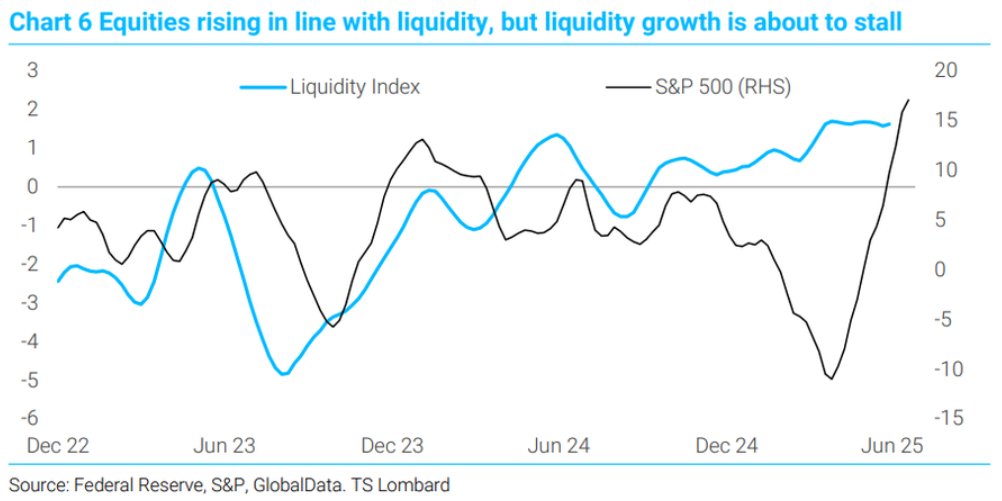
Group 1 - The core argument of the report is that the massive excess liquidity released by the Federal Reserve and the U.S. Treasury has been the primary driver of the bull market in U.S. and global stock markets, raising concerns about how long this support can maintain high valuations [1][2] - The report questions the sustainability of the current high valuations in the stock market, particularly in light of the significant gap between the S&P 500 index and actual corporate profits, which has historically led to negative annualized returns [5][6] - The analysis indicates that the relationship between stock market valuations and productivity growth is distorted due to liquidity effects rather than fundamental economic strength, suggesting a potential risk for risk assets in the near term [2][5] Group 2 - The report highlights that the current market environment is characterized by complacency, with a significant number of earnings downgrades exceeding upgrades, raising the risk of increased volatility and potential declines in the stock market [7][8] - Analysts from JPMorgan warn that the global stock market, particularly the U.S. market, may face significant cracks despite recent highs, as the market sentiment appears overly optimistic amid tightening liquidity and deteriorating corporate earnings outlooks [7][8] - The report anticipates that the S&P 500 index may experience a notable decline, with projections suggesting a potential drop of around 15% by the end of the year, reflecting concerns over high valuations and economic slowdown [8]

美银Hartnett:美股接近“卖出信号”,但下半年泡沫风险高,黄金依旧是弱美元最佳对冲
Hua Er Jie Jian Wen· 2025-06-28 04:22
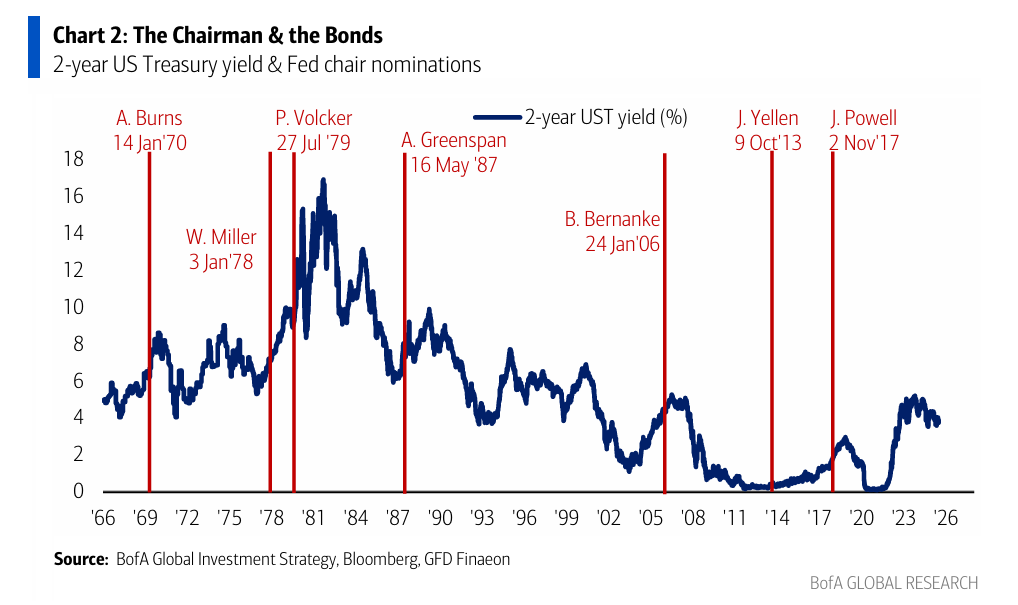
Core Viewpoint - The U.S. stock market is approaching a technical "sell signal," but potential changes in the policy environment could create a market bubble in the second half of the year [1][4]. Group 1: Technical Indicators - Multiple technical indicators from Bank of America show that the U.S. stock market is nearing critical thresholds, with 73% of MSCI global country indices trading above their 50-day and 200-day moving averages, while the critical point is 88% [5]. - The S&P 500 index could trigger a "sell signal" if it breaks through 6300 points in July [5]. - The global fund flow indicator is also cautious, with the ratio of funds flowing into global stocks and high-yield bonds reaching 0.99%, close to the 1.0% "greed" threshold [5]. Group 2: Policy Environment - Despite the technical sell signals, the policy environment is expected to provide support in the second half of the year, with global central banks having cut rates 64 times this year [7]. - The Federal Reserve may join in rate cuts to address slowing economic growth in the U.S. [7]. - The anticipated nomination of a new Federal Reserve Chair by Trump in the fall could lead to a decline in the dollar, as historical data suggests such nominations typically result in a weaker dollar [1][13]. Group 3: Investment Strategy - Bank of America recommends investors adhere to the "BIG" strategy, which includes bonds, international stocks, and gold, with gold being the best hedge against a weakening dollar [4][15]. - The firm suggests that while technical indicators are nearing sell signals, the risk of a bubble remains high if policies shift from tariffs to tax cuts and rate reductions [4][15]. Group 4: Fund Flows - Recent fund flows show a divergence, with $26 billion flowing into cash, $12.1 billion into bonds, $3.5 billion into stocks, $2.8 billion into gold, and $2.1 billion into cryptocurrencies [10]. - Emerging market bonds saw a record inflow of $5.8 billion in a single week, while U.S. small-cap stocks experienced an outflow of $4.4 billion, the largest since December 2024 [10]. Group 5: Market Participation - The current market rally is primarily driven by a narrow group of stocks, with only 22 S&P 500 constituents at all-time highs, significantly lower than previous major breakouts [6]. - The "Mag7" stocks account for 14.8% of the assets under management in Bank of America's private client portfolios, indicating a high concentration in large tech stocks [6].

1929年经济大萧条:股市震荡、通货膨胀、失业率上升,历史在重演
Sou Hu Cai Jing· 2025-06-12 02:27
Group 1 - The article discusses the potential signs of a new economic crisis in the U.S., drawing parallels to the 1929 Great Depression, as predicted by Tesla's CEO Elon Musk [1][17] - It highlights the causes of the 1929 Great Depression, including excessive consumer credit and inflation driven by overproduction and insufficient purchasing power among the populace [5][10][12] Group 2 - The article outlines the impact of World War I on the U.S. economy, leading to a false sense of prosperity and increased consumer spending, which was unsustainable [6][8] - It emphasizes the widening wealth gap and the imbalance between production and consumption, with urban areas experiencing greater economic growth compared to rural areas [10][12] Group 3 - The article describes the speculative bubbles in real estate and the stock market during the late 1920s, fueled by easy credit and investor enthusiasm, which ultimately led to the stock market crash [13][16] - It details the catastrophic consequences of the stock market crash on the U.S. economy, including widespread bankruptcies and soaring unemployment rates [16][18] Group 4 - The article draws attention to current economic risks in the U.S., including inflation, stock market volatility, and rising unemployment, exacerbated by the COVID-19 pandemic and geopolitical tensions [18][20][22] - It notes the significant inflation rate of 7.9% in early 2022, alongside a GDP decline of 1.4%, indicating economic instability [20]

股市泡沫生存入门:轻仓并荒废第一个十年
雪球· 2025-03-06 07:40
Core Viewpoint - The article emphasizes the importance of early investment learning and the necessity of enduring a seemingly "wasted" period of time, which can last for a decade or more, to truly understand the market dynamics and develop a solid investment framework [2][14]. Group 1: Investment Learning Process - Investors often need to experience at least two market bubbles to accumulate sufficient experience and abandon their speculative mindset, transitioning to rational trading based on asset value [6][12]. - The learning process in the stock market is heavily influenced by bull and bear cycles, which can span five to ten years, requiring investors to navigate through at least two complete cycles to "graduate" [6][14]. - The feedback in investment learning is often delayed, making it challenging for investors to see immediate results from their efforts, especially if they enter the market during a bear phase [6][14]. Group 2: Market Behavior and Psychology - Initial market experiences can lead to emotional reactions, with the first cycle often driven by instinct rather than learned behavior, while the second cycle tests whether investors have truly absorbed lessons and can manage their emotions [13][15]. - The article discusses how the timing of entering the market can significantly affect learning experiences, with those starting during favorable conditions potentially having a more straightforward learning curve compared to those entering during challenging periods [7][8]. Group 3: Investment Strategies and Approaches - The concept of "light positions" during the initial learning phase is advocated to control trial-and-error costs and maintain psychological flexibility, allowing investors to view gains and losses from a broader perspective [15]. - The article suggests that the essence of investing is a game against oneself, and the first ten years should be viewed as a time for learning rather than immediate profit [15].