
财税体制改革

Search documents
国家财政实力持续增强
Zhong Guo Jing Ji Wang· 2025-09-13 01:17
Core Insights - The Chinese government emphasizes the strengthening of fiscal capacity during the "14th Five-Year Plan" period, with significant increases in both revenue and expenditure, ensuring robust support for national governance and public welfare [1][2][3] Fiscal Strength and Budget Overview - National general public budget revenue is projected to reach 106 trillion yuan, an increase of 17 trillion yuan (approximately 19%) compared to the "13th Five-Year Plan" period [1] - General public budget expenditure is expected to exceed 136 trillion yuan, marking an increase of 26 trillion yuan (24%) from the previous period [1] - Local fiscal strength is also growing, with 16 provinces expected to see revenue growth of over 20% compared to 2020 [1] Economic Policy and Development - Fiscal policy is becoming more proactive and precise, enhancing macroeconomic regulation to support stable and healthy economic growth [1][2] - The government is focusing on counter-cyclical adjustments to smooth short-term fluctuations while promoting long-term development momentum [1][2] Social Welfare and Public Spending - Over 70% of national general public budget expenditure is allocated to social welfare, with significant investments in education, social security, healthcare, and housing [2] - Total fiscal investment in social welfare during the "14th Five-Year Plan" is nearly 100 trillion yuan, with specific allocations including 20.5 trillion yuan for education and 19.6 trillion yuan for social security and employment [2] Education and Technology Investment - National fiscal education funding is expected to exceed 25 trillion yuan, a 38% increase from the "13th Five-Year Plan" [3] - Fiscal support for technology is projected to reach 5.5 trillion yuan, a 34% increase, with a focus on basic research and national strategic technology tasks [3] Fiscal and Tax System Reform - The government is committed to deepening fiscal and tax system reforms to enhance budget management, tax systems, and fiscal frameworks [4][5] - Key reforms include optimizing expenditure structures and improving the efficiency of fund usage, with a focus on high-quality development and social equity [5] Future Directions - The government plans to continue advancing fiscal support for innovation and technology, aiming to strengthen the country's technological capabilities [3][6] - Implementation plans for fiscal and tax reforms are being developed, with a focus on adapting to changing conditions and promoting regional balance [6]
财政部:财政政策始终留有后手 未来政策发力空间依然充足
Zheng Quan Shi Bao· 2025-09-12 18:58
Core Insights - The fiscal strength of the country has significantly increased since the "14th Five-Year Plan," with a notable enhancement in the structure of fiscal expenditures and proactive macroeconomic regulation [1][2] - The total public budget revenue is expected to reach 106 trillion yuan, an increase of 17 trillion yuan or approximately 19% compared to the "13th Five-Year Plan" [1] - The total public budget expenditure is projected to exceed 136 trillion yuan, marking an increase of 26 trillion yuan or 24% compared to the previous five-year period [1] Fiscal Policy and Economic Growth - Fiscal policy has shifted from active to more proactive, becoming a crucial support for stable economic growth, with an average growth rate of 5.5% over the past four years [2] - The deficit ratio has increased from 2.7% to 3.8%, with a further rise to 4% this year, and new local government special bond quotas amounting to 19.4 trillion yuan have been arranged [2] - Over 10 trillion yuan in tax reductions and deferred payments have been implemented, expanding fiscal policy space [2] Focus on Domestic Demand - The Ministry of Finance aims to innovate fiscal and tax policy tools to stimulate consumption and expand effective investment, tapping into the potential of domestic demand [3] Social Welfare Investments - More than 70% of the national public budget expenditure is allocated to social welfare, with significant investments in education (20.5 trillion yuan), social security and employment (19.6 trillion yuan), health (10.6 trillion yuan), and housing security (4 trillion yuan) [4] - The central government has arranged nearly 50 trillion yuan in transfer payments to local governments over five years to strengthen financial support [5] Debt Management - The Ministry of Finance has effectively managed existing debt and curbed new debt, leading to a gradual reduction in hidden debt risks [7] - As of the end of August this year, 4 trillion yuan of the newly increased 6 trillion yuan special debt limit has been issued, with an average interest cost reduction of over 2.5 percentage points [8] - The total government debt is projected to be 92.6 trillion yuan by the end of 2024, with a debt-to-GDP ratio of 68.7%, indicating that the overall government debt level is within a reasonable range [8]
财政部:已制定财税体制改革实施方案和分年度工作计划
Zhong Guo Xin Wen Wang· 2025-09-12 12:45
Group 1 - The Ministry of Finance has developed an implementation plan and annual work schedule for fiscal and tax system reform, which is essential for advancing comprehensive reforms in other areas [1][2] - The reform focuses on three aspects: enhancing efficiency through budget system reform, promoting high-quality development, social equity, and market unity through tax system reform, and driving fiscal system reform with clear responsibilities and regional balance [1][2] Group 2 - The Ministry emphasizes the importance of optimizing revenue, expenditure, and management, with a significant increase in the funds transferred to the general public budget, which is over ten times the amount during the 13th Five-Year Plan period [1] - The central government has allocated nearly 50 trillion yuan in transfer payments to local governments since the beginning of the 14th Five-Year Plan, supporting local implementation of central policies [2] - The Ministry has implemented various tax reforms, including the introduction of a special deduction for childcare and significant increases in deductions for elderly and child care, benefiting over 67 million people [2]
这场发布会 信息量很大
Shang Hai Zheng Quan Bao· 2025-09-12 12:19
Core Insights - The press conference highlighted the achievements of fiscal reform and development during the "14th Five-Year Plan" period, with a focus on budgetary income and expenditure growth [2][3]. Fiscal Revenue and Expenditure - National general public budget revenue is expected to reach 106 trillion yuan during the "14th Five-Year Plan," an increase of 17 trillion yuan or approximately 19% compared to the "13th Five-Year Plan" [2]. - National general public budget expenditure is projected to exceed 136 trillion yuan over five years, an increase of 26 trillion yuan or 24% compared to the previous plan [2]. Fiscal Policy and Economic Stability - The Ministry of Finance emphasized the importance of balancing risk prevention and economic development, indicating that there is still ample room for fiscal policy to maneuver [3]. - The long-term positive trend of the economy is expected to provide a solid foundation for fiscal operations [3]. Special Government Bonds - The issuance of 500 billion yuan in special government bonds is anticipated to stimulate approximately 6 trillion yuan in credit investment [4]. Tax System Reform - The Ministry of Finance is actively advancing the implementation plan and annual work schedule for deepening the fiscal and tax system reform [5]. Domestic Demand and Consumption - The Ministry plans to innovate fiscal and tax policy tools to stimulate consumption and expand effective investment, aiming to develop domestic demand [6]. - As of August, the government has allocated approximately 420 billion yuan to support the replacement of consumer goods, resulting in over 2.9 trillion yuan in sales [6]. Science and Technology Investment - Fiscal spending on science and technology is expected to reach 5.5 trillion yuan during the "14th Five-Year Plan," a 34% increase from the previous period [7]. - Investment in basic research is projected to total 730 billion yuan, with an average annual growth rate of 12.3% [7]. Debt Management - By mid-2025, over 60% of financing platforms are expected to exit, indicating a significant reduction in hidden debts [9]. - The Ministry of Finance will continue to manage government debt sustainably, focusing on both reducing existing debt and enhancing management practices [9][10]. Financial Integrity - The Ministry of Finance is committed to combating financial fraud to maintain a healthy and orderly market economy [11]. - Over the past two years, the Ministry has conducted quality checks on over 4,600 accounting firms and nearly 1,500 asset appraisal institutions [11].
非凡“十四五”丨“国家财政账本”来了!一起细读
Xin Hua She· 2025-09-12 12:08
Core Viewpoint - The Chinese government emphasizes the importance of improving people's livelihoods through fiscal policies during the "14th Five-Year Plan" period, with a focus on high-quality development and direct financial support to citizens [1]. Fiscal Policy - The fiscal deficit rate has increased from 2.7% to 3.8%, and is expected to rise further to 4% this year [2]. - A special long-term bond issuance of 6 trillion yuan has been arranged to replace hidden debts, significantly alleviating local repayment pressures [2]. - An additional 500 billion yuan in special bonds is expected to stimulate approximately 6 trillion yuan in credit [2]. Tax and Budget Reforms - The central government's transfer payments to local governments have totaled nearly 50 trillion yuan during the "14th Five-Year Plan" [3]. - The scale of cross-provincial adjustments is projected to reach 253.3 billion yuan in 2024 [3]. - 14 out of 18 existing tax types have completed legislation [3]. Economic Stimulus - Central fiscal employment support funds amount to 318.6 billion yuan, with an overall fiscal contribution of about 420 billion yuan leading to over 2.9 trillion yuan in sales of various goods [5]. - Over 19.4 trillion yuan in local government special bonds have been arranged over five years to support 150,000 construction projects [5]. Technological Development - National fiscal spending on technology is expected to reach 5.5 trillion yuan, a 34% increase from the "13th Five-Year Plan" [7]. - The government has supported over 30,000 small and medium-sized technology enterprises with approximately 800 billion yuan in loans [7]. Education Funding - National fiscal education funding is projected to exceed 25 trillion yuan during the "14th Five-Year Plan," maintaining over 4% of GDP for over a decade [9]. - Approximately 1.1 trillion yuan has been allocated for transfer payments to enhance local education investments [9]. Debt Management - By the end of August, 4 trillion yuan of the newly increased 6 trillion yuan special debt limit has been issued [11]. - The total government debt is projected to be 92.6 trillion yuan by the end of 2024, with a manageable debt ratio [11]. Rural Development - Central fiscal funds for rural revitalization have increased from 156.5 billion yuan in 2021 to 177 billion yuan in 2025 [13]. - Rural residents in poverty-stricken areas have seen their per capita disposable income increase by nearly 40% over the "14th Five-Year Plan" period [13]. International Cooperation - The government is actively engaging in international financial cooperation, particularly in managing sovereign debt for developing countries [14]. - Efforts are being made to enhance the "Belt and Road" investment and financing system [14]. Financial Supervision - Strengthened supervision mechanisms are in place for the issuance of national bonds and local government debt management [16]. - A comprehensive supervision system has been established for central department budgets and transfer payment funds [16].

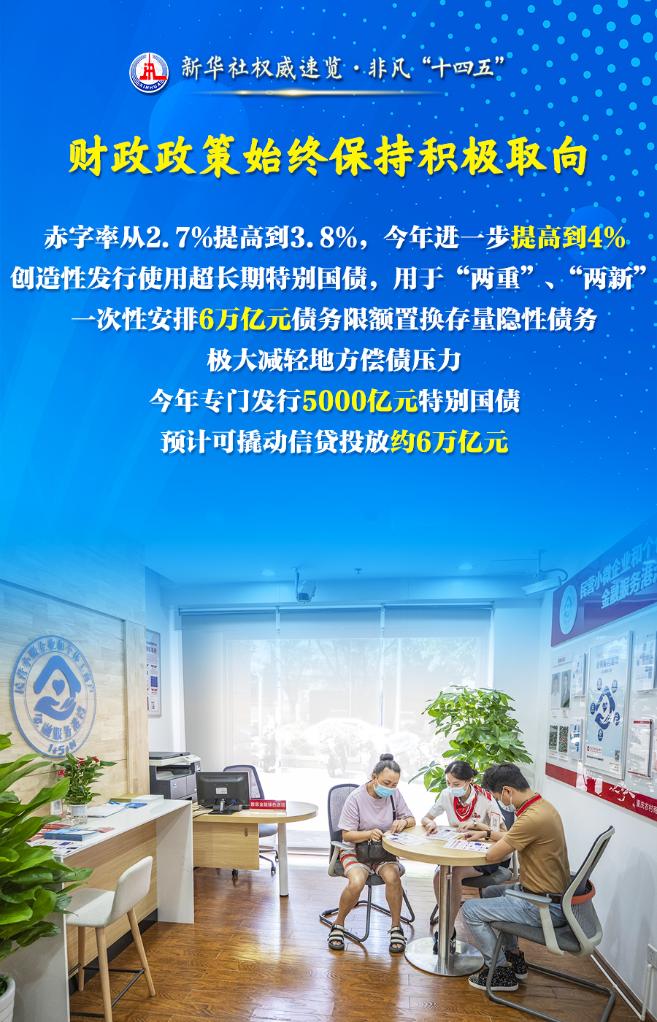
新华社权威速览·非凡“十四五”丨“国家财政账本”来了!一起细读
Xin Hua She· 2025-09-12 11:27
Core Viewpoint - The Chinese government emphasizes the importance of improving people's livelihoods while ensuring high-quality development during the "14th Five-Year Plan" period, with a significant focus on fiscal policies that directly benefit the public [1] Fiscal Policy and Budget Management - The scale of funds transferred from government funds and state-owned capital to the general public budget in the past four years is ten times that of the "13th Five-Year Plan" period [4] - The central government's transfer payments to local governments have totaled nearly 50 trillion yuan since the beginning of the "14th Five-Year Plan" [4] Support for Employment and Consumption - The central government allocated 318.6 billion yuan for employment support, which has driven sales of various goods exceeding 2.9 trillion yuan [7] - Approximately 4.2 trillion yuan has been allocated to support major technological equipment and innovative material products [7] Investment in Technology and Innovation - National fiscal spending on science and technology is expected to reach 5.5 trillion yuan, a 34% increase compared to the "13th Five-Year Plan" [9] - The government has supported over 30,000 small and medium-sized technology enterprises with approximately 800 billion yuan in loans [9] Education Funding - The proportion of national fiscal education funding to GDP has remained above 4% for over a decade, with an expected total of over 25 trillion yuan during the "14th Five-Year Plan" [11] - The government has arranged about 1.1 trillion yuan in transfer payments to enhance local investment in compulsory education [11] Debt Management - As of the end of August, 4 trillion yuan of the newly increased 6 trillion yuan special debt limit has been issued [13] - The total government debt is projected to be 92.6 trillion yuan by the end of 2024, with a reasonable debt ratio and controllable risks [13] Rural Development and Poverty Alleviation - The central fiscal funds for rural revitalization have increased from 156.5 billion yuan in 2021 to 177 billion yuan in 2025 [15] - The per capita disposable income of rural residents in poverty-stricken areas has increased by nearly 40% during the "14th Five-Year Plan" [15] International Financial Cooperation - The government is actively guiding the G20 on sovereign debt management for developing countries and enhancing the "Belt and Road" investment and financing system [17] Financial Supervision and Accountability - There is a strengthened supervision system focusing on the use of newly issued national bonds and local government debt management [19] - A comprehensive supervision system has been established for central department budgets and transfer payment funds [20]

财政部重磅发声:财政政策始终留有后手,未来财政政策发力空间依然充足|政策与监管
清华金融评论· 2025-09-12 11:09
Core Viewpoint - The article discusses the achievements and future directions of China's fiscal policy during the "14th Five-Year Plan" period, emphasizing the strengthening of fiscal capabilities, proactive macroeconomic adjustments, and a focus on improving people's livelihoods [3][4][5][6][10]. Group 1: Fiscal Strength and Achievements - National fiscal strength has significantly increased, with general public budget revenue expected to reach 106 trillion yuan, a 19% increase from the "13th Five-Year Plan" period [4]. - General public budget expenditure is projected to exceed 136 trillion yuan, marking a 24% increase, with a focus on optimizing the structure to support major development and livelihood projects [4]. - The fiscal policy has been actively adjusted to enhance economic stability, contributing to an average growth rate of 5.5% over the past four years, with a 30% contribution to global economic growth [5]. Group 2: Focus on People's Livelihoods - The fiscal budget allocates significant resources to education (20.5 trillion yuan), social security and employment (19.6 trillion yuan), healthcare (10.6 trillion yuan), and housing security (4 trillion yuan), totaling nearly 100 trillion yuan for livelihood investments [6]. - Initiatives such as 1 billion yuan for childcare subsidies and 200 million yuan for free preschool education demonstrate a commitment to addressing public concerns [6]. Group 3: Risk Management and Reform - The government has implemented measures to manage local government debt, with nearly 50 trillion yuan allocated for transfers to local governments, ensuring stable fiscal operations [6][8]. - Fiscal reforms focus on optimizing resource allocation, enhancing efficiency, and clarifying responsibilities between central and local governments [7][16]. Group 4: International Cooperation and Global Engagement - The Ministry of Finance is actively involved in international financial cooperation, participating in over 26 multilateral and bilateral financial dialogue mechanisms, and promoting global economic governance reforms [8][42]. - The Asian Infrastructure Investment Bank has reached 110 members and financed over 60 billion USD, showcasing China's commitment to global inclusive development [8]. Group 5: Future Directions - The Ministry of Finance aims to enhance macroeconomic regulation, deepen fiscal reforms, and improve fiscal management to support the goal of building a modern socialist country [9][10]. - The focus will be on expanding domestic demand, supporting technological self-reliance, and ensuring the sustainability of poverty alleviation efforts [20][23][38].

蓝佛安发声,财政政策始终留有后手
财联社· 2025-09-12 09:15
Core Viewpoint - The article discusses the achievements and future plans of China's fiscal policy during the "14th Five-Year Plan" period, emphasizing the importance of balancing risk prevention and economic development while ensuring fiscal policy remains flexible and proactive [2][3]. Fiscal Policy and Debt Management - The Ministry of Finance will continue to maintain the continuity and stability of fiscal policies while enhancing flexibility and foresight, preparing policies in advance to support high-quality economic development [3]. - The government will implement a debt management mechanism that aligns with high-quality development, focusing on reducing existing hidden debts, managing new debt limits, and improving the efficiency of bond usage [4]. - A total of 19.4 trillion yuan of local government special bonds have been arranged over five years to support 150,000 construction projects, alongside 3.3 trillion yuan in central budget investments for infrastructure [6]. Economic Stimulus and Consumption - The issuance of 5 trillion yuan in special government bonds this year aims to inject capital into large commercial banks, potentially stimulating around 6 trillion yuan in credit [7]. - Fiscal policies have successfully stimulated consumption, with approximately 420 billion yuan allocated to support the replacement of old consumer goods, resulting in over 2.9 trillion yuan in sales [11]. - The rural retail sales of consumer goods have increased by 24% since the beginning of the "14th Five-Year Plan," driven by targeted fiscal measures [11]. Debt and Risk Management - As of the end of 2024, the total government debt is projected to be 92.6 trillion yuan, with a debt-to-GDP ratio of 68.7%, indicating that the debt level is within a reasonable range and manageable [9]. - Over 60% of financing platforms have exited by mid-2025, indicating significant progress in reducing hidden debts [10]. - The average interest cost of debt has decreased by over 2.5 percentage points after debt swaps, saving more than 450 billion yuan in interest expenses [12].
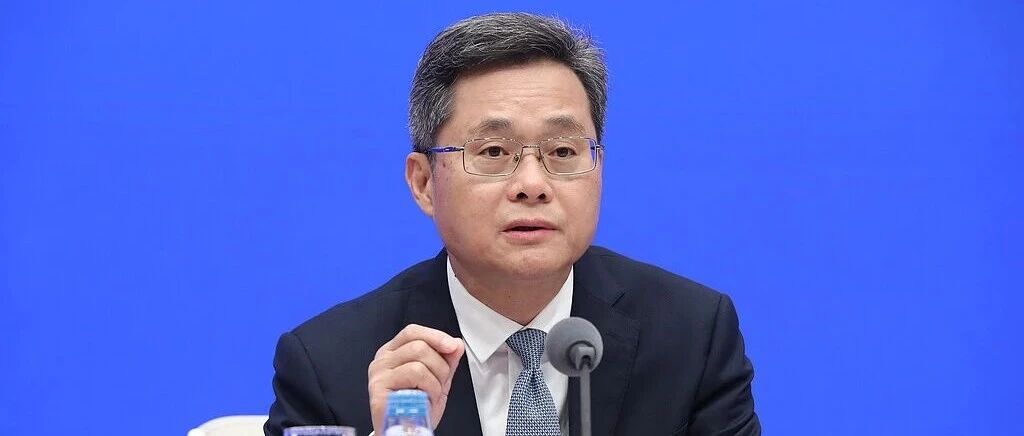
财政部重磅发声!
证券时报· 2025-09-12 09:10
今天(12日)下午,国务院新闻办公室举行"高质量完成'十四五'规划"系列主题新闻发布会。 蓝佛安:财政政策始终留有后手,未来财政政策发力空间依然充足 财政部部长蓝佛安9月12日在国新办"高质量完成'十四五'规划"系列主题新闻发布会上表示,财政政策统 筹考虑防风险和促发展,始终留有后手,未来财政政策发力空间依然充足。一是我国经济长期向好的趋势 没有变,这决定了财政运行的基本盘始终是坚实稳固的。二是这些年我们积累了越来越多的宏观调控的经 验,政策工具不断丰富密度周期,跨周期调节能力大大增强。三是随着重点领域风险防范制度机制进一步 健全,以及存量风险逐步消化,财政应对未来挑战更有底气、更加从容。 蓝佛安:财政部门将做好政策储备,主动靠前发力 蓝佛安表示,下一步财政部门将继续保持政策的连续性、稳定性,增强灵活性、预见性,加强对形势的前 瞻研判,做好政策储备,主动靠前发力,为经济社会高质量发展贡献财政力量。 蓝佛安:"十四五"以来财政政策力度更加给力,财政赤字率从2.7%提高到今年4% 蓝佛安表示,"十四五"以来,财政政策力度更加给力。赤字率从2.7%提高到3.8%,今年进一步提高到 4%;安排新增地方政府专项债券额度 ...

财政部:“十四五”时期国家财政实力大大增强 未来财政政策发力空间依然充足
智通财经网· 2025-09-12 08:44
Group 1 - The core viewpoint of the article emphasizes the significant achievements in fiscal reform and development during the "14th Five-Year Plan" period, highlighting the proactive fiscal policies that support economic stability and growth [1][2][6] - The national general public budget revenue is expected to reach 106 trillion yuan, an increase of 17 trillion yuan or approximately 19% compared to the "13th Five-Year Plan" period [1][6] - The national general public budget expenditure is projected to exceed 136 trillion yuan, an increase of 26 trillion yuan or 24% compared to the "13th Five-Year Plan" period, with more funds directed towards major development and livelihood projects [1][6] Group 2 - Fiscal macro-control has become more proactive and effective, enhancing the adaptability of fiscal policies to economic conditions, thus supporting stable and healthy economic development [2][7] - The average economic growth rate over the past four years has been 5.5%, contributing approximately 30% to global economic growth [2][7] - The central government has arranged nearly 50 trillion yuan in transfer payments to local governments over five years, ensuring local fiscal stability [2][3] Group 3 - The fiscal policy has been adjusted to enhance counter-cyclical regulation and support long-term development momentum, with a focus on expanding domestic demand and promoting economic circulation [2][7] - The deficit ratio has increased from 2.7% to 3.8%, with further increases planned, and new local government special bond quotas of 19.4 trillion yuan have been arranged [2][15] - More than 10 trillion yuan has been allocated for tax reductions and refunds [2][15] Group 4 - The fiscal system reform aims to clarify responsibilities and enhance coordination between central and local finances, promoting regional balance [3][24] - The transfer payment system has been optimized to support high-quality development and ecological protection [3][24] - The central government has provided nearly 50 trillion yuan in transfer payments to local governments since the beginning of the "14th Five-Year Plan" [3][24] Group 5 - The fiscal policy has a clear focus on improving people's livelihoods, with significant allocations for education, social security, and healthcare [8][36] - The total fiscal expenditure for education is expected to exceed 25 trillion yuan during the "14th Five-Year Plan" period, representing a growth of approximately 38% compared to the "13th Five-Year Plan" [36] - The government has implemented various measures to enhance educational equity and quality, including increased funding for rural education and teacher training [36][38]