
资管新规

Search documents
“固收+”产品收益率上升!这些银行理财产品7月上榜
Zhong Guo Zheng Quan Bao· 2025-08-20 13:15
Group 1 - The bond market faced pressure in July, with the yield on 10-year government bonds rising by 5 basis points to 1.70%, stabilizing by the end of the month [1] - The Shanghai Composite Index increased by 3.74% for the month, while the ChiNext Index surged by 8.14%, indicating a preference for growth styles in the market [1] - The total number of bank wealth management products reached 42,629 by the end of July, an increase of 776 from June [1] Group 2 - The average annualized return of the listed products approached 10%, with volatility rising significantly compared to June [6] - The average scale of the listed products was approximately 4.79 billion yuan, a decrease of 34.92% month-on-month [6] - The proportion of products with a risk level of three (medium risk) accounted for one-third of the listed products, indicating a shift in risk profile [6] Group 3 - The average weighted annualized return of the listed products in the mixed category reached 17.86%, with a notable increase in volatility [22] - The average scale of these products was about 4.83 billion yuan, down 40.88% from June [22] - The allocation to equity assets became a significant source of returns, with a focus on technology growth styles [22] Group 4 - The overall risk level of the listed products increased, with 50.48% of products rated at level three (medium risk) or higher [27] - The products primarily invested in high-grade interest rate bonds and bank capital tools, maintaining a focus on liquidity [18] - The investment strategy reflected a "high proportion of fixed income + moderate liquidity" approach [18]

170万亿资管市场格局重塑 专业化与头部化成定局
Jing Ji Guan Cha Wang· 2025-08-20 02:01
Core Insights - The Chinese asset management industry achieved a record scale of 170.13 trillion yuan by mid-2025, marking a 4.27% increase from the end of 2024, indicating a stable development phase post-implementation of new regulations [1][9] - Bank wealth management and public funds are the main drivers of industry growth, with bank wealth management reaching 30.67 trillion yuan (up 2.38%) and public funds at 34.39 trillion yuan (up 4.78%) by mid-2025 [1][5] - The market is experiencing a concentration effect, with major institutions like E Fund and Huaxia leading the public fund sector, while state-owned and joint-stock banks dominate the bank wealth management market [2][7] Asset Management Scale - As of June 2025, the total assets under management (AUM) in China's asset management industry reached 170.13 trillion yuan, a historical high [1] - The bank wealth management market had a total scale of 30.67 trillion yuan, with a notable increase in the market share of wealth management companies to 89.61% [3][4] Market Dynamics - The number of banks in the wealth management sector decreased by 24, while the number of wealth management companies increased by 1, indicating market consolidation [4] - The public fund sector saw a total of 12,905 products with a net asset value of 34.39 trillion yuan, reflecting a 4.78% growth [5] Product Performance - Bank wealth management products generated an average net value growth rate of approximately 0.65% in Q2 2025, with equity mixed products achieving a growth rate of 1.01% [3] - QDII funds showed strong performance, with average returns of 7.91% for equity QDII funds and 10.72% for mixed QDII funds in Q2 2025 [6] Investment Trends - The asset allocation in the insurance asset management sector is shifting towards equities, with a 16.65% increase in stock investments by life insurance companies compared to the previous year [8] - Innovative products such as REITs and ETFs are emerging, providing new investment channels and reflecting a shift in investor preferences [9] Future Outlook - The asset management industry is expected to focus more on quality rather than just growth in scale, with an emphasis on professionalization, differentiation, and internationalization [10] - The industry faces challenges such as low interest rates and the need for refined product management to meet diverse investor demands [10]
银行理财产品移行提速 资管新规进入过渡期
Bei Jing Shang Bao· 2025-08-13 23:12
Core Viewpoint - The migration of bank wealth management products to wealth management subsidiaries is accelerating as the transition period for asset management regulations approaches its end, with several banks announcing plans to transfer their products [1][4]. Group 1: Migration of Wealth Management Products - China Merchants Bank and CITIC Bank have announced plans to transfer several previously issued wealth management products to their respective wealth management subsidiaries [2][3]. - The migration includes specific products such as "CITIC Wealth Management Growth Strong Bond Daily Open Net Value RMB Wealth Management Product" and others, with a scheduled pause in subscription and redemption transactions [2][3]. - This marks the eighth transfer of wealth management products by China Merchants Bank this year, totaling 59 products transferred to its wealth management subsidiary [4]. Group 2: Reasons for Acceleration - Analysts suggest that the increasing maturity of wealth management subsidiaries in terms of product issuance, sales, operational management, and investment research capabilities necessitates the accelerated migration of wealth management products from parent banks [1][4]. Group 3: Challenges in Migration - The migration process may face challenges such as system compatibility issues, customer acceptance of product name changes, and the management of existing assets, particularly those with flaws or risks [5]. - Wealth management subsidiaries are advised to maintain strict financial separation from parent banks and enhance their product offerings through improved risk control and investment research capabilities [6].


券商资管发力主动管理 前20强规模已突破5.2万亿元
Xin Hua Wang· 2025-08-12 06:30
Core Insights - The asset management scale of securities firms has decreased from its peak to 8.64 trillion yuan, a reduction of over 50%, indicating a need for comprehensive transformation and enhancement of active management capabilities [1] - The latest data shows that CITIC Securities has surpassed 1 trillion yuan in both average asset management scale and active management assets, while five other firms have over 90% of their assets in active management, reflecting significant transformation results [1] - However, the transformation process has revealed several issues, including inadequate implementation of asset management regulations, violations in product operations, non-standard investment management, and insufficient credit risk management mechanisms [1] Securities Firms Asset Management Scale - As of the fourth quarter of 2021, the top 20 securities firms collectively managed 6.15 trillion yuan in assets, with CITIC Securities leading at 1.17 trillion yuan, ahead of CICC by nearly 300 billion yuan [2] - Both CITIC Securities and Zhongyin Securities saw their average asset management scales increase by over 100 billion yuan compared to the previous quarter, with Zhongyin Securities experiencing the highest growth rate of 26.32% [2] - Conversely, nine firms reported a decrease in their average asset management scale, with five firms experiencing declines exceeding 10%, and Haitong Securities seeing a drop of over 20% [2] Active Management Growth - By the end of the third quarter of 2021, the total asset management business scale was approximately 65.87 trillion yuan, with securities firms' private asset management business accounting for 8.64 trillion yuan, representing only 13.12% of the total, indicating significant potential for growth [3] - The active management asset scale of the top 20 securities firms reached 5.21 trillion yuan in the fourth quarter of 2021, with CITIC Securities exceeding 1 trillion yuan in active management assets [3] - Zhongyin Securities reported a remarkable increase of 87% in its active management asset scale, reaching 4111.76 billion yuan, attributed to favorable market conditions and strategic partnerships [4] Regulatory and Compliance Issues - Recent regulatory actions have highlighted compliance issues within securities firms, such as inadequate implementation of asset management regulations and deficiencies in risk management systems [6] - East Asia Securities received a warning for failing to comply with regulations, while Zhejiang Securities faced a six-month suspension for various compliance failures [6] - The industry is increasingly focusing on enhancing risk control awareness and improving research and investment capabilities in response to regulatory demands [6]



多家银行部分理财产品费率降为零 未来或有更多银行跟进
Xin Hua Wang· 2025-08-12 06:30
Core Insights - The trend of decreasing fees for bank wealth management products has been observed, with some fees dropping to zero, indicating a competitive shift in the market [1][2] - The decline in fees is attributed to a combination of factors including a relaxed funding environment, increased competition among banks, and the transition to net value products [1][2] - Future competition may lead more banks to adopt fee reduction strategies, emphasizing the importance of comprehensive financial services and customer satisfaction [3] Group 1: Fee Adjustments - Several banks, including China Merchants Bank and Huaxia Bank, have announced fee reductions for their wealth management products, with some fees now at zero [1] - The main fees associated with bank wealth management products include sales fees, custody fees, and management fees, among others, with variations across different banks [2] Group 2: Market Dynamics - The overall trend shows that fixed fees for bank wealth management products are generally lower than those for public funds, particularly in terms of custody fees [2] - The competitive landscape is evolving due to the implementation of asset management regulations, prompting banks to adjust their fee strategies in response to public funds and other asset management entities [2][3]
市场规模达29万亿元 投资者数量创新高
Xin Hua Wang· 2025-08-12 06:30
Core Insights - The banking wealth management industry in China has shown stable growth, achieving a market size of 29 trillion yuan by the end of 2021, a year-on-year increase of 12.14% [1] - The transition period for regulatory compliance under the new asset management regulations has been largely completed, with the scale of guaranteed wealth management products reduced to zero and net value products accounting for 92.97% of the total [2] - The report indicates a significant increase in the number of investors holding wealth management products, reaching approximately 81.3 million by the end of 2021, with individual investors growing by 94.48% [5][6] Market Overview - The total number of new wealth management products issued in 2021 was 47,600, raising 12.219 trillion yuan, generating nearly 1 trillion yuan in returns for investors [1] - The proportion of bond assets in wealth management products has increased, with bond holdings rising by 4.13 percentage points year-on-year [3] - The report highlights that credit bonds accounted for 48.13% of total investment assets, with AA+ rated and above credit bonds making up 84.05% of the credit bond holdings [3] Regulatory Environment - The regulatory framework for wealth management has been strengthened, with a focus on professional supervision and risk management [7] - The China Banking and Insurance Regulatory Commission (CBIRC) will continue to approve new wealth management companies based on a "mature one, approve one" principle [7] - The report emphasizes the need for ongoing regulatory oversight to ensure compliance and mitigate risks in the wealth management sector [7][8] Future Outlook - The banking wealth management industry is expected to enter a new phase of quality improvement and upgrading in 2022, focusing on differentiated development and increased openness to foreign investment [8] - There will be an emphasis on enhancing asset allocation efficiency and flexibility, directing funds into key areas of the national economy [8][9] - The industry aims to better meet the diverse and high-quality development needs of wealth management, with a focus on social responsibility investments and supporting the real economy [8][9]
理财公司纷纷自购为哪般
Xin Hua Wang· 2025-08-12 06:28
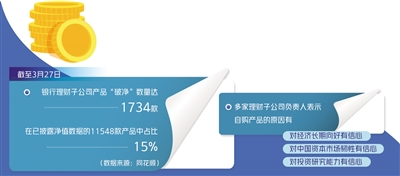
Core Viewpoint - Several wealth management companies are purchasing their own financial products, indicating confidence in the long-term economic outlook and their investment research capabilities [2][3]. Group 1: Company Actions - Zhongyou Wealth Management announced the purchase of approximately 650 million yuan of its own financial products [2]. - Everbright Wealth Management stated it would buy up to 200 million yuan of its stock and mixed financial products [2]. - Nanyin Wealth Management has invested about 500 million yuan in its own financial products [2]. Group 2: Market Context - The phenomenon of self-purchase is misinterpreted as a sign of poor performance in the banking wealth management sector, while it is a normal market behavior similar to company executives buying their own stocks [2]. - The banking wealth management market previously experienced volatility, with 1,734 products breaking their net value as of March 27, 2022, accounting for 15% of the 11,548 products with disclosed net value data [2]. Group 3: Reasons for Self-Purchase - The main reasons for self-purchase include confidence in the long-term economic outlook, resilience of the Chinese capital market, and belief in their own investment research capabilities [2]. - The banking wealth management sector is adapting to market changes by increasing investments in fixed-income products and enhancing research capabilities for equity products [3]. Group 4: Regulatory Changes - Since the implementation of the "Asset Management New Regulations" in April 2018, banking wealth management products have transitioned to net value products, with investment returns and losses fully borne by investors [4]. - The valuation method for banking wealth management products has shifted from amortized cost to market value, resulting in more significant net value fluctuations that reflect real asset price changes [4]. Group 5: Future Trends - The proportion of equity-based banking wealth management products is expected to increase, leading to a closer correlation between banking wealth management returns and stock market fluctuations [5]. - As investor education improves, acceptance of return volatility in banking wealth management is anticipated to rise, emphasizing the need for enhanced investment research capabilities [5].
监管层明确壮大公募基金管理人队伍 银行理财子公司有期待有纠结
Xin Hua Wang· 2025-08-12 06:26
Core Viewpoint - The regulatory authorities are actively promoting the entry of bank wealth management subsidiaries into the public fund management sector, indicating a strong expectation for the high-quality development of these subsidiaries [1][2][3]. Regulatory Changes - The China Securities Regulatory Commission (CSRC) has released new rules allowing bank wealth management subsidiaries to apply for public fund licenses, which is a continuation of previous policies aimed at enhancing the quality of the public fund industry [2][3]. - The new regulations are seen as a way to gradually push bank wealth management towards public offerings, benefiting more ordinary investors and providing competitive opportunities against other asset management institutions [3][5]. Market Impact - The acquisition of public fund licenses is expected to significantly enhance the equity investment capabilities of bank wealth management subsidiaries, allowing them to offer a wider range of investment products [2][3]. - With the trend of declining interest rates, these subsidiaries are looking to improve their equity investment capabilities to better serve their clients and expand their market presence [3][5]. Collaboration and Competition - There is a potential for collaboration between bank wealth management subsidiaries and existing fund companies, with the expectation that cooperative effects will outweigh competitive tensions [6][7]. - The risk-return characteristics of products from bank wealth management subsidiaries and public funds differ significantly, which may lead to a complementary relationship rather than direct competition [6][7]. Future Outlook - If bank wealth management subsidiaries obtain public fund licenses, they are likely to focus initially on cash management and fixed-income products, which could complement traditional public funds that emphasize equity investments [7]. - The long-term success of these subsidiaries will depend on their ability to leverage their existing banking relationships and sales channels to meet diverse client financing needs while navigating the competitive landscape [7].
产品收益率展示方式多样,业内人士提醒——理性看待理财产品过往业绩
Xin Hua Wang· 2025-08-12 06:20
Core Viewpoint - Investors should not solely rely on displayed yield numbers when selecting bank wealth management products, as these figures require careful analysis of their specific types and regulatory context [1][2]. Group 1: Types of Yield - Various yield types include performance comparison benchmarks, annualized yields over different periods (7 days, 1 month, 3 months, since inception), which serve different purposes in evaluating investment performance [2][3]. - The performance comparison benchmark is a target set by the product manager and does not guarantee future performance or actual returns [2][3]. - Annualized yield is calculated on a yearly basis to standardize returns for easier comparison, with different time frames providing multiple metrics for investors [3][4]. Group 2: Regulatory Context - Regulatory requirements prohibit the prediction of future performance for wealth management products, emphasizing that past performance does not indicate future results [1][4]. - Financial institutions can display various past performance metrics based on product characteristics, but there is no unified standard for presenting these yields [4]. Group 3: Investment Strategy - Investors should align their analysis of yield types with their investment horizon; for long-term investments (over 6 months), focus on performance comparison benchmarks and annualized yields, while for short-term investments (1 to 6 months), short-term yields should be prioritized [4]. - It is suggested that investors extend their investment duration to achieve more stable returns, as most net value-based products tend to fluctuate around the performance comparison benchmark over time [4].
加快保险资管产品发展 业界期待统一政策出台
Xin Hua Wang· 2025-08-12 06:19
Core Viewpoint - Insurance asset management institutions should actively embrace the wealth management market by leveraging their advantages to cultivate high-net-worth clients, expand funding sources and sales channels, enrich product categories, develop tool-based products, and provide corresponding asset allocation consulting services [1] Group 1: Development of Insurance Asset Management Products - The scale of combination insurance asset management products has grown rapidly, increasing from 12.5 trillion yuan at the end of 2019 to 34.5 trillion yuan by the end of March 2022, with an annual growth rate of 57.02% [2] - The main funding sources for these products are bank self-operated and wealth management, accounting for approximately 51% and 40% respectively [2] - In terms of investment performance, stock and mixed insurance asset management products have shown high average returns over the past three years, while fixed-income products have demonstrated stable performance, with pure bond insurance asset management products outperforming public funds [2] Group 2: Advantages and Disadvantages Compared to Public Funds - Combination insurance asset management products have advantages over public funds, including stable funding sources and longer funding durations, which provide relative advantages in risk control, long-term fund management, and asset allocation [2] - However, they face disadvantages such as a relatively single funding source and weaker distribution channels, primarily due to past regulatory restrictions on insurance asset management sales [3] Group 3: Future Outlook and Recommendations - The insurance asset management industry is expected to respond to the evolving wealth management market by expanding funding sources through pensions and high-net-worth clients, and by developing distribution capabilities [3] - The article highlights several challenges, including tax burden discrepancies and lower allocation ratios for stock subscriptions compared to public funds, which reduce the attractiveness of insurance asset management products [4] - It is recommended that regulatory bodies review the financial and tax policies applicable to the asset management industry to ensure fair competition among all market participants [5]