AI大模型

Search documents
零食优选牵手汇通达网络,量贩双寡头格局下探路腰部突围
Bei Jing Shang Bao· 2026-03-03 12:19
Core Insights - The snack retail industry is undergoing significant consolidation, with Huaitongda Network partnering with Hunan snack chain brand Snack Selection to form a joint venture for exclusive operation of the "Snack Selection" brand [2][3] - The joint venture aims to integrate resources and accelerate the expansion of snack and hard discount retail markets, leveraging Huaitongda's extensive supply chain and digital capabilities [2] Group 1: Company Overview - Huaitongda Network is a leading industrial internet platform in China, listed on the Hong Kong Stock Exchange since February 2022, with a retail ecosystem covering over 26,000 towns across 21 provinces and municipalities by mid-2025 [2] - Snack Selection operates over 2,800 stores across more than 10 core provinces in China, collaborating with over 1,000 upstream suppliers and offering more than 4,000 SKUs [3] Group 2: Market Dynamics - The snack retail industry is seeing increased concentration, with major players like Mingming Hen Mang and Wancheng Group forming a duopoly, collectively operating nearly 40,000 stores and holding over 70% market share [3] - Smaller regional brands, including Snack Selection, are exploring strategies to differentiate themselves and avoid direct price competition with larger players by focusing on unique product offerings [4] Group 3: Strategic Implications - The success of Snack Selection's partnership with Huaitongda will depend on the depth of resource integration and the effective implementation of technology to reduce operational costs and improve turnover rates [4] - There remains potential for smaller brands to thrive in lower-tier cities and county markets, provided they can quickly adapt to digital transformation and solidify their regional presence [4]

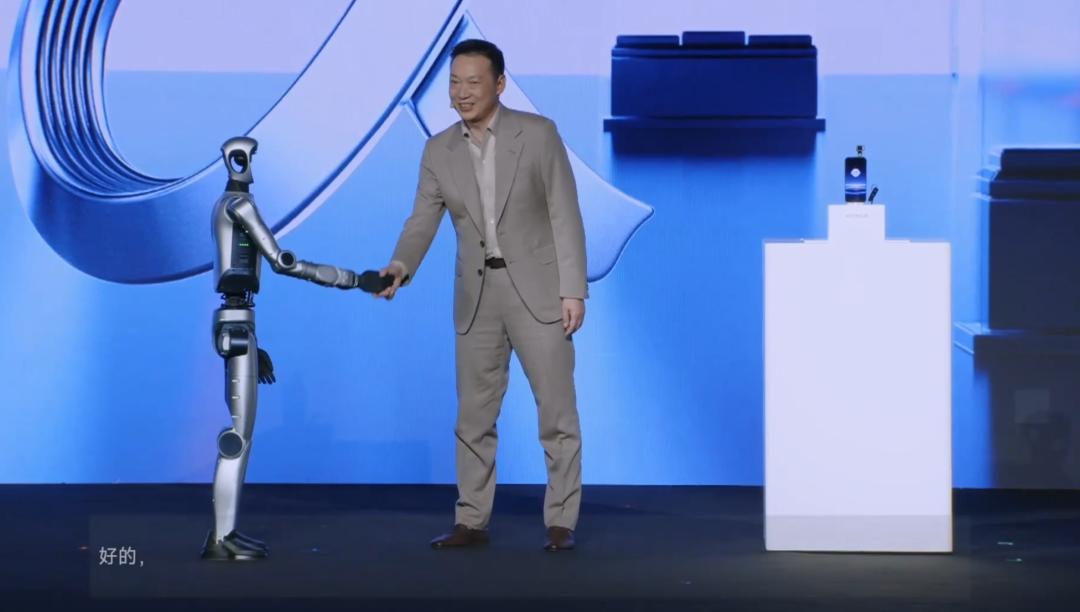
荣耀机器人“太空步”秀巴展,小米机器人上岗汽车工厂,小鹏升级自动驾驶,比亚迪颠覆技术,谁会走得更远?
3 6 Ke· 2026-03-03 09:59
Core Viewpoint - The technology industry is increasingly characterized by cross-industry collaboration, particularly in the robotics sector, where major players from various fields are entering the market, driven by advancements in AI and robotics technology [2][4]. Group 1: Robotics Market Trends - The robotics market is expected to see significant growth, with companies like Yushu Technology, ZhiYuan Robotics, and others becoming key players following their successful launches in 2025 [2]. - The 2026 Spring Festival Gala featured performances incorporating robots, further boosting interest and investment in the robotics market [2]. - Industry leaders from various sectors, including mobile, automotive, and internet, are predicted to join the robotics market, indicating a competitive landscape [2][4]. Group 2: Company Innovations - Honor launched its humanoid robot, marking its entry into the consumer humanoid robotics market, and aims to integrate smartphone technology with robotics for enhanced user experience [4][6]. - Xiaomi has begun deploying its humanoid robots in automotive manufacturing, showcasing practical applications of robotics in production environments [10][15]. - Xiaopeng Motors announced the upcoming release of its second-generation VLA model, aimed at achieving fully autonomous driving within the next 1-3 years, with plans for global testing and deployment [18][20]. Group 3: Upcoming Developments - BYD is set to unveil a "disruptive technology" on March 5, 2026, with expectations that it may involve advancements in battery technology or smart driving [21]. - Predictions suggest that BYD may also introduce new robotics products based on its electric vehicle technology [24].



阿里下场造眼镜:千问的生意还好做吗?
创业邦· 2026-03-03 05:07
Core Viewpoint - Alibaba's launch of the Qianwen AI glasses marks a strategic move in the AI hardware sector, aiming to integrate its ecosystem and establish a foothold in the consumer AI application market [2][5][10]. Product Overview - The Qianwen AI glasses are a rebranding of the previously launched Quark AI glasses, with the same core development team and similar hardware specifications [2][5]. - Key features include dual flagship chips, a five-microphone array, bone conduction technology, and the ability to record 3K video, with a weight of approximately 40g [7][9]. Strategic Intent - The integration of the Qianwen app with the glasses aims to create a seamless user experience, allowing functionalities like food delivery and hotel booking to be accessed directly through the device [5][9]. - The rebranding to Qianwen signifies a shift from a search-centric identity to a more comprehensive AI assistant role, enhancing Alibaba's presence in the global AI hardware market [11][10]. Market Positioning - The Qianwen AI glasses are positioned as a flagship product in Alibaba's consumer hardware strategy, with plans for international expansion by 2026 [11][10]. - The glasses have already achieved significant sales, with the Quark AI glasses ranking first in Tmall's XR device sales and selling over 8,000 units within 90 days [13]. Competitive Landscape - The entry of major players like Alibaba complicates the relationship between established AI glasses startups, as they become both collaborators and competitors [6][17]. - The market for AI glasses is still in its infancy, with significant growth potential, as IDC predicts global shipments will exceed 23.7 million units by 2026 [15]. Industry Dynamics - The current AI glasses market emphasizes the importance of AI capabilities over hardware specifications, with many startups lacking the necessary AI development resources [17][21]. - The competition landscape is evolving, with the potential for collaboration and competition coexisting, as startups may seek alternative partnerships to mitigate risks associated with working with direct competitors [21][22].


股价大涨超17%!MiniMax首份财报“惊艳”华尔街:告别盲目烧钱!以低研发成本换取131%高增长,盈利能力超预期!
美股IPO· 2026-03-03 03:41
3月2日,摩根大通和高盛双双发布研报,对中国AI大模型公司MiniMax2025年第四季度及全年财报进行了解读。摩根大通写道: 我们没有看到任何特别不利的数据。 | 农. 1: MINIMax 业绩四视 | | | | | | | | | --- | --- | --- | --- | --- | --- | --- | --- | | 年底截至 12月 31 日 | | | 4Q25 | | | 4Q24A | 同比 | | 百万美元 | 实际 | 摩根大通预测 | 差幅 | 市场一致预期 | 差幅 | | | | 净收入 | 26 | 19 | 32% | 18 | 43% | 11 | 131% | | Al 原生产品 | 15 | 12 | 24% | | | 8 | 82% | | 开放平台及其他企业服务 | 11 | 7 | 45% | | | 3 | 278% | | 毛利润 | 8 | 3 | 144% | 2 | 272% | 3 | 136% | | 销售与营销费用 | (13) | (10) | 25% | | | (34) | -63% | | 研发费用 | (72) | (107) ...

智谱-结构性改善的全球AI大模型领导者
2026-03-01 17:21
Summary of the Conference Call Transcript Company Overview - **Company**: Knowledge Atlas Technology JSC Ltd (智谱) - **Ticker**: 2513.HK - **Industry**: AI Foundation Models - **Market Position**: A global leader in AI foundation models with a strong academic foundation from Tsinghua University [1][2][11] Key Insights Revenue Growth Projections - Expected revenue growth from **RMB 769 million** in 2025 to **RMB 4.2 billion** in 2027, representing a **5-6x increase** [2][9] - Anticipated revenue of **RMB 30 billion** by 2030 [2][9] Business Model and Market Dynamics - The company has a **high local deployment revenue** ratio of **85%** in the first half of 2025, with a shift towards cloud deployment expected to increase its share to **66% by 2027** and over **80% by 2030** [2][9] - The latest model, **GLM 5**, shows improvements in programming and agent capabilities, with a **60% increase in pricing** compared to previous models [2][9] Competitive Landscape - The AI foundation model market is highly competitive, with major players like OpenAI and Google dominating [12] - The company faces geopolitical risks and supply chain vulnerabilities, particularly due to reliance on high-performance GPUs [12] Financial Metrics and Valuation - Target price set at **HKD 560**, corresponding to a **53x price-to-sales ratio** for 2027 [3][19] - Cash flow discount model assumptions include a **15% weighted average cost of capital** and a **3% perpetual growth rate** [3][19] Risks and Challenges - **Geopolitical Risks**: Limited expansion in the U.S. market due to being on the Entity List [2][12] - **Supply Chain Risks**: High dependency on a few suppliers for GPUs, with over **50% of procurement** from the top five suppliers [12] - **Market Competition**: Intense competition may erode pricing power if the company fails to maintain performance improvements [12] - **Financial Visibility**: Ongoing net losses and high cash burn raise concerns about profitability and revenue predictability [12] Additional Insights - The company is positioned at the beginning of a long-term expansion cycle in the AI foundation model economy, projected to grow at a **63.5% CAGR** from 2024 to 2030, exceeding **RMB 101 billion** [12] - The company has established a strong research collaboration with Tsinghua University, ensuring a continuous influx of top AI research talent [12] Conclusion Knowledge Atlas Technology JSC Ltd is poised for significant growth in the AI foundation model sector, driven by innovative product offerings and a favorable market environment. However, it must navigate geopolitical challenges and intense competition to realize its growth potential.
MINIMAX-WP:MiniMax 2.5让运行复杂 Agent 在经济上可行,Expert 功能沉淀具体领域 SOP-20260301
Guoxin Securities· 2026-03-01 00:45
Investment Rating - The investment rating for the company is "Outperform the Market" (maintained) [1]. Core Insights - MiniMax 2.5 has been released, making the operation of complex agents economically viable. The new Expert feature allows users to inject their skills and knowledge into agents, creating specific Standard Operating Procedures (SOPs) [2]. - MiniMax 2.5 shows excellent performance in handling complex tasks economically, with a 37% increase in task completion speed compared to the previous version, M2.1. The cost of running agents is significantly lower than competitors, with a cost of $1 for one hour of continuous operation at 100 tokens per second [3][4]. - The internal implementation of MiniMax 2.5 has led to 30% of overall tasks being autonomously completed by the model, with 80% of new code submissions generated by M2.5 in programming scenarios [4]. - The Expert feature has seen over 16,000 expert agents created by users, covering various professional fields, and future iterations will introduce pricing and revenue-sharing mechanisms for creators [5]. Financial Projections - Revenue projections for 2025-2027 are adjusted to $70 million, $208 million, and $514 million, respectively, with a slight decrease in 2025 expectations but an increase for 2026 and 2027 [7]. - The adjusted net profit estimates for the same period are projected at -$30 million, -$35 million, and -$31 million, with minor adjustments [7]. - The company is expected to maintain a strong growth trajectory, particularly in overseas markets, where 73% of revenue is derived [6].
从学华为到学 AI,复盘理想的三年管理实验
晚点LatePost· 2026-02-28 08:32
Core Viewpoint - The article discusses the challenges faced by Li Auto as it transitions from a "Huawei-style" management approach back to a more flexible and founder-driven model, emphasizing the importance of product innovation and brand identity over rigid processes [4][41]. Group 1: Management Transition - Li Auto's senior vice president of sales and service, Zou Liangjun, left the company in mid-2025, prompting a review of declining sales and a shift away from Huawei-inspired practices [4][5]. - The company acknowledged that high incentives and commissions led to a loss of focus on its core values, resulting in a decision to revert to a more flexible target management system [4][5]. - The departure of several Huawei-background executives marked a significant shift in Li Auto's organizational structure, moving away from a rigid performance commitment model [5][6]. Group 2: Sales Performance and Challenges - Li Auto's annual sales have stagnated around 400,000 units, significantly lower than the target of over 1 million units for safety in the automotive industry [5][6]. - The company faced increased competition from rivals like NIO, which surpassed Li Auto in deliveries for five consecutive months, leading to a nearly 20% year-on-year decline in deliveries by the end of 2022 [5][6]. - The introduction of new models, such as the i8 and i6, has been met with production and delivery challenges, including battery capacity constraints [5][6]. Group 3: Organizational Structure and Strategy - Li Auto's sales and service group underwent a restructuring, moving from a direct report to the CEO to a secondary department reporting to the president, indicating a shift in management focus [6][10]. - The establishment of a Go-to-Market (GTM) department aimed to streamline product launches and ensure alignment between product development and sales strategies [13][24]. - The company initially adopted a matrix organizational structure to enhance cross-department collaboration but later reverted to a more traditional model following leadership changes [28][19]. Group 4: Learning from Competitors - Li Auto's management has drawn inspiration from various tech giants, including Apple and Google, in addition to Huawei, to build a robust organizational capability [5][4]. - The company has recognized the need for a balance between structured processes and the flexibility required for product innovation, especially in a competitive market [41][36]. - The shift towards AI and a "founder model" reflects a desire to enhance decision-making efficiency and foster innovation within the company [37][39]. Group 5: Future Directions - Li Auto plans to implement AI tools to improve operational efficiency and decision-making processes, marking a significant shift in its strategic approach [37][39]. - The company aims to cultivate a culture of innovation while maintaining a focus on product quality and brand identity, moving away from overly rigid management practices [41][36]. - The management acknowledges that there is no perfect management methodology, emphasizing the importance of making correct judgments and solving engineering challenges to build a unique brand [41][41].


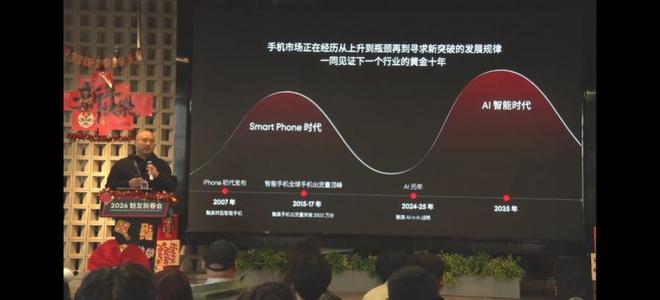
魅族手机急刹:“偏科生”第四次走到十字路口
2 1 Shi Ji Jing Ji Bao Dao· 2026-02-28 03:42
Core Viewpoint - Meizu Technology announced the suspension of domestic smartphone hardware projects and will focus on third-party hardware partnerships while continuing its overseas mobile business and AI products [1][2][15] Group 1: Company Strategy and Changes - Meizu will pause the development of new domestic smartphone hardware to concentrate resources on its Flyme operating system and AI initiatives [1][15] - The company aims to implement a global strategy with a target of achieving 50% of sales from overseas markets by 2025 [2][25] - Meizu's management has undergone frequent changes since its strategic investment by Geely Group, impacting its operational stability [13][14] Group 2: Historical Context and Market Position - Meizu was an early player in the smartphone market, launching the M8 before the iPhone, and gained recognition for its Flyme OS [3][6] - The company faced significant competition from Xiaomi and Huawei, leading to a decline in its market presence [6][9] - Despite a peak in sales during 2015-2017, Meizu struggled to maintain its competitive edge and faced legal challenges from Qualcomm [11][12] Group 3: Product Development and Future Plans - The planned launch of the Meizu 22 Air was canceled due to rising memory costs, with a focus now on the upcoming Meizu 23 [19][21] - Meizu is exploring AI-native hardware products, including a new device called Meizu 22 Next, which aims to integrate AI capabilities [21][23] - The company is shifting its product line to include a broader range of price points, targeting the mid-range market [17][18]
未知机构:广发计算机刘雪峰团队星环科技68803125年业绩快报点评25年营-20260228
未知机构· 2026-02-28 02:40
Summary of Conference Call Notes Company Overview - **Company**: 星环科技 (Xinghuan Technology) - **Stock Code**: 688031 - **Industry**: AI and Data Software Key Points from the Conference Call Financial Performance - **2025 Annual Revenue**: Expected to reach 450 million yuan, representing a year-on-year growth of 20.5% [1] - **Net Profit**: Projected at -250 million yuan, an improvement from -340 million yuan in 2024 [1] - **Q4 2025 Revenue**: Anticipated to be 220 million yuan, with a year-on-year growth rate of 37.4%, significantly higher than the 7.4% growth in the first three quarters of 2025 [1] Product Demand and Market Trends - **AI Software Demand**: The acceleration in Q4 revenue growth reflects strong demand for the company's AI foundational software [1] - **Key Products**: The company's big data product TDH and AI tool software SophonLLMOps are essential for enterprise digital transformation [1] Technological Advancements - **GPU-Native Cognitive Database**: Effectively meets the data processing needs of enterprise-level AI applications, supporting key-value, vector, and graph structure data [2] - **Performance Optimization**: The cognitive database has been optimized for NVIDIA's CUDA platform, resulting in significant performance improvements [2] - **Market Potential**: The company is well-positioned to capitalize on the penetration of AI large models in sectors such as finance, energy, manufacturing, and transportation [2] Financial Projections and Investment Recommendations - **Revenue Forecast**: Expected revenues for 2025, 2026, and 2027 are projected at 450 million yuan, 520 million yuan, and 600 million yuan respectively [2] - **Net Profit Forecast**: Expected net profits for the same years are projected at -250 million yuan, -110 million yuan, and -70 million yuan respectively [2] - **Comparable Companies**: MongoDB, Snowflake, and Elastic are selected as comparable companies for valuation purposes [2] - **Valuation**: Given the scarcity of A-share big data companies and the growth prospects of AI software tools, a 50x PS valuation for 2026 is recommended, leading to a target price of 214.42 yuan per share, maintaining a "Buy" rating [2]

香港交易所(00388):港港市场景气延续,盈利持续高增
Guoxin Securities· 2026-02-28 02:00
Investment Rating - The investment rating for the company is "Outperform the Market" [6][24]. Core Views - The company is expected to achieve significant revenue growth driven by the active trading environment in the Hong Kong market, with projected revenue of HKD 29.16 billion in 2025, representing a year-on-year increase of 30.3% [1][8]. - The net profit attributable to shareholders is forecasted to reach HKD 17.75 billion in 2025, reflecting a 36.0% year-on-year growth, supported by a substantial increase in daily trading volume [1][8]. - The company's EBITDA margin has reached a historical high of 78.2%, and the annualized return on equity (ROE) is projected to be 31.7%, indicating strong operational efficiency and profitability [1][8]. Revenue and Profit Structure - The primary sources of revenue are trading fees and transaction system usage fees, which together accounted for 73.2% of total revenue in 2025 [2][8]. - The average daily turnover (ADT) in the cash market is expected to be HKD 2.315 trillion in 2025, a significant increase of 92.9% year-on-year, driven mainly by southbound capital inflows [2][13]. - Southbound trading accounted for 26.2% of the overall daily turnover in the Hong Kong stock market, highlighting its importance in driving market activity [2][13]. Strategic Initiatives - The company is focusing on deepening connectivity with mainland markets, optimizing and expanding the scope of the Stock Connect program, and exploring innovative business opportunities such as data connectivity [3][24]. - Efforts to enhance market vitality include reforms in listing rules to attract high-quality assets and diverse investors [3][24]. - The company is also investing in technology to upgrade trading and settlement platforms, which will support future business expansion [3][24]. Financial Forecasts - Revenue is projected to grow from HKD 22.37 billion in 2024 to HKD 37.60 billion by 2028, with a compound annual growth rate (CAGR) of approximately 9.6% [4][32]. - Net profit is expected to increase from HKD 13.05 billion in 2024 to HKD 23.44 billion by 2028, reflecting a strong growth trajectory [4][32]. - The company’s PE ratio is forecasted to decrease from 40.4 in 2024 to 22.5 by 2028, indicating an improving valuation as earnings grow [4][32].