
AR眼镜

Search documents
巨头血拼AI眼镜:苹果的野心与Meta的护城河
2 1 Shi Ji Jing Ji Bao Dao· 2025-07-02 02:38
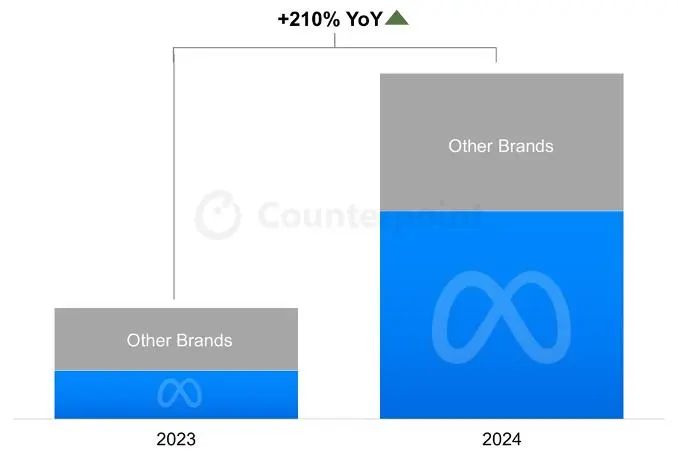
Group 1 - Apple is developing at least seven types of head-mounted devices, with the first product expected to be smart glasses similar to Ray-Ban, projected to ship 3-5 million units by 2027 [1][2] - Apple will not launch new head-mounted devices in 2026, but multiple new products are anticipated starting in 2027, indicating a shift in focus towards smart glasses [1][2] - The AI glasses market is becoming increasingly competitive, with major players like Apple, Samsung, and Google racing to establish a presence against Meta, which currently dominates the market [1][3] Group 2 - Among the seven smart glasses being developed by Apple, three belong to the Vision series, which includes lighter and more affordable XR headsets, while four are smart glasses that may replace some TWS and smartphone camera functions [2] - The global shipment of smart glasses is expected to exceed 10 million units by 2027, with Apple focusing on self-developed core chips for these devices [3][2] - Meta has released the Oakley Meta, targeting the vertical sports market, with significant improvements in battery life and functionality, indicating a strategic move towards specialized applications [6][7] Group 3 - Meta's aggressive investment strategy aims to dominate the smart glasses market, with plans to release a high-end product named "Hypernova" in 2025, priced over $1,000 [7][9] - Meta's AI smart glasses sales surged by 216% year-on-year in Q1 2025, driven by the popularity of Ray-Ban Meta smart glasses, which accounted for a significant portion of the market [7][9] - Google is also entering the smart glasses market by collaborating with Samsung to launch an operating system for smart glasses, indicating a different approach compared to Meta's self-contained strategy [11][12] Group 4 - The domestic market is experiencing a "hundred glasses war," with emerging manufacturers facing challenges related to supply chain management and product quality [13][14] - The competition involves internet companies, smartphone manufacturers, and startups, each leveraging their unique advantages in software, hardware, and ecosystem development [14] - The success of companies in this competitive landscape will depend on their ability to integrate product design, software optimization, and systematic capabilities [14]


难怪罗永浩泼冷水?这个行业超40%“PPT产品”正透支用户信任
3 6 Ke· 2025-07-01 11:19
Core Insights - The smart glasses industry is facing significant delivery challenges, with multiple companies issuing apologies for delays and lack of transparency in communication [2][9][15] - Despite the market's vibrancy, with 56 new smart glasses launched in 2024, over 40% of products showcased have not been made available for purchase, leading to a perception of them as "concept products" [3][4][9] Industry Overview - The smart glasses market has seen a surge in new product launches, with 56 models introduced in 2024 alone, surpassing the total from the previous year [3][4] - Major players in the market include both startups and established tech companies, such as XREAL, Rokid, and Xiaomi, indicating a diverse competitive landscape [4][5] Product Launch Challenges - Companies like Yingmu Technology and Shanjing Technology have faced repeated delays in product deliveries, leading to customer dissatisfaction and refund incidents [2][9] - A significant number of products, approximately 25, remain unavailable for purchase despite being announced, highlighting supply chain constraints [9][10] Sales Performance - Among the launched products, 31 are currently available for purchase, with brands like XREAL and Xiaomi performing particularly well in sales [11][12] - Xiaomi's AI glasses quickly became a top seller on platforms like JD.com, indicating strong consumer interest despite the overall market challenges [12][14] Market Dynamics - The industry is characterized by rapid product introductions, with 15 products claiming to be "first in the world," raising concerns about potential marketing gimmicks [15][16] - The smart glasses sector is compared to the smart speaker market, which faced a decline due to lack of innovation and consumer interest, suggesting a cautionary tale for smart glasses [17][18] Future Outlook - The smart glasses industry must focus on overcoming technical challenges and ensuring reliable product availability to build consumer trust [18][19] - There is a need for companies to prioritize functional simplicity and user experience over excessive features to avoid the pitfalls seen in other tech markets [19][20]

特朗普称彻底摧毁伊朗关键铀浓缩设施|首席资讯日报
首席商业评论· 2025-06-23 04:29
Group 1 - Vipshop's Vice President Feng Jialu is under investigation for corruption, with the company maintaining a zero-tolerance policy towards such behavior, stating that business operations remain normal [1] - Jilin Province aims to accelerate the development of the ice and snow equipment industry, targeting an output value exceeding 5 billion yuan by 2030 [2] - The satellite communication technology is becoming a focal point in the mobile communication sector, with expectations of revolutionary changes in the industry over the next decade [4] Group 2 - Amazon has exercised an option to acquire approximately 3.95% of Valu's shares, with the transaction set to be executed at a price of 6.041 Egyptian pounds per share [7] - In 2024, the per capita disposable income of urban residents in Yiwu reached 97,170 yuan, surpassing that of major first-tier cities [8] - The establishment of the Greater Bay Area Comprehensive National Science Center Alliance aims to enhance innovation resource sharing and collaboration between Shenzhen and Dongguan [10] Group 3 - Temu has opened an office in Turkey and plans to establish a logistics center in Istanbul to provide next-day delivery services, indicating a move towards localized operations [11]

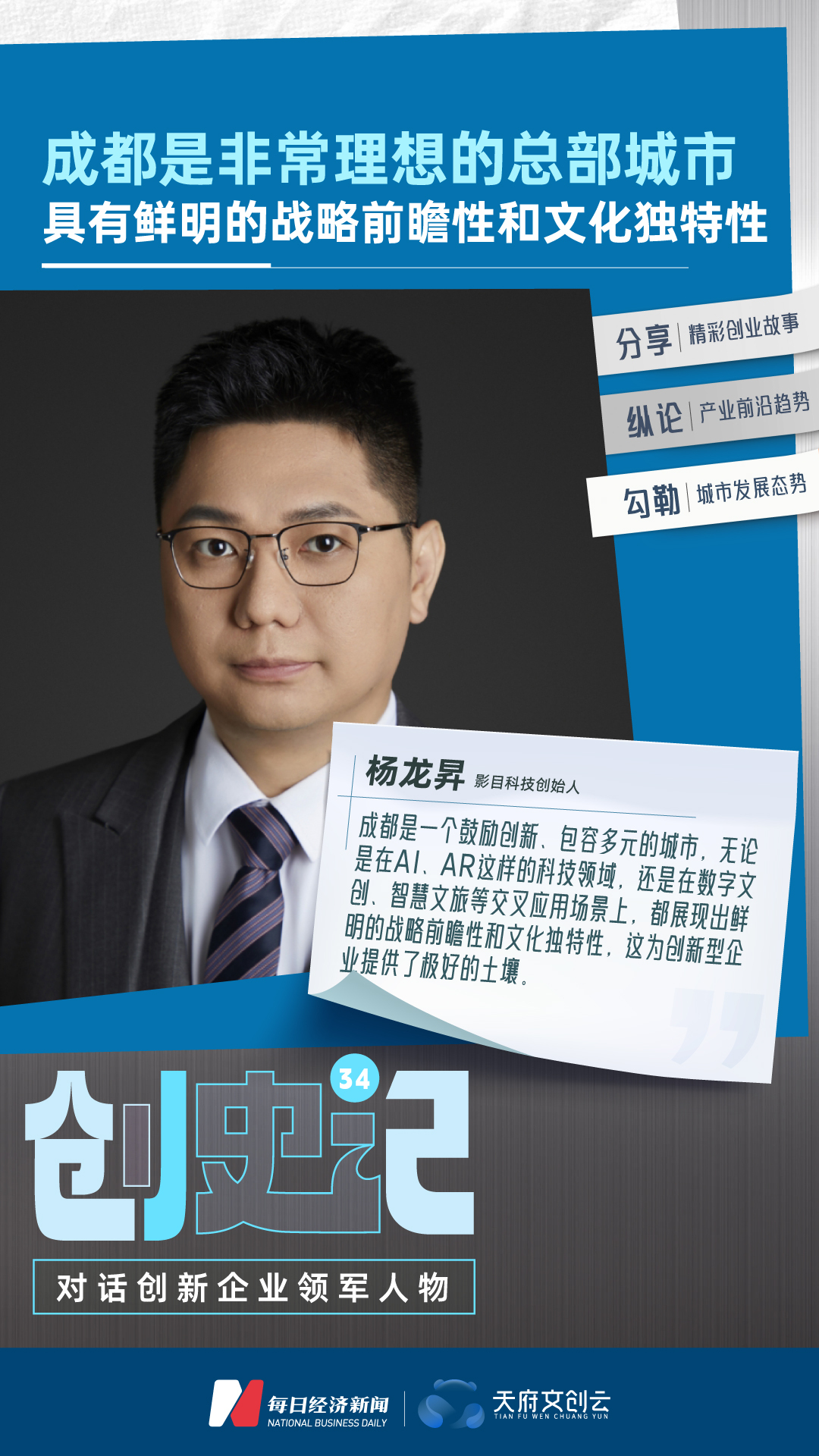
影目科技创始人杨龙昇: 成都是非常理想的总部城市,具有鲜明的战略前瞻性和文化独特性
Mei Ri Jing Ji Xin Wen· 2025-06-19 13:10
Core Insights - The global smart glasses shipment is expected to reach 12.8 million units by 2025, representing a 26% year-on-year growth, with Yingmu Technology leading the industry in Chengdu, aiming to create a 100 billion-level industrial cluster [1][2] - Chengdu is recognized as a vibrant city for innovation and entrepreneurship, with significant achievements in technology and a supportive government environment for high-tech enterprises [1][2] Industry Overview - The AR glasses market is transitioning from an introduction phase to a period of rapid growth, with increasing participation from major tech companies like Google, Huawei, Xiaomi, and Lenovo [6] - The user base for AR glasses is shifting from niche tech enthusiasts to mainstream consumers, as products become more practical and lightweight [6][10] - Key components of the AR glasses supply chain, such as optical displays and SoC chips, are improving, but there is still room for enhancement in cost control and user experience [7][10] Product Development - Yingmu Technology's INMO GO2, an AI translation glasses, has gained significant traction in the consumer market, demonstrating practical applications in various scenarios [8][10] - The upcoming INMO AIR3 aims to provide an integrated AR experience with advanced features for both work and entertainment, showcasing the potential for full-scene wearability [8][10] Challenges and Opportunities - The AR glasses industry faces challenges in ecosystem maturity, including the lack of unified standards and the need for user education on practical applications [11][12] - The industry is characterized by a long-term growth trajectory, requiring sustained investment and collaboration to establish a robust user base and ecosystem [12] Recommendations for Chengdu - To enhance the development of the smart hardware industry, Chengdu should focus on strengthening its supply chain, particularly in core components like optical modules and low-power SoCs [16] - Encouraging collaboration between leading enterprises and local startups can help create real-world application scenarios for AR glasses, driving product iteration and market adoption [16][17] - Promoting a more international and youthful innovation ecosystem can position Chengdu as a model city for integrating technology with lifestyle [17] Future Plans - Yingmu Technology plans to deepen its R&D investments in AI and AR in Chengdu, establish a smart glasses production line, and create experiential stores to explore next-generation applications [20] - The company aims to leverage Chengdu's technological foundation and policy support to build a leading AI+AR industry ecosystem in China, targeting a 100 billion-level industrial cluster [20]
对标苹果智能眼镜?Meta押注超轻薄头显
Jing Ji Guan Cha Wang· 2025-06-05 07:16
Group 1 - Meta has officially canceled the upgrade projects for its VR product Quest 4 and is shifting focus to the development of a lightweight open headset called "Puffin," aiming for a 2026 release [1][2] - The "Puffin" headset will weigh less than 110 grams and feature a split architecture, with core hardware externalized to a pocket-sized device, significantly reducing head burden [2][4] - Meta's Reality Labs division has seen a decline in revenue, with the initial success of Quest 3S not sustaining in subsequent sales, while Ray-Ban Meta smart glasses remain a highlight [2][7] Group 2 - Apple's first smart glasses are expected to feature a custom processor based on the Apple Watch chip, focusing on energy efficiency and multi-camera visual recognition capabilities [3][4] - Both Meta and Apple view their upcoming smart glasses as "transitional products," aiming to capture user attention through lightweight design and AI functionalities, paving the way for future AR glasses [4][5] - The competition between Meta and Apple is not only about hardware technology but also about ecosystem advantages, with Meta leveraging its social user base and AI advertising, while Apple relies on its existing device ecosystem [7]
【太平洋科技-每日观点&资讯】(2025-06-03)
远峰电子· 2025-06-02 09:23
Market Overview - The main board saw significant gains with notable stocks such as Yuyin Co. (+10.07%), Times Publishing (+10.02%), and Hengbao Co. (+10.00%) leading the charge [1] - The ChiNext board also performed well, highlighted by Xiongdi Technology (+13.22%) and Shangluo Electronics (+12.74%) [1] - The Sci-Tech Innovation board was led by Lais Information (+4.55%) and Gai Lun Electronics (+4.25%) [1] - The SW Education Publishing sector showed a slight increase of 0.64% [1] Domestic News - TSMC's subsidiary, Caiyu, is aggressively developing super-surface technology to enter the AR glasses market, aiming to expand its consumer product offerings and explore silicon photonics opportunities [1] - Unisoc launched a fully domestically produced enterprise-level PCIe 5.0 SSD, the Unisoc Flash E5200, featuring domestic main control chips and 3D TLC storage particles [1] - UMC announced its collaboration with Intel on a 12nm process, which is a key development plan expected to achieve mass production by 2027 [1] - ASE introduced a new chip-on-wafer bridge technology utilizing TSV to enhance I/O density and thermal performance, addressing increasing bandwidth demands [1] Company Announcements - Kangxi Communication reported a reduction in shareholding by a major shareholder, Pan Bin, who decreased his stake to below 5% by selling 2,293,073 shares [3] - Airong Software announced a cash dividend distribution of 1.50 yuan per 10 shares, totaling 31,332,495 yuan [3] - Huashi Technology received five invention patents for its independently developed products, with a patent term of 20 years [3] - Runze Technology disclosed a reduction in shareholding by major shareholders, who sold 2,457,300 shares, representing 0.1427% of the total share capital [3] Overseas News - New思科技 reported receiving a letter from the U.S. Department of Commerce regarding new export restrictions to China, prohibiting sales and access to certain services [4] - DRAMeXchange reported a significant increase in the average trading price of PC DRAM products, which rose by 27.27% in May [4] - TrendForce indicated that NAND Flash suppliers faced a 15% decline in average selling prices in Q1 2025, with total revenue for the top five brands dropping nearly 24% [4] - AMD plans to launch a new AI chip tailored for the Chinese market, based on the RDNA4 architecture, following Nvidia's similar move [4]

雷鸟发布光波导方案X3ProAR眼镜,融合AI多模态大模型
Jianghai Securities· 2025-05-30 12:55
Investment Rating - The industry investment rating is maintained at "Overweight" [1] Core Insights - The report highlights the increasing importance of domestic GPU chip procurement supported by Beijing, emphasizing the significance of domestic substitution for AI chips [3] - The launch of multiple AI glasses is noted, with a rapid market growth rate anticipated [3] - The report indicates that the global top ten foundry output value is expected to reach a record high in Q4 2024, driven by strong demand for advanced processes [3] - The slowing of Moore's Law is leading to increased demand for heat dissipation solutions, with graphene heat dissipation expected to become a superior solution [3] - NAND price increases announced by SanDisk are expected to drive the storage industry's upward trend [3] Summary by Sections Recent Industry Performance - Over the past 12 months, the industry has shown a relative return of 26.37% compared to the CSI 300 index, with an absolute return of 33.15% [2] Key Events - The launch of the RayNeo X3 Pro AR glasses on May 27, 2025, is a significant event, featuring advanced specifications such as a Qualcomm Snapdragon AR1 platform and a display capable of 16.7 million colors [5] - CounterPoint forecasts a 42% year-on-year growth in AR glasses shipments for 2025, marking it as the fastest-growing segment [5] - The introduction of a 12-megapixel AI glasses application CMOS image sensor by SmartSens is also highlighted, showcasing advancements in lightweight and low-power technology [5] Investment Recommendations - The report suggests focusing on companies within the AR glasses supply chain, including GoerTek, Luxshare Precision, Yida Information, Crystal Optoelectronics, and SmartSens, due to the anticipated acceleration in AR glasses development driven by optical technology advancements and multimodal AI integration [5]
雷鸟创新甩出AR眼镜王炸
Hua Er Jie Jian Wen· 2025-05-29 13:18
Core Viewpoint - Thunder Innovation, a leading player in the AR market, has launched several new products including the AI+AR glasses Thunder X3 Pro, aiming to solidify its position in the competitive landscape of AR technology [2][7]. Product Launch - The flagship product, Thunder X3 Pro, is priced starting at 8999 yuan, making it the most expensive AR glasses from Thunder Innovation to date [2]. - The product features significant advancements in five core technologies: chip, interaction, spatial computing, weight, and optical display [3]. Technological Advancements - Thunder X3 Pro is powered by the first-generation Snapdragon AR1 platform, which reduces power consumption while enhancing AI capabilities and multimedia processing [3]. - It incorporates the smallest mass-producible full-color Micro-LED optical engine, achieving a 43-inch full-color 3D aerial transparent display [3]. Interaction and Spatial Awareness - The device features the Falcon Imaging Plus system, which maintains spatial positioning errors within 0.5%, enhancing its spatial recognition capabilities [4]. - It supports multiple interaction methods, including Apple Watch control, five-dimensional navigation, voice commands, and smartphone integration [4]. Software and Ecosystem - Thunder X3 Pro runs on the RayNeoOS 2.0 system, integrating various functions such as AI translation, spatial navigation, and first-person photography [5]. - The product is the first AR glasses to support visual Live AI interaction, allowing users to receive instant intelligent feedback in various scenarios [5]. Market Position and Strategy - Thunder Innovation holds a dominant position in the AR/AI shooting glasses market, with a 50% market share in Q1 2025, and a 160% year-on-year increase in sales for the Thunder Air series [7]. - The company has partnered with Alibaba Cloud and other firms to explore new applications of AI and AR technology in urban living and smart travel [6]. Industry Growth - The AR glasses market is experiencing rapid growth, with online sales of smart glasses reaching 116,000 units in Q1 2025, a 117% increase year-on-year [9]. - The competitive landscape is still evolving, with significant potential for market expansion as technology continues to advance [10].

雷鸟X3 Pro发布:融合手机与AI应用生态,到手价7649元起
Xin Lang Ke Ji· 2025-05-28 04:45
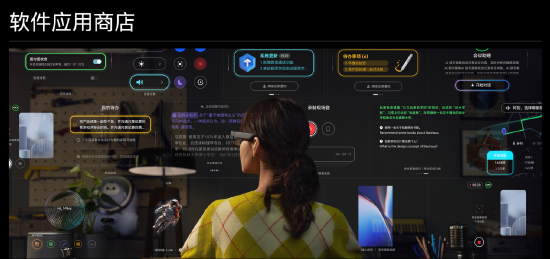
Core Viewpoint - Thunderbird Innovation has launched several new products including the AR glasses Thunderbird X3 Pro, the new pocket TV series Thunderbird Air 3s, and the AI shooting glasses Thunderbird V3 Slim, aiming to expand its product offerings in the AR and multimedia sectors [1][3]. Product Details - The Thunderbird X3 Pro AR glasses are the third generation of color AR glasses, featuring the world's smallest mass-produced full-color Micro-LED light engine and a 43-inch full-color 3D transparent display achieved through a collaboration with Applied Materials [3]. - The X3 Pro includes the Falcon Imaging Plus system for spatial awareness and supports various interaction methods such as Apple Watch control, five-dimensional navigation, voice commands, and mobile integration, all while weighing only 76g [3]. - The device runs on the first-generation Snapdragon AR1 platform, enhancing AI capabilities and multimedia processing [3]. Software and Ecosystem - The X3 Pro is equipped with the new RayNeoOS 2.0 system, which integrates features like AI translation, spatial navigation, AI recording, call transcription, and first-person photography [3]. - Thunderbird Innovation plans to launch an AI Agent application store featuring various AI applications such as DeepSeek, liquor recognition, luxury goods identification, English tutoring, and mock interviews [3][4]. Market Integration - The X3 Pro introduces the RayNeo AR application virtual machine, allowing deep integration with Android and supporting over 30 mainstream apps including Douyin, Bilibili, and Honor of Kings [4]. - Collaborations with Alibaba Cloud, Gaode Map, and Ant Group have been established to explore deep cooperation in areas such as AI and AR glasses models, map navigation, and safety [4]. Pricing Information - The starting price for the Thunderbird X3 Pro is set at 8,999 yuan, with a subsidized price of 7,649 yuan [5]. - The Thunderbird Air 3s series is priced starting at 1,499 yuan (1,274 yuan after subsidy), while the Air 3s Pro starts at 1,599 yuan (1,359 yuan after subsidy) [5]. - The Thunderbird V3 Slim is targeted at users with narrow faces, available in four stylish colors, with a starting price of 1,799 yuan (1,529 yuan after subsidy) [5].
前大厂专家做出全球唯一光学方案,已是Rokid多年供应商|硬氪专访
3 6 Ke· 2025-05-28 04:43
Group 1 - Rokid, founded by Misa, has been a significant player in the hardware startup scene for 11 years, recently achieving a valuation of $1 billion despite unclear profitability [1][2] - The company has gained attention as part of the "Hangzhou Seven Dragons," alongside other notable tech startups, following a successful presentation where Misa showcased AR+AI glasses [2][3] - The optical supplier for Rokid Glasses, Guangzhou Semiconductor, has developed a unique single-light diffraction waveguide solution that reduces power consumption and costs while maintaining good display quality [3][4] Group 2 - The AI glasses market is currently experiencing rapid growth, with increasing interest from various clients, including both established companies and startups [3][22] - The supply chain for AI glasses is still immature, with significant discrepancies among different suppliers, leading to potential product failures if any component is flawed [3][10] - Guangzhou Semiconductor's technology is considered to be at the forefront, with the potential for Chinese companies to lead the global market in AI and AR optical technologies [4][10] Group 3 - The distinction between AI glasses and previous AR glasses lies in the integration of large models for voice interaction, with AI glasses expected to evolve to include display functionalities [5][6] - Current AI glasses are facing challenges in profitability, with two primary business models emerging: one focusing on hardware sales and the other on content monetization [7][8] - The competitive landscape for AI glasses is intensifying, with many new entrants, but this is seen as beneficial for industry growth [9][20] Group 4 - Guangzhou Semiconductor has developed a unique optical module that allows for a thinner and more efficient design, which is crucial for consumer acceptance [14][17] - The company emphasizes the importance of reducing costs and weight in their products, which is essential for consumer electronics [20][22] - The demand for improved optical performance, safety, and affordability is driving innovation in the AR glasses sector [22][23]