
智能化

Search documents
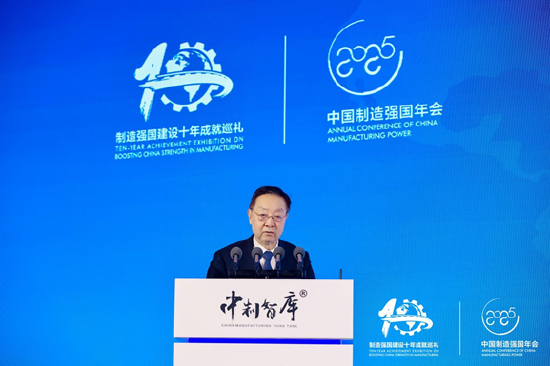
李毅中谈新型工业化实践路径:以“智能化、绿色化、融合化”构建现代化产业体系
Xin Lang Cai Jing· 2025-12-29 03:28
Core Viewpoint - The 10th China Manufacturing Power Conference emphasizes the theme "Entity as the Root, Moving Towards the New" and discusses the importance of advancing industrialization through smart, green, and integrated approaches [1][5]. Group 1: Smart Manufacturing - The concept of "smart manufacturing" involves advancing the application of artificial intelligence (AI) to drive technological breakthroughs and implement the "AI+" initiative, which empowers research and innovation as well as production transformation [3][7]. Group 2: Green Transformation - "Green transformation" focuses on strengthening low-carbon transitions to ensure that the industrial sector meets the carbon peak target by 2030 and steadily progresses towards carbon neutrality [3][7]. Group 3: Integrated Development - The term "integration" refers to the blurring boundaries between secondary and tertiary industries, as well as between manufacturing and services. It highlights the need for multi-modal integration paths, including the fusion of technology and industry, and deep collaboration between academia and industry [3][7]. Group 4: High-End Development - Understanding the connotation of "high-end" is crucial. It involves leveraging technological innovation to optimize and adjust industrial and product structures, phasing out outdated practices while enhancing quality and efficiency to move towards high-end manufacturing [4][8]. - The strategy includes integrating into global value chains, supply chains, and industrial chains, ensuring that the manufacturing sector adapts to global market practices while maintaining stability in the supply chain and employment [4][8].

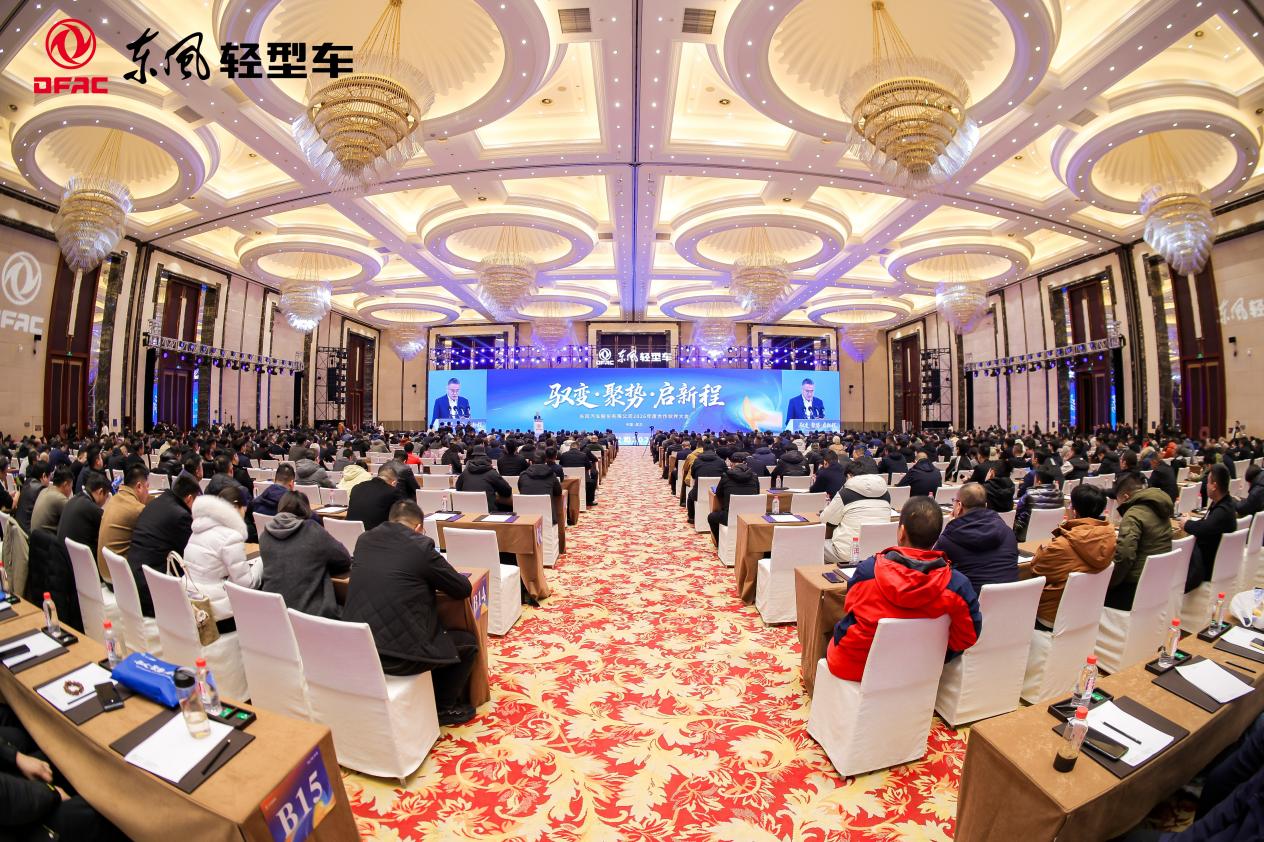
驭变聚势启新程 东风股份驶入绿色与智能发展主航道
Zhong Guo Qi Che Bao Wang· 2025-12-29 03:09
Core Insights - Dongfeng Motor Corporation held its 2026 Partner Conference in Wuhan, summarizing its achievements in 2025 and outlining strategic plans for the 14th Five-Year Plan [1] - The company demonstrated resilience and growth in a challenging automotive market, particularly in the light commercial vehicle (LCV) sector, achieving both sales and market share increases [3][6] Group 1: 2025 Achievements - In 2025, Dongfeng maintained stable sales in a fluctuating market and increased its market share despite fierce competition [3] - The company launched 34 new products across various technologies, including fuel, pure electric, and hybrid models, enhancing its product portfolio [5] - Dongfeng's partnerships expanded, with 105 new partners joining, strengthening its network and collaborative ecosystem [5] Group 2: Marketing and Brand Development - Dongfeng initiated marketing reforms to enhance frontline capabilities and established a brand public relations department to improve brand recognition [5] - The company implemented a service brand strategy called "True Beautiful," focusing on standardized processes and customer satisfaction [5] Group 3: 2026 Strategic Goals - For 2026, Dongfeng set ambitious sales targets and plans to launch over 122 new and upgraded models, emphasizing a shift towards new energy vehicles [7][9] - The company aims to optimize its product structure, particularly in the light truck and small truck segments, with a focus on fuel efficiency and electric models [7][9] Group 4: Future Outlook - Dongfeng anticipates the light commercial vehicle market will shift from scale growth to value competition, with a projected market size of 3.1 million units by 2030 and nearly 50% penetration of new energy vehicles [14] - The company is committed to building a "community of shared interests" with partners, focusing on technological innovation and deep ecological integration to enhance competitiveness [16]

上汽集团:以改革之力书写转型新篇
Zhong Guo Qi Che Bao Wang· 2025-12-29 01:39
Core Insights - The global automotive industry is undergoing a significant transformation centered on intelligence and electrification, driven by a new wave of technological revolution and industrial change, leading to a shift towards high-quality development focused on technology-driven, ecological collaboration, and green low-carbon initiatives [2] - SAIC Motor Corporation aims to deepen reforms by 2025, with a core value of "understanding cars better and understanding you better," establishing a comprehensive development ecosystem that promotes synergy among brand, technology, product, and market [2] Technological Innovation - The core achievement of the reforms is a systematic breakthrough in technological innovation, with SAIC abandoning fragmented R&D models to create a three-dimensional technology framework labeled "Smart Brain," "Robust Body," and "Powerful Heart," investing over 150 billion yuan in electric and intelligent fields, and accumulating nearly 25,000 effective patents [3] - "Smart Brain" focuses on intelligent driving and interactive experience, achieving 300,000 orders for the Robotaxi service and launching various intelligent cockpit applications [4] - "Robust Body" emphasizes safety and control optimization, introducing an integrated intelligent safety system and a second-generation digital chassis that enhances safety performance by over 20% compared to industry standards [4] - "Powerful Heart" targets breakthroughs in power efficiency and driving range, with a hybrid engine achieving a thermal efficiency of 46.3% and a super range system providing a pure electric range of 450 km [4] User-Centric Approach - In a market characterized by stock competition, SAIC integrates the core concept of "understanding cars better and understanding you better" throughout its operations, transitioning from a manufacturer to a user partner [6] - By 2025, SAIC will refresh its brand identity and position itself as a "partner brand with technology and warmth," while also launching initiatives to resonate with users' experiences [6] - Product upgrades are closely aligned with user needs, featuring thoughtful configurations and establishing efficient user feedback mechanisms to drive product iteration [6] Product Matrix and Market Performance - The integration of technological innovation and user demand has led to a surge in SAIC's product matrix, with multiple new models launching successfully by 2025 [7] - The autonomous segment has seen significant success, with the flagship model, the Zhiji LS9, achieving over 5,000 orders in 25 minutes, and the MG4 model accumulating over 60,000 pre-orders [8] - The company has also seen strong performance in the joint venture segment, with models like the SAIC Audi E5 and Buick models achieving rapid order milestones [8] Financial Growth and Market Position - The multi-dimensional collaboration of technology, users, and products has translated into tangible market performance, with SAIC's vehicle sales reaching 4.108 million units in the first 11 months of 2025, a year-on-year increase of 16.4% [9] - Sales of SAIC's self-owned brands reached 2.666 million units, up 25.7%, while new energy vehicle sales grew by 38.8% [9] - The net profit attributable to shareholders reached 2.08 billion yuan, a year-on-year increase of 644.9%, indicating a strong financial position amid industry challenges [9][10]


研判2025!中国膨胀罐行业分类、产业链及市场规模分析:智控革新赋能稳压未来,材料突破拓展高端赛道[图]
Chan Ye Xin Xi Wang· 2025-12-29 01:27
Core Insights - The expansion tank industry in China is projected to reach a market size of approximately 2.179 billion yuan in 2024, reflecting a year-on-year growth of 4.36% [1][6] - The industry is undergoing structural changes driven by technological integration, with a focus on smart solutions and material innovations [1][10] Industry Overview - Expansion tanks are essential industrial devices that regulate system pressure by absorbing volume changes in liquids due to temperature fluctuations or pressure variations [2][4] - The main types of expansion tanks are diaphragm and bladder types [3] Industry Value Chain - The upstream of the expansion tank industry includes raw materials such as carbon steel, stainless steel, rubber, and various components [4] - The downstream applications are diverse, including HVAC systems, water supply, fire protection, and industrial production [4] Market Size - The expansion tank market is expected to grow to approximately 2.179 billion yuan in 2024, with a 4.36% increase from the previous year [1][6] - The integration of AI algorithms and IoT modules is transforming expansion tanks into predictive maintenance smart terminals [1][10] Key Companies - The Chinese expansion tank industry is characterized by a competitive landscape dominated by foreign companies, with local manufacturers like Zhejiang Yuanhua Machinery and Aotu Energy Technology making significant advancements [7][8] - Aotu Energy Technology focuses on energy technology R&D and has developed expansion tank products that meet international standards [7] Industry Development Trends 1. The industry is shifting from traditional construction reliance to deeper application and cross-field expansion, particularly in energy storage and data center cooling systems [9][10] 2. Technological upgrades are focusing on product efficiency and durability, with a trend towards smart integration in expansion tanks [10] 3. The competitive landscape is expected to optimize, with domestic brands gradually moving towards mid-to-high-end markets, supported by increased investment in R&D and quality control [11]

350亿,又一家新势力宣布破产
虎嗅APP· 2025-12-28 14:40
Core Viewpoint - The demise of Qoros Auto serves as a warning for the Chinese automotive industry, highlighting the challenges of transitioning from product development to market success in the rapidly evolving new energy vehicle sector [4][10]. Group 1: Qoros Auto's Decline - Qoros Auto has officially entered bankruptcy proceedings, marking the end of a brand once seen as a benchmark for high-end domestic vehicles in China [6]. - The bankruptcy was initiated by a supplier due to Qoros's long-standing debt issues, with over 1,000 enforcement actions and a total frozen equity amount exceeding 35 billion yuan [6][7]. - The company struggled with high R&D costs and an aggressive pricing strategy that did not resonate with consumers, leading to cumulative losses exceeding 6 billion yuan from 2014 to 2016 [7][8]. Group 2: Industry Implications - Qoros's failure reflects broader systemic issues within the automotive industry, including brand building, market positioning, and technological pathways [10][14]. - The case illustrates that product quality alone is insufficient; establishing brand recognition and consumer trust is a long-term process [10][11]. - Successful brands like Lynk & Co and NIO have differentiated themselves through precise positioning and innovative service models, contrasting with Qoros's approach [11]. Group 3: Strategic Lessons - The trajectory of Qoros emphasizes the importance of strategic consistency and market timing, particularly in a rapidly changing automotive landscape [12]. - The company failed to adapt to the shift towards electric and intelligent vehicles, missing critical opportunities for transformation [12][14]. - Qoros's isolated operational model hindered its ability to leverage supply chain efficiencies and scale, which are crucial in a competitive market [13]. Group 4: Future Industry Trends - The new energy vehicle sector is entering a critical phase where the focus will shift from mere production to delivering value and user experience [16]. - Future differentiation will rely on understanding real-life scenarios and providing tailored solutions rather than just technical specifications [17]. - The industry is moving towards software-defined vehicles, where the value will increasingly come from software capabilities rather than hardware [18]. - Building long-term relationships with customers will become essential, transforming the sales process into a continuous engagement model [19]. - Global expansion will be vital for new players, as domestic markets become saturated, with emerging markets presenting new opportunities [20]. - Sustainable practices are shifting from being optional to essential, as regulatory frameworks increasingly demand low-carbon solutions across the automotive supply chain [20].
周观点 | 云深处启动上市辅导 关注机器人+智能化板块【国联民生汽车 崔琰团队】
汽车琰究· 2025-12-28 08:46
Market Performance - The A-share automotive sector rose by 2.8% from December 22 to December 28, outperforming the CSI 300 index which increased by 1.2% [2] - Within the sector, automotive parts, passenger cars, commercial cargo vehicles, and automotive services saw increases of 4.0%, 2.3%, 0.9%, and 0.3% respectively, while motorcycles and commercial passenger vehicles declined by 1.3% and 2.1% [2] Investment Recommendations - The core investment focus for the month includes companies such as Geely Automobile, Xpeng Motors, BYD, Bertley, Top Group, New Spring, Hu Guang, and Chunfeng Power [3][10] - In the passenger car segment, there is optimism for quality domestic brands accelerating in smart technology and globalization, recommending Geely, Xpeng, BYD, and Xiaomi [12] - For automotive parts, recommendations include smart driving companies like Bertley and Horizon Robotics, as well as companies in the new forces supply chain such as Xingyu and Hu Guang [15] Robotics and Automation - Zhiyuan Robotics is expected to achieve annual revenue exceeding 1 billion yuan, with a projected shipment of 5,000 robots by 2025 [4] - The first batch of L3 autonomous vehicles has been approved for large-scale operation in Chongqing, which is anticipated to drive technological optimization and the practical application of autonomous driving technology [5][11] - The focus on the robotics sector is heightened with the upcoming IPOs of domestic robotics manufacturers, which are expected to catalyze the industry [4][16] Heavy Trucks and Commercial Vehicles - The heavy truck market is experiencing a recovery, with sales in November 2025 reaching approximately 100,000 units, a year-on-year increase of about 46% [26] - The expansion of the vehicle replacement subsidy policy is expected to stimulate demand for new purchases, with average subsidies of 80,000 yuan for scrapping and replacing eligible trucks [26][27] Tire Industry - The tire industry is witnessing a strong performance with high operating rates, particularly in the PCR segment, which stood at 72.05% as of December 26, 2025 [30][48] - Recommendations for tire companies include Sailun and Senqilin, as they are expected to benefit from ongoing globalization and demand recovery [28][30]
广西重塑关键金属产业版图 从“资源大区”迈向“产业强区”
Zhong Guo Xin Wen Wang· 2025-12-28 06:21
Core Viewpoint - The construction of the Nandan Key Metals High-Quality Development Comprehensive Experimental Zone in Guangxi is a significant step towards transforming the region's key metals industry, focusing on high-end, intelligent, green, large-scale, and park-based development [1][5]. Group 1: Industry Transformation - Guangxi is recognized as a key region for critical metals in China, holding significant reserves of nine critical metals, including tin, antimony, and rare earth elements [1][3]. - The region has historically faced challenges due to a fragmented industry structure and environmental pressures, which have hindered high-quality development [1][4]. - A comprehensive action plan has been initiated to address illegal mining and heavy metal pollution, aiming to consolidate mining rights and manage small, scattered enterprises [1][4]. Group 2: Strategic Initiatives - The Nandan Key Metals High-Quality Development Comprehensive Experimental Zone is designated as a pilot and demonstration area for industrial transformation in Guangxi [2]. - A total of 35 key projects related to nine critical metals and other non-ferrous metals have been signed and launched in Guangxi [2]. - The "Nine Chains and Three Clusters" industrial system aims to extend the industrial chains of critical metals and enhance high-value segments such as high-purity materials and advanced alloys [3]. Group 3: Innovation and Green Development - Plans to establish the Guangxi Key Metals Research Institute and high-level laboratories are underway to boost innovation capabilities [4]. - The region is promoting green mining and factory initiatives, focusing on clean production technologies and ecological restoration of historical tailings [4]. - The Nandan zone is prioritized as a key project, with efforts to shut down non-compliant enterprises and accelerate the integration of mining rights [4]. Group 4: Investment and Support - Local authorities are actively engaging with industry giants to attract investment and support for the key metals sector [4]. - Financial systems have introduced specific loans and subsidies to alleviate financing challenges for enterprises in the region [4]. - The overall goal is to transition from a resource-exporting model to a globally influential key metals industry and advanced manufacturing cluster [5].
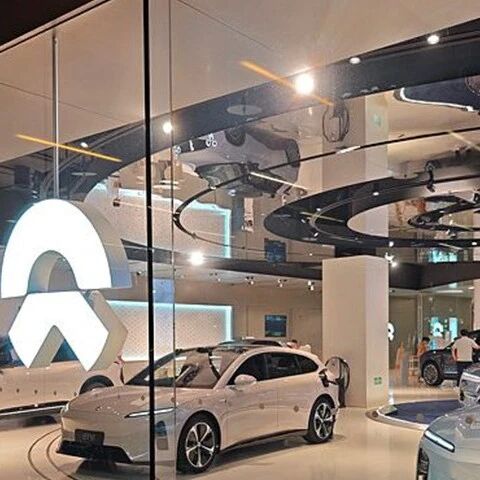
新能源车企,「逃离」商场一楼
36氪· 2025-12-28 03:18
活到最后,才是最大的排面。 以下文章来源于金错刀 ,作者祥燎 金错刀 . 科技商业观察家。爆品战略提出者。 这一次,轮到了 汽车商场店 。 2013年,特斯拉在北京开设第一家体验店,地址选在了很有潮流感的侨福芳草地购物中心,开创了在商场里卖新能源汽车的先河。 文 | 祥燎 编辑 | 张一弛 来源| 金错刀(ID: ijincuodao ) 封面来源 | 视觉中国 又一个特斯拉开的"坏头",快被抛弃了。 作为新能源汽车行业的标杆,特斯拉有不少"创举"被同行模仿,结果后来被车主狠狠吐槽,继而陆续被抛弃或升级。比如取消物理按键,还有夏天晒得头晕 的全景天窗,冬天冻得僵硬的隐形门把手…… 但风向说变就变,在商场里一掷千金的车企越来越少了。 数据显示,2024年以来全国购物中心的新能源汽车门店数量 同比减少37% ,连特斯拉、小鹏等头部品牌也在"撤退"。 投入最狠的,非蔚来莫属。据报道,北京王府井的东方广场店,蔚来付出的年租金高达7000万-8000万元。 后来汽车商场店风靡全国。甚至可以说,判断商场火不火,过去看的是星巴克和麦当劳的分布,现在要看有多少新能源汽车的门店。 车企们为什么集体逃离商场? 特斯拉开的"坏头" ...


研判2025!中国金属表面处理行业发展历程、市场政策、产业链图谱、市场规模、竞争格局及发展趋势分析:行业整体呈现“大市场、小企业”的分散格局[图]
Chan Ye Xin Xi Wang· 2025-12-28 01:01
Core Viewpoint - The metal surface treatment industry is crucial for manufacturing development, closely linked to sectors like automotive, aerospace, and electronics, with significant growth driven by the demand for advanced surface treatment technologies in emerging fields like new energy vehicles and 5G communication [1][10]. Overview - Metal surface treatment involves altering the structure, morphology, properties, and performance of metal surfaces through physical and chemical methods to enhance surface quality and meet specific functional requirements [2][4]. Development History - The industry has evolved through five key stages: initial exploration (1949-1978), market-oriented development (1978-2000), scale development (2000-2012), technological and green transformation (2012-2020), and high-quality development (2020-present), transitioning from imitation to independent innovation and global competition [4][6]. Current Status - The market size of China's metal surface treatment industry is projected to reach 794.96 billion yuan in 2024, with a year-on-year growth of 5.3%. The market composition includes electroplating (21.2%), physical treatment (26.5%), chemical treatment (23.0%), and heat treatment (11.5%) [1][10]. Industry Chain - The upstream of the industry includes electroplating chemicals, coating materials, and related equipment, while the downstream encompasses automotive, machinery, aerospace, and electronics sectors, with automotive manufacturing being the primary demand area [8][10]. Competitive Landscape - The industry is characterized by a fragmented market with many small enterprises. Over 70% of companies have registered capital under 2 million yuan, while those with over 50 million yuan account for less than 3% [11][12]. Development Trends 1. **Green Transformation**: The industry is moving towards environmentally friendly practices, with a shift from high-pollution processes to low-emission technologies like cyanide-free electroplating and water-based coatings [13][14]. 2. **Intelligent and Digital Integration**: Automation and digital technologies are enhancing production efficiency and product quality, with smart equipment replacing manual operations [14][15]. 3. **High-End and Multifunctional Technology**: The demand from high-end manufacturing is driving advancements in surface treatment technologies, focusing on multi-functional and high-precision applications [15][16]. 4. **Accelerated Domestic Substitution and Global Expansion**: The industry is focusing on reducing reliance on imports by enhancing domestic production capabilities and exploring international markets, particularly in Southeast Asia [16][17].

汽车行业周报:2026 年"两新"政策有望优化延续,带动需求稳步向上-20251227
SINOLINK SECURITIES· 2025-12-27 15:38
Investment Rating - The report suggests a focus on companies such as BYD, Geely Automobile, and others in the automotive sector, as well as companies like Li Auto-W, Xpeng Motors-W, and others in the smart technology and robotics sectors [2]. Core Insights - The Central Economic Work Conference has outlined six key tasks related to the automotive industry, emphasizing domestic demand, innovation, reform, openness, coordinated development, and green transformation, which are expected to stabilize and boost automotive demand [12][13]. - The report highlights that passenger car exports have maintained a year-on-year growth rate of over 20% for six consecutive months, with expectations for double-digit growth in wholesale exports by 2026 due to recovering demand in markets like Russia and the increasing export of new energy vehicles [14]. - The report notes that the smart driving experience is expected to improve significantly with advancements in new architectures and high-performance chips, leading to increased consumer acceptance and sales for leading companies in smart driving technology [17][20]. Industry Data Tracking Market and Sector Performance - The Shanghai and Shenzhen 300 Index increased by 1.95%, while the Shenwan Automotive Index rose by 2.74% [21]. - The top five stocks with the highest gains this week included Chaojie Co. (+41.6%), Longji Machinery (+33.7%), and others, while the top five stocks with the largest declines included Meidong Automotive (-6.5%) and others [28]. Passenger Car Sales Data - In December 2025, the wholesale sales of passenger cars reached 568,000 units, a year-on-year decrease of 9%, while the retail sales were 536,000 units, also down 11% year-on-year [4][32]. - For November 2025, wholesale sales were 2.991 million units, a year-on-year increase of 1.7%, with new energy vehicle wholesale sales at 1.694 million units, up 17.6% year-on-year [5][35]. - The report indicates that the export of passenger cars in November was 594,000 units, reflecting a 50% year-on-year increase, with new energy vehicle exports reaching 273,000 units, up 244.1% year-on-year [51][57]. Industry Dynamics - The report discusses the rapid development of smart technology and robotics, with significant advancements in autonomous driving and AI integration in vehicles, indicating a shift towards a more intelligent automotive market [17][19]. - The report also mentions the increasing focus on new energy vehicles and the expansion of charging infrastructure, which has reached 19.322 million charging points, marking a 52% year-on-year growth [73].




