
新型工业化

Search documents
2025全球工业互联网融合发展交流大会召开
Liao Ning Ri Bao· 2025-09-07 02:25
9月6日,2025全球工业互联网融合发展交流大会在沈阳召开。大会聚焦人工智能与工业互联网融合 发展时代命题,着力打造国际高端交流合作平台,为新型工业化建设注入新动能。 近年来,我省坚持以新型工业化为引领,以数字技术赋能产业升级,持续做好结构调整"三篇大文 章",加快建设4个万亿级产业基地,做强做大22个重点产业集群,打造数字辽宁、智造强省。试点示范 有序推进,两化融合成效显著,创新突破成果丰硕,以智赋能正在重塑辽宁制造业新优势。 会议指出,要全面深化产业协作,依托辽宁雄厚的工业基础,拓展数字技术赋能实体经济的创新实 践;要持续推动数字升级,在培育标杆场景、构建产业大脑、壮大专业服务商等方面形成更多突破,打 造一批数字化车间、智能工厂和先进产业集群,为全球工业互联网发展贡献辽宁方案。要协同优化发展 环境,积极构建政府、企业、智库多方参与的高水平协同机制,因地制宜发展新质生产力,加快建设具 有辽宁特色的现代化产业体系。 副省长单义出席会议并讲话。 ...
深耕工业互联网 开辟发展新赛道
Liao Ning Ri Bao· 2025-09-07 02:25
"网"罗"链"接全球。全球工业互联网大会,"全球"是其站位所在、雄心所属。经过6年的发展,大 会已成为国际级盛会、世界级平台,在促进工业互联网技术交流、产业合作、国际对话等方面发挥着日 益重要的作用。本届大会,来自国内和美国等多个国家的政府领导、院士专家、企业及行业协会代表云 集沈阳,围绕"数启新章智造新质"主题点亮思想火花、凝聚创新共识。立足全球视野,汇聚全球声音, 为全球工业互联网发展贡献中国力量,大会的"全球"二字实至名归。 赋"智"焕"新"升级。当前,人工智能已成为影响未来发展的关键变量,工业互联网迈进规模化应用 新阶段。二者的深度融合、双向赋能,将为推进新型工业化带来前所未有的发展机遇。早在2019首届工 业互联网全球峰会上,国内外专家就把思考的触角深入到工业互联网和人工智能融合的领域。本届大会 的核心命题更加聚焦,就是"人工智能+"。如何加快人工智能在工业互联网中的应用?人工智能怎样更 好赋能千行百业、惠及千家万户、服务千城万村?一个个问号在经验分享中被拉直,各路嘉宾在对话对 接中达成共识。工业互联网联手人工智能技术,让办会之路越走越宽,融合创新前景更加广阔。 相逢初秋,山青海碧。交流合作,力量汇 ...
鲁政委解析“十五五”:产业趋势洞察与行业资产布局新路径
Sou Hu Cai Jing· 2025-09-06 02:11
Core Insights - The "14th Five-Year Plan" period is identified as a critical window for the construction of a new industrialization and modern industrial system in China, with profound changes expected in industrial structure, supply chains, and value chains [1] Group 1: Industrial Structure Adjustment - The industrial structure adjustment will exhibit a "three-track parallel" feature, with emerging and future industries transitioning from cultivation to explosive growth, becoming new engines of economic growth [3] - Traditional industries are accelerating their transformation towards high-end, intelligent, and green development through technological upgrades and model innovations [3] - The deep integration of manufacturing and service industries is giving rise to new service-oriented manufacturing models, promoting the synergy between the real economy and the digital economy [3] Group 2: Industrial Chain Upgrade - The upgrade of the industrial chain focuses on three main directions: enhancing the concentration of leading industries, optimizing the regional division of labor, and strengthening talent strategies [3] - By concentrating on strategic fields such as integrated circuits and biomedicine, China aims to consolidate its leading position in global manufacturing [3] - The transfer of industries from the eastern to the central and western regions is forming a gradient development pattern, supported by dual-driven policies for overseas talent introduction and local talent cultivation [3] Group 3: Supply Chain Restructuring - The restructuring of the supply chain is characterized by a "main and auxiliary chain collaboration" model, where the domestic main chain leverages a complete industrial system and a large domestic market to consolidate cost advantages in traditional industries [3] - The overseas auxiliary chain is being localized in regions such as Southeast Asia and the Middle East to adapt to tariff policies and green standards, enhancing the resilience of the supply chain [3] - This "dual circulation" supply chain adjustment significantly strengthens China's ability to respond to global demand fluctuations [3] Group 4: Asset Allocation Strategies - Asset allocation should focus on three main lines: investing in areas of industrial structure upgrade, particularly in the scaling of emerging industries, intelligent transformation of traditional industries, and integration projects [4] - Regional asset allocation should be centered around leading industries, capturing the synergy between eastern innovation resources and central and western manufacturing bases [4] - Supporting enterprises' global layout through cross-border finance and logistics services will assist main chain companies in building overseas supply chain networks [4]


辽宁石化新型工业化院成立暨辽宁石化和精细化工产业高质量发展大会举行
Liao Ning Ri Bao· 2025-09-06 01:30
Core Viewpoint - The establishment of the Liaoning Petrochemical New Industrialization Institute aims to create a leading comprehensive service platform for the petrochemical industry in China, driving high-quality development and innovation in the Northeast petrochemical sector [1][2]. Group 1: Institute Establishment and Objectives - The Liaoning Petrochemical New Industrialization Institute is jointly established by Liaoning Petrochemical University, the Liaoning Petroleum and Chemical Industry Association, and the Liaoning Chemical Society [1]. - The institute aims to integrate provincial resources and gather national advantages to meet the new industrialization needs of the Liaoning petrochemical industry [1]. - The focus areas include public services, technological innovation, and industrial empowerment to promote the transformation and upgrading of the Liaoning petrochemical industry [1]. Group 2: Educational and Research Contributions - Liaoning Petrochemical University, as the first petroleum industrial school in New China, has trained over 140,000 technical professionals for the national energy sector and regional economic development [2]. - The university's Petrochemical Experimental Verification Center is the only exclusive platform covering the entire petrochemical industry chain in Liaoning, achieving breakthroughs in key areas such as high-end polyolefin material preparation and deep processing of refining tail gas [2]. - The emphasis is on addressing "bottleneck" issues in industrial development through enhanced research efforts and converting more scientific achievements into practical productivity [2]. Group 3: Strategic Development Initiatives - The establishment of the institute is seen as an opportunity to deepen the integration of industry and education, as well as science and education [2]. - There is a call to align talent, innovation, and industrial chains to create a high-level platform that supports the high-end, intelligent, and green development of the Liaoning petrochemical industry [2].
国机集团,最新透露
Shang Hai Zheng Quan Bao· 2025-09-05 16:06
Core Viewpoint - China National Machinery Industry Corporation (Sinomach) is focusing on enhancing its core functions and competitiveness while leveraging the capital market to support new industrialization efforts [1][3]. Group 1: Company Overview - Sinomach currently controls 11 listed companies, including 10 in A-shares and 1 overseas [3]. - The listed companies play a crucial role as industry leaders and innovators, contributing to the overall quality and market value management of state-owned enterprises [3]. Group 2: Performance Metrics - As of June 2025, the total market value of Sinomach's listed companies increased by 17.5% compared to the end of 2022, outperforming the index growth during the same period [3]. - The seven listed companies participating in the event reported an average annual profit growth of 9.2% over the past three years, with total cash dividends amounting to 3.817 billion yuan, representing 40.2% of net profit attributable to shareholders [3]. Group 3: Future Strategies - Sinomach aims to achieve relative market value growth and outperform the market through various value creation tools, including mergers and acquisitions, market reforms, and investor relations management [4][6]. - The company plans to enhance investment value by focusing on investor returns through dividends and share buybacks, while also engaging with investors for feedback [6]. Group 4: Company Developments - Seven listed companies under Sinomach, including Sinomach Heavy Industry and YTO Group, shared their future development directions during the event [8]. - Sinomach Heavy Industry is focusing on strategic emerging industries and future industries, while YTO Group aims to lead in smart agriculture solutions [9]. - Su-meida is actively exploring external growth through mergers and acquisitions, with plans to acquire a listed company to enhance its capabilities in the new energy and chemical equipment sectors [10].
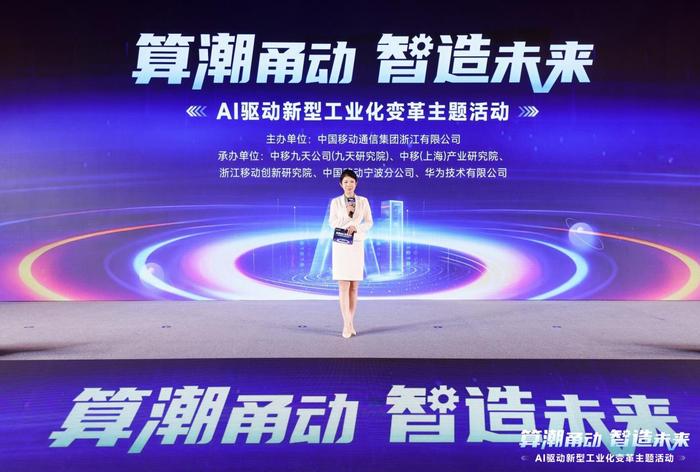
“算潮甬动 智造未来”中国移动AI驱动新型工业化变革主题活动在宁波举行
Xin Lang Cai Jing· 2025-09-05 13:27
Core Insights - The Chinese government emphasizes the strategic importance of artificial intelligence (AI) as a transformative technology for the new industrial revolution and modernization efforts [1][3] - China Mobile is actively promoting AI integration in manufacturing, launching initiatives and guidelines to facilitate the adoption of AI technologies among small and medium-sized enterprises (SMEs) [3][5] Group 1: Government Initiatives - The State Council has issued opinions to deepen the implementation of the "AI+" initiative, aiming to cultivate new productive forces and ensure that all citizens benefit from AI advancements [1] - The event in Ningbo marks a significant step in promoting AI-driven industrial transformation, with the establishment of an AI+ manufacturing ecosystem [3][6] Group 2: AI in Manufacturing - China Mobile, in collaboration with Huawei, released practical guidelines for AI applications in manufacturing, targeting the challenges faced by SMEs [5][6] - The guidelines focus on 63 AI application scenarios across ten key industries in Ningbo, providing a comprehensive operational manual for AI transformation [5] Group 3: Pilot Projects and Collaborations - China Mobile has initiated pilot projects in Ningbo, showcasing successful AI applications that significantly enhance production efficiency, such as an 80% increase in production efficiency at a flexible production line [6][9] - Strategic partnerships have been formed, including a collaboration with China Nuclear Zhejiang Energy to integrate AI with energy technologies [7][9] Group 4: Ecosystem Development - The establishment of the "Factory Operating System Ecosystem" aims to create a comprehensive service model for industrial clients, enhancing production efficiency and reducing transformation risks [11][13] - China Mobile is building an AI+ manufacturing ecosystem with various partners to support algorithm development and industry-specific solutions [13][15] Group 5: Future Directions - The ongoing efforts in Ningbo are expected to serve as a replicable model for AI-driven industrialization across China, promoting a new era of intelligent manufacturing [6][9] - The collaboration among industry players is crucial for accelerating the digital transformation of manufacturing and fostering innovation in AI applications [15]

拓斯达涨2.02%,成交额1.68亿元,主力资金净流入404.31万元
Xin Lang Cai Jing· 2025-09-05 07:24
Company Overview - Guangdong Tuosda Technology Co., Ltd. is located in Dongguan, Guangdong Province, established on June 1, 2007, and listed on February 9, 2017. The company provides overall industrial automation solutions and related equipment for downstream manufacturing clients [2] - The main business revenue composition includes: Smart Energy and Environmental Management Systems (31.50%), Industrial Robots and Automation Application Systems (29.39%), Injection Molding Machines and Supporting Equipment (21.05%), CNC Machine Tools (15.07%), and Others (3.00%) [2] - Tuosda belongs to the Shenwan industry classification of Machinery Equipment - Automation Equipment - Robots, and is associated with concepts such as New Industrialization, Humanoid Robots, Machinery, Industrial Mother Machines, and Machine Vision [2] Financial Performance - As of June 30, 2025, Tuosda achieved operating revenue of 1.086 billion yuan, a year-on-year decrease of 36.98%, and a net profit attributable to shareholders of 28.73 million yuan, a year-on-year decrease of 19.75% [2] - The company has cumulatively distributed 284 million yuan in dividends since its A-share listing, with 48.18 million yuan distributed over the past three years [3] Stock Market Activity - On September 5, Tuosda's stock price increased by 2.02%, reaching 34.86 yuan per share, with a trading volume of 168 million yuan and a turnover rate of 1.47%, resulting in a total market capitalization of 16.627 billion yuan [1] - Year-to-date, Tuosda's stock price has risen by 36.76%, with a recent decline of 3.03% over the past five trading days, a 2.86% increase over the past 20 days, and a 1.22% increase over the past 60 days [1] - The company has appeared on the "Dragon and Tiger List" three times this year, with the most recent appearance on May 13, where it recorded a net buy of -129 million yuan [1] Shareholder Information - As of June 30, 2025, Tuosda had 87,200 shareholders, a decrease of 0.74% from the previous period, with an average of 3,806 circulating shares per person, a decrease of 0.94% [2] - Among the top ten circulating shareholders, the Huaxia CSI Robot ETF (562500) is the second-largest shareholder with 7.4858 million shares, an increase of 1.3327 million shares from the previous period [3]
创业板50指数领涨全市场宽基指数!创业板50ETF(159949)大涨近8%,先导智能、胜宏科技20cm涨停
2 1 Shi Ji Jing Ji Bao Dao· 2025-09-05 07:02
Group 1 - The ChiNext 50 Index (SZ399673) showed strong performance with an intraday increase of 7.2%, leading the market's broad indices [1] - The ChiNext 50 ETF (159949) also rose significantly, with an intraday increase of 7.91%, while several component stocks, including XianDao Intelligent and Shenghong Technology, hit the daily limit [1] - The Ministry of Industry and Information Technology and the State Administration for Market Regulation released the "Action Plan for Stable Growth in the Electronic Information Manufacturing Industry (2025-2026)", targeting an average growth rate of around 7% for the manufacturing value-added in the computer, communication, and other electronic equipment sectors [1] Group 2 - Financial support for new industrialization aims to establish a mature financial system by 2027, focusing on high-end, intelligent, and green development in manufacturing [3] - Key policy highlights include systematic financial support paths, collaboration of five financial tools, dual-driven medium and long-term financing, and deep linkage with capital markets [3] - The plan emphasizes support for key industries such as integrated circuits and green manufacturing, while promoting balanced regional development and preventing excessive competition [3] Group 3 - The A-share market is expected to transition into a phase of consolidation, with a positive medium-term outlook despite short-term adjustments [2] - Key variables to monitor include improvements in macroeconomic data, changes in overseas market conditions, and institutional repositioning following semi-annual report disclosures [2] - The current market environment is favorable due to intertwined domestic and foreign policy benefits, with significant improvements in market liquidity and a net inflow of global funds into A-shares [2]

2025金砖国家新工业革命伙伴关系论坛将在厦门举办
Zhong Guo Xin Wen Wang· 2025-09-05 06:10
Group 1 - The 2025 BRICS New Industrial Revolution Partnership Forum will be held in Xiamen, China, on September 16-17, with representatives from 34 countries and international organizations confirmed to attend [1][2] - This year's forum will showcase China's contributions, including the achievements of the BRICS New Industrial Revolution Partnership Innovation Base and the progress of three major cooperation initiatives: the China-BRICS AI Development and Cooperation Center, the BRICS Industrial Capacity China Center, and the BRICS Digital Industry Ecosystem Cooperation Network [2] - The forum will focus on practical cooperation, addressing the needs of BRICS countries and developing nations, with discussions on industrial digitalization, green development, and AI empowerment [2][3] Group 2 - The forum will feature a main session with high-level dialogues and six sub-forums, inviting government officials and industry leaders to discuss experiences in industrial development [2] - Accompanying events will include the BRICS Industrial Innovation Competition award ceremony, an exhibition on the new industrial revolution, and a training program for outstanding talents [2]
威尔高涨2.09%,成交额7928.95万元,主力资金净流入227.92万元
Xin Lang Cai Jing· 2025-09-05 03:16
Company Overview - Weigao, established on April 7, 2017, is located in Huizhou, Guangdong Province, and specializes in the research, production, and sales of printed circuit boards (PCBs) [1] - The company's main business revenue composition is 87.45% from printed circuit boards and 12.55% from other businesses [1] Stock Performance - As of September 5, Weigao's stock price increased by 2.09% to 50.22 CNY per share, with a total market capitalization of 6.761 billion CNY [1] - Year-to-date, Weigao's stock price has risen by 44.49%, but it has seen a decline of 10.51% over the last five trading days [1] - The stock has appeared on the "Dragon and Tiger List" six times this year, with the most recent appearance on August 13, where it recorded a net purchase of 53.65 million CNY [1] Financial Performance - For the first half of 2025, Weigao achieved operating revenue of 715 million CNY, representing a year-on-year growth of 58.71% [2] - The net profit attributable to the parent company for the same period was 45.20 million CNY, reflecting an 18.31% increase year-on-year [2] Shareholder Information - As of August 20, Weigao had 18,600 shareholders, an increase of 13.93% from the previous period, with an average of 2,901 circulating shares per shareholder, down by 12.22% [2] - After its A-share listing, Weigao has distributed a total of 36.08 million CNY in dividends [3] - As of June 30, 2025, Hong Kong Central Clearing Limited is the fourth-largest circulating shareholder, holding 723,900 shares as a new shareholder [3]