
绿色金融

Search documents
金融行业双周报(2025、12、5-2025、12、18)-20251219
Dongguan Securities· 2025-12-19 09:15
Investment Ratings - Banking: Overweight (Maintain) [1] - Securities: Market Weight (Maintain) [1] - Insurance: Overweight (Maintain) [1] Core Insights - The financial indices for banks, securities, and insurance showed varied performance, with banks declining by 0.93%, securities increasing by 3.47%, and insurance rising by 15.61% as of December 18, 2025 [9] - The report highlights a trend of increasing social financing, with corporate bonds contributing significantly, while demand for loans from both residents and enterprises remains weak [43] - Regulatory changes in the insurance sector aim to encourage long-term investments and improve the competitive landscape for leading insurance companies [47] Summary by Sections Market Review - As of December 18, 2025, the banking index decreased by 0.93%, while the securities and insurance indices increased by 3.47% and 15.61%, respectively [9] - Xiamen Bank, Zhongyin Securities, and China Ping An were noted for their strong performance, with increases of 5.49%, 12.39%, and 16.99% [9] Valuation Situation - The banking sector's price-to-book (PB) ratio stands at 0.77, with state-owned banks at 0.83, joint-stock banks at 0.62, city commercial banks at 0.73, and rural commercial banks at 0.65 [20] - The securities sector's PB ratio is at 1.48, indicating potential for valuation recovery [22] Recent Market Indicators - The one-year Medium-term Lending Facility (MLF) rate is 2.0%, with the one-year and five-year Loan Prime Rates (LPR) at 3.0% and 3.50%, respectively [27] - The average daily trading volume in A-shares was 17,440.20 billion, reflecting a decrease of 9.91% [33] Industry News - The Ministry of Industry and Information Technology and the People's Bank of China issued a notice to support green finance for green factory construction [38] - The China Securities Regulatory Commission emphasized differentiated development paths for securities firms, encouraging mergers and resource integration for leading firms [45] Company Announcements - China Life reported total premiums exceeding 700 billion as of November 30, 2025 [41] - New China Life announced a 16% year-on-year increase in original premium income as of November 30, 2025 [41] Weekly Insights - The banking sector is advised to focus on regional banks with strong performance and stable earnings, such as Ningbo Bank and Chengdu Bank [44] - The securities sector should consider firms with restructuring potential and strong operational capabilities, including Zheshang Securities and CITIC Securities [46] - The insurance sector is encouraged to invest in companies with strong growth in new business value, such as China Pacific Insurance and Ping An [47]
在三湘大地点绿成金——绿色金融的湖南探索
Xin Hua Cai Jing· 2025-12-19 09:03
Group 1: Green Finance Development in Hunan - As of the end of Q3 2025, Hunan's green loan balance is expected to exceed 1.3 trillion yuan, representing a 21.1% increase from the beginning of the year, surpassing the national average by 3.6 percentage points [1] - Hunan is actively promoting environmental rights mortgage financing and exploring innovative financial products, gradually constructing a green finance methodology unique to the province [1] - The first "Xianglin Carbon Ticket" pledge loan of 3 million yuan was issued in Shuanglong Town, Huayuan County, showcasing Hunan's efforts in environmental rights mortgage financing [1] Group 2: Transition Finance Initiatives - Hunan aims to establish itself as a significant advanced manufacturing hub, focusing on intelligent, green, and integrated development, while addressing the financial challenges faced by enterprises in transitioning to low-carbon operations [2] - The core of transition finance is to provide precise financial support for high-carbon industries like steel, non-ferrous metals, and energy to shift towards low-carbon and zero-carbon models [2] - A pilot project in the foundry industry in Jiahe County has led to the creation of a comprehensive service system, including a support directory and carbon accounts, facilitating the introduction of financial products linked to carbon emissions [2] Group 3: Water Resource Financing - Hunan is promoting national transition finance standards in agriculture, coal power, steel, and construction materials, with a focus on sustainable water resource utilization [3] - The "Water Rights" financing value assessment and pledge registration mechanism has been established to activate local water resource assets, resulting in 170 million yuan in "Water Loans" issued to support small hydropower station upgrades [3] - By the end of Q3, the green loan balance in Chenzhou reached 74.985 billion yuan, reflecting a 19.1% increase from the beginning of the year, outpacing the growth rate of other loans by 10.2 percentage points [3] Group 4: Policy Support for Green Finance - In December 2024, the People's Bank of China Hunan Branch, along with six other departments, issued a notice to develop green finance to support the construction of a beautiful Hunan, focusing on carbon reduction, pollution reduction, and green expansion [4] - A set of 25 measures was also released to enhance financial services for the green, low-carbon, and high-quality development of the Yangtze River Economic Belt [4] - The Hunan Branch of the People's Bank of China will continue to strengthen coordination with relevant departments to promote innovative green finance products and services [4]
万亿元市场可期,绿色信托凭多元创新激活双碳金融
Hua Xia Shi Bao· 2025-12-19 09:02
Core Viewpoint - The green trust sector is positioned to play a crucial role in the low-carbon transformation of the trust industry, driven by the dual goals of "dual carbon" targets and high-quality transformation of the trust industry [2][5]. Group 1: Green Trust Development - The China Trust Industry Association has released the "Top Ten Green Trust Cases for 2025," showcasing diverse practices in asset services, asset management, and public welfare charity within the green development sector [2]. - Green trusts can serve as protectors of ecological conservation, supporters of rural revitalization, and enablers of industrial upgrades, indicating a broad potential for future development [2][5]. Group 2: Case Examples - In asset services, the "Solar Energy Series" household photovoltaic service trust by Foreign Trade Trust has enabled farmers to generate their own electricity and sell it, resulting in an average annual income increase of over 3,000 yuan per household, with some remote areas seeing income growth of 40% [3]. - The Shandong Guoxin CCER carbon asset income rights project has successfully mobilized trust funds to help enterprises realize carbon asset benefits, supporting expansion and environmental upgrades [4]. - The Yunnan Trust's endangered species protection charity trust has raised 470,000 yuan, focusing on habitat restoration and species protection, while also emphasizing cultural and talent development [4]. Group 3: Market Trends and Challenges - In 2024, the green trust sector is projected to see a significant increase, with 390 new projects and a total scale exceeding 300 billion yuan, driven by investments in infrastructure and energy transition [6][8]. - Despite growth, challenges such as structural imbalances and insufficient research capabilities hinder the development of green trusts, with many smaller firms struggling to participate [7]. - The introduction of the "Green Trust Guidelines" and ESG disclosure standards aims to clarify operational boundaries and improve the recognition of new green projects, providing a clearer framework for trust companies [7]. Group 4: Future Outlook - By 2025, the green trust market is expected to exceed 1.2 trillion yuan, accounting for 27% of the total trust market, with a compound annual growth rate of over 28% [8]. - The marginal profit margin for green trusts is projected to be 58%, surpassing the industry average by 17 percentage points, highlighting their potential as a key growth driver for the industry [8].


践行绿色金融,国泰基金构建更完善ESG投资生态
Sou Hu Cai Jing· 2025-12-19 07:07
Core Viewpoint - The acceleration of green transformation in economic and social development is a strategic choice aligned with China's modernization and high-quality development goals, with a focus on integrating green finance and sustainable investment into the financial sector [1] Group 1: ESG Investment Strategy - The ESG (Environmental, Social, and Governance) investment philosophy has rapidly gained traction in global markets, emphasizing a comprehensive evaluation that includes environmental protection and social responsibility alongside financial performance [2] - Since becoming a signatory to the UN Principles for Responsible Investment (PRI) in 2022, the company has achieved the highest five-star rating in the 2024 PRI assessment across multiple dimensions, including passive equity and active quantitative strategies [2] - An ESG research team has been established to set sustainable investment goals and ensure the integration of ESG principles throughout the investment research process [2] Group 2: Green Financial Research Framework - The company is focused on building a rigorous research framework to support its green finance strategy, ensuring that ESG principles are embedded in the investment decision-making process [4] - Investment decisions incorporate positive and negative screening, as well as ESG integration, using an ESG rating system to assess the green governance performance of investment targets [4] - Fund managers consider both internal and external ESG ratings when constructing investment portfolios, prioritizing investments with strong green governance [4] Group 3: Product Innovation - The company is committed to supporting the energy revolution and sustainable investment, focusing on clean energy utilization and the development of a new energy system [6] - A diverse range of green financial products is offered, including various ETFs and actively managed funds, aimed at directing social capital towards green industries [6] - The product lineup includes industry-leading innovations and specialized tools, providing long-term funding support for green industry development and offering investors a variety of options to participate in the green transition [6] Group 4: Collaborative Ecosystem - The company recognizes the importance of collaboration in advancing green finance and aims to enhance its ESG investment ecosystem through product innovation, technology, and industry partnerships [7] - Plans include leveraging big data and AI to improve risk assessment and yield analysis for green projects, as well as fostering communication among investment institutions, enterprises, and regulatory bodies [7] - The company aims to guide social capital towards green sectors, contributing to the low-carbon transition of the real economy while achieving its own high-quality development [7]

林海“淘金” 绿富同兴
Jing Ji Ri Bao· 2025-12-19 05:51
经济日报记者 薛志伟 刘兴 吴陆牧 集体林权制度改革是完善农村基本经营制度的重大实践,对推动林业高质量发展、激发乡村全面振 兴活力具有重要意义。 2023年9月,中办、国办印发《深化集体林权制度改革方案》,支持福建、江西、重庆建设深化集 体林权制度改革先行区。两年来,3个先行区探索实施了一批首创性、特色性改革举措,激活林业发展 活力,让改革成果惠及更多林农。 制度先行先试,激发活力 创新金融服务,点绿成金 林区变革,制度先行。三地通过改革创新,推动集体林改政策机制更加完善,支撑保障更加有力。 走进福建省龙岩市武平县,一片片山林焕发出生机与活力。2002年,武平率先迈出集体林权制度改 革的步伐,曾因山小分散、单户难经营而"沉睡"的山林成了联户共富的试验林,亦是福建集体林权制度 改革的生动缩影。但改革从未止步,经营分散化、产业链低端化等新问题倒逼新探索。 2024年,福建省林业局出台方案,决定在全省16个县(市、区)开展以"多方得益、多式联营、多 重服务"为重点的集体林权制度"三多"改革试点工作。 "多方得益"激活利益链,在推进"三权分置"、优化林权管理、完善生态补偿机制上先行,让林农、 集体、企业、社会多方得益 ...
西班牙对外银行李蕾:未来五年将再投放7000亿欧元支持绿色与社会可持续项目
Xin Lang Cai Jing· 2025-12-19 05:29
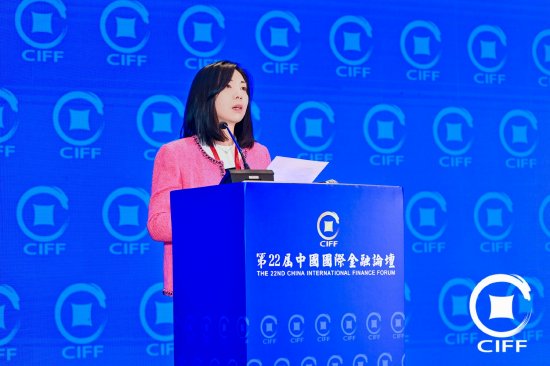
李蕾谈到,当今世界,数字技术正以前所未有的速度重新定义金融的边界,在中国,一场以服务实体经 济为根本、以风险防控为基石、以制度创新为引领的深刻变革正在系统推进。 在金融科技治理、数据要素流通、人工智能规范化应用、以及数字人民币探索等领域,中国不仅走在全 球前列,更为智能金融的发展奠定了坚实的制度基础。同时,在"双碳"战略的引领下,具有中国特色、 面向世界的绿色金融体系也日臻完善。 专题:第二十二届中国国际金融论坛 2月19日-20日,"第二十二届中国国际金融论坛"在上海举行,主题为:数字经济时代的智能金融生态构 建。西班牙对外银行(BBVA)中国区总裁李蕾出席并演讲。 她介绍到,西班牙对外银行作为一家拥有160多年历史、深耕亚洲欧洲拉美等多国市场的国际银行集 团,始终致力于成为连接国际资源与本地需求的协作伙伴。在绿色金融方面,自2018年以来,已累计投 放超过3000亿欧元用于可持续融资,并承诺在2025—2029年期间再投放7000亿欧元支持绿色与社会可持 续项目。 "我们愿以全球经验与本地洞察,助力中国金融的高质量发展。"她说。 李蕾指出,数字经济的浪潮奔涌向前,构建安全、智能、可持续的金融生态,是我们共 ...

领航金融未来 擘画时代新篇
Jing Ji Guan Cha Bao· 2025-12-19 04:26
Group 1 - The Chinese financial industry is at a historical crossroads, with significant achievements in financial supply-side structural reforms enhancing its ability to serve the real economy [1] - The "Five Major Articles" of financial services, including technology finance, green finance, inclusive finance, pension finance, and digital finance, have transitioned from policy frameworks to industry consensus and practical actions, forming a multi-layered and differentiated financial service system [1] - The new tasks for the financial sector include improving service quality, supporting innovation-driven development, promoting common prosperity, and maintaining financial stability [1] Group 2 - Leading financial institutions are pursuing excellence amidst challenges, expanding their service radius and enhancing competitive differentiation in response to intensified international trade competition and narrowing domestic interest margins [2] - Technological innovations, such as artificial intelligence and big data applications, are deepening financial digitalization, reducing operational costs, and improving service quality [2] - Financial institutions are focusing on national strategies like rural revitalization and regional coordinated development, implementing innovative practices such as rural digital inclusive finance and infrastructure financing [2] Group 3 - A case collection initiative has been launched to summarize innovative achievements and practices in the financial industry for 2025, aiming to identify exemplary financial institutions that maintain strategic focus and achieve high-quality development [3] - The initiative will employ rigorous standards and diverse perspectives for comprehensive evaluation, promoting industry exchange and collective progress [3] Group 4 - As the financial industry stands at the starting point of the "14th Five-Year Plan," it requires clearer thinking regarding macroeconomic transitions, profound changes in financial demand structure, and increasingly refined financial regulation [4] - Financial institutions need to find a new balance among strategic focus, risk management, and continuous technological innovation [4] - The direction for high-quality development in finance is clear, with expectations for more financial institutions to excel in the new journey of the "14th Five-Year Plan" and contribute to the narrative of Chinese modernization [4]
交银人寿获评保险稳健投资样本
Jin Rong Jie· 2025-12-19 03:14
Core Viewpoint - The article emphasizes the importance of enhancing long-term, stable, and value investment capabilities in the insurance industry, which is essential for supporting the high-quality development of the real economy and fulfilling the responsibilities of financial institutions [1]. Group 1: Investment Philosophy - The company adheres to the philosophy of "absolute return + long-term stable return," focusing on absolute rather than relative returns and prioritizing long-term stability over short-term gains [2]. - In the first half of 2025, the comprehensive yield of its asset management platform reached 6.5%, showcasing strong performance [2]. - The average comprehensive investment yield over the past three years stands at 6.75%, maintaining a leading position among major bank-affiliated life insurance companies [2]. Group 2: Investment Management System - The investment advantages stem from a professional and systematic investment management framework, with a precise allocation in major asset classes [3]. - Fixed income assets serve as a "ballast," ensuring safety and stability, with a focus on long-duration high-quality fixed income assets to enhance profitability during declining interest rate cycles [3]. Group 3: Equity and Alternative Investments - The company employs a value, long-term, and contrarian investment approach in equity investments, aiming for long-term excess returns while maintaining patience during market fluctuations [4]. - In alternative investments, the company prioritizes high-quality infrastructure projects in key national regions and captures opportunities in innovative assets like public REITs, achieving a comprehensive yield of approximately 30% for its public REITs strategy products from January to November 2025 [4]. - Investments in mature operating real estate ABS projects in Shanghai yield 5%, contributing to overall investment returns [4]. Group 4: Future Outlook - The company anticipates a stable economic development environment and an optimized policy landscape, providing strong support for capital markets [5]. - Despite external uncertainties, the company believes that domestic economic momentum is robust, presenting more opportunities than challenges [5]. - The focus will be on leveraging research and investment collaboration to create differentiated competitive advantages while adhering to the core mission of insurance protection and enhancing financial services for the real economy [5].
绿金委《可持续金融共同分类目录》专家组第五次会议在北京召开
Zhong Guo Jin Rong Xin Xi Wang· 2025-12-19 02:44
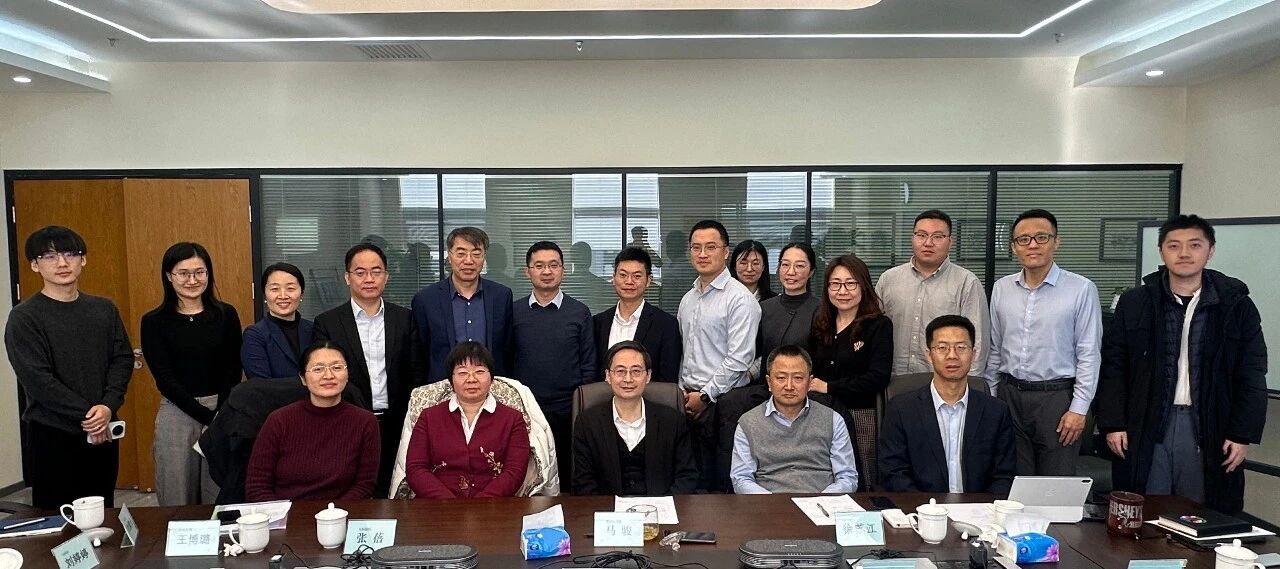
登录新浪财经APP 搜索【信披】查看更多考评等级 12月13日,中国金融学会绿色金融专业委员会在北京召开《可持续金融共同分类目录(CGT)》专家组第五次会议。会议围绕CGT从2022版向2024版的切换 安排、多边可持续金融共同分类目录(MCGT)的使用定位、贴标机制优化以及银行端产品纳入等议题进行了交流。来自中国人民银行研究局、中国外汇交 易中心、上海证券交易所、商业银行、资产管理机构、第三方机构、研究机构及国际金融机构等20余名代表参会。 图:部分参会人员合影 会上,专家组组长、外汇交易中心徐苏江介绍了专家组今年以来的工作进展,包括CGT贴标在绿色债券市场中的应用情况,以及围绕CGT逐步形成的投资工 具和市场实践。截至11月末,专家组已评估并发布29个批次的CGT贴标绿色债券清单。在约490只贴标债券中,尚有288只处于存续期,发行规模约3300亿元 人民币。非金融机构在发行阶段主动寻求CGT贴标的比例,已从初期约10%显著提升至10月的92%。基于已贴标的CGT债券,目前已有多家机构推出相关投 资工具和产品。 会议还就银行在推动CGT市场发展中的作用进行了交流。摩根资产管理(中国)和中国邮储银行代表分享 ...
绿色金融体系持续创新精准赋能山东生态与经济协同发展
Qi Lu Wan Bao· 2025-12-19 01:59
Group 1: Digital Management in Green Finance - The establishment of a comprehensive digital management system for green finance projects covering five key areas: carbon finance, environmental finance, green buildings, ecological product development, and water conservation [1] - A total of 1,050 ecological and environmental projects have been precisely pushed to financial institutions, resulting in loan amounts reaching 24.51 billion yuan [1] - The project database has expanded from 107 to 274 projects, with a total bank credit of 17.33 billion yuan and loan disbursement of 5.7 billion yuan supporting green project construction in the province [1] Group 2: Financial Support for Low-Carbon Transition - Collaboration with the provincial development and reform commission to support energy and industrial low-carbon transition trials, selecting 4 cities, 7 counties, and 21 enterprises as pilot subjects [2] - Introduction of innovative financial products, including the first loans linked to the aluminum industry's transition, and the establishment of financial standards for the aluminum and oil processing industries [2] - Projects in the coal and electricity sector have received bank credit of 22.4 billion yuan, with loan disbursement of 4.33 billion yuan [2] Group 3: Marine Economy and Green Upgrading - Implementation of 16 special measures to enhance financial support for the marine economy, focusing on the construction of 71 national marine ranches with loans totaling 2.89 billion yuan [3] - Support for key scientific and technological platforms, with marine technology innovation loans reaching 14.47 billion yuan, a year-on-year increase of 32.4% [3] - Successful execution of the first marine carbon sink transaction based on a provincial carbon platform, with financial institutions purchasing carbon credits for their own carbon neutrality [3] Group 4: Comprehensive Green Financial System - The People's Bank of China in Shandong is focused on building a diversified green financial system, achieving full-process online management of projects through the "Beautiful Shandong Construction Financial Project Library" [4] - The bank has innovatively conducted transition financial pilot projects and established standards for key industries such as aluminum and refining to support low-carbon upgrades [4] - Initiatives like marine carbon sink trading and GEP loans are effectively promoting green development and ecological value transformation in the marine economy [4]