
大模型

Search documents
2025年中国金融智能体发展研究报告
艾瑞咨询· 2026-01-25 00:03
Core Insights - The report provides a comprehensive analysis of the current state and trends of financial intelligent agents in China, emphasizing their development driven by technological breakthroughs, business innovation, and policy support [1][2]. Group 1: Driving Factors - Technological breakthroughs are addressing the "last mile" challenges in the application of large models, enhancing their task execution capabilities through advancements in tools and frameworks [6]. - Approximately 33% of financial institutions are actively investing in intelligent agents, indicating a growing recognition of their practical value [7]. - Policy support is guiding the application and development of intelligent agents in finance, with clear directives and funding allocations for AI technologies [8]. Group 2: Current Industry Cycle - The financial intelligent agent industry is in its initial exploration phase, with 96% of applications still in the proof of concept or pilot stages, and only 4% in agile practice [12]. - The majority of intelligent agent applications are focused on operational functions, such as knowledge Q&A and office assistance, with expectations of transitioning to agile practice within 1-2 years [16]. - Financial institutions are exploring two main deployment paths: embedding intelligent agent functions into existing systems and developing independent intelligent agent applications [18]. Group 3: Market Distribution - The banking sector accounts for 43% of the financial intelligent agent market, followed by asset management at 27% and insurance at 15% [25][26]. - The demand for intelligent agents in asset management is driven by needs in research and analysis, while insurance focuses on underwriting and customer service [25]. Group 4: Project Financials - The investment scale for intelligent agent platforms and applications in 2025 is projected to reach 950 million yuan, with a compound annual growth rate of 82.6% expected by 2030 [35]. - Most intelligent agent application projects are concentrated in the 300,000 to 1.5 million yuan range, reflecting a cautious approach to investment [31]. Group 5: Business Models - The market for intelligent agents features two primary business models: product delivery, which involves selling software products, and value delivery, which ties fees to business outcomes [39][42]. - The value delivery model presents significant market potential but requires high capabilities from service providers to ensure effective integration into client business processes [39]. Group 6: Challenges and Opportunities - The current market is characterized by high expectations versus the reality of exploration phase challenges, necessitating careful management of client expectations to maintain trust [43]. - Financial institutions are increasingly focused on the value assessment of intelligent agents, with a shift towards evaluating their potential to drive sustainable business growth and enhance customer experience [53][73]. Group 7: Future Trends - As the industry transitions from the initial exploration phase to agile practice, financial institutions are expected to adopt a more strategic approach to deploying intelligent agents, emphasizing long-term value creation [80]. - Establishing an AI Agent Strategy Office (ASO) is recommended for financial institutions to manage intelligent agent applications systematically and ensure continuous value feedback [80].


2025中国经济:稳中有进 量质齐升
Xin Lang Cai Jing· 2026-01-24 20:40
Economic Overview - In 2025, China's GDP reached 140,187.9 billion yuan, marking a 5% year-on-year growth, achieving a significant milestone [3] - The economic performance is characterized by resilience and vitality despite facing pressures from international competition, trade wars, and domestic challenges [3][4] Structural Changes - China's economy is transitioning towards new and upgraded development, with traditional industries accelerating their transformation and emerging industries like quantum computing and AI gaining momentum [4] - Active fiscal policies and moderately loose monetary policies have played a crucial role in maintaining market vitality [4] Trade and Openness - In 2025, China's total import and export value reached 454,687 billion yuan, reflecting a 3.8% increase, marking the ninth consecutive year of growth [8] - China's export potential remains strong due to international demand and ongoing improvements in trade environment, including the signing of the upgraded China-ASEAN Free Trade Area agreement [8][9] Real Estate Market - The real estate market in 2025 showed signs of stabilization, with transaction volumes stabilizing and inventory levels decreasing [6] - The completion of housing delivery tasks marked a significant milestone, reducing risks associated with high debt and leverage in the sector [6] Consumer Spending - Retail sales of consumer goods surpassed 50 trillion yuan, growing by 3.7%, with final consumption contributing 52% to economic growth, an increase of 5 percentage points from the previous year [7] - The focus on investing in human capital, such as education and healthcare, is seen as essential for unlocking long-term consumption potential [7] New Productive Forces - New productive forces are identified as a key driver in the transition towards a new and superior economic model, enhancing industrial structure and export competitiveness [10] - Financial support for new productive forces has been increasing, with a need for further optimization in direct financing and the establishment of industry investment funds [10]

AI芯片格局
傅里叶的猫· 2026-01-24 15:52
Core Insights - The article discusses the evolving landscape of AI chips, particularly focusing on the rise of TPU and its implications for major tech companies like Google, OpenAI, and Apple [3][5][7]. TPU's Rise - TPU is gaining traction as a significant player in the AI training and inference market, challenging NVIDIA's long-standing GPU dominance [3]. - Major companies like OpenAI and Apple are increasingly adopting TPU for their core operations, indicating a shift in the competitive landscape [3][4]. - The transition from GPU to TPU involves complex technical adaptations, which can lead to high costs and extended timelines for companies [4][6]. Supply and Demand Challenges - There is currently a 50% supply gap in the global AI computing power market, driven by surging demand for TPU [5]. - This supply shortage is causing delays in projects and increasing costs for companies relying on TPU, particularly affecting TSMC, the main foundry for TPU [5]. - The immature software ecosystem surrounding TPU, particularly its incompatibility with the widely used CUDA framework, poses additional challenges for widespread adoption [5][6]. TPU vs. AWS Trainium - Google’s TPU has a hardware-level optimization for matrix and tensor operations, providing significant efficiency advantages over AWS's Trainium, which lacks such integration [7]. - Trainium's reliance on external libraries for operations increases resource consumption and limits efficiency, particularly in large-scale deployments [7]. - Both companies have different strengths in network adaptation, with Google focusing on vertical scaling and AWS on horizontal scaling, leading to a differentiated competitive landscape [8]. Oracle's Unexpected Rise - Oracle has emerged as a key player in the chip market by leveraging government policies and strategic partnerships to secure high-end chip supplies [9][10]. - The company has formed partnerships with government entities and other service providers to monopolize certain chip markets, creating a dual resource barrier [10]. - Oracle's collaboration with OpenAI for a $300 billion computing resource deal highlights its strategy to profit from reselling computing power [10]. OpenAI's Financial and Operational Challenges - OpenAI faces a significant funding gap, with annual revenues of approximately $12 billion against a projected investment need of $300 billion for expansion [14]. - The company’s reliance on venture capital and the increasing costs of computing power exacerbate its financial pressures [14]. - OpenAI's business model struggles with low profitability in its core LLM inference business, necessitating a delicate balance between pricing and user retention [15]. Future of Large Models - The industry is witnessing diminishing returns on performance improvements as model sizes increase, while the costs of computing power rise exponentially [17]. - Resource constraints, particularly in power supply and dependency on NVIDIA, are becoming critical bottlenecks for large model development [17][18]. - Future developments in large models are expected to focus on more efficient and diverse technological paths, moving away from mere parameter competition [18][19]. Conclusion - The competition in AI chips and computing power is a battle for industry dominance, with companies like Google, Oracle, and OpenAI navigating complex challenges and opportunities [19][20]. - The market is expected to stabilize as supply chains improve, but the ability to monetize technology and integrate it into practical applications will be crucial for long-term success [20].



与郭毅可深聊:AI 逼近“全知”,人类会走向精神荒芜吗?
虎嗅APP· 2026-01-24 14:19
Core Viewpoint - The article discusses the implications of generative AI on knowledge acquisition and human cognition, emphasizing the importance of questioning and communication skills in the AI era [5][6][7]. Group 1: AI and Knowledge Acquisition - The development of large models allows for instant access to knowledge, raising the question of whether the ability to ask questions will become the most critical intellectual asset [8]. - Knowledge is defined as a consensus-based understanding, and the compression process of large models seeks statistical consensus, diminishing the need for personal knowledge systems [8][9]. - The ability to ask meaningful questions is crucial, as superficial questions yield superficial answers, while deeper inquiries can lead to more valuable insights [9][10]. Group 2: Human-Machine Interaction - Communication with machines is highlighted as a vital skill, with the ability to discern and evaluate AI-generated responses being essential for effective interaction [10][11]. - The distinction between asking AI and humans is minimal, but the richness of AI's knowledge necessitates a more critical approach to evaluating its responses [11][12]. - The evolution of thought processes is influenced by the tools used for knowledge acquisition, with AI potentially enhancing cognitive abilities rather than diminishing them [12][13]. Group 3: AI in Creative Processes - Collaboration with AI can lead to profound creative outputs, as demonstrated by individuals who effectively engage with AI to co-create content [13][14]. - The correct use of AI involves treating it as a knowledgeable partner, requiring users to critically analyze and engage with its responses [14][15]. - The potential for AI to develop its own viewpoints and emotions is discussed, suggesting that as AI's reasoning capabilities improve, it may begin to form independent perspectives [15][16]. Group 4: Future of AI and Employment - The emergence of AI tools will elevate the standards for professions like journalism, enhancing the depth and quality of reporting rather than leading to job loss [16][17]. - The article posits that the evolution of skills is necessary in the face of technological advancements, with those who adapt being more likely to thrive [17]. - The ongoing evolution of AI is viewed positively, with an emphasis on the need for humans to evolve alongside technology rather than succumb to pessimism about its impact [17].

北京两会 | 市人大代表曲子恒:定期遴选“家政+养老”融合发展的示范平台与企业
Xin Lang Cai Jing· 2026-01-24 13:26
Core Viewpoint - The Beijing Municipal People's Congress emphasizes the need to enhance inclusive and foundational elderly care services, advocating for a robust three-tier elderly care service network and the implementation of age-friendly public facility renovations [1] Group 1: Policy Recommendations - The company suggests accelerating the cultivation of influential brands and service-oriented platforms in the elderly care industry through policy guidance, financial support, and standard development [2][3] - It is recommended to conduct recognition work for high-quality home elderly care service providers and include them in key support areas for service consumption, providing assistance in brand promotion and market outreach [2] Group 2: Financial and Regulatory Support - The company proposes innovative financial and insurance support models, including low-interest credit for well-rated elderly service providers and collaboration with insurance firms to develop liability insurance products for home care services [3] - A call for a prudent regulatory approach that optimizes the business environment for elderly care services while ensuring safety standards is made [3] Group 3: Technological Integration and Service Innovation - The company highlights the importance of leveraging AI and smart technologies in elderly care and related services, suggesting the establishment of platforms to connect technology with service demands [4] - It encourages the exploration of new service models that integrate healthcare, tourism, and community services, promoting the development of comprehensive service complexes [4]
中辉期货申请基于大模型的量化交易策略动态生成专利,提高策略的多样性和创新性
Jin Rong Jie· 2026-01-24 12:35
Group 1 - The core idea of the news is that Zhonghui Futures Co., Ltd. has applied for a patent for a method, system, and storage medium for dynamically generating quantitative trading strategies based on large models, indicating a focus on innovation in trading strategies [1] Group 2 - Zhonghui Futures Co., Ltd. was established in 1993 and is located in Shanghai, primarily engaged in capital market services, with a registered capital of 143 million RMB [2] - The company has made investments in 2 enterprises, participated in 3 bidding projects, and holds 6 patent records, along with 10 administrative licenses [2]
诚天国际申请基于大模型的供应链溯源管理方法专利,提高溯源数据的可信度
Sou Hu Cai Jing· 2026-01-24 11:15
Group 1 - The core viewpoint of the article is that Cheng Tian International Supply Chain (Shenzhen) Co., Ltd. has applied for a patent for a supply chain traceability management method and system based on large models, indicating a focus on enhancing supply chain transparency and reliability [1] Group 2 - The patent application, published as CN121391287A, was filed on October 2025 and aims to improve the credibility of traceability data by identifying malicious participants in the supply chain through deep learning capabilities [1] - The method involves identity registration and certification of supply chain participants, blockchain recording of product production and circulation processes, and generating traceability reports and credibility assessments based on identified anomalies [1] Group 3 - Cheng Tian International Supply Chain (Shenzhen) Co., Ltd. was established in 2018 and is primarily engaged in multimodal transport and transportation agency services, with a registered capital of 50 million RMB [1] - The company has made one external investment, participated in one bidding project, and holds 14 trademark registrations and 24 patent applications, along with 20 administrative licenses [1]
苹果进入双寡头时代
虎嗅APP· 2026-01-24 09:43
Core Viewpoint - The article discusses the transition of leadership at Apple as Tim Cook approaches retirement, highlighting the potential successors John Ternus and Craig Federighi, marking the end of the post-Jobs era and the beginning of a new "duopoly" leadership structure at Apple [4][24]. Group 1: Leadership Transition - Tim Cook, aged 65, is facing questions about succession as Apple undergoes significant management restructuring following the departures and retirements of several executives [4]. - John Ternus and Craig Federighi are identified as key figures in Cook's succession plan, with Ternus being positioned as a potential CEO due to his youth and extensive experience in hardware engineering [12][25]. Group 2: Design Department Changes - The design department at Apple has undergone significant changes since the departure of former Chief Design Officer Jony Ive in 2019, leading to a fragmented structure with responsibilities split between Evans Hankey and Alan Dye [6][9]. - Ternus was appointed as the "Executive Sponsor" for design, allowing him to bridge the gap between designers and executives, although he does not directly oversee design [10][11]. Group 3: Federighi's Role in AI - Craig Federighi, now overseeing Apple's AI department, has shifted from being an AI skeptic to actively integrating AI technologies into Apple's products, particularly following the emergence of ChatGPT [17][19]. - Under Federighi's leadership, Apple has faced challenges in AI development, leading to the decision to collaborate with Google for AI capabilities, indicating a pragmatic approach to technology integration [20][26]. Group 4: Philosophical Differences in Management - Ternus represents a shift towards a product-driven, engineering-first approach at Apple, moving away from the design-centric philosophy of the past [13][26]. - Federighi's management style emphasizes cost control and practicality, which may lead to a more stable financial performance for Apple, albeit with less revolutionary innovation [22][26]. Group 5: Future Outlook - The combination of Ternus and Federighi as co-leaders may signify a new era for Apple, focusing on operational efficiency and practical product development rather than groundbreaking design [26][27]. - The transition is seen as a response to the evolving tech landscape, with Apple aiming to maintain relevance without overextending financially [22][26].


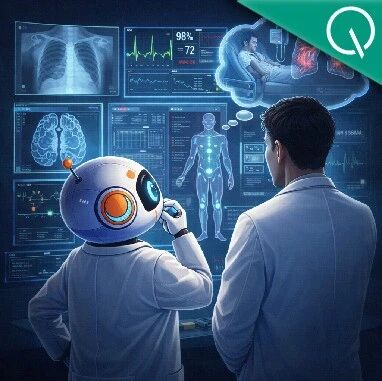
微软发布医疗时序基座模型:基于4540亿数据预训练,解决不规则采样难题
量子位· 2026-01-24 05:19
Core Viewpoint - The article discusses the introduction of MIRA, a universal base model designed for medical time series data, which addresses the challenges of irregular and heterogeneous medical data, aiming to enhance predictive capabilities in healthcare AI [5][25]. Group 1: Medical AI Landscape - Large Language Models (LLMs) and Computer Vision (CV) are transforming the healthcare industry, enabling AI to interpret CT images and write medical summaries [1]. - A critical missing piece in medical AI is the ability to understand the "dynamic evolution of life," which is essential for capturing the continuous trajectory of vital signs [2][4]. Group 2: Challenges in Medical Time Series Data - Traditional deep learning models rely on idealized assumptions of uniform data sampling, which do not hold true in real-world medical scenarios, particularly in Intensive Care Units (ICUs) where vital signs are recorded at irregular intervals [9][10]. - The characteristics of medical time series data include irregular time intervals, heterogeneous sampling rates, and data missing due to non-standard clinical workflows [12]. Group 3: MIRA Model Introduction - MIRA is built on 454 billion medical data points and aims to overcome the limitations of traditional models by learning physiological dynamic patterns across various scenarios and modalities [5][25]. - MIRA employs two core technologies: Continuous Time Rotational Position Encoding (CT-RoPE) for understanding historical data and Neural ODE for predicting future states [13][18]. Group 4: Experimental Validation - MIRA demonstrates zero-shot transfer capabilities, outperforming some supervised models in out-of-distribution tests, indicating its ability to learn general physiological signal changes [21]. - MIRA shows high robustness in handling sparse data, maintaining performance even with only 30% of observation points, unlike traditional models that rely on interpolation [23][24]. Group 5: Future Implications - The introduction of MIRA marks a significant step towards a "universal base" era in medical AI, allowing hospitals to quickly develop high-precision customized models with minimal local data [25].

浪潮企业云取得基于大模型的QAR数据译码方法专利
Jin Rong Jie· 2026-01-24 03:21
Group 1 - The core point of the article is that Inspur Enterprise Cloud Technology (Shandong) Co., Ltd. has obtained a patent for a method, device, equipment, and medium for QAR data decoding based on large models, with the patent announcement number CN120729972B and an application date of September 2025 [1] - Inspur Enterprise Cloud Technology (Shandong) Co., Ltd. was established in 2022 and is located in Jinan City, primarily engaged in software and information technology services [1] - The company has a registered capital of 150 million RMB and has made investments in 4 other enterprises, holds 216 patent pieces of information, and possesses 4 administrative licenses [1]