数字金融

Search documents
申耕季录 · 2025年三季度 | 申万宏源服务国家战略在行动
申万宏源证券上海北京西路营业部· 2025-10-21 02:52
Core Viewpoint - Shenwan Hongyuan is committed to serving the financial sector and contributing to the construction of a financial powerhouse, aligning with national policies and focusing on innovation and excellence [1]. Group 1: Service to Technology Finance - Shenwan Hongyuan launched the first technology innovation fund in Xinjiang, with an initial scale of 500 million yuan, aimed at supporting the growth of technology enterprises in the region [4]. - The company assisted TCL Technology Group in completing a major asset acquisition project with a total transaction value of 11.562 billion yuan, marking the largest equity purchase in the electronics sector since 2021 [5]. - In Q3, Shenwan Hongyuan helped various companies issue a total of 12.5 billion yuan in technology innovation bonds, including 6 billion yuan for the National Oil and Gas Pipeline Group [7]. - The company supported Tianyue Advanced Technology in successfully listing on the Hong Kong Stock Exchange, raising approximately 2.044 billion HKD [8]. Group 2: Service to Green Finance - Shenwan Hongyuan acted as the lead underwriter for Hebei Bank's successful issuance of 5 billion yuan in green financial bonds, with a 3-year term and a low coupon rate of 1.83% [10]. - The company facilitated the issuance of the first green technology innovation REITs in the market, with a scale of 1.406 billion yuan, marking a significant milestone in the steel industry [11]. Group 3: Service to Digital Finance - Shenwan Hongyuan assisted Health 160 in its successful listing on the Hong Kong Stock Exchange, raising 400 million HKD, focusing on digital healthcare services [13]. Group 4: Service to External Opening - Shenwan Hongyuan participated in the 25th China International Investment Trade Fair, showcasing its commitment to the financial powerhouse strategy and internationalization efforts [16]. Group 5: Service to Regional Finance - The company established a listing service station in Xuhui District to provide tailored services for technology enterprises seeking to go public [19]. - Shenwan Hongyuan collaborated with China Gezhouba Group to issue 3 billion yuan in technology innovation bonds to support the western development strategy [20]. - The company invested 492 million yuan in a city renewal project in Shunyi District, Beijing, aimed at transforming the area into a new commercial landmark [22].


科技筑基+数字赋能!东莞证券深耕金融“五篇大文章”
Sou Hu Cai Jing· 2025-10-21 00:51
Core Viewpoint - Dongguan Securities is committed to integrating the "Five Major Articles" of finance into its development strategy, focusing on technological and digital finance while promoting green finance, inclusive finance, and pension finance [1][2] Group 1: Strategic Planning - Dongguan Securities established a leadership group for the "Five Major Articles" in 2025, led by Chairman Chen Zhaoxing, with specialized teams for each financial area to ensure effective policy research and business collaboration [2] - The company emphasizes transforming basic research into practical business applications, conducting specialized studies, and producing research outcomes to align with national strategies [2] Group 2: Technological Finance - The company integrates advantages in technology innovation and financial resources within the Guangdong-Hong Kong-Macao Greater Bay Area, focusing on supporting manufacturing and technological innovation [4] - Dongguan Securities has sponsored 36 companies for IPOs, raising over 18 billion yuan, and assisted 30 listed companies in refinancing, raising nearly 19 billion yuan [4] - The company issued 1 billion yuan in technology innovation bonds in 2025, with a 1.79% interest rate, marking a historical low for the company [5] Group 3: Digital Finance - Dongguan Securities positions digital finance as a core engine for strategic transformation, leveraging resources in the Greater Bay Area to advance into financial technology [7] - The company has developed the Zhangzhengbao APP and other digital platforms to enhance connectivity among enterprises, employees, and clients, ranking 18th among brokerage apps in terms of active users [7] - The company has implemented AI technologies to improve research efficiency and client services, including a digital onboarding service using 3D avatars [8]

“三农”信贷增力度优服务
Jing Ji Ri Bao· 2025-10-20 22:51
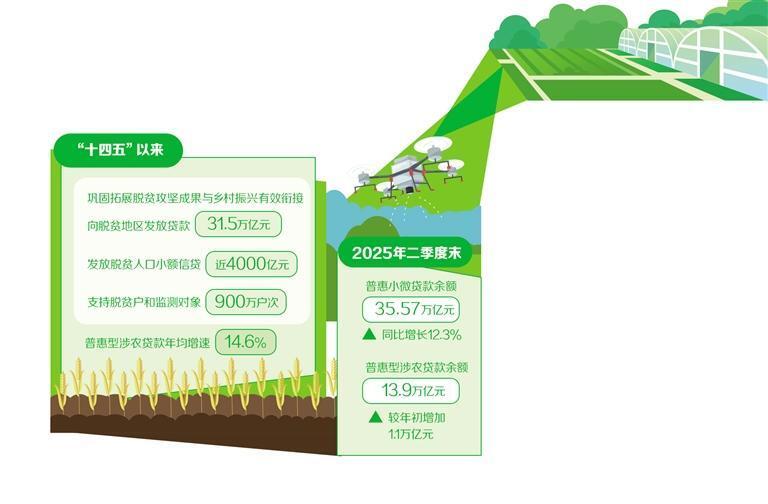
Core Insights - Since the "14th Five-Year Plan," China's agricultural financial supply has continued to grow, with inclusive agricultural loans averaging an annual growth rate of 14.6% [2] Group 1: Credit System Improvement - The development of a rural credit system is essential for enhancing agricultural financial services, helping to reduce information asymmetry and enabling a shift from passive lending to proactive service [3] - The rural credit system has led to a 1.5 times increase in the balance of rural credit loans in Hechi City since 2017, with interest rates decreasing by approximately 250 basis points [3] Group 2: Digital Financial Empowerment - Digital finance is a key focus area, with banks accelerating digital transformation to better serve agricultural credit needs [6] - The "Yunongtong" app by China Construction Bank has facilitated online loan processes for farmers, with 61,600 registered users and loans amounting to 3.511 billion yuan by September [6] Group 3: Financial Supply Mechanism Optimization - Various banks have established a clear division of labor in serving the agricultural sector, with a focus on optimizing the inclusive financial service system [9] - By the second quarter of 2025, the balance of inclusive small and micro loans is projected to reach 35.57 trillion yuan, reflecting a year-on-year growth of 12.3% [9] Group 4: Role of Large and Small Banks - Large banks are enhancing rural financial services and extending credit to county-level areas, focusing on increasing service breadth and depth [10] - Small and medium-sized banks are crucial for supporting rural revitalization by developing differentiated competitive advantages [11]
科技筑基+数字赋能 东莞证券深耕金融“五篇大文章”
Zheng Quan Shi Bao· 2025-10-20 22:24
Core Insights - Dongguan Securities, a state-controlled brokerage rooted in the Greater Bay Area, integrates the concept of "serving the country through finance" into its development strategy, focusing on technology finance and digital finance while advancing green finance, inclusive finance, and pension finance [1][2] Group 1: Strategic Framework - The company established a leadership group for the "Five Major Articles" in 2025, led by Chairman Chen Zhaoxing, to ensure systematic implementation across technology finance, green finance, inclusive finance, pension finance, and digital finance [2] - Dongguan Securities emphasizes the importance of transforming basic research into practical business applications, conducting specialized studies to summarize progress in implementing the "Five Major Articles" [2] Group 2: Technology Finance - The company has created a comprehensive service system for technology innovation enterprises, focusing on direct investment, bond financing, IPO sponsorship, and research services [4] - Dongguan Securities has sponsored 36 companies for listing, raising over 18 billion yuan, and assisted 30 listed companies in refinancing, raising nearly 19 billion yuan [4] - In 2025, the company successfully issued 1 billion yuan in technology innovation bonds, achieving a record low interest rate of 1.79% [5] Group 3: Digital Finance - Dongguan Securities positions digital finance as a core engine for strategic transformation, leveraging resources in the Greater Bay Area to advance into cutting-edge financial technology [7] - The company has developed the Zhangzhengbao APP and other digital platforms to enhance connectivity between enterprises, employees, and clients, ranking 18th among brokerage apps in terms of active users [7] - The company has implemented AI technologies to improve research efficiency and service delivery, including the deployment of DeepSeek for localized applications [8]
学“硬核”技能护“钱袋子” 济南图书馆数字金融讲座助力市民防风险!
Sou Hu Cai Jing· 2025-10-20 10:02
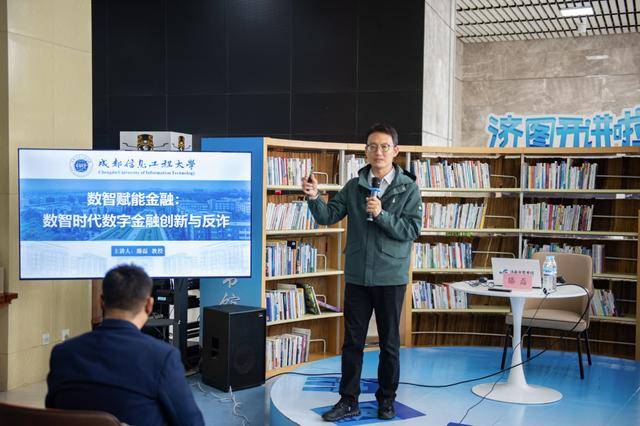
Core Insights - The lecture titled "Digital Intelligence Empowering Finance: Protecting Your 'Wallet'" was successfully held in Jinan, focusing on the forefront of digital finance development and security prevention [1] - Professor Teng Lei from Chengdu University of Information Technology provided insights into the profound changes in the financial industry driven by the integration of big data and artificial intelligence [3] Group 1: Digital Finance Trends - The "Digital Intelligence Era" is bringing efficiency, convenience, and inclusiveness to the financial industry, while also presenting new risks and challenges [3] - Innovations in digital finance include intelligent payment, digital currency, supply chain finance, intelligent investment advisory, and blockchain applications, showcasing the revolutionary changes technology brings to financial services [3] Group 2: Financial Security Concerns - The lecture addressed prevalent financial security issues, analyzing common scams related to online loans and consumer rebates, and the use of new technologies in these frauds [5] - Practical knowledge frameworks for identifying and preventing risks were provided, including the application of artificial intelligence and blockchain in financial fraud prevention [5] Group 3: Public Engagement and Future Outlook - The interactive session allowed attendees to discuss their financial security concerns, enhancing public understanding of digital finance and risk prevention [5] - Professor Teng emphasized the importance of building a safe, trustworthy, and healthy digital financial ecosystem, requiring collaboration among regulatory bodies, financial institutions, and consumers [5] - The event effectively improved public awareness and capability in participating safely in financial activities in the digital age, contributing to a harmonious financial environment and social stability [7]
2025中国国际数字经济博览会“产业数字金融发展的创新路径与实践研讨会”成功举办
Quan Jing Wang· 2025-10-20 05:28
Core Insights - The sixth China International Digital Economy Expo has commenced, focusing on the theme of "Innovative Paths and Practices in Industrial Digital Finance" [1] - The event aims to explore the integration of digital finance with industrial digitalization, leveraging technological advancements to empower financial institutions in their digital transformation [1][3] Group 1: Event Overview - The seminar is organized by the China International Digital Economy Expo Committee and features participation from various sectors including government, financial institutions, listed companies, technology firms, and academic institutions [1][2] - Over 150 professionals attended the seminar, including representatives from local governments, financial institutions, and universities [2] Group 2: Keynote Speakers and Themes - Notable speakers included experts from various financial and academic backgrounds, discussing topics such as the integration of digital finance and the digital economy, the role of AI in financial services, and the importance of financial reform [5][6][7] - The discussions highlighted the need for financial institutions to adapt to the digital economy and the importance of AI in enhancing operational efficiency [5][6] Group 3: Project Launch and Goals - The "Hebei Digital Financial Industrial Park" project was announced, with a total investment of approximately 1.1 billion yuan, covering over 80 acres and aiming to create a center for financial empowerment in Shijiazhuang [8] - The project is expected to contribute significantly to the development of digital finance in Hebei and support regional economic innovation [8][9] Group 4: Future Directions - The seminar concluded with discussions on the need for a robust data element market and risk prevention mechanisms to support the development of digital finance [9] - The event emphasized the importance of collaboration among various sectors to enhance the integration of finance and industry, aiming for more precise risk pricing and efficient resource allocation [9]
一周要闻·阿联酋&卡塔尔|小鹏汇天“陆地航母”获中东首批600台订单/阿里云在迪拜启用第二座数据中心
3 6 Ke· 2025-10-20 04:54
Group 1: Xpeng's Land Aircraft Orders and Market Entry - Xpeng's "Land Aircraft" received its first batch of 600 orders in the Middle East, with plans to enter the market as early as 2027 [2] - The company has completed a public flight demonstration and announced the completion of its manufacturing base in Guangzhou, preparing for mass production in 2026 [2] - Cumulatively, Xpeng has received 7,000 orders for its "Land Aircraft" [2] Group 2: Huawei and e& UAE Partnership - e& UAE and Huawei have partnered to integrate AI into the 5G-Advanced core network, marking a significant advancement in the region's 5G capabilities [2] - This collaboration aims to enhance user experience and operational efficiency in the UAE's telecommunications sector [2] Group 3: Alibaba Cloud's Expansion - Alibaba Cloud has launched its second data center in Dubai to meet the growing demand for cloud computing and AI in the Middle East [3] - This facility is part of Alibaba Cloud's global expansion, which now includes 29 regions and 92 availability zones [3] Group 4: New Developments in UAE Real Estate - Dubai's real estate market saw a 22.7% year-on-year increase in residential sales in Q3 2025, with commercial transactions up by 31% [5] - The commercial market completed 3,418 transactions totaling 30.4 billion dirhams, with significant growth across various asset types [5] Group 5: Investment and Economic Growth in Qatar - Qatar's contract awards surged by 115.9% year-on-year in Q3 2025, driven by the successful bid for the 2030 Asian Games [8] - The total contract awards for the first nine months of 2025 reached $20.5 billion, with notable contributions from the oil and gas sector [8] Group 6: Strategic Developments in Abu Dhabi - Abu Dhabi is set to develop a large mixed-use community along the Dubai-Abu Dhabi highway, including the region's largest shopping center [6] - The project is expected to attract significant investment, with a total estimated cost exceeding 55 billion dirhams [6] Group 7: International Trade Agreements - India and Qatar are advancing negotiations for a free trade agreement, aiming for completion by Q3 2026 [9] - Bilateral trade between the two countries is projected to exceed $30 billion by 2030 [9]

Finternet 2025亚洲数字金融峰会将于11月4日在香港举办
Ge Long Hui· 2025-10-20 03:21
Core Insights - The first Finternet 2025 Asia Digital Finance Summit will be held on November 4 in Hong Kong, focusing on three main pillars: regulatory dialogue, institutional participation trends, and application scenarios [1] - The summit aims to connect the real economy with the Web3 world, promoting a vision of building a global compliant network for efficient collaboration among ecosystem partners [2] Group 1: Event Details - The summit will cover industry hot topics such as regulatory compliance, cross-border payments, asset tokenization, and digital asset investment [1] - Notable industry leaders, including Alex Manson from SC Ventures and Lily Liu from the Solana Foundation, will be in attendance, along with representatives from BlackRock, Franklin Templeton, Visa, and Circle [1] Group 2: Objectives and Vision - The brand vision of the Finternet Asia Digital Finance Summit is encapsulated in the phrase "Bridge Ideas with Solutions," aiming to serve the real economy and connect the Web3 world [1] - The agenda will focus on compliance opportunities, regulatory paths for digital assets, institutional participation, application scenarios, and the development of Digital Asset Treasuries (DAT) and Real World Assets (RWA) [2]
邮储银行青岛分行科技赋能粮食收购产业,智能营销系统成效斐然
Qi Lu Wan Bao· 2025-10-20 02:39
Core Insights - The article highlights the proactive measures taken by Postal Savings Bank's Qingdao branch to enhance financial services in the grain acquisition industry through the development of a data-driven "Cloud Intelligent Marketing System" [1][2][4]. Group 1: Technological Innovation - The "Cloud Intelligent Marketing System" addresses challenges such as low outreach and success rates in serving grain industry clients by implementing a customer-centric approach and integrating targeted marketing strategies [2][3]. - The system utilizes advanced big data analytics to accurately filter and categorize grain industry clients, significantly improving service efficiency for client managers [3][4]. Group 2: Financial Product Development - The Qingdao branch has introduced specialized loan products like "Rich Farmer Loan," "Grain Acquisition Industry Loan," and "Grain Farmer Treasure," covering all aspects of the grain industry from planting to processing [2][4]. - The financial services extend throughout the entire grain industry chain, effectively addressing funding challenges across various stages such as planting, acquisition, and sales [2][4]. Group 3: Performance and Recognition - As of June 2025, the system has established 52 grids and visualized over 73,000 client names, leading to a significant increase in outreach and marketing success rates [4]. - The branch's efforts resulted in a net increase of 628 million yuan in specialized industry loans, with a year-on-year increase of 511 million yuan [4]. - The innovative marketing system received the "Third Qingdao Digital Finance Innovation Competition Financial Technology Excellent Project Third Prize," reflecting high industry recognition [4]. Group 4: Future Outlook - The Qingdao branch aims to continue enhancing the integration of business and technology, optimizing the intelligent marketing system to improve the quality and efficiency of inclusive financial services [6]. - The focus remains on supporting the real economy and contributing to social equity, small and micro-enterprise development, and rural economic growth [6].

如何做好金融“五篇大文章”?中信、银河、中信建投等顶级券商“掌舵人”齐聚上海:要打破“单打独斗”模式
Xin Lang Zheng Quan· 2025-10-20 02:12
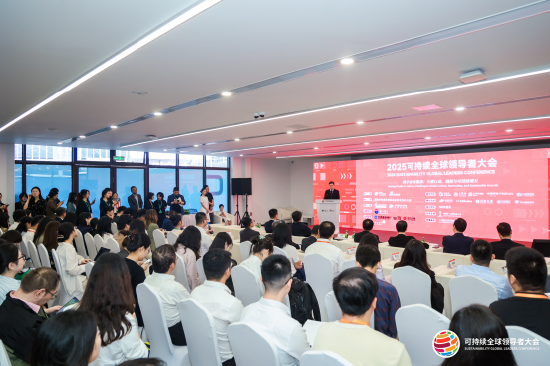
Group 1: Conference Overview - The 2025 Sustainable Global Leaders Conference will be held from October 16 to 18 in Shanghai, focusing on "Facing Challenges Together: Global Action, Innovation, and Sustainable Growth" as its core theme, aiming to explore new paths for sustainable development and inject "Chinese momentum" into global governance [1] - The conference is co-hosted by the World Green Design Organization (WGDO) and Sina Group, with support from the IFRS Foundation and the Shanghai Huangpu District People's Government [1] Group 2: Financial Sector Insights - Discussions at the conference highlighted the importance of the "Five Major Articles" in constructing a new ecosystem for sustainable development in the securities industry, emphasizing collaboration among banks, securities, and insurance institutions to provide comprehensive services [3][7] - China Galaxy Securities' Chairman Wang Sheng noted that innovation is the primary driving force for development, with a focus on technology finance as the first of the "Five Major Articles," indicating that the capital market has formed a multi-level service system for technology finance [5] - CITIC Securities' General Manager Zou Yingguang emphasized the need for continuous investment in technology finance and the exploration of innovative products in green finance to support the "dual carbon" goals [10] - The ESG strategy of China Merchants Securities aims to create a capital cycle that supports low-carbon transformation and enhance social welfare, integrating the "Five Major Articles" with ESG development [12] - Guangda Securities' President Liu Qiuming discussed the importance of integrating the "Five Major Articles" into the company's strategy and achieving positive progress in supporting innovation and financing for high-tech enterprises [15] - Guo Chuanzhou, Chairman of Yuekai Securities, highlighted the company's efforts in promoting inclusive finance and knowledge property transactions to support small and medium-sized enterprises [19] Group 3: Wealth Management Trends - Guo Xiaobo, President of Guolian Minsheng Securities, pointed out that wealth management has a significant impact on the valuation and market value of securities firms, with a notable shift towards wealth management and asset management in the global securities industry [17]