
风险管理

Search documents
宏锡基金带您读懂期权:从零基础入门到资产配置的进阶之路
Zhong Guo Zheng Quan Bao· 2025-08-18 08:55
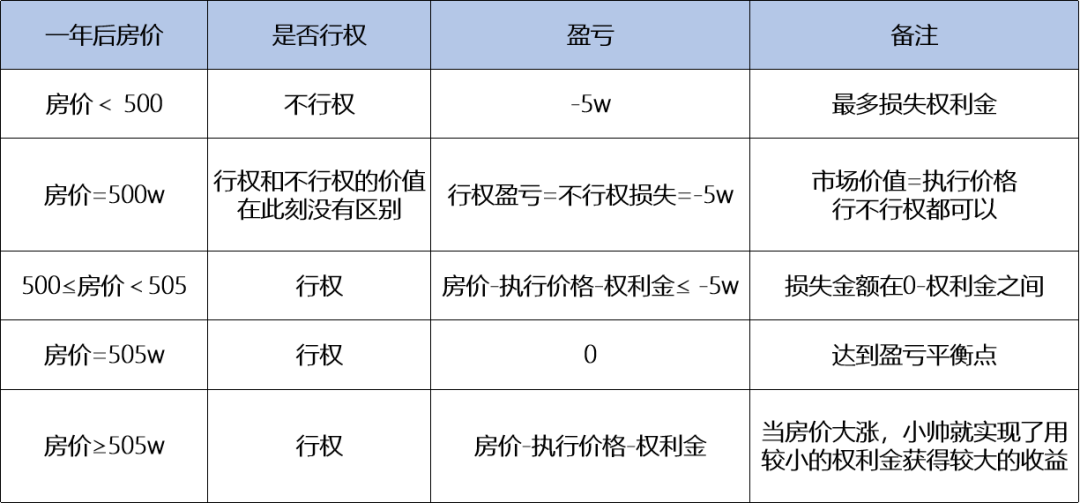
期权入门指南: 零基础也能秒懂的核心要点 "期"表示未来,"权"表示权利。期权,就是未来的权利的意思。其英文名称 "option" 直指本质——赋予期权持有者自由选择的权利。 期权是一种金融合约,赋予购买者在某个交易日或之前,以固定价格买/卖出某种金融资产的权利。 权利持有人(买方)既选择可以行权,也可以选择不行权。买方需要支付小额费用(权利金)锁定这个权利,卖方则承担相应的履约义务。 1、期权合约的六大要素 (1)标的资产:期权合约的"主角" 标的资产是指期权合约所对应的基础资产。它可以是商品、股指、外汇等。如玉米期权对应玉米期货合约,股指期权对应股票指数。 (2)权利类型:多空战场的"指挥棒" 权利类型决定了是有权买入还是卖出标的资产。 ①看涨期权(Call):未来买入标的资产的权利,如果你认为未来标的资产价格可能上涨,可购入看涨期权; ②看跌期权(Put):未来卖出标的资产的权利,如果你认为未来标的资产价格可能下跌,可购入看跌期权。 例如,50ETF期权的合约单位为1万,买了一份50ETF期权看涨期权就相当于拥有1万份50ETF的购买权利。 (5)行权价格:交易的"锚定点" (3)到期日:期权合约的"保 ...

港股投资需注意什么?
Jin Rong Jie· 2025-08-18 02:24
Trading Rules - Hong Kong stock trading rules differ from other markets in several dimensions, including trading hours which are divided into morning and afternoon sessions [1] - Unlike A-shares, Hong Kong stocks do not have a fixed price fluctuation limit, allowing for greater price volatility and potential opportunities, but also higher risks [1] - The T+0 trading system allows investors to buy and sell stocks on the same day, providing flexibility in adjusting positions but increasing the complexity of short-term trading [1] Market Environment Factors - The Hong Kong securities market is highly internationalized and is significantly influenced by global economic conditions, macroeconomic data releases, monetary policy changes, and geopolitical situations [2] - The market includes a diverse range of companies, from influential blue-chip stocks to potential small and medium enterprises, necessitating in-depth research on industry trends and competitive landscapes [2] Currency Fluctuation Issues - The Hong Kong dollar is pegged to the US dollar, and investments in Hong Kong stocks involve settlement in Hong Kong dollars, exposing investors to currency fluctuation risks, particularly against the Chinese yuan [3] - Even if the market value of held stocks remains unchanged, currency fluctuations can affect actual returns when converted back to other currencies [3] Risk Management Key Points - Investors should establish a comprehensive risk management system, diversifying investments across different industries, market capitalizations, and styles to mitigate the impact of volatility in any single stock or sector [4] - Setting scientifically reasonable stop-loss and take-profit points is essential, with strict adherence to established strategies to control losses and secure profits [4]
攻守兼备 让客户获得实实在在的收益——访民生加银恒泽债券基金经理关键
Shang Hai Zheng Quan Bao· 2025-08-17 13:36
Group 1 - The core viewpoint emphasizes that bond funds remain an effective "ballast" for asset allocation, while convertible bond funds are expected to provide better experiences and long-term returns for investors [1][2] - The Minsheng Jianyin Hengze Bond Fund, managed by the key manager, achieved a net value growth rate of 13.63% over the past three years, ranking in the top 5% among similar long-term pure bond funds [2] - The Minsheng Jianyin Convertible Bond Preferred Fund has shown good returns amid market structural rotation, validating the effectiveness of its dual low defense strategy [2][3] Group 2 - The investment style focuses on a top-down approach to assess major asset classes, maximizing utility when opportunities arise while paying attention to major cycle shifts [3] - Risk management is highlighted as a priority, with a strong emphasis on the long-term value of stable allocations over frequent trading, particularly for ordinary investors [3] - The current convertible bond market is at a historically high valuation, driven by the equity market and continuous capital inflow, which poses risks for low-risk investors [3][4] Group 3 - The company has a robust research and investment management framework, ranking second in active bond investment management capabilities over nearly 11 years [4] - The investment philosophy aligns with the company's mission to ensure that clients achieve tangible returns, fostering trust and support from investors for sustainable long-term development [4]
金融监管总局最新发布!释放重要信号→
Jin Rong Shi Bao· 2025-08-16 04:34
Core Viewpoint - The banking sector in China shows stable growth, optimized structure, and controllable risks as of Q2 2025, reflecting a robust performance in supporting the real economy and enhancing risk resilience [1][2]. Group 1: Banking Sector Performance - As of the end of Q2 2025, the total assets of banking financial institutions reached 467.3 trillion yuan, a year-on-year increase of 7.9% [1]. - The net profit of commercial banks for the first half of the year amounted to 1.2 trillion yuan [1]. - The non-performing loan (NPL) ratio for commercial banks was 1.49%, a decrease of 0.02 percentage points from the previous quarter [1][3]. Group 2: Loan Growth and Structure - The balance of inclusive loans to small and micro enterprises reached 36 trillion yuan, growing by 12.3% year-on-year [2]. - Inclusive agricultural loans increased by 1.1 trillion yuan since the beginning of the year, totaling 13.9 trillion yuan [2]. - Large commercial banks led the asset growth with a year-on-year increase of 10.4%, highlighting their pivotal role in the financial system [2]. Group 3: Risk Management and Asset Quality - The banking sector has seen a reduction in both the NPL balance and NPL ratio, with the NPL balance at 3.4 trillion yuan, down 24 billion yuan from the previous quarter [3][4]. - The provision coverage ratio rose to 211.97%, indicating enhanced financial buffers against risks [4]. - In the first half of the year, banks made new provisions of 1.1 trillion yuan, an increase of 579 billion yuan year-on-year, and disposed of 1.5 trillion yuan in non-performing assets, up 1.236 trillion yuan year-on-year [3]. Group 4: Operational Efficiency - The cost-to-income ratio for commercial banks improved to 30.2%, a decrease of 5.3 percentage points compared to the previous year [5]. - The net interest margin remained stable at 1.42%, with a slight decrease of 0.01 percentage points from the first quarter [5]. - The reduction in funding costs has contributed to a narrowing decline in net interest margin [5]. Group 5: Future Outlook - The banking sector must remain vigilant against potential challenges, including interest rate fluctuations that may pressure net interest margins and credit risks in certain economic recovery areas [6]. - There is a need for continued optimization of credit structures while supporting the real economy and enhancing risk management to promote a positive financial-economic cycle [6].
全球首个!证监会:同意
Sou Hu Cai Jing· 2025-08-16 03:50
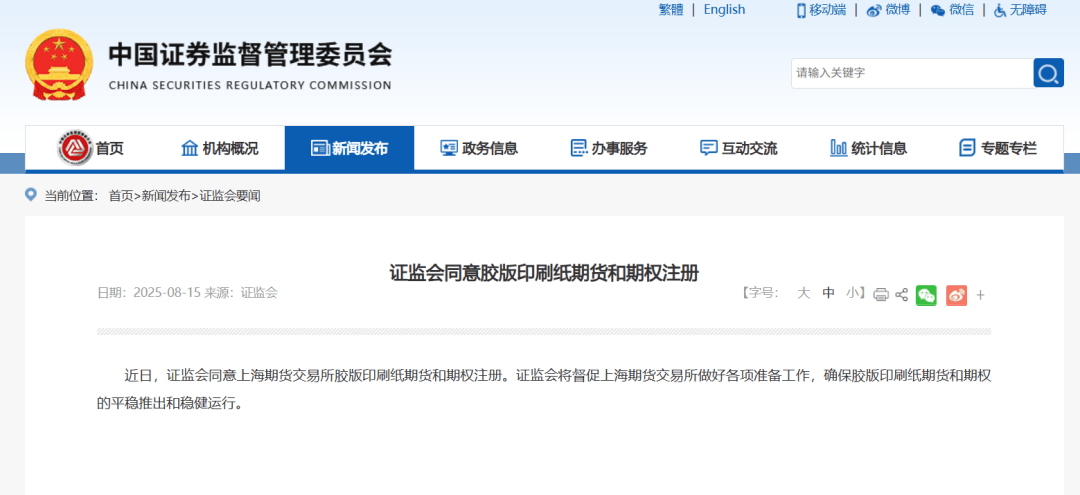
Core Insights - The China Securities Regulatory Commission has approved the Shanghai Futures Exchange to register futures and options for newsprint, fuel oil, asphalt, and pulp, marking the launch of the world's first financial derivatives for cultural paper [1][3] - The introduction of newsprint futures and options will fill a gap in the domestic market for financial derivatives related to cultural paper, providing tools for companies in the cultural paper industry to manage price volatility [3] Industry Overview - The paper industry is a crucial basic raw material sector closely linked to national economic development and people's daily lives, with paper types categorized into cultural, packaging, household, and specialty papers [1] - China is the largest producer and consumer of newsprint globally, with a projected production of 9.48 million tons and apparent consumption of 8.71 million tons in 2024 [3] Market Dynamics - The domestic paper industry faces significant revenue growth pressures due to complex and changing market conditions, leading to a high demand for risk management tools [3] - The launch of newsprint futures and options is expected to create a complete risk management chain in collaboration with pulp futures, enhancing the management of exposure risks from raw materials to finished products [3] Product Development - The Shanghai Futures Exchange has developed futures for fuel oil, asphalt, and pulp over several years, which have become important hedging tools for enterprises, characterized by good market liquidity and mature investor structure [3] - The introduction of options products will allow companies to utilize both futures and options for more refined hedging strategies, thereby improving their risk management capabilities [3]
期货新品种,全球首个文化用纸金融衍生品将至→
Jin Rong Shi Bao· 2025-08-16 03:18
Core Viewpoint - The approval of futures and options for coated printing paper by the China Securities Regulatory Commission marks a significant step in enriching the product system of the Shanghai Futures Exchange and filling the gap in financial derivatives for cultural paper [1][2]. Industry Overview - The coated printing paper is a typical representative of cultural and printing paper, primarily made from bleached wood pulp, widely used in books, magazines, and notebooks, characterized by a large market size, high standardization, and significant price volatility [1]. - China is the largest producer and consumer of coated printing paper globally, with a projected production of 9.48 million tons and apparent consumption of 8.71 million tons in 2024 [1]. Market Dynamics - The recent concentration of domestic cultural paper production capacity has led to increased price volatility in the coated printing paper market, affecting the entire industry chain [2]. - The introduction of futures and options for coated printing paper is expected to provide precise tools for managing price volatility risks, facilitating the formation of a transparent market price [2]. Risk Management - The new financial instruments will create a complete risk management chain between pulp and coated printing paper, enhancing the closed-loop management of exposure risks from raw materials to finished products [2][3]. - The integration of these new products with existing pulp futures will allow companies to implement cross-commodity hedging strategies, improving overall resource allocation efficiency in the industry [3]. Environmental Considerations - The listing of coated printing paper futures and options will promote green and circular development in the industry, with contract arrangements prioritizing companies with relevant green certifications [3]. - The paper industry is undergoing a transformation towards green and low-carbon practices, aligning with national strategies for sustainable development [2][3].
华大九天: 关于中国电子财务有限责任公司风险评估专项审计报告
Zheng Quan Zhi Xing· 2025-08-15 16:35
Core Viewpoint - The audit report indicates that China Electronic Finance Co., Ltd. has effectively established and implemented a risk management system related to its financial statements, including funding, credit, investment, auditing, and information management as of June 30, 2025 [1][33]. Company Overview - China Electronic Finance Co., Ltd. was established as a national non-bank financial institution and began operations in 2001, with a registered capital of 1.901 billion RMB, which was later increased to 2.5 billion RMB after a capital increase [5][6]. - The company underwent a merger with Zhuhua Group Finance Co., Ltd. and opened a branch in Guizhou in May 2023 [5][6]. Risk Management System - The company has developed a comprehensive risk management system, including internal control measures and risk assessment procedures, to ensure effective governance and operational integrity [9][10]. - The internal control structure is designed to separate responsibilities among various governance bodies, including the shareholders' meeting, board of directors, and supervisory board [9]. Financial Performance - As of June 30, 2025, the company reported bank deposits of 18.666 billion RMB, net interest income of 257 million RMB, and a net profit of 161 million RMB [20][33]. - The company maintains a capital adequacy ratio of 12.75%, which exceeds the regulatory minimum requirement [20]. Compliance with Regulatory Requirements - The company adheres to the regulatory requirements set forth by the China Banking and Insurance Regulatory Commission, including maintaining liquidity ratios and limits on loan balances relative to deposits [20][21]. - The company has established various internal policies and procedures to ensure compliance with financial regulations and effective risk management [30][31].
悦达投资: 悦达投资关于江苏悦达集团财务有限公司2025年上半年风险评估报告
Zheng Quan Zhi Xing· 2025-08-15 16:24
Group 1 - The financial company, Jiangsu Yueda Group Financial Co., Ltd., was established on December 23, 2015, with a registered capital of 1.1 billion RMB, and is primarily engaged in providing financial services to its parent group [1][2] - The ownership structure of the financial company includes Jiangsu Yueda Group Co., Ltd. (51%), Jiangsu Yueda Investment Co., Ltd. (25%), and Yueda Capital Co., Ltd. (24%) [1] - The financial company has established a comprehensive internal control system, including a board of directors, a supervisory board, and a risk management committee to ensure effective governance and risk management [2][4] Group 2 - As of June 30, 2025, the financial company reported total assets of 4.966 billion RMB, with loans and advances amounting to 3.129 billion RMB and interbank deposits of 1.025 billion RMB [12] - The financial company has implemented a robust risk management framework to identify and assess credit risk, liquidity risk, and operational risk, ensuring a balanced approach to risk and return [4][6][7] - The financial company has established a credit rating system for clients, categorizing them into six credit levels (AAA to B) based on various financial and non-financial indicators [5] Group 3 - The financial company has developed a liquidity risk management policy that emphasizes both risk control and pursuit of benefits, ensuring that liquidity risks are maintained within manageable limits [6][10] - The internal audit department operates independently to oversee compliance and effectiveness of internal controls, providing recommendations for improvement based on audit findings [11] - As of June 30, 2025, the financial company has met all regulatory requirements set forth by the relevant financial authorities, indicating a sound financial position and effective risk management practices [15]

胶版印刷纸期货及期权上市在即 完善浆纸产业全周期风险管理体系
Shang Hai Zheng Quan Bao· 2025-08-15 11:33
来源:上海证券报·中国证券网 上证报中国证券网讯(记者 费天元)8月15日,中国证监会发布通知,同意上海期货交易所胶版印刷纸 期货及期权,燃料油、石油沥青和纸浆期权注册。这标志着上期所即将上市全球首个文化用纸金融衍生 品,同时加速实现成熟期货品种期权覆盖。证监会要求上期所做好各项准备工作,保障相关品种平稳推 出和稳健运行。 造纸产业还具有较强的循环经济特征。目前我国造纸产业已经基本形成完整的原料可再生、产品可循 环、废弃可回收的生产、流通和消费体系。记者了解到,胶版印刷纸期货和期权上市后,将通过交割品 级选择设置、交割认证品牌准入等合约制度安排,引导行业全面贯彻绿色循环发展理念。例如,将在交 割认证品牌遴选时优先考虑具备相关绿色认证资质的企业,引导生产企业推行环保工艺,以市场化手段 推动造纸产业绿色低碳转型,为实现"双碳"目标和绿色发展贡献力量。 刘文龙表示,自2020年以来,中国造纸协会与上期所就胶版印刷纸期货、期权合约及规则开展了大量的 调研和论证,并在推动造纸行业绿色低碳转型、促进高质量发展方面进行了深入的研究。希望该品种上 市后能够通过市场化的手段,有效推动产业实现绿色低碳转型。 上期所燃料油、石油沥 ...
上期所即将上市全球首个文化用纸金融衍生品
Sou Hu Cai Jing· 2025-08-15 10:02
Core Viewpoint - The Shanghai Futures Exchange (SHFE) has received approval from the China Securities Regulatory Commission to launch futures and options for coated printing paper, fuel oil, asphalt, and pulp, marking the introduction of the world's first financial derivatives for cultural paper, which will enhance the product system of SHFE and provide tools for price risk management in the paper industry [1][2]. Group 1: Industry Overview - The paper industry is a crucial basic raw material industry closely related to national economic development and people's lives, with various applications including cultural paper, packaging paper, and specialty paper [1]. - China is the largest producer and consumer of coated printing paper globally, with a projected production of 9.48 million tons and apparent consumption of 8.71 million tons in 2024 [2]. Group 2: Market Dynamics - The introduction of coated printing paper futures and options will fill the gap in domestic financial derivatives for cultural paper, providing enterprises in the cultural paper industry chain with precise tools to manage price volatility risks [2]. - The futures and options will create a complete risk management chain from "pulp to coated printing paper," enhancing the closed-loop management of exposure risks for upstream and downstream enterprises [2]. Group 3: Environmental Considerations - The paper industry has strong circular economy characteristics, with a complete system for renewable raw materials, recyclable products, and recoverable waste already established in China [2]. - The listing of coated printing paper futures and options will promote green and circular development in the industry by prioritizing brands with green certifications during delivery certification [2].