
双碳战略

Search documents
包钢2个项目入选“中国好技术”项目库
Nei Meng Gu Ri Bao· 2025-10-22 15:29
Core Insights - The "Carbonization Method for Comprehensive Utilization of Steel Slag" project and the "Deep Treatment Technology for Coking Phenolic Cyanide Wastewater" project from Baogang Group have been recognized in the 2024 "China Good Technology" evaluation, highlighting their innovative contributions to environmental sustainability [1][2] Group 1: Project Highlights - The "Carbonization Method for Comprehensive Utilization of Steel Slag" project effectively utilizes steel slag and explores new pathways for industrial solid waste and carbon emission management, aligning with the national "dual carbon" strategy [1] - This project has previously received multiple honors, including the "National Green Low-Carbon Demonstration Project," indicating its maturity and social recognition [1] - The "Deep Treatment Technology for Coking Phenolic Cyanide Wastewater" project has optimized its process system, significantly enhancing wastewater treatment efficiency and showcasing both environmental and economic value [2] Group 2: Technical Achievements - The "Deep Treatment Technology for Coking Phenolic Cyanide Wastewater" has been applied successfully in Baogang Group, treating approximately 7 million tons of wastewater, with a significant reduction in key pollutants like ammonia nitrogen [2] - The treated water meets the direct discharge standards of the "Pollutant Discharge Standards for Coking Chemical Industry" (GB16171-2012), demonstrating compliance with environmental regulations [2] - About 70% of the treated water can be reused in the coking production process, reducing the annual water intake from the Yellow River by approximately 3.6 million tons, promoting both ecological and economic benefits [2] Group 3: Recognition and Impact - The "China Good Technology" award, established in 2014, aims to promote excellent technological innovation and the transformation of innovative achievements, with an acceptance rate of less than 30% from over 5,500 submitted projects [2]

滨化集团递表港交所 在氯碱化学品行业稳居龙头地位
Zhi Tong Cai Jing· 2025-10-22 12:20
Core Viewpoint - Binhua Group has submitted an application for listing on the Hong Kong Stock Exchange, positioning itself as a leader in the chlor-alkali chemical industry and achieving rapid growth in petrochemical and wet electronic chemicals sectors [1][5]. Company Overview - Binhua Group is a comprehensive chemical group focused on technological innovation and green low-carbon development, established in 1968 with over 50 years of experience in the chemical industry [5]. - The company operates in three core segments: chlor-alkali chemicals, C3 and C4 chemicals, and wet electronic chemicals, with a diverse product portfolio including caustic soda, propylene oxide, MTBE, and electronic-grade hydrofluoric acid [5]. - According to Frost & Sullivan, Binhua Group is the largest producer of granular caustic soda, food-grade flake caustic soda, trichloroethylene, tetrachloroethylene, and chloroprene in China, and the largest private producer of propylene oxide by capacity as of June 30, 2025 [5]. Business Model and Strategy - Binhua Group benefits from abundant upstream resources, including salt and electricity, establishing a diversified and synergistic product ecosystem that covers various downstream applications [6]. - The company implements industrial synergy and resource recycling in its production processes, enhancing resource utilization efficiency, reducing waste emissions, and lowering overall production costs [6]. - Binhua Group is actively promoting an integrated "new energy + chemicals" model to accelerate the green low-carbon transition of energy supply, seizing opportunities from global energy structure transformation and low-carbon economic transition [6]. - The company aligns with China's "dual carbon" strategy, integrating carbon reduction goals into its green development initiatives and has been recognized as a "national green factory" [6]. Financial Performance - Binhua Group's revenue for the fiscal years ending December 31 and the six months ending June 30 for 2022, 2023, 2024, and 2025 are as follows: - 2022: 88.92 billion RMB - 2023: 73.06 billion RMB - 2024: 102.28 billion RMB - 2025 (first half): 73.54 billion RMB [8]. - The company reported a gross profit margin of 26.5% in 2022, which decreased to 16.7% in 2023, and is projected to be 6.4% in 2024 [8]. - Operating profit for 2022 was 1.75 billion RMB, which fell to 635.59 million RMB in 2023, with a projected operating profit of 161.18 million RMB for the first half of 2025 [8].


新股消息 | 滨化集团递表港交所 在氯碱化学品行业稳居龙头地位
Zhi Tong Cai Jing· 2025-10-22 12:20
Core Viewpoint - Binhu Chemical Group has submitted an application for listing on the Hong Kong Stock Exchange, maintaining its leading position in the chlor-alkali chemical industry while achieving rapid growth in petrochemical and electronic chemical sectors [1] Group 1: Company Overview - Binhu Chemical Group is a comprehensive chemical group focused on technological innovation and green low-carbon development, established in 1968 with over 50 years of experience in the chemical industry [1] - The company operates in three core segments: chlor-alkali chemicals, carbon three and four chemicals, and wet electronic chemicals, with a comprehensive product portfolio including caustic soda, propylene oxide, MTBE, and electronic-grade hydrofluoric acid [1] Group 2: Market Position - According to Frost & Sullivan, Binhu Chemical Group is the largest producer of granular caustic soda, food-grade flake caustic soda, trichloroethylene, tetrachloroethylene, and chloropropene in China by revenue in 2024, and the largest private producer of propylene oxide by capacity as of June 30, 2025 [1] - The company is one of the few domestic manufacturers capable of producing electronic-grade hydrofluoric acid for advanced semiconductor processes [1] Group 3: Business Model and Strategy - Binhu Chemical Group has established a diversified and synergistic product ecosystem benefiting from abundant upstream resources, including salt and electricity, covering various downstream applications such as alumina and epoxy resin [2] - The company implements industrial synergy and resource recycling in its production processes, enhancing resource utilization efficiency, reducing waste emissions, and lowering overall production costs, which strengthens its ability to withstand industry cyclicality [2] - The company actively promotes an integrated "new energy + chemicals" model to accelerate the green low-carbon transition of energy supply, seizing opportunities from global energy structure and low-carbon economy transformations [2] - Binhu Chemical Group aligns with China's "dual carbon" strategy, deeply integrating carbon reduction goals into its green development initiatives, and has been recognized as a "national green factory" [2] Group 4: Financial Performance - Binhu Chemical Group's main business involves the production and sales of organic and inorganic chemical products, with revenue from energy sales contributing to its income [3] - The company reported revenues of 8.892 billion RMB, 7.306 billion RMB, 10.228 billion RMB, and 7.354 billion RMB for the fiscal years ending June 30 for 2022, 2023, 2024, and the first half of 2025, respectively [3]
市场占有率证明:反映企业市场占有率的重要证明文件-权威机构中金企信
Sou Hu Cai Jing· 2025-10-22 11:24
Core Insights - The article emphasizes the importance of market share proof for companies applying for "single champion," "specialized and innovative," and "small giant" designations, highlighting its role in enhancing application credibility and success rates [2][8]. Market Share Proof - Market share proof is a critical document that reflects a company's market position and is essential for applications in various competitive categories [2][4]. - It can be established through self-certification by the company or by citing data from third-party professional institutions, addressing challenges such as lack of data sources and inability to define niche markets [2][10]. Benefits for Companies - For companies, market share proof helps in defining market scope, obtaining reliable data, and strengthening data logic, ultimately improving the chances of successful applications [5][14]. - It also enhances trust among collaborators by providing insights into the company's market position, product competitiveness, and overall market share [7][16]. Industry Trends - The electric traction vehicle market in China is experiencing significant growth, with sales surpassing 85,100 units from January to August 2025, marking a year-on-year increase of 244% [10]. - The market is characterized by a concentration of leading players, with 28 participants and five companies holding over 10% market share, including Jiefang, Xugong, and Sany [11]. Future Directions - Key future trends in the industry include lightweight design, intelligent systems, and increased battery energy density, which are expected to enhance vehicle performance and expand market applications [11].


四家车企重金砸向新总部 重庆、广州满弦PK汽车城
Zhong Guo Jing Ji Wang· 2025-10-22 10:45
40亿元、40.5亿元、51.6亿元……近来,多家车企豪掷千金,"卷"起了新总部。 10月20日,小鹏汽车正式搬迁至位于广州天河智慧城、总投资40亿元的新总部。今年,长安汽车(000625)投资40.5亿元在重庆鲤鱼池投建全球新总部,预 计2027年落成投入使用。赛力斯(601127)更是豪掷51.6亿元,在重庆礼嘉投建包括新总部、新研发基地在内的"赛力斯全球汽车公园"。去年11月,广汽集 团(601238)总部办公地址从珠江新城CBD搬迁至广州市番禺区。 四个"搬家"的企业"两两作对",以"传统车企+造车新势力"的组合分列广州和重庆,也凸显了中国五大汽车生产基地(上海、长春、北京、广州、重庆)中"两 强"的竞逐之势。 车企密集投建或搬迁新总部,并非单纯的"办公升级",更是中国汽车产业在"双碳"战略引领、新能源转型深水区、区域经济协同发展三重背景下的必然选 择。"豪掷"背后,既有国家政策的顶层牵引,离不开地方政府的精准赋能,更是企业应对市场竞争的主动突围。 汽车产业投资热情依旧 宏观来看,近年来,中国汽车产业虽面临"内卷"挑战,但国民经支柱产业地位愈发稳固。日前,国家统计局新闻发言人在2025年前三季度国民经 ...





长期主义赢富储未来 | 富士康储能量产暨新品正式发布
鑫椤锂电· 2025-10-22 08:47
Core Viewpoint - The article emphasizes the strategic importance of energy storage in the context of the "dual carbon" strategy, highlighting the launch of the energy storage production base in Zhengzhou as a key move for Foxconn's subsidiary, Fuchu Kenen, to enhance its market presence and product offerings [3][11]. Group 1: Company Developments - Fuchu Kenen's launch event in Zhengzhou marks a significant milestone in its journey towards market-oriented and large-scale development in the energy storage sector [3]. - The Zhengzhou energy storage base is designed to support full-scene product manufacturing capabilities and has already initiated multiple projects, contributing to the local new energy industry ecosystem [3][11]. - The company aims to build a product matrix and operational network that covers all scenarios and offers global services, ensuring safer, more efficient, and cost-effective solutions for customers [17]. Group 2: Product Features and Innovations - Fuchu Kenen's energy storage products are characterized by "three highs and one long," which refers to high safety, high reliability, high efficiency, and long lifespan, directly impacting user returns [5]. - The newly announced 9.37MWh container system, named "Energy Beast 9370," utilizes proprietary technology to achieve an 87% increase in capacity compared to conventional products, making it highly competitive in both commercial and grid-side applications [11]. - The company is also planning to develop key products for the next year, including an 488kWh AIO system and 6.25MWh and 9.37MWh container systems [9]. Group 3: Customer Assurance and Risk Management - Fuchu Kenen is committed to ensuring the long-term safety and stability of customer assets by collaborating with quality investment partners and providing a comprehensive commercial insurance coverage of 35 million RMB [13]. - The EMS cloud platform enables intelligent operation and maintenance, offering customers peace of mind through smart, cloud-based solutions [13]. - The company positions itself not just as a seller of equipment but as a guardian of energy storage safety, prioritizing customer relationships and service [15].
交车200辆并签约500辆!谁家新能源轻卡爆大单?
第一商用车网· 2025-10-22 07:22
Core Viewpoint - The strategic signing of 500 hydrogen fuel light trucks and the delivery of 200 new energy light trucks by Yutong and Zhengzhou Transportation Construction Investment Co., Ltd. marks a significant step towards promoting hydrogen fuel vehicles and meeting diverse logistics needs in Zhengzhou [1][3][11]. Group 1: Strategic Importance - The signing of 500 hydrogen fuel light trucks is a key initiative for Zhengzhou to implement the "dual carbon" strategy and promote green industry development, contributing to the city's goal of becoming a "hydrogen energy demonstration city" [3][4]. - The event is seen as a breakthrough in addressing application bottlenecks and stimulating market potential, as stated by Zhengzhou's Deputy Director of the People's Congress [3][5]. Group 2: Project Scope and Implementation - The project encompasses the entire supply chain from procurement to delivery and operation, systematically addressing core issues in vehicle manufacturing, energy assurance, and market operation [6]. - Yutong Group plans to increase R&D investment and collaborate with partners to explore integrated solutions for vehicle leasing, energy assurance, and operational services, aiming to establish sustainable hydrogen transportation business models [6][9]. Group 3: Market Potential and Performance - Yutong has developed a range of hydrogen fuel products over 16 years, achieving significant industry advantages in economic performance and environmental adaptability, with sales ranking among the top in the country for three consecutive years [8]. - The hydrogen fuel light trucks are designed to meet high efficiency and energy consumption demands in cold chain transportation, with over 500 hydrogen fuel refrigerated light trucks already in regular operation in Zhengzhou [8][11].

中国风电锚定“50亿千瓦”新目标,央企现代能源ETF(561790)备受关注,石化油服涨停
Xin Lang Cai Jing· 2025-10-22 05:54
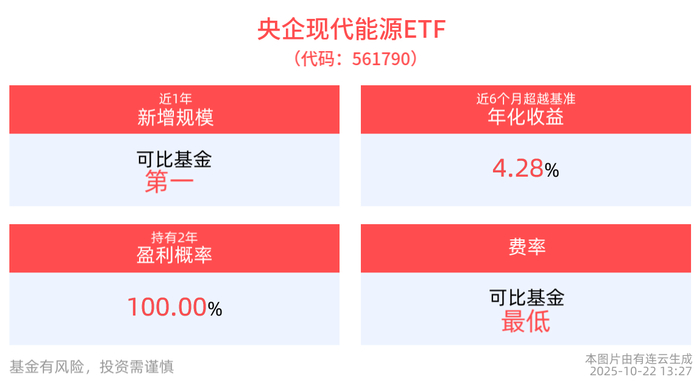
Core Insights - The China Securities National New State-Owned Enterprises Modern Energy Index has seen a slight decline of 0.13% as of October 22, 2025, with mixed performance among constituent stocks [3] - The "Wind Energy Beijing Declaration 2.0" was released on October 20, 2025, at the International Wind Energy Conference, setting ambitious targets for wind power installation during the 14th and 15th Five-Year Plans [3] Group 1: Market Performance - The top-performing stocks include PetroChina Oilfield Services, which rose by 10.00%, and China Nuclear Engineering, which increased by 4.10% [3] - The recent trading volume for the National Modern Energy ETF was 161.57 million yuan, with a turnover rate of 3.62% [3] - Over the past year, the National Modern Energy ETF has seen an average daily trading volume of 615.35 million yuan [3] Group 2: Policy Changes - Starting November 1, 2025, the 50% VAT refund policy for onshore wind power will be canceled, while the policy for offshore wind power will continue until the end of 2027 [4] - The cancellation of tax incentives for onshore wind power is expected to impact net profits by approximately 19%, creating short-term pressure on profitability [4] Group 3: Industry Outlook - Despite the short-term challenges, the long-term outlook for the wind power industry remains robust due to China's commitment to its "dual carbon" strategy [4] - The wind power supply chain is anticipated to enter a recovery phase, with a focus on leading turbine manufacturers and offshore expansion [4] - The "Two Seas" strategy for wind power equipment is expected to enhance market share and overall profitability for companies in the sector [4] Group 4: Index Composition - As of September 30, 2025, the top ten weighted stocks in the index include Changjiang Electric Power and China Nuclear Power, accounting for 47.72% of the index [6]



中国科学院碳足迹智能核算研究取得进展
Huan Qiu Wang Zi Xun· 2025-10-22 02:51
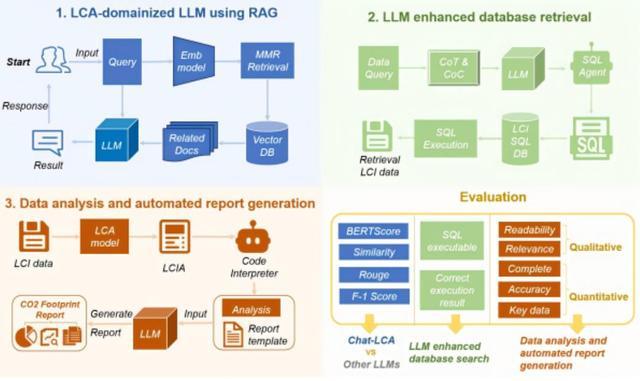
Core Insights - The article discusses the introduction of Chat-LCA, an intelligent life cycle assessment (LCA) solution that integrates large language models (LLM) to enhance carbon accounting efficiency and accuracy in the context of China's "dual carbon" strategy [1][3]. Group 1: Technology and Innovation - Chat-LCA represents a significant advancement by integrating cutting-edge AI technologies such as retrieval-augmented generation (RAG), Text2SQL, chain of thought (CoT), and code chain (CoC) into the entire LCA process [3]. - The system automates the entire workflow from knowledge acquisition to report generation, effectively breaking down knowledge barriers and data silos [3][4]. Group 2: Performance Metrics - Chat-LCA has demonstrated high accuracy and efficiency, achieving a BERTScore of 0.85 in answering professional questions across ten industries, a Text2SQL execution accuracy of 0.9692 on real LCI databases, and a report generation accuracy of 0.9832 with a readability score of 8.42 out of 10 [4]. - The system can reduce traditional LCA analysis time from weeks to just a few hours, marking a qualitative leap in carbon accounting efficiency [4]. Group 3: Practical Applications - In practical applications, such as assessing the carbon footprint of lithium-sulfur batteries, Chat-LCA identified raw material acquisition (47.2%) and production stages (31.3%) as major carbon emission hotspots, providing targeted emission reduction suggestions like clean energy alternatives [4]. - The solution significantly lowers the technical barriers for carbon accounting and expands the applicability of LCA methods across various industrial and policy scenarios, supporting the realization of "dual carbon" goals with actionable technological and decision-making tools [4].
未势能源携手宇通集团 助力“中原氢都”冷链物流零碳升级
Zheng Quan Ri Bao Wang· 2025-10-21 11:41
Core Insights - The recent event in Zhengzhou marked a record for the largest single signing of hydrogen fuel light trucks in China, with a strategic agreement for 500 hydrogen fuel cell systems between Weishi Energy and Yutong Light Truck [1] - Yutong Group is committed to increasing R&D investment and collaborating with partners to develop sustainable hydrogen transportation business models [1][2] - Weishi Energy aims to validate the economic viability of hydrogen technology in various commercial vehicle scenarios, demonstrating its capabilities in the hydrogen energy sector [2] Group 1 - The strategic signing of 500 hydrogen fuel cell systems will support the development of a cold chain logistics network in Henan, covering 18 cities and 102 counties [1] - The collaboration aims to create a replicable model for hydrogen energy in the cold chain food supply sector, contributing to national hydrogen energy promotion [1][3] - Weishi Energy and Yutong Group have previously collaborated on various hydrogen vehicle projects, showcasing the adaptability of hydrogen technology in different commercial applications [2] Group 2 - The recent project is a significant milestone for Weishi Energy in expanding its market presence in Central China and contributing to the green transportation system in Zhengzhou [3] - Future plans include leveraging local resources and the hydrogen industry development strategy in Zhengzhou to enhance the coverage of cold chain logistics [3] - The initiative aligns with national carbon neutrality goals, providing a hydrogen-powered solution for sustainable logistics [3]