
碳达峰碳中和

Search documents
哈尔滨银行(06138)落地哈市首笔“碳排放+碳信用”联动挂钩贷款
智通财经网· 2025-07-02 11:44
Group 1 - The People's Bank of China and local financial authorities guided Harbin Bank to successfully launch the first "carbon emission + carbon credit" linked loan in Harbin, providing a credit of 100 million yuan to Harbin Thermal Power Co., Ltd. [1] - This project aligns with various policies aimed at promoting green finance and sustainable development in the region, contributing to ecological priority and green development in Heilongjiang [1][2] - Harbin Thermal Power Co., Ltd. has consistently exceeded national standards for nitrogen oxides and sulfur dioxide emissions by over 30%, and has been recognized as a national high-tech enterprise in 2023 [2] Group 2 - Harbin Bank's Harbin branch has designed loan interest rate linkage indicators based on the company's carbon emissions and credit, providing interest rate discounts to incentivize green low-carbon development [2] - The bank has been actively implementing the central government's decisions on carbon peak and carbon neutrality, focusing on key areas such as heating supply, manufacturing transformation, and new energy [2] - Harbin Bank aims to expand its green finance service scale and enhance service levels to support the sustainable development of "Beautiful Heilongjiang" [2]

深圳能源拟63亿投建电厂改造项目 第一季净利增22%总资产1724亿
Chang Jiang Shang Bao· 2025-07-02 03:48
长江商报消息 能源巨头深圳能源(000027.SZ)继续做强做优主业。 6月30日晚间,深圳能源公告称,子公司拟63.32亿元投资建设妈湾电厂升级改造煤电环保替代一期工程 项目。 经过多年发展,深圳能源实现了从单一发电企业成长为具有多元化能源体系的综合服务商,产业板块涵 盖低碳电力、生态环保、综合燃气、数智服务。 近年来,深圳能源展现出强大的发展动能。截至3月末,公司资产规模达1724亿元。2025年一季度,公 司实现"开门红",其中归母净利润同比增长22.31%。 拟63.32亿投建电厂升级改造项目 6月30日晚间,深圳能源公告,公司控股子公司深圳妈湾电力有限公司(以下简称"妈湾公司")拟投资 建设妈湾电厂升级改造煤电环保替代一期工程项目,项目装机规模为2×660兆瓦。本项目总投资为63.32 亿元,自有资金为13.05亿元,由妈湾公司自筹,其余投资款拟通过融资解决。 公告显示,妈湾电厂位于深圳市南山区南头半岛西南端,已建6台亚临界燃煤机组,其中1号、2号机组 装机容量均为320兆瓦,3号至6号机组装机容量均为330兆瓦,总装机容量为1960兆瓦,大气污染物排放 水平达到超低排放要求。1号、2号机组已于20 ...

上海永茂泰汽车科技股份有限公司第三届董事会第十五次会议决议公告
Shang Hai Zheng Quan Bao· 2025-07-01 21:07
Board Meeting Summary - The third board meeting of Shanghai Yongmaotai Automotive Technology Co., Ltd. was held on July 1, 2025, with all 9 directors present, confirming the legality and validity of the meeting [2][4]. Employee Stock Ownership Plan Adjustment - The board approved an adjustment to the reserved transfer price for the 2025 employee stock ownership plan, changing it from 3.96 RMB per share to 3.92 RMB per share, effective from July 4, 2025 [3][30][34]. Investment in Mexico - The board approved an investment of approximately 450 million RMB to establish an intelligent manufacturing base for automotive parts in Mexico, which aims to expand the company's overseas production capacity and enhance market competitiveness [5][10][22]. - The investment will be made by the company's wholly-owned subsidiary in Singapore, in collaboration with another subsidiary, and is aligned with national "going out" strategies [6][10][21]. Project Feasibility and Strategic Importance - The project is strategically important as it aligns with the company's long-term development goals and customer needs, enhancing internationalization and profitability [22][21]. - Mexico's favorable investment environment, including its proximity to the U.S. and its status as a major automotive production hub, supports the project's feasibility [17][21]. Company Background and Operations - The company has over 20 years of experience in producing aluminum alloy automotive parts, serving major clients in the automotive industry, and has established a comprehensive low-carbon circular economy in its operations [20][22].

宁夏第三条电力外送大通道“宁电入湘”工程开始向湖南送“绿电”
Zheng Quan Ri Bao Wang· 2025-07-01 03:00
Core Points - The "Ningdian Ruxiang" project, a ±800 kV UHVDC transmission line, has completed its 168-hour trial operation and started delivering electricity to Hunan, marking the third major power transmission channel from Ningxia [1] - The project spans 1616 kilometers and passes through six provinces, with a total installed capacity of 17.64 million kW, of which 13 million kW comes from renewable energy sources, contributing over 50% of green electricity [1] - The total investment for the project is 28.1 billion yuan, with an estimated 70 billion yuan in related investments in renewable energy, coal power, and energy storage projects in Ningxia [1] Industry Impact - The project enhances energy cooperation between Ningxia and Hunan, with local Hunan enterprises supplying key components such as high-end converter transformers and capacitors [2] - The construction of a 3 million kW wind-solar energy base by Hunan Energy Group in Ningxia is underway, with the first phase of a 1 million kW solar project expected to be connected to the grid by July 30 [2] - The project is expected to provide reliable electricity for Hunan enterprises and potentially lower their electricity costs, fostering economic development in both regions [2]
碳足迹背景数据库为什么重要?
Zhong Guo Huan Jing Bao· 2025-06-29 23:14
Core Viewpoint - The construction of a unified and standardized carbon footprint background database is crucial for the development of China's product carbon footprint management system and for enhancing international competitiveness in carbon data standards [1][4]. Group 1: Current Status of Carbon Footprint Background Database - China is placing significant emphasis on the establishment of carbon footprint background databases, as highlighted in the State Council's work plan for building a dual control system for carbon emissions [1]. - Despite some progress, the construction and application of carbon footprint background databases in China are still in the early stages, facing various misconceptions and bottlenecks [2][3]. Group 2: Challenges in Database Construction - There is a weak understanding of the database among market participants, leading to confusion between different types of databases and insufficient emphasis on real data quality control [2][3]. - The quality of data is inconsistent, with issues such as redundant and low-level construction, lack of unified standards, and transparency problems in existing databases [3]. - The promotion and application of carbon footprint background databases are inadequate, with limited recognition in international markets and a need for improved standards [3]. Group 3: Recommendations for Improvement - It is recommended to enhance planning and design for the national carbon footprint background database, ensuring a unified structure and avoiding redundant construction [4][5]. - Emphasis should be placed on research and development, fostering talent in carbon footprint data development, and utilizing digital technologies for better data accessibility and traceability [5][6]. - Expanding application scenarios through public awareness campaigns and competitions can help improve the market space for quality background databases [6][7]. Group 4: International Cooperation - Strengthening international collaboration is essential, including technical exchanges with global lifecycle data development organizations and promoting mutual recognition of carbon footprint data standards [7].
光伏治沙助力“沙戈荒”地区可持续发展
Xin Hua She· 2025-06-27 09:17
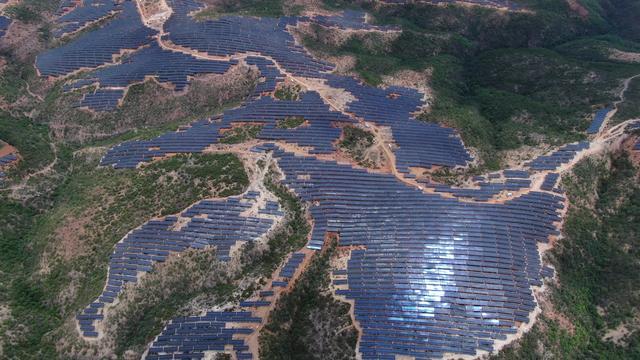
Group 1 - JinkoSolar's global vice president shared China's experience in photovoltaic desertification control at the 2025 Summer Davos Forum, attracting international interest [2] - JinkoSolar supplied a total of 1.75GW of photovoltaic components for two major projects in Saudi Arabia and is involved in a 1.8GW project in Abu Dhabi, showcasing China's solutions for energy transition and desertification prevention [2] - The company aims to shift from global sales to global production and investment, exporting technology, systems, standards, talent, and experience to help local industries establish their own supply chains [2] Group 2 - China has the most severe desertification in the world, with 2.57 million square kilometers of desertified land, accounting for 26.81% of its territory [3] - Through large-scale greening projects, China has effectively managed 53% of its desertifiable land, achieving "zero growth" in land degradation [3] - The "14th Five-Year Plan" emphasizes the construction of large-scale wind and photovoltaic bases in desert areas, with a target of 455 million kilowatts of installed capacity by 2030 [3] Group 3 - The State Grid Corporation of China plans to integrate large-scale renewable energy into the grid, transmitting power from desert regions over distances of 2,000 to 3,000 kilometers [5] - By the end of 2024, the first batch of 50 large-scale wind and photovoltaic base projects will be completed, with an installed capacity exceeding 90 million kilowatts [5] - Continuous technological innovation has led to increased global recognition of JinkoSolar's products, with over 50% of orders coming from overseas clients [5] Group 4 - The systematic development approach of photovoltaic desertification control in China is seen as a model for other countries [5] - Building large-scale renewable energy bases in desert areas is an effective solution for integrating renewable energy generation with desertification control and ecological restoration [5][6] - This approach not only promotes green energy development but also creates economic growth points in desert regions through ecological restoration and energy industry integration [6]
大力推进城市更新,江西着力推进“好社区”建设
Zhong Guo Xin Wen Wang· 2025-06-27 06:53
资讯编辑:周小燕 021-26096760 资讯监督:乐卫扬 021-26093827 资讯投诉:陈跃进 021-26093100 据了解,江西将着力构建多部门协同工作模式,深化"先体检、后更新"的社区体检更新一体化推进机 制,创新建立社区广泛协商提出"需求清单"、相关部门深度梳理提供"资源清单"、政府统筹整合形 成"项目清单"三张清单制度,探索适用存量更新改造的项目流程、技术措施和快速办理机制。 在设施提升工程方面,将聚焦"一老一小"、停车充电等痛点,大力增建社区嵌入式服务设施,利用闲置 空间新增停车位,普及电动自行车充电设施,同步完善无障碍和适老化改造,让日常起居更舒心。同 时,江西将落实城市建设领域的碳达峰碳中和目标,践行生态宜居理念,建设口袋公园、开放共享绿 地,增加居民身边的"微生态";系统整治雨污管网错接混接,推广建筑节能改造和太阳能光伏应用,降 低社区能耗,积极助力城市建设绿色转型。 此外,江西还将充分运用新一代信息技术,促进数字生态与社区生活深度融合,普及自助服务终端、停 车管理等设施,提升硬件智能化水平;搭建社区智慧服务平台,集成政务办理、物业报修等功能,实现 便民服务指尖可达。 6月26日 ...
16.4℃ 去年平均气温再创新高 四川多管齐下应对气候变化,积极谋划绿色低碳转型
Si Chuan Ri Bao· 2025-06-26 00:21
Group 1: Climate Change and Its Impact - Sichuan's average temperature in 2024 reached 16.4℃, 1.2℃ higher than the previous record, marking the highest since 1961 [1] - Climate change, characterized by warming, is identified as one of the most pressing global challenges [1] Group 2: Green and Low-Carbon Transition in Industries - The cement industry is a major source of CO2 emissions in Sichuan, prompting a shift towards green and low-carbon practices [2] - Ba Zhong Conch Cement Co. improved energy efficiency by 8% through technological innovation, while Zi Gong Jinlong Cement Co. reduced fuel usage and achieved solid waste resource utilization [2] Group 3: Development of Green Industries - Sichuan is focusing on developing green low-carbon industries such as photovoltaics, power batteries, and hydrogen energy, aiming to establish a world-class lithium battery and photovoltaic industry base [3] - The added value of green low-carbon industries in Sichuan grew by 10.2% year-on-year, with investment in these industries increasing by 1.3 percentage points [3] - Renewable energy power generation capacity exceeded 100 million kilowatts, with over 70% of renewable energy being consumed [3] Group 4: Climate Adaptation Initiatives - A carbon footprint management system is being established to promote greenhouse gas reduction throughout the product lifecycle [4] - Sichuan has initiated climate adaptation projects, including the construction of sponge cities and a modern water network to enhance resilience against extreme weather [4] - The province has built 14 automatic greenhouse gas monitoring stations, creating a nationwide monitoring network [4] Group 5: Ongoing Efforts in Green Transition - Sichuan will continue to optimize energy, industry, and transportation structures while deepening ecological reforms and controlling greenhouse gas emissions [5]
“碳”路向未来——我国加快推进经济社会绿色低碳转型
Xin Hua She· 2025-06-25 16:52
Core Viewpoint - The event in Hangzhou on June 25, 2025, showcased China's significant achievements and practices in addressing climate change, emphasizing the importance of green transformation as a new engine for economic and social development [1][2]. Group 1: Achievements in Climate Change Response - China has made substantial progress in green and low-carbon development, integrating it into national economic and social planning [3]. - By April 2025, installed capacity for wind and solar power exceeded 1.5 billion kilowatts, with clean energy rapidly increasing its share [4]. - The national carbon emissions trading market has seen a cumulative transaction volume of 664 million tons, with voluntary emission reductions reaching 2.15 million tons [4]. Group 2: Green Technology and Innovations - Qingdao Jifa Group has developed a waterless dyeing technology that saves 100,000 tons of water annually [6]. - In Jiangsu, a smart low-carbon industrial park has reduced carbon emissions per unit of output by nearly 60% through advanced technologies [7]. - The "Hydrogen Electric Tugboat" developed in Shandong is expected to reduce carbon emissions by over 1,500 tons annually [7]. Group 3: Public Engagement and Lifestyle Changes - The energy efficiency labeling system, covering 45 product categories, has become one of the most extensive and effective in the world [9]. - Community initiatives, such as plastic waste recycling in Taizhou, have provided additional income for residents while promoting environmental sustainability [9]. - Increasing public participation in waste sorting and green practices reflects a growing commitment to low-carbon living [9]. Group 4: Future Directions and Opportunities - The transition to a green and low-carbon economy is seen as essential for achieving high-quality development and addressing ecological challenges [8][10]. - Emphasizing the integration of low-carbon principles into daily life and production processes is crucial for building a sustainable future [10].
北京碳市场已平稳运行11个履约周期 低碳生活成新风尚
Zhong Guo Xin Wen Wang· 2025-06-25 15:39
Core Viewpoint - Beijing's carbon market has been operating smoothly for 11 compliance cycles, with the online transaction average price of carbon emission allowances rising from around 50 yuan/ton at the start to 111 yuan/ton in 2024, effectively driving corporate emission reduction behaviors [1][2]. Group 1: Carbon Market Performance - The carbon market has successfully incentivized companies to reduce emissions, allowing those with a shortage of allowances to purchase them to meet carbon control tasks, while surplus units can sell excess allowances for profit [1]. - The carbon market is a crucial policy tool for addressing climate change and promoting a green low-carbon transformation in economic and social development [1]. Group 2: Green Electricity Integration - The carbon market is linked with green electricity trading, where key carbon-emitting units become the main consumers of green electricity, receiving approximately 6 cents compensation for each kilowatt-hour of green electricity consumed, leading to a net benefit of about 4 cents after offsetting the cost [2]. - In 2024, over 140 units participated in green electricity trading, purchasing nearly 70% of the market's green electricity share, establishing themselves as the primary consumers in the city [2]. Group 3: Regulatory Framework and Future Plans - Beijing's carbon market operates under a regulatory framework supported by local laws and government guidelines, managing approximately 900 key carbon-emitting units with a total carbon emission of about 45 million tons [1]. - The city plans to innovate and improve the carbon market and carbon-inclusive mechanisms to enhance public participation in low-carbon actions and contribute to achieving the "dual carbon" goals [2].