
一带一路

Search documents
商务部欧亚司负责人谈2025年中国—中亚货物贸易情况
Shang Wu Bu Wang Zhan· 2026-01-18 05:00
Core Insights - In 2025, under the guidance of the diplomatic strategy, China-Central Asia economic and trade cooperation has made significant progress, with total trade reaching $106.3 billion, a year-on-year increase of 12%, and a growth rate improvement of 6 percentage points compared to the previous year [1] - China has become the largest trading partner for Central Asian countries, with the region's share in China's foreign trade further increasing [1] Trade Performance - The total import and export value between China and Central Asia has historically surpassed $100 billion for the first time, maintaining positive growth for five consecutive years [1] - China's exports to Central Asia amounted to $71.2 billion, up 11%, with strong growth in electromechanical and high-tech products, while imports from Central Asia reached $35.1 billion, a 14% increase, diversifying into non-resource products such as chemicals, steel, and agricultural products [1] New Business Models - The cross-border e-commerce between China and Central Asia has continued to grow rapidly, with ongoing advancements in warehousing and logistics, and comprehensive development of cross-border payment cooperation [1] - The establishment of the China-Central Asia Trade Facilitation Cooperation Platform in Nanjing marks a significant step in enhancing trade connectivity, with "Silk Road e-commerce" serving as an efficient bridge for trade [1] Investment and Trade Integration - High-quality cooperation in building the "Belt and Road" initiative is deepening, with major projects in connectivity, equipment manufacturing, green minerals, and modern agriculture accelerating, effectively boosting exports to Central Asia and aiding in the industrial upgrading and economic revitalization of Central Asian countries [1][2]
电力迎来国内外双重利好,区域电企借行业东风破局
Quan Jing Wang· 2026-01-18 03:28
Group 1 - The core viewpoint of the articles highlights the dual benefits for the power grid companies from both domestic and international markets, with significant investments expected during the "14th Five-Year Plan" period and a surge in demand in emerging markets [1][4] - The International Energy Agency (IEA) predicts that $2.5 trillion will be needed to fill the electricity infrastructure gap in emerging markets by 2030, with over 60% of this gap in renewable energy projects in Africa and Southeast Asia [1][2] - The current logic of the power industry's overseas expansion is based on the dual adaptation of "emerging market demand + domestic technology output," with a significant increase in annual installed capacity demand expected in Africa from 2025 to 2030 [2] Group 2 - The Zambian project by Chendian International serves as a typical case of regional power companies leveraging industry trends, located in a core industrial electricity gap area where industrial electricity prices are approximately 1.8 times higher than in China [3] - The project is expected to increase Chendian International's generation capacity by about 55%, with a quick payback period of approximately six years, making it suitable for regional power companies [3] - The project benefits from a five-year tax exemption policy in Zambia and favorable financing rates under the "Belt and Road" initiative, leading to a projected net profit margin of 40%, significantly higher than the 15% net profit margin of domestic regional power businesses [3][4] Group 3 - The successful implementation of the Zambian project is projected to bring a net profit increase of 43%-57% for Chendian International and validates the feasibility of overseas expansion for regional power companies [4] - The "14th Five-Year Plan" anticipates a fixed asset investment of 4 trillion yuan by the State Grid Corporation, representing a 40% increase from the previous plan, which is expected to exceed expectations [4] - The dual benefits from domestic and international market demands will open up capacity and profit space for Chendian International, providing a dual-path strategy of "stabilizing the domestic base and expanding overseas" for power companies reliant on a single region [4]

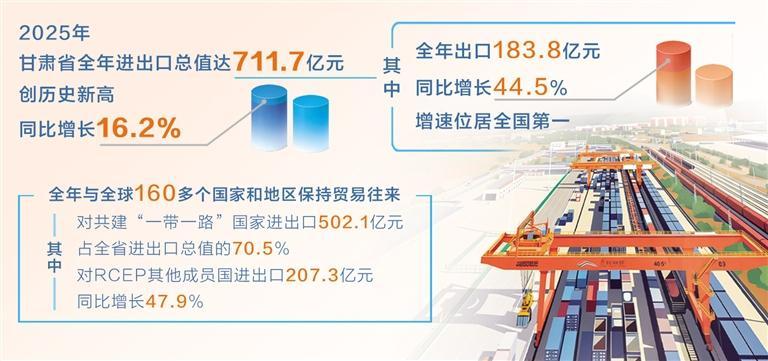
【盘点2025】去年甘肃进出口总值首破700亿元 创历史最高纪录 出口增速全国第一
Xin Lang Cai Jing· 2026-01-18 01:55
Core Insights - Gansu Province's total import and export value in 2025 reached 711.7 billion, marking a historical high and a year-on-year growth of 16.2%, ranking sixth nationwide [3] - Exports amounted to 183.8 billion, with a remarkable year-on-year increase of 44.5%, the highest growth rate in the country [4] Group 1: Trade Performance - The province maintained trade relations with over 160 countries and regions, with imports and exports to Belt and Road countries totaling 502.1 billion, a 6.6% increase, accounting for 70.5% of total trade [3] - Trade with RCEP member countries reached 207.3 billion, showing a significant year-on-year growth of 47.9%, increasing its share to 29.1% [3] Group 2: Export Quality and Composition - The quality of exported goods improved significantly, with high-tech product exports reaching 21.3 billion, a 49.9% increase [4] - Notably, exports of "new three samples" products, including electric vehicles, photovoltaic products, and lithium batteries, surged to 6.4 billion, a more than sevenfold increase, with photovoltaic product exports alone reaching 5.4 billion, nearly a tenfold increase [4] Group 3: Import Trends - Metal ores remained the primary import commodity, totaling 358.4 billion, a 2.8% increase, constituting 67.9% of total imports [4] - Imports of nickel and agricultural products grew by 96.1% and 10.7% respectively, supporting the stability of the industrial supply chain [4] Group 4: Private Sector Dynamics - The number of enterprises engaged in import and export activities reached 1,055, with a net increase of 180 [4] - Private enterprises showed remarkable vitality, with 973 companies accounting for over 90% of the total, and their import and export value reached 296.5 billion, a 52.9% increase, representing 41.7% of the province's total trade, up by 10 percentage points [4]

“带动当地经济发展、改善人民生活的关键力量”(共建“一带一路”·第一现场)
Ren Min Ri Bao· 2026-01-17 23:16
Core Insights - The Sihanoukville Special Economic Zone (SSEZ) has transformed from a barren area 18 years ago into a bustling industrial hub with over 200 enterprises, significantly contributing to local economic development and employment [2] - The SSEZ is a model for the China-Cambodia Belt and Road Initiative, showcasing the successful collaboration between the two countries in infrastructure and industrial development [2] Group 1: Economic Development - The SSEZ has become a modern industrial park with diverse industries including automotive parts, hardware, building materials, and medical supplies, providing 35,000 jobs [2] - The local economy has improved significantly, with many employees upgrading their living conditions from makeshift housing to brick houses due to increased income from employment in the zone [6] Group 2: Workforce Development - Companies in the SSEZ are focusing on local talent development, with a high localization rate of over 90% in some firms, and providing training programs in China for skill enhancement [3][4] - Employees have transitioned from basic operational roles to management positions, indicating a significant improvement in skill levels and job responsibilities [3][4][7] Group 3: Technological Advancements - Companies are investing in automation and advanced technologies, such as automatic tape machines and visual inspection equipment, to enhance production efficiency and quality [5] - The introduction of digital logistics management systems has streamlined operations, allowing for real-time tracking and improved efficiency in logistics [8] Group 4: Industry Transformation - The SSEZ is witnessing a shift in production practices, with local companies increasingly opting for local processing of imported raw materials, thereby enhancing local production capabilities and reducing costs [9][10] - The establishment of direct shipping routes between China and Cambodia has further facilitated trade and reduced logistics costs, contributing to the growth of businesses in the SSEZ [8]
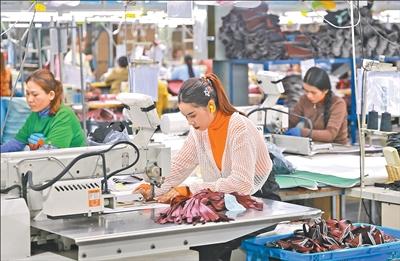
柬埔寨西港特区已吸引超200家企业入驻、提供3.5万个就业岗位 “带动当地经济发展、改善人民生活的关键力量”(共建“一带一路”·第一现场)
Ren Min Ri Bao· 2026-01-17 22:19
Core Insights - The Sihanoukville Special Economic Zone (SSEZ) has transformed from a barren area 18 years ago to a bustling industrial hub with over 200 enterprises, significantly contributing to local economic development and improving living standards [1] - The SSEZ is a model for the China-Cambodia Belt and Road Initiative, showcasing successful infrastructure development and industrial diversification [1] Company Development - 3L Medical Products (Cambodia) has grown to employ around 600 staff, with over 90% being Cambodian nationals, and has expanded its product range to over 20 categories [2] - The company has implemented a training program for local employees, sending them to China for six months to enhance their skills in both language and technical expertise [2] - The company has established a promotion system requiring employees to complete a three-month training program before advancing, ensuring a skilled workforce [3] Employee Life Improvement - Employees have transitioned from living in makeshift housing to brick houses, reflecting the positive impact of industrial growth on their quality of life [4][5] - The introduction of modern transportation options has improved daily commutes, with many employees now using motorcycles instead of crowded buses [4] Industry Transformation - The logistics sector has seen significant upgrades, with companies like Jialida Logistics adopting advanced equipment and digital management systems to enhance efficiency and safety [6] - The introduction of a digital management platform has streamlined operations, allowing for real-time tracking and improved customer service [6] Economic Impact - The SSEZ has diversified Cambodia's industrial landscape, promoting local production and reducing reliance on imports, particularly in the plastics sector [7] - The establishment of direct shipping routes between China and Cambodia has lowered freight costs, further stimulating business growth in the region [6][7]
贵州天柱油茶“智”变
Jing Ji Ri Bao· 2026-01-17 22:16
Core Viewpoint - The oil tea industry in Tianzhu County, Guizhou Province, is experiencing significant advancements through technology, leading to increased production efficiency and product quality, while also expanding into international markets [1][2]. Group 1: Production Efficiency - The company has implemented "hot air explosion" technology, increasing the oil yield from 18% to 28%, allowing an additional 10 kilograms of tea oil to be extracted from every 100 kilograms of oil tea seeds [1]. - The introduction of drones has drastically reduced the time required for harvesting, with one drone completing the work of over 20 workers in just three days [1]. - Smart irrigation systems now cover 12,900 acres of oil tea forests, enhancing water and fertilizer efficiency while improving oil tea quality [2]. Group 2: Market Expansion - The company has obtained international food safety certification, enabling its tea oil to enter global markets, with plans to sell 303 tons to Southeast Asia and the EU by 2025, generating over 60 million yuan in sales [2]. Group 3: Technological Innovation - The county has collaborated with research institutions to develop three local varieties and introduce eight high-yielding strains, resulting in seven technical patents [2]. - The goal for the experimental fields is to achieve a yield of 1,500 pounds per acre, supported by precise fertilization techniques [2]. Group 4: Community Impact - The oil tea industry is expected to produce over 16,000 tons of tea seeds annually, with processing capacity reaching 3,500 tons, benefiting 47,300 households and 175,000 people [2].
共建“一带一路”畅通全球产供链
Jing Ji Ri Bao· 2026-01-17 22:16
Core Insights - The article discusses the measurement of global industrial and supply chain paths, emphasizing the role of the Belt and Road Initiative (BRI) in enhancing connectivity and mitigating the impacts of decoupling [1] Group 1: Global Supply Chain Analysis - The authors constructed indicators to measure global industrial supply chain paths using data from the Asian Development Bank's international input-output tables [1] - The analysis reveals that China's "broad internal circulation" has a low dependency on overseas paths from a unilateral perspective [1] - From a bilateral perspective, the intermediate paths of the global supply chain between China and the US are concentrated around both countries [1] Group 2: Multilateral Supply Chain Dynamics - In a multilateral context, countries like Singapore, Vietnam, and Mexico are more inclined to become important intermediate paths in China's multilateral supply chain, while the US and Japan are more likely to serve as downstream endpoints and upstream starting points [1] - The BRI strengthens China's supply chain connections with other regions, helping to buffer the decline in supply chain interconnections caused by decoupling [1] Group 3: Policy Recommendations - It is essential to implement effective measures from the Regional Comprehensive Economic Partnership (RCEP), such as trade facilitation, liberalization, and tariff reductions, to lower costs and enhance efficiency, ensuring stable supply chains [1] - The establishment of bilateral and multilateral free trade agreements with BRI countries is recommended to create efficient and stable regional supply chains, leveraging the BRI members to develop and facilitate a digital Silk Road and green infrastructure connectivity [1] - Short-term communication and coordination with developed economies like the US and Japan should be strengthened to prevent supply chain disruptions, while long-term strategies should focus on enhancing independent innovation capabilities to mitigate the "bottleneck" challenges in related industries [1]
“青字号”多点开花闯世界
Xin Lang Cai Jing· 2026-01-17 17:41
Core Viewpoint - During the "14th Five-Year Plan" period, Qinghai Province's foreign trade is experiencing rapid growth, structural optimization, and accelerated transformation of driving forces, particularly by 2025, with significant advancements in the international influence of "Qinghao" brand products centered around new energy and specialty industries [1] Group 1: Export Growth and Product Transformation - The export of clean energy products, represented by lithium-ion batteries and photovoltaic components, is rapidly increasing and has become the main driver of the province's export growth, marking a successful shift from traditional resource-based products to advanced manufacturing represented by new energy and new materials [1] - The salt lake chemical industry is extending towards fine and high value-added products, with significant growth in exports of specialty products like magnesium-based items [2] Group 2: Brand Development and Market Expansion - The export of specialty agricultural and livestock products is improving in branding and standardization, with the export scale and market coverage of "Qinghao" products like cold-water fish and cool-season vegetables continuously expanding, positioning them as leaders in their respective fields nationwide [2] - The business department has developed a foreign trade quality product manual and is promoting "Qinghao" products through exhibitions and other channels to enhance their international influence [2] Group 3: E-commerce and Logistics Development - The construction of cross-border e-commerce pilot zones in Xining and Haidong is progressing steadily, deepening the integration of "industrial belt + cross-border e-commerce" [2] - The regular operation of international freight trains has been established, with 187 trains running in 2025, a 38.5% increase year-on-year, providing a stable international logistics channel for "Qing goods" [2] Group 4: International Trade Relations - Continuous deepening of trade relations with countries involved in the Belt and Road Initiative and positive progress in exploring emerging markets like RCEP have further enhanced the foreign trade risk resistance capability [3] - In 2025, the business department organized over 300 enterprises to participate in key domestic and international exhibitions and hosted multiple economic and trade promotion meetings in regions such as Hong Kong, Macau, Southeast Asia, and Central Asia [3]
“地缘扰动下的出海新格局”系列:中企出海的“第二增长曲线”
Orient Securities· 2026-01-17 14:56
Group 1: Growth Trends - The "first growth curve" driven by the "numerator" is recognized, with a shift from infrastructure to manufacturing exports expected in 2025[4] - China's overseas investment demand is still on a high growth trajectory, with a three-year rapid growth cycle observed in capital goods exports[4] - In 2025, direct investment in countries along the Belt and Road Initiative (BRI) is projected to increase significantly, particularly in Asia and Africa[4] Group 2: Risks and Challenges - Geopolitical risks, particularly from Western countries, are increasingly impacting overseas investment decisions, exemplified by the U.S. "long-arm jurisdiction" policies[4] - Emerging economies face challenges related to economic stability and high debt levels, with African nations experiencing a shift from concessional loans to higher-cost commercial loans[4] - High inflation rates in regions like Africa, averaging 18.6% in 2024, pose risks to profit margins for companies operating abroad[4] Group 3: Strategic Responses - The Chinese government aims to enhance cooperation with BRI countries and improve risk management in overseas investments as outlined in the 14th Five-Year Plan[4] - Development of international financial infrastructure, such as the Hong Kong Gold Exchange, is seen as a key lever to mitigate risks associated with overseas investments[4] - The establishment of a gold central clearing system in Hong Kong is expected to facilitate RMB-denominated gold transactions, enhancing financial stability for emerging economies[4]

2025年河南省外贸进出口首破9000亿元
Zheng Zhou Ri Bao· 2026-01-17 12:17
Core Insights - In 2025, Henan Province's foreign trade reached 935.67 billion yuan, marking a 14.1% year-on-year increase, surpassing the national growth rate by 10.3% [1] - Exports totaled 616.82 billion yuan, up 18%, while imports were 318.85 billion yuan, growing by 7.2% [1] - The province's contribution to national foreign trade growth rose from 0.5% in 2024 to 7% in 2025, showcasing Henan's resilience and competitive spirit [1] Group 1: Trade Scale and Growth - The foreign trade scale reached a new peak, ranking 10th nationally and 2nd in Central China, with continuous record-breaking monthly figures since April [1] - The number of enterprises engaged in import and export activities increased to 15,300, with 2,207 new companies entering the market [1] - Enterprises with over 1 billion yuan in import and export volume totaled 72, contributing 691.21 billion yuan, a 20.9% increase, boosting the overall growth rate by 14.5 percentage points [1] Group 2: Export Product Upgrades - Exports of electromechanical products reached 409.63 billion yuan, a 23.3% increase, accounting for 66.4% of total exports, up 2.9 percentage points [2] - The "new three items" (electric vehicles, lithium batteries, and photovoltaic products) collectively exported 33.61 billion yuan, a 1.8-fold increase, with electric vehicle exports alone reaching 30.87 billion yuan, a 2.5-fold increase [2] Group 3: Market Diversification - Henan's foreign trade partners expanded to over 200 countries and regions, with trade with the top five partners totaling 488.22 billion yuan, representing 52.2% of total trade [2] - Trade with the EU and ASEAN grew by 18.1% and 15.6%, respectively, while growth rates for the Middle East, Africa, and Central Asia exceeded 25% [2] - Trade with Belt and Road countries reached 442.23 billion yuan, a 14.3% increase [2] Group 4: Open Capability Enhancement - The Zhengzhou-Luxembourg "Air Silk Road" handled over 140,000 tons of cargo, highlighting its role in connectivity [3] - The TIR international road transport business expanded, with 22 new routes to nine countries, and the establishment of the first international road transport hub in Zhengzhou [3] - The China-Europe (Asia) freight train service saw significant growth, with approximately 190,000 TEUs and nearly 1.9 million tons of cargo transported [3] - The five comprehensive bonded zones in Henan achieved a total import and export volume of 518.63 billion yuan, a 17% increase, accounting for 55.4% of the province's total trade [3]