国产替代

Search documents
全线爆发!谁是背后推手?最新解读来了
Zhong Guo Ji Jin Bao· 2026-02-01 02:50
Core Viewpoint - The semiconductor sector is currently experiencing a significant uptrend driven by multiple factors, including rising prices and explosive performance across the entire industry chain, from wafer manufacturing to design and storage [1][2][3]. Industry Outlook - The semiconductor industry is in a recovery phase, with inventory adjustments nearly complete and supply-demand dynamics returning to balance, indicating a recovery path [3][4]. - The current phase is characterized by a dual nature of cyclical and growth attributes, with AI driving unprecedented demand for computing power, leading to explosive growth opportunities in chip design, manufacturing, and advanced packaging [3][4][6]. Investment Opportunities - Key investment areas include domestic computing power, semiconductor equipment, materials, and components benefiting from the expansion of domestic wafer fabs, as well as military semiconductors [2][10]. - The semiconductor sector is viewed as a core asset representing cutting-edge technology, with significant growth potential over the next 3-5 years, particularly in the context of AI and domestic innovation [2][15]. Market Dynamics - The strong performance of the semiconductor industry is attributed to three main factors: the growing demand for AI computing power, accelerated capacity expansion in overseas foundries, and the ongoing domestic innovation in chip design [4][5][6]. - The industry is currently in an uptrend phase, with high utilization rates in wafer manufacturing and a supply-demand imbalance in storage chips leading to price increases [8][9]. Strategic Investment Approaches - Investment strategies focus on semiconductor equipment, materials, and advanced packaging, with an emphasis on identifying turning points in the industry cycle and balancing growth potential with valuation [13][14]. - The emphasis is on finding high-odds stocks within the broader trends of AI and domestic substitution, with a focus on companies that exhibit strong growth potential and unique capabilities [13][14]. Long-term Growth Potential - The domestic semiconductor industry still has substantial growth potential, driven by ongoing investments in key processes, equipment, and materials, which are expected to yield significant innovation results [15][16]. - The current investment environment suggests a favorable outlook for the semiconductor sector, with expectations of continued high growth in AI-related capital expenditures through 2026 [7][15].
2026年中国投资展望:过弯加油,马年牛腾;东升西不落——政策利好有望超预期
Sou Hu Cai Jing· 2026-02-01 02:18
Economic Outlook - The report predicts a GDP growth rate of approximately 4.7% for 2026, with CPI expected to rebound to around 0.5% [22][23] - Internal demand is anticipated to contribute more significantly to growth, with a stable recovery in investment driven by major project launches and government spending [22][23] - Fiscal and monetary policies are expected to remain moderately accommodative to support economic transition and structural upgrades [22][23] Policy Environment - The restructuring of local government responsibilities is nearing completion, providing a foundation for macro policies to shift from "defensive" to "proactive" [22][43] - The report suggests that policy benefits may exceed expectations, with a potential turnaround in market perceptions regarding PPI and CPI by mid-2026 [43][44] Market Strategy - The report expresses optimism for the stock market in 2026, predicting significant increases in major indices supported by corporate earnings growth and valuation recovery [2][23] - Key investment opportunities are identified in sectors such as technology, pharmaceuticals, military, and certain resource sectors, with a focus on companies that can leverage internal demand and technological innovation [2][23] Industry Insights - Strategic emerging industries, particularly AI, semiconductors, and biomedicine, are expected to drive high-quality economic development [2][22] - Traditional industries like real estate are still in an adjustment phase, but their marginal impact on the overall economy is diminishing [2][22] Sector-Specific Forecasts - The banking sector is projected to see revenue and profit growth of around 2.2% and 2.0% respectively in 2026, supported by improved capital strength and credit capacity [25] - The real estate market is expected to experience declines in new home sales and construction area, with prices projected to drop by 6% [26] - The oil and gas sector anticipates a further decline in Brent crude oil prices by 9% to $62 per barrel in 2026 due to global supply excess [27] - The copper market is expected to see a 24% increase in prices, driven by a projected global refined copper deficit of 300,000 tons [29] Technology Sector - The technology sector is expected to maintain high growth rates, with net profit growth projected at 20-25%, driven by demand in AI, smart hardware, and new energy vehicles [35] - The semiconductor industry is highlighted as a key area for growth, with domestic companies expected to gain market share [35] Consumer Sector - The consumer sector is anticipated to face challenges, with optional consumption companies experiencing performance volatility due to market conditions [36][39] - The essential consumer goods sector is expected to see stable growth, with a projected revenue increase of 0-5% in 2026 [39][40]

茂莱光学(688502):立足高端精密光学 半导体铸就广阔空间
Xin Lang Cai Jing· 2026-02-01 00:32
Group 1: Company Overview - Company Maolai Optical, established in 1999, focuses on precision optical products, expanding from custom optical devices to optical lenses and systems, covering the entire spectrum from deep ultraviolet (DUV) to far infrared [1] - The company's revenue for the first half of 2025 reached 319 million yuan, a year-on-year increase of 32.26%, with semiconductor, life sciences, AR/VR detection, autonomous driving, biometrics, and aerospace accounting for 61.0%, 19.0%, 6.5%, 4.0%, 1.9%, and 0.9% of revenue respectively [1] - The company is prioritizing technological upgrades and product development in emerging fields such as semiconductors, life sciences, and AR/VR detection [1] Group 2: Industry Insights - The global industrial-grade precision optics market reached 13.6 billion yuan in 2021, growing by 19.6%, and is projected to grow from 16 billion yuan in 2022 to 26.8 billion yuan by 2026, with a CAGR of 14% [2] - The optical materials industry is in a mature stage, while the downstream applications include consumer electronics, instruments, semiconductor manufacturing, automotive lenses, lasers, and optical communications [2] - Chinese mainland companies are gradually entering the high-end precision optics sector, with some firms expanding into industrial-grade applications, leveraging their technological advantages for differentiated competition [2] Group 3: Semiconductor Optical Technology - Optical technology is a core support in semiconductor manufacturing, with key applications in photolithography optical systems and semiconductor measurement systems, where optical systems account for 30% and 10% of costs respectively [3] - The company has developed core technologies in precision optical coating, ultra-smooth polishing, high-precision optical bonding, low-stress high-precision assembly, and optical lens/system design for photolithography [3] - In the measurement field, the company's semiconductor measurement products include optical components, lenses, and system modules, with rapid revenue growth from domestic semiconductor detection equipment manufacturers [3] Group 4: Financial Projections - The company has over 20 years of experience in the high-end precision optics industry, utilizing a customized business model for differentiated competition, with products spanning optical components, lenses, and system modules [4] - The growth is driven by long-term trends of technological iteration and domestic substitution, benefiting from the shift in demand from consumer-grade to industrial-grade and high-end precision optical components [4] - Revenue projections for 2025-2027 are 659 million yuan, 857 million yuan, and 1.071 billion yuan, with corresponding net profits of 65 million yuan, 97 million yuan, and 144 million yuan, leading to a current market PE of 318x, 213x, and 144x respectively [4]
中国手术机器人行业近况更新:华创医药投资观点&研究专题周周谈·第161期
Huachuang Securities· 2026-02-01 00:25
Investment Rating - The report does not explicitly state an investment rating for the surgical robot industry, but it indicates a positive outlook for growth and development in the sector. Core Insights - The surgical robot industry in China is entering a rapid development phase, supported by national policies and capital investment, with significant advancements in technology and market demand [13]. - The report highlights the transition from a capital-driven to a value-driven model in the surgical robot sector, emphasizing the importance of clinical applications and technological integration [13]. - The approval process for surgical robots by the NMPA has accelerated, particularly for orthopedic surgical robots, which dominate the market in terms of the number of products approved [30][28]. Summary by Sections Market Overview - The surgical robot market in China is characterized by a growth in sales volume, with a total of 332 units sold in the first 11 months of 2025, reflecting a year-on-year increase of 3.75% [34]. - The sales revenue for surgical robots reached 2.973 billion yuan, showing a slight decline of 0.87% year-on-year, indicating a structural transition rather than a market downturn [34]. Technological Advancements - Innovations in remote operation, miniaturization, and AI assistance are driving the development of surgical robots, with products like the TUMAI® remote surgical robot achieving significant milestones in cross-border surgeries [16][19]. - The introduction of AI-assisted surgical robots is enhancing precision in surgeries, with products capable of 3D reconstruction and personalized surgical planning [16]. Regulatory Developments - The National Healthcare Security Administration has established a pricing framework for surgical robots, which is expected to facilitate market growth by clarifying reimbursement policies and pricing structures [27][26]. - The pricing guidelines categorize surgical robot services into navigation, participation in execution, and precision execution, linking them to main surgical procedures [27]. Market Segmentation - The orthopedic surgical robot segment holds the largest market share, accounting for 50% of the total NMPA-approved surgical robots from 2014 to 2024, followed by neurosurgical robots [30]. - The report indicates a significant potential for growth in emerging fields such as vascular surgery robots, with increasing demand and technological advancements [34]. Competitive Landscape - The report identifies key players in the surgical robot market, including domestic manufacturers that are rapidly gaining market share as regulatory barriers for imports increase [45]. - The competitive landscape is shifting as domestic products receive NMPA approval, challenging the previously dominant imported products [45].
逆势突围:3 家中企跻身全球芯片设备 20 强
是说芯语· 2026-02-01 00:24
Core Insights - The global semiconductor equipment market is projected to reach $168 billion by 2025, indicating significant changes in the competitive landscape [1] - Chinese companies are showing remarkable performance, with North Huachuang rising from eighth to fifth globally, and several others entering the top 30, highlighting the rise of domestic equipment [1] - The domestic manufacturing rate of semiconductor equipment in China has doubled to 20%-30% from three years ago [1] Group 1: Leading Tier - The top 10 rankings are dominated by companies from the US, Japan, and the Netherlands, with North Huachuang as the only Chinese company, covering both mature and advanced processes [2] - ASML remains the absolute leader in lithography, monopolizing the advanced process market below 7nm with its EUV technology [2] - Applied Materials, Lam Research, KLA, and Tokyo Electron are key players in various segments, maintaining technological leadership in their respective fields [2] Group 2: Mid-Tier - The 11-20 rankings are primarily occupied by US and Japanese companies, focusing on measurement, probe stations, and advanced packaging equipment, with Zhongwei and Shanghai Microelectronics making significant strides [5] - Zhongwei is a leader in etching, with its 5nm etching equipment being adopted by TSMC, and a cumulative shipment exceeding 6,800 units [6] - Shanghai Microelectronics is the only domestic lithography machine manufacturer, achieving mass production of 90nm lithography machines and maintaining a high yield rate [6] Group 3: Industry Trends - The changes in the TOP20 rankings reflect two major industry trends: the continuous advancement towards 3nm and 2nm processes, and the accelerated push for domestic substitution in the supply chain [8] - While leading companies from the US, Japan, and the Netherlands will continue to dominate the high-end equipment market, they face challenges from domestic alternatives and regional supply chain localization [8] - Chinese companies are expected to enhance their international market share through R&D investment and collaboration within the supply chain, while leading firms will solidify their technological advantages [8]




这些企业冲击北交所上市丨IPO一周要闻
Sou Hu Cai Jing· 2026-02-01 00:12
Summary of Key Points Core Viewpoint - The A-share and Hong Kong stock markets have seen a concentration of new listings, with significant first-day gains for newly listed companies, indicating strong investor interest and market resilience. Group 1: IPO Approvals - Three companies have received IPO approvals this week, all from the Beijing Stock Exchange [2] - Zhejiang Hengdao Technology Co., Ltd. specializes in the research, design, production, and sales of hot runner systems for injection molds, with a major focus on automotive and consumer electronics sectors [3] - Hebi Haichang Intelligent Technology Co., Ltd. focuses on high-performance wiring harness equipment, serving industries such as automotive and renewable energy [5] - Kunshan Hongshida Intelligent Technology Co., Ltd. is engaged in the development and production of intelligent automation equipment for various sectors, including consumer electronics and new energy [6] Group 2: Financial Performance - Hengdao Technology's revenue for 2022-2024 is projected to be 143 million, 168 million, and 234 million yuan, with net profits of 39 million, 49 million, and 69 million yuan respectively [4] - Haichang Intelligent's revenue for the same period is expected to be 520 million, 652 million, and 800 million yuan, with net profits of 108 million, 121 million, and 115 million yuan [5] - Hongshida's revenue is projected to be 397 million, 476 million, and 649 million yuan, with net profits of 30 million, 39 million, and 53 million yuan [7] Group 3: New Listings - "Mingming Hen Mang" (01768.HK), the first stock in the snack retail sector, debuted on January 28, with a first-day closing price increase of 77.52% [9] - Agricultural Technology Company (831038.BJ) listed on the Beijing Stock Exchange, with a first-day closing increase of 1.19% [9] - Zhenstone Co., Ltd. (601112.SH), a leader in clean energy materials, saw its stock price surge by 121.65% on its first day of trading [10] - Medical device company Medela (920119.BJ) also experienced a significant first-day increase of 161.46% [10] Group 4: Filing Dynamics - Eleven companies filed for IPOs in the Hong Kong market this week, with a focus on A+H share expansion [11] - Notable filings include Jucheng Co., a leading non-volatile memory chip designer, and Deyang Co., a leader in energy storage [11] - The trend shows a concentration of hard technology companies seeking to leverage their A-share listings for international financing [12] Group 5: Sector Highlights - Hard technology companies are prominent in the recent IPO filings, with firms like Kunlun New Energy Materials and Coolchip Microelectronics focusing on core material development and AI solutions [12] - Consumer and medical sectors are also active, with companies like Tongrentang and Zhuozheng Medical seeking to expand their service capabilities and market presence [13]
美芯“遮羞布”被撕开,黄仁勋承认0订单,张绍忠多年前预言成真
Xin Lang Cai Jing· 2026-01-31 23:27
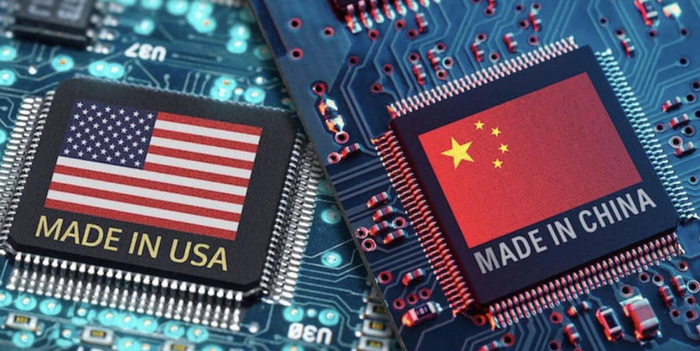
Core Viewpoint - The situation regarding NVIDIA's chip supply to China has dramatically changed, with the H200 orders initially expected to be plentiful now facing uncertainty and potential restrictions [1][4]. Group 1: NVIDIA's Chip Supply Dynamics - Prior to the H200, NVIDIA's only chip available for China was the H20, which was a downgraded version and deemed obsolete globally [1]. - The U.S. government's restrictions led to NVIDIA's market share in China plummeting from 95% to 0%, resulting in zero orders and revenue [1]. - Despite the initial expectation of high demand for the H200, NVIDIA's CEO has reported no orders from Chinese companies for this chip [4]. Group 2: U.S. Government's Position - CEO Jensen Huang has warned that U.S. restrictions will ultimately harm American companies and may accelerate China's domestic chip development [2]. - The U.S. government, particularly under Trump, has allowed the export of H200 to China, but with a condition of a 25% revenue share from NVIDIA's operations in China [4]. - There is internal conflict within the U.S. government regarding the approval of H200 exports, leading to uncertainty in the supply chain [4]. Group 3: China's Response and Strategy - China has prioritized the use of domestic chips, indicating that American chips are no longer essential [7]. - The current dynamics suggest that China now has the power to decide whether to purchase American chips, reversing the previous dependency [8]. - Regardless of U.S. policy changes, China's commitment to self-reliance in chip development remains strong, with no intention to slow down domestic innovation [10].

机械行业2025年度业绩前瞻:AI引领成长崛起,反内卷周期反转,出海进一步提速
ZHESHANG SECURITIES· 2026-01-31 13:20
Group 1: Investment Strategy - The investment strategy for 2026 focuses on cyclical recovery in sectors like engineering machinery, industrial gases, and shipping[1] - Growth sectors include embodied intelligence, controllable nuclear fusion, photovoltaic equipment, lithium battery equipment, semiconductor equipment, AIDC, and PCB equipment[1] - Optimism towards the U.S. market strategy due to easing trade disputes and potential Federal Reserve interest rate cuts[1] Group 2: Engineering Machinery Market - The global engineering machinery market is projected to reach $213.5 billion in 2024, with a CAGR of 6% from 2024 to 2030[2] - Domestic excavator sales are expected to grow by 18% in 2025, reaching 118,518 units, while total excavator sales will increase by 17% to 235,257 units[2] - China's leading manufacturers are gaining global market share, with SANY's market value at approximately 10% of Caterpillar's as of January 2026[3] Group 3: Industrial Gases - The industrial gas market is expected to reach ¥1.3 trillion in 2026, with a CAGR of 6.8% over the next four years[19] - The competitive landscape is concentrated, with the top four global industrial gas companies holding a 54% market share[19] - Growth drivers include macroeconomic recovery and increased demand from sectors like semiconductors and renewable energy[19] Group 4: Semiconductor Equipment - The global semiconductor market is expected to grow by 9% in 2026, reaching $760.7 billion, driven by AI demand[14] - Domestic semiconductor equipment demand is expected to rise due to increased production capacity and a focus on self-sufficiency[14] - Key investment areas include etching and thin-film equipment, as well as the domestic production of photolithography machines[15]
光芯片深度:芯光璀璨,智算未来
Changjiang Securities· 2026-01-31 11:05
Investment Rating - The investment rating for the optical chip industry is "Positive" and maintained [11] Core Viewpoints - Optical chips are a high-value segment within the optical communication industry, characterized by significant technical barriers and value [3][9] - The industry predominantly adopts the IDM model, which covers the entire process from design to manufacturing and testing, leading to high entry barriers [7][50] - Domestic optical chip manufacturers are expected to benefit from a combination of industry growth, structural opportunities in silicon photonics, and increased market share from domestic replacements [8][9] Summary by Sections Optical Chips - Optical chips are the core active components in optical communication, determining the quality, speed, and energy efficiency of optical signal transmission [6][21] - The transition from traditional discrete solutions to high-integration silicon photonics solutions is accelerating, driven by the limitations of existing technologies [6][36] Manufacturers of Optical Chips - Manufacturers typically use the IDM model, which enhances collaboration with downstream module manufacturers and allows for rapid iteration and optimization of processes [7][50] - The industry faces significant barriers in R&D iteration, process yield, and capacity expansion, with domestic manufacturers focusing on the CW light source route due to its shorter production chain and better yield optimization [7][9] AI and Connectivity Demand - The demand for optical chips is expected to rise due to the commercialization of AI by North American cloud providers, leading to increased capital expenditures and a positive feedback loop in computing power investments [8][9] - The supply side is constrained by a concentrated upstream InP substrate market and long expansion cycles, with a predicted 25%-30% shortfall in optical chips [8] Investment Recommendations - The report recommends focusing on leading domestic CW light source manufacturers, particularly Shijia Photon, and paying attention to Yuanjie Technology [9][12]

全球 EEPROM 领军者冲击港交所 ,“A+H” 双上市
是说芯语· 2026-01-31 09:43
Core Viewpoint - Jucheng Co., Ltd. has submitted its listing application to the Hong Kong Stock Exchange, initiating a dual listing strategy, and is recognized as a leading player in the domestic non-volatile memory (NVM) chip sector, achieving significant breakthroughs in various niche markets [1]. Group 1: Company Overview - Founded in November 2009, Jucheng Co., Ltd. has over a decade of experience in chip design, focusing on the demand for storage and mixed-signal chips in the AI era, and has developed a diversified product matrix including SPD chips, EEPROM, NOR Flash, and camera motor driver chips [4]. - The company is actively promoting the mass production of closed-loop and optical image stabilization motor driver chips, which have passed tests by major smartphone manufacturers and are expected to be used in mid-to-high-end and flagship models [4]. - Jucheng's products are widely used in AI infrastructure, automotive electronics, industrial control, and consumer electronics, establishing strong partnerships with global memory module giants and well-known automotive and smartphone manufacturers such as Samsung, Huawei, Xiaomi, BYD, and Tesla [4]. Group 2: Market Position and Performance - According to Frost & Sullivan data, Jucheng Co., Ltd. ranks as the third-largest EEPROM supplier globally and the largest in China, while also being the second-largest supplier of DDR5 SPD chips, holding over 40% of the global market share for DDR5 SPD chips [5]. - The company has achieved a 14.0% market share in the global EEPROM market, with a leading position in the camera module EEPROM market at 40.3% and 21.8% in the liquid crystal panel EEPROM market [5]. - In the automotive electronics sector, Jucheng has become a key player in domestic automotive-grade chips, expected to be the only supplier of a full range of automotive-grade EEPROM chips in China by the end of 2025, and ranks as the third-largest globally [6]. Group 3: Financial Performance - Jucheng Co., Ltd. has shown steady improvement in profitability, with projected revenues of 1.028 billion yuan and a net profit of 290 million yuan for 2024, marking a 43.50% year-on-year increase in net profit for the first half of 2025 [8]. - The company's market capitalization reached 29.47 billion yuan as of January 30, 2026, reflecting growing recognition in the capital market [8]. Group 4: Future Outlook - Jucheng Co., Ltd. aims to leverage its technological advantages and comprehensive product offerings to strengthen its leading position in existing niche markets, expand into high-value sectors such as automotive electronics and industrial control, and capitalize on the increasing penetration of DDR5 and the explosive growth of AI computing power [10].