生成式人工智能

Search documents
瀚博半导体正式启动A股IPO:国内几乎所有头部GPU企业均已启动上市流程
IPO早知道· 2025-07-19 02:31
Group 1 - The core viewpoint of the article highlights that several leading GPU companies established between 2018 and 2020, including Hanbo Semiconductor, Moer Technology, and Muxi, have initiated their A-share IPO processes, indicating a growing trend in the semiconductor industry [3][4]. - Hanbo Semiconductor has signed a counseling agreement with CITIC Securities to officially start its A-share IPO process, marking a significant step for the company [3]. - Moer Technology and Muxi's IPO applications have been accepted by the Sci-Tech Innovation Board as of June 30, 2023, further emphasizing the momentum in the GPU sector [3]. Group 2 - Hanbo Semiconductor, founded in 2018, specializes in high-end GPU chip solutions for AI core computing power and graphics rendering, and has developed two generations of GPU chips that are now in mass production [4][5]. - The company offers a full-stack chip solution with three main product lines: graphics rendering GPUs, data center GPUs, and edge GPUs, catering to various applications including AI, cloud graphics rendering, and smart transportation [5]. - The core technical team of Hanbo Semiconductor comprises experienced professionals from renowned companies like AMD, NVIDIA, and Intel, with an average industry experience of over 18 years [5].


ChatGPT带来全新物种:一人公司的黎明到来了
Tai Mei Ti A P P· 2025-07-18 10:53
Core Insights - OpenAI has launched a new generative AI tool called ChatGPT Agent, which functions as a digital employee capable of executing complex tasks autonomously, such as market analysis and report generation [2][4][5] - The introduction of ChatGPT Agent signifies a profound transformation in the workplace, particularly affecting traditional white-collar jobs, as it dramatically increases productivity and efficiency [3][4][7] Impact on Employment - The release of ChatGPT Agent is expected to disrupt the definition of work, with predictions indicating that up to 300 million jobs globally could be replaced by generative AI systems [4][5] - Specific job roles that involve routine tasks, such as scheduling, drafting meeting notes, and basic data analysis, are particularly vulnerable to being automated by AI [5][6][7] Skills Revaluation - The rise of ChatGPT Agent necessitates a shift in workplace skills, moving away from traditional execution skills like proficiency in Office software to abilities such as asking precise questions and integrating knowledge across fields [8][9][10] - Future employees will need to develop skills in evaluating AI-generated content, acting as editors to ensure accuracy and relevance [11][12] New Business Models - The emergence of AI tools like ChatGPT Agent could lead to the rise of "one-person companies," where individuals can leverage AI to handle various business functions, reducing the need for large teams [14][15][16] - This shift may foster a more agile and innovative business ecosystem, characterized by dynamic collaboration among "super individuals" rather than traditional hierarchical organizations [16]
Netflix第二季度营收110.79亿美元,净利润同比增长46%,上调全年营收及利润率指引
Wind万得· 2025-07-18 10:00
// 一、核心财务表现 // 1. 营收与利润 2. 地区市场表现 3. 全年指引上调 // 二、业务亮点与战略动向 // 1. 广告业务增长强劲 2. 内容与市场策略 3. 汇率与运营效率 季度营收达 110.8 亿美元,同比增长 15.9% ,略高于分析师预期的 110.6 亿美元。 净利润同比激增 45.6% 至 31.25 亿美元,稀释后每股收益( EPS )为 7.19 美元,超出市场预期的 7.08 美元。 营业利润率从去年同期的 27.2% 提升至 34.1% ,创历史新高。 自由现金流同比增长 86.9% 至 22.67 亿美元,全年自由现金流指引上调至 80 亿 -85 亿美元。 欧洲、中东及非洲( EMEA ): 营收 35.38 亿美元,同比增长 18% (剔除汇率影响后增长 16% )。 拉美( LATAM ): 营收 13.07 亿美元,同比增长 9% (剔除汇率影响后增长 23% )。 亚太( APAC ): 营收 13.05 亿美元,同比增长 24% (剔除汇率影响后增长 23% ),增速领跑全球。 营收预期从 435 亿 -445 亿美元上调至 448 亿 -452 亿美元,按 ...


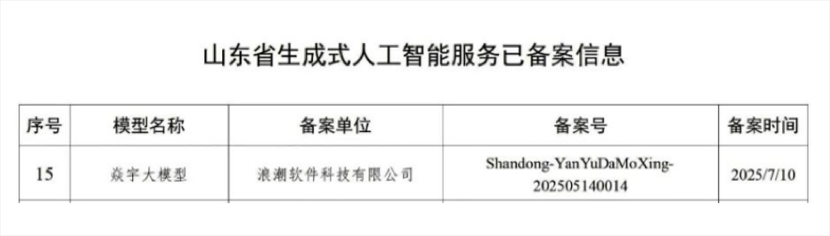
浪潮科技“焱宇大模型”通过国家级生成式人工智能服务备案
Qi Lu Wan Bao· 2025-07-18 04:21
近日,山东省网信办正式公布生成式人工智能服务备案名录,全省累计完成17款相关服务备案。其中,浪潮科技研发 的"焱宇大模型"顺利通过国家网信部门审核,正式获得国家级备案认证。 焱宇大模型以优质语料为核心支撑,通过数据源管理、语料提质、合成评测等全链路手段,为模型训练输送高质量资 源。其构建的LLMOps体系覆盖从数据管理到应用上线的全流程,支持在线平台快速调用,显著缩短应用交付周期。 在安全方面,模型集成数据分类分级、敏感信息过滤、提示词改写等工具,结合隐私计算与分布式可信训练框架,形 成多层次安全防护体系,可满足高合规场景需求。同时支持行业定制化开发,精准匹配业务需求。 场景落地:覆盖十余行业领域,打造丰富应用场景 基于技术突破,焱宇大模型已在基层治理、应急、法治、自然资源、科研、税务、工会、文物、文博、文化等10多个 垂直领域,开发了超百个智能体应用,涵盖辅助办公、话务助理、知识库、报告审查、智能图谱、智能运维、问数等 近20种实用服务场景,打造出20多个典型应用案例,实现了场景级大模型的定制化可视化构建与高效交付。 浪潮科技始终以技术创新驱动产业发展,此前焱宇大模型已成功获批4项深度学习算法备案。此次再次 ...
硅谷AI人才争夺战升温!传Meta(META.US)再挖走苹果(AAPL.US)两名核心AI工程师
智通财经网· 2025-07-18 02:11
Group 1 - Meta has hired two top AI researchers, Mark Lee and Tom Gunter, from Apple to join its "superintelligence lab" team, following the recruitment of Ruoming Pang [1] - The hiring spree reflects the tech industry's competition for AI talent, with Meta's CEO Mark Zuckerberg prioritizing AI and investing heavily in recruitment and data center development to compete with firms like OpenAI and Google [1][2] - Gunter and Lee's recruitment highlights ongoing turmoil within Apple's foundational model team, which is responsible for developing generative AI technologies [2] Group 2 - Apple is simultaneously developing versions of its Siri voice assistant that utilize both proprietary and third-party technologies, with a decision on the underlying software needed before the new assistant's launch next spring [3] - Meta's attractive compensation packages are significantly higher than those offered by Apple, prompting Apple to increase salaries for some engineers in an effort to retain talent [3] - Zuckerberg announced that Meta plans to invest "hundreds of billions" in computing to build superintelligence, aiming to create a top-tier team concentrated in California for efficient collaboration [3]


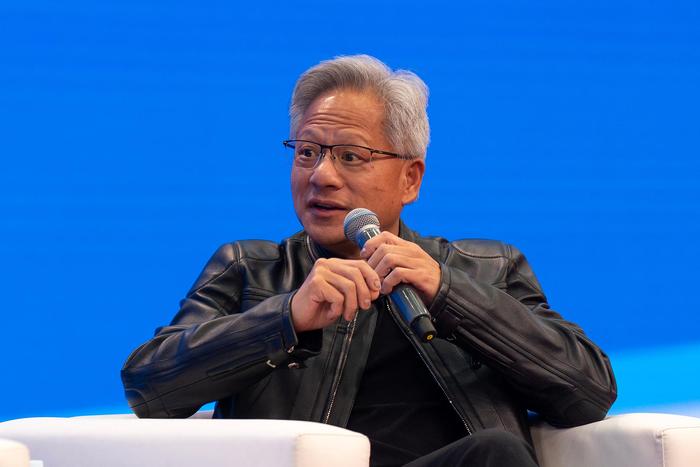
黄仁勋:人工智能下个浪潮是Physic AI;全国产化AI一体机在深圳发布丨数智早参
Mei Ri Jing Ji Xin Wen· 2025-07-17 23:24
Group 1 - Huang Renxun, CEO of Nvidia, predicts that the next wave of artificial intelligence will be Physic AI, which uses fundamental principles to replace human coding and algorithm description for result prediction [1] - The shift from current text/image models to industrial simulation and biomedicine indicates a potential transformation in investment logic within the industry [1] - If Physic AI achieves autonomous derivation of physical laws, it could disrupt traditional simulation tools and advance industries like autonomous driving and material research [1] Group 2 - The launch of the domestically produced "Pinyuan AI Integrated Machine" series in Shenzhen marks a significant breakthrough in China's AI hardware, achieving full domestic control over key software and hardware technologies [2] - The Pinyuan AI Integrated Machine features 16 domestically produced Jiangyuan D10 AI inference acceleration cards, enhancing model inference efficiency by 300% in text generation and image recognition scenarios [2] - This development is expected to strengthen national technology security and reduce reliance on foreign technologies, while promoting AI applications in enterprises and government [2] Group 3 - The recent registration of the "Fengyu" large model by SF Technology and other AI services indicates a speeding up of industry standardization, with a total of 439 generative AI services registered as of June 30, 2025 [3] - The entry of traditional giants like SF into the generative AI space signifies the expansion of large models from the internet into logistics and telecommunications sectors [3] - Companies are now required to demonstrate that their technologies can effectively reduce costs and improve efficiency, moving beyond mere concepts [3]

以生成式人工智能赋能大中小学思政课一体化建设
Ren Min Ri Bao· 2025-07-17 22:02
Core Viewpoint - The integration of ideological and political education (IPE) across all educational stages is essential for cultivating socialist builders and successors, with generative artificial intelligence (AI) playing a crucial role in enhancing the quality and effectiveness of IPE [1] Group 1: Resource Integration - The construction of a comprehensive IPE resource database across all educational stages is fundamental for the continuous deepening of IPE integration [2] - Current challenges include content repetition and poor connection between different educational stages, outdated teaching cases, and regional disparities in resource allocation [2] - Generative AI can facilitate intelligent integration and innovative supply of teaching resources, creating a dynamic resource library that responds to social hotspots [2] Group 2: Practical Education Space - A multi-scenario, all-encompassing practical education system is necessary for advancing IPE integration [3] - Existing issues include a lack of a structured progression in practical education across different educational stages and limited opportunities for students in remote areas [3] - Generative AI can help build a "virtual-real symbiosis" ecosystem for practical education, utilizing technologies like AR, VR, and MR to create immersive learning experiences [3] Group 3: Evaluation Ecosystem - A scientific and integrated evaluation system is vital for the effective implementation of IPE integration [4] - Current evaluation systems are fragmented and overly focused on exam scores, which undermines the broader educational goals of IPE [4] - Generative AI can support the development of a data-driven, intelligent evaluation system that provides personalized diagnostic reports and integrates evaluation standards across educational stages [4]
链博会上的黄仁勋:未来20年还要“苦干”,羡慕年轻人被AI陪伴一生
Xin Lang Cai Jing· 2025-07-17 13:20
Core Viewpoint - The third China International Supply Chain Promotion Expo opened in Beijing, highlighting NVIDIA's H20 chip's return to the Chinese market and the ongoing rapid development of AI technology [1][2]. Group 1: AI Development - NVIDIA's CEO Jensen Huang emphasized that AI is evolving rapidly, with significant advancements occurring approximately every four to five years [4]. - Huang noted that NVIDIA's computing power has increased by 100,000 times over the past decade, enabling more effective machine learning [5]. - The majority of AI-related research is open-source, with a notable number of papers published by Chinese researchers, which account for the highest global share [5]. Group 2: AI's Value - Huang believes that AI's impact on science will be greater than its service to humanity, as it can solve complex algorithms in various fields such as weather and ocean physics [5]. - He expressed confidence that AI can help advance scientific understanding and simulate natural laws [5]. Group 3: AI's Future - Huang argued against the notion that learning AI technology is unnecessary, stating that foundational knowledge is crucial for problem-solving [7]. - He encouraged the younger generation to engage with AI, as it enhances capabilities and promotes equality across different demographics [7][8]. - Huang described AI as a lifelong companion that can assist individuals throughout their lives, recording personal journeys and providing guidance [8].
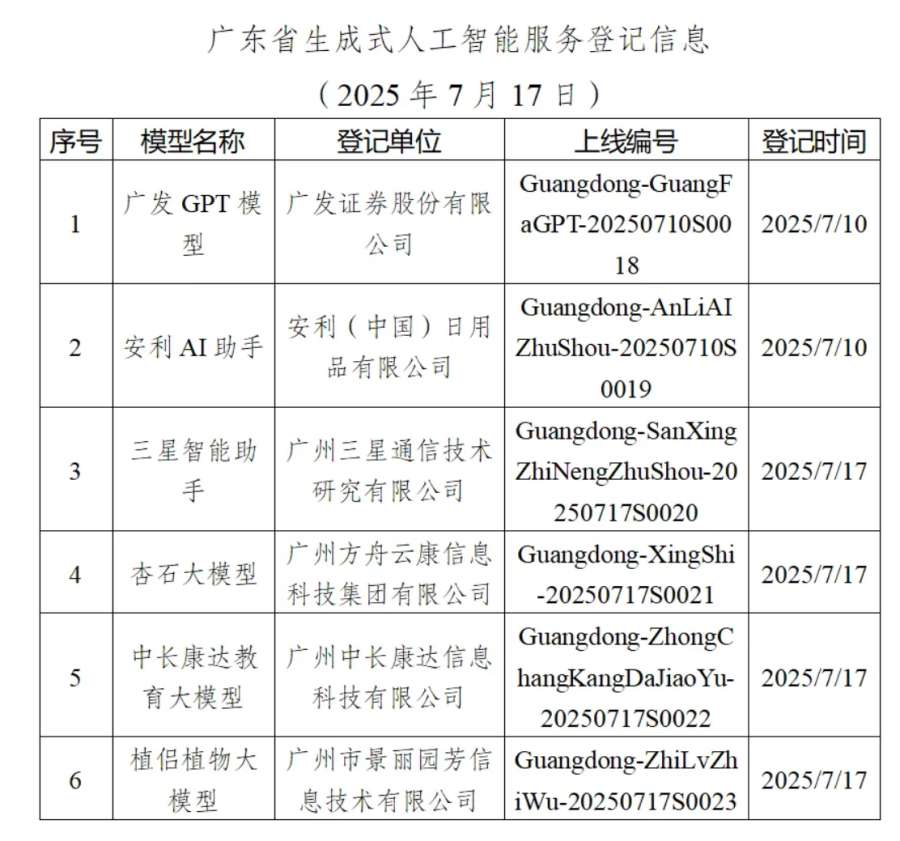
广东新增6款已完成登记的生成式人工智能服务。(网信广东)
news flash· 2025-07-17 10:31
Group 1 - Guangdong has added 6 newly registered generative artificial intelligence services [1]
估值55亿美元,英伟达投资的Cohere加码亚太市场
Sou Hu Cai Jing· 2025-07-17 09:48
Group 1 - Cohere, an AI startup valued at $5.5 billion, plans to establish an Asia-Pacific hub in Seoul, South Korea, to expand its operations in the region [2] - The company has appointed Andrew Chang as Vice President for the Asia-Pacific region to oversee the Seoul office and drive regional expansion [2] - Cohere has raised a total of $970 million in funding from investors including Nvidia, AMD, Oracle, Salesforce, Cisco, and others, with the latest funding round being a $500 million Series D completed in July 2024 [2] Group 2 - Cohere focuses on developing large language models tailored for enterprises, particularly in regulated industries that handle sensitive data, such as finance, healthcare, manufacturing, energy, and government [5] - The company collaborates with LG CNS to develop customized AI models with advanced Korean language processing capabilities, integrating with Cohere's AI agent, North [5][6] - A significant project includes the development of a large language model with 111 billion parameters that supports 23 languages, including Korean, Japanese, and Chinese, which can operate within enterprise data centers [5] Group 3 - The decision to open an office in South Korea aligns with the new president's commitment to invest 100 trillion won (approximately $72 billion) in AI infrastructure and technology development [6]