
碳达峰碳中和

Search documents
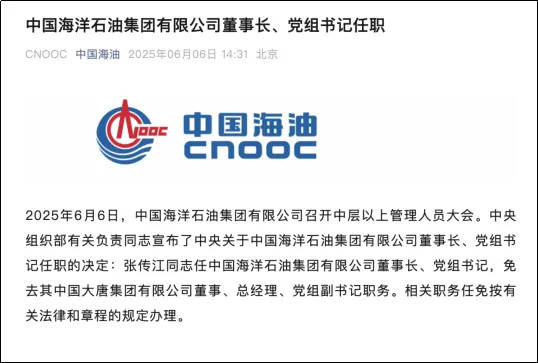
刚刚,中海油新董事长到位,来自大唐集团!
Sou Hu Cai Jing· 2025-06-06 09:02
Core Viewpoint - Zhang Chuanjiang has been appointed as the new Chairman and Party Secretary of China National Offshore Oil Corporation (CNOOC), succeeding Wang Dongjin, who had been in the position until early May 2023 [1][3]. Group 1: Leadership Changes - Zhang Chuanjiang's appointment comes after a month-long vacancy in the chairman position following the removal of Wang Dongjin in April 2023 [3]. - Prior to this role, Zhang held various significant positions, including General Manager of China Datang Corporation and Chairman of China Shenhua Coal to Liquid and Chemical Company [4][6]. Group 2: Background of Zhang Chuanjiang - Zhang Chuanjiang, born in 1968 in Jingmen, Hubei, holds a master's degree in engineering and has extensive experience in the oil and coal chemical sectors [3]. - His previous roles include serving as the Assistant General Manager of the National Energy Group and various leadership positions within China Shenhua [4][5]. Group 3: CNOOC's Current Status and Future Direction - In 2024, CNOOC's crude oil production reached 56.3 million tons, accounting for 19% of the national total, while its revenue from renewable energy remains below 5% [8]. - The company is in the midst of a critical evaluation of its "14th Five-Year Plan," with Zhang's leadership expected to guide the transition towards cleaner energy in line with national carbon neutrality goals [8].


中国人民政治协商会议全国委员会常务委员会关于政协十三届四次会议以来提案工作情况的报告
Xin Hua Wang· 2025-06-06 03:18
Proposal Work Overview - The National Committee of the Chinese People's Political Consultative Conference (CPPCC) reported on the proposal work since the Fourth Session of the 13th CPPCC, highlighting the submission of 6,117 proposals, with 5,039 officially filed and a 99.8% completion rate [2][3]. Economic Development Proposals - Proposals focused on achieving high-quality development through measures such as tax reduction, maintaining steady credit growth for small and micro enterprises, and enhancing anti-monopoly efforts [3]. - Suggestions to increase investment in basic research and support specialized enterprises contribute to technological self-reliance and the optimization of industrial supply chains [3]. - Recommendations for rural revitalization and agricultural modernization have been integrated into national planning efforts [3]. Political Development Proposals - Emphasis on building socialist democratic politics and promoting the rule of law through proposals related to historical education and community governance [4]. - Suggestions for improving the electoral system in Hong Kong and enhancing legal frameworks in the Greater Bay Area contribute to national unity [4]. Cultural Development Proposals - Proposals aimed at enhancing cultural confidence and promoting traditional culture, including the establishment of national standards for cultural dissemination [5]. - Recommendations for improving public cultural services and supporting the development of the ice and snow economy in specific regions [6]. Social Development Proposals - Proposals focused on employment stability, education quality, and improving living standards, including support for new graduates and addressing the needs of vulnerable groups [6]. - Suggestions for enhancing healthcare systems and addressing aging population challenges have been noted [6]. Ecological Development Proposals - Proposals aimed at improving environmental quality and promoting green development, including the establishment of monitoring systems for major river basins [7]. - Recommendations for enhancing carbon reduction efforts and improving energy efficiency are highlighted [7]. Proposal Work Improvement Measures - The CPPCC has emphasized the importance of political leadership in proposal work and the need for quality improvement in proposal handling [8][10]. - Efforts to enhance collaboration and communication among various stakeholders in the proposal process have been initiated [9][10].
【第三十六次】习近平:深入分析推进碳达峰碳中和工作面临的形势任务 扎扎实实把党中央决策部署落到实处
Xin Hua She· 2025-06-06 02:37
Group 1 - The core viewpoint emphasizes the urgency and complexity of achieving carbon peak and carbon neutrality goals, which are critical for high-quality development and addressing environmental constraints [1][2][3] - The Chinese government has made significant progress in establishing a green, low-carbon economic system, including the launch of a national carbon market and the cessation of new overseas coal power projects [2][3] - Achieving the "dual carbon" goals is framed as a necessity for sustainable development, technological advancement, and meeting public demand for a better ecological environment [2][3] Group 2 - The relationship between development and emission reduction is highlighted, indicating that emission reduction should not hinder productivity but rather promote green transformation [3][4] - The need for coordinated national planning and local adaptation in carbon reduction strategies is emphasized, avoiding a one-size-fits-all approach [3][4] - The importance of balancing long-term and short-term goals in carbon reduction efforts is discussed, advocating for a pragmatic and gradual approach [3][4] Group 3 - The principles for advancing "dual carbon" work include national coordination, prioritizing conservation, dual-driven strategies, and risk prevention [4][5] - A focus on energy revolution is necessary, with a shift from traditional energy sources to renewable energy, ensuring energy security during the transition [4][5] - The promotion of green technology and innovation is essential, with an emphasis on developing and applying advanced low-carbon technologies [5][6] Group 4 - The establishment of a comprehensive green and low-carbon policy framework is crucial, including energy consumption controls and carbon emission standards [5][6] - Active participation in global climate governance is encouraged, aiming to contribute to a fair and cooperative international climate framework [5][6] - Strengthening party leadership and accountability in "dual carbon" initiatives is necessary to ensure effective implementation and oversight [6]
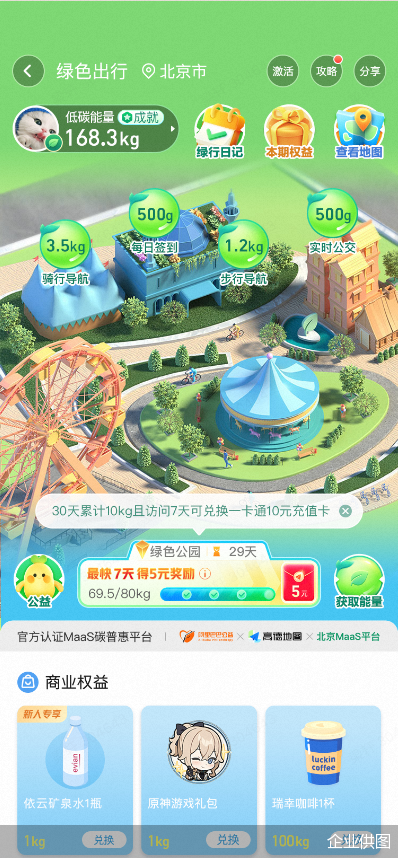
“美丽中国,我是行动者” 活动启动,高德地图助力全民低碳生活
Bei Jing Shang Bao· 2025-06-05 09:25
Core Viewpoint - The "Beautiful China, I am an Action Taker" initiative aims to promote low-carbon behavior among the public, leveraging digital platforms to encourage sustainable living and contribute to carbon peak and carbon neutrality goals [1][3]. Group 1: Initiative Overview - The initiative is launched by the Ministry of Ecology and Environment and focuses on integrating low-carbon habits into daily life across various scenarios such as clothing, food, housing, transportation, and usage [1]. - The program utilizes digital platforms and carbon behavior quantification to guide the public in adopting green low-carbon lifestyles [1][3]. Group 2: Participation Mechanism - Users can access the initiative through the Gaode Map app, which features a personal points account, check-in calendar, leaderboards, and daily task reminders to enhance low-carbon travel awareness [2]. - The initiative includes not only conventional low-carbon travel methods like cycling and public transport but also low-carbon driving routes and electric vehicle options [2]. Group 3: Collaborative Efforts - Gaode Map, along with other platforms like Ele.me and Alipay, has launched dedicated entry points for the initiative, promoting a collective call for public participation in low-carbon behavior [3]. - The initiative signifies a new phase in building a green low-carbon lifestyle across society, with digital tracking and incentives quantifying individual low-carbon actions within the social emission reduction framework [3].
焦点访谈丨能源转型 提质焕“新”
国家能源局· 2025-06-05 08:53
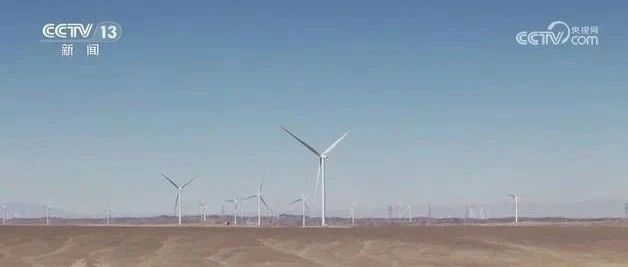
Core Viewpoint - The article emphasizes the rapid development and significance of clean energy, particularly wind and solar power, in China's efforts to combat climate change and achieve carbon neutrality by 2060 [1][8]. Group 1: Industry Growth and Achievements - China's wind and solar power installed capacity reached 1.48 billion kilowatts, surpassing traditional coal power for the first time [1]. - By the end of 2023, China's wind and solar power installed capacity has increased tenfold compared to a decade ago, driven by strong government policies and technological advancements [2]. - The cost of solar power generation has decreased by 90% from 2010 to 2022, making it significantly cheaper than coal power [4]. Group 2: Technological Advancements - Innovations in technology have led to significant improvements in efficiency, with companies like JinkoSolar achieving world-leading conversion efficiencies for solar cells [3]. - The development of large-scale wind turbines, such as the 20MW offshore floating wind turbine with blades measuring 130 meters, showcases the technological progress in the wind energy sector [3][4]. Group 3: Economic and Environmental Impact - The wind and solar energy sectors are becoming key drivers of economic growth in regions like Hami, Xinjiang, where they account for over half of the energy structure [4]. - The use of green hydrogen, produced from renewable energy sources, is being promoted as a cleaner alternative to traditional hydrogen production methods, contributing to reduced carbon emissions [5]. Group 4: Future Prospects and Policy Framework - The Chinese government aims for renewable energy consumption to reach 80% by 2060, integrating it with new industrial, transportation, agricultural, and building systems [8]. - The introduction of "green electricity direct connection" policies aims to enhance the consumption of renewable energy and meet the green energy needs of enterprises [8].
最高法:去年审结环资一审案超21万,加大破坏生态犯罪惩治
Nan Fang Du Shi Bao· 2025-06-05 05:03
Group 1 - The Supreme Court's annual report indicates that in 2024, courts adjudicated 219,000 environmental resource cases, including 26,000 criminal cases related to environmental pollution and ecological damage [1][2] - The report emphasizes the enforcement of environmental protection laws, with over 4,900 cases related to pollution adjudicated, supporting the ongoing battle against pollution [2] - The establishment of specialized environmental resource courts has increased, with 2,424 such courts set up nationwide, employing over 16,000 judges and judicial assistants [3] Group 2 - The report highlights the judicial efforts to support the "dual carbon" goals, including the establishment of a climate change judicial response research center [2][3] - It details the judicial handling of ecological damage compensation, with 246 cases adjudicated and a total compensation amounting to 9.6 billion yuan, reflecting a year-on-year increase of 87.5% [1] - The Supreme Court is actively involved in legislative support for ecological environment laws and has published numerous typical cases to guide judicial practices [3]

“十四五”降碳转型迎大考,电力部门有望率先实现碳达峰
Sou Hu Cai Jing· 2025-06-05 04:31
2025年是"十四五"的收官之年,也是备战"十五五"的关键之年,诸多约束性指标的冲刺、考核与下一步工作的谋划、筹备在同步进行。作为"十四五"阶段出 台的重大战略决策、被视为广泛而深刻的经济社会系统性变革的"碳达峰碳中和"工作也将在今年迎来阶段性"大考"。其中,占全国碳排放总量约40%的最大 排放源——电力部门的降碳、减排情况备受关注。 6月5日,上海国际问题研究院"能源低碳发展"项目课题组与国际环保机构绿色和平发布《当"风光狂奔"遇上"煤电惯性":电力部门碳达峰倒计时》报告, 对"十四五"以来中国电力部门低碳转型态势进行了回顾分析,并就"十五五"全国碳达峰攻坚战中电力部门的进一步转型提出了相关建议。 虽然新能源受限于波动性、电网接纳等问题,在发电方面的表现逊色于装机增速,但近期的步伐也同样在加快。2024年,我国可再生能源新增发电量约占全 社会新增用电量的86.44%,其中风电、太阳能合计新增发电量贡献了约56.8%的全社会新增用电需求。而且,根据国家能源局的统计,这一占比仍在进一步 提升,今年一季度,风电、太阳能的新增发电量已经超过了全社会的新增用电量。 电力部门碳排放有望在今年实现达峰 电力部门的低碳转型 ...

逐“绿”去 向“美”行 国家开发银行为绿色发展提供稳定中长期资金支持
Jin Rong Shi Bao· 2025-06-05 03:14
Core Viewpoint - The National Development Bank (NDB) is actively supporting green infrastructure projects, focusing on ecological protection and sustainable development in various regions of China [1][2][3][4][5][6][7]. Group 1: Green Infrastructure Projects - The NDB has financed the renovation and expansion of the Lanzhou Qilihe Anning Sewage Treatment Plant, which utilizes advanced treatment technology to ensure wastewater meets the Class A discharge standards [1]. - In the first four months of this year, the NDB issued over 250 billion yuan in green loans, emphasizing support for green infrastructure, clean energy, ecological protection, and pollution prevention [2]. - The NDB is committed to integrating ecological and environmental considerations into the entire lifecycle of infrastructure projects, including support for green transportation and waste management facilities [3]. Group 2: Renewable Energy Initiatives - The NDB is focusing on the development of new green low-carbon energy bases, providing long-term financing for clean energy projects and innovative storage technologies [4]. - In Xinjiang, the NDB is supporting the Huadian Mulei carbon dioxide compressed air energy storage project, which will be the largest of its kind globally, enhancing local renewable energy capacity [4]. Group 3: Ecosystem Protection and Restoration - The NDB is actively supporting ecosystem protection and restoration projects in key river basins, exploring mechanisms for realizing the value of ecological products [5]. - In Guangzhou, the NDB has facilitated the implementation of demonstration projects aimed at improving urban ecological environments and agricultural productivity [6]. Group 4: Innovative Financial Products - The NDB is innovating green financial products, such as sustainable development-linked loans, to promote water-saving irrigation practices in agriculture [7]. - The bank is also developing green financial bond products to attract social capital for green development initiatives [7].
新洋丰的“绿色突围战”
Zhong Guo Jing Ji Wang· 2025-06-05 02:19
Core Viewpoint - The article emphasizes the importance of agriculture in ecological protection and green development, highlighting the role of New Yangfeng as a leader in the phosphate fertilizer industry in China, actively responding to national strategies for green transformation and environmental protection [1][6]. Group 1: Environmental Challenges and National Strategies - Global food systems contribute over one-third of total anthropogenic greenhouse gas emissions, with food production accounting for the highest share at 39% [1]. - In China, approximately 40% of arable land is experiencing varying degrees of soil degradation, indicating significant challenges in agricultural non-point source pollution management [1]. - The Chinese government has integrated climate change response into its national strategy, promoting policies for comprehensive green transformation in agriculture [1]. Group 2: Technological Innovation and Research - New Yangfeng has increased its investment in technological research, undertaking over 20 national and provincial key research projects, focusing on green slow-release fertilizers and agricultural pollution prevention technologies [2]. - The company has developed four new functional slow-release fertilizer products and nine specialized products for crops like corn and peanuts, covering approximately 1.35 million acres to enhance fertilizer efficiency and reduce environmental burdens [2]. Group 3: Standards and Industry Leadership - New Yangfeng actively participates in the establishment of green product and factory standards, contributing to seven national and industry standards, setting a replicable model for the industry's green transformation [3]. Group 4: Product and Service Integration - The company has developed a diverse product matrix of over 100 types of fertilizers, focusing on high efficiency, specialization, and environmental protection to meet various agricultural needs [4]. - New Yangfeng has conducted over 10,000 technical training sessions and established more than 600 high-standard demonstration fields to promote green planting and improve soil health [4]. Group 5: Resource Utilization and Eco-restoration - New Yangfeng leads in the comprehensive utilization of phosphogypsum, processing over 700 million tons annually, with a resource utilization rate continuously improving [5]. - The company collaborates with research institutions to develop soil conditioners and organic fertilizers, conducting trials for saline-alkali land improvement in various provinces [5]. Group 6: Future Outlook - New Yangfeng aims to further integrate green production with ecological protection, striving for a harmonious coexistence of agriculture and the environment while enhancing sustainable agricultural practices [6].

广东:积极推动涉碳金融产品创新
news flash· 2025-06-04 15:02
Core Viewpoint - The People's Bank of China Guangdong Branch, in collaboration with multiple departments, has developed a work plan to support green and low-carbon development in Guangdong, focusing on innovative financial products related to carbon [1] Group 1: Key Actions Proposed - Implementation of a special action to expand and improve green financing in key areas, supporting ecological construction and low-carbon transition in Guangdong [1] - Promotion of innovation in carbon-related financial products, enhancing green credit product innovation, and accelerating the development of green direct financing services [1] - Establishment of a comprehensive directory of green financing projects to facilitate connections between green projects and financial institutions, improving service capabilities and risk management [1] - Optimization of the ecological environment for green finance, including the enhancement of credit systems and external support mechanisms [1]