信息茧房

Search documents
汇聚千余青年代表,第18届全球青年模拟联合国大会在京召开
Bei Jing Ri Bao Ke Hu Duan· 2025-08-02 07:23
Group 1 - The 18th Global Youth Model United Nations Conference (WEMUN EXPO 2025) opened on August 1 in Beijing, themed "WE, the answers!" to guide global youth in addressing global challenges through dialogue and cooperation [1] - The conference marks the 80th anniversary of the United Nations and gathers over a thousand youth representatives from more than ten countries, engaging in discussions across 23 committees [1] - The event is supported by the China Soong Ching Ling Foundation, featuring a special venue for discussions on 37 hot topics aimed at contributing youth wisdom for world peace and development [1] Group 2 - The CEO of Beijing Blue Plus International Education Consulting Co., Ltd. highlighted the significant value of Model United Nations (MUN) in addressing the spiritual challenges faced by contemporary youth, emphasizing three key benefits: information discernment, deep communication skills, and intrinsic motivation [3] - The organizing committee ensured a high-level academic experience through online training and standardized processes prior to the conference, with additional activities like workshops on UN Sustainable Development Goals [3] - The Secretary-General of the CCG Foundation noted that MUN serves as an international platform that helps youth build language skills, foster inclusivity, and expand global perspectives [3]


如何避免进入“信息茧房”?
Hu Xiu· 2025-07-31 08:12
Group 1 - The discussion revolves around the concept of "information cocoon" and its relevance in the current digital age, highlighting its historical context and evolution [1][2][4] - The book "Digital Survival" by Nicholas Negroponte is referenced as a foundational text that connects to the idea of personalized information consumption, which later evolved into the concept of "information cocoon" [2][4] - The emergence of recommendation algorithms is identified as a significant factor that has transformed the initial optimistic view of personalized information into a more fragmented and isolated information experience [5][6][10] Group 2 - Different types of information cocoons are discussed, with distinctions made between "high-level" and "low-level" cocoons, emphasizing the subjective nature of user experiences [7][9] - The phenomenon of "echo chambers" is introduced, where individuals are surrounded by like-minded opinions, reinforcing their existing beliefs and limiting exposure to diverse perspectives [12][14][16] - The role of technology in shaping user behavior and information consumption is examined, suggesting that while technology can enhance access to information, it can also lead to a narrowing of perspectives [10][11][24] Group 3 - The concept of "filter bubbles" is introduced, highlighting how algorithms on social media platforms can create environments that reinforce users' existing beliefs [13][14][30] - The discussion touches on the limitations of algorithms in promoting content diversity, suggesting that a balance between algorithmic recommendations and user agency is necessary [21][38] - The need for educational initiatives to help users navigate the complexities of technology and information consumption is emphasized, advocating for a more informed and proactive user base [24][39][40] Group 4 - The term "hive mind" is proposed as a counter-concept to "information cocoon," suggesting a more collaborative and open approach to information sharing and consumption [42][43] - The importance of content quality and the role of content curators are highlighted, indicating that the effectiveness of information dissemination relies on both algorithmic and human interventions [41][45] - The discussion concludes with a call for a multi-faceted approach to address the challenges posed by information cocoons, integrating technology, user education, and content quality control [39][44][45]

信息蜂房,更好信息生态的可能
3 6 Ke· 2025-07-29 09:51
Core Viewpoint - The discussion revolves around the concept of "information cocoon" and its implications in the current digital age, emphasizing the need for a deeper understanding of how technology and user behavior contribute to this phenomenon [2][3][24]. Group 1: Information Cocoon Concept - The term "information cocoon" refers to a state where individuals are exposed to a narrow range of information, often due to algorithmic filtering and personal preferences, leading to a limited worldview [9][10][12]. - The emergence of personalized content delivery systems has intensified the cocoon effect, as users increasingly receive information that aligns with their existing beliefs, reinforcing their biases [11][12][15]. - The historical context of the "information cocoon" concept can be traced back to earlier ideas like "my daily newspaper," which envisioned a highly personalized information consumption model [6][7][14]. Group 2: User Behavior and Technology Interaction - Users play a significant role in the formation of information cocoons, often choosing to engage with content that confirms their existing views, which can lead to a lack of exposure to diverse perspectives [9][10][15]. - The interaction between users and algorithms creates a feedback loop where user preferences shape content delivery, further entrenching the cocoon effect [20][21][36]. - The challenge lies in encouraging users to actively seek diverse information sources and engage with content that may challenge their viewpoints, rather than passively consuming tailored content [19][32]. Group 3: Content Quality and Algorithmic Influence - The quality of content available in the information ecosystem is crucial; if the content pool is limited or biased, even sophisticated algorithms cannot provide a balanced information diet [34][36]. - Algorithms are often viewed as the primary culprits behind the cocoon effect, but the underlying issue may also stem from the quality and diversity of the content being fed into these systems [37][38]. - There is a need for a multi-faceted approach to address the information cocoon phenomenon, which includes improving content quality, enhancing user engagement, and refining algorithmic recommendations [32][38].
信息蜂房,更好信息生态的可能|3万字圆桌实录
腾讯研究院· 2025-07-29 09:03
Core Viewpoint - The article discusses the evolution of information consumption from "information cocoons" to "honeycombs," emphasizing the need for a new understanding of information ecosystems in the digital age [2][3]. Group 1: Information Cocoon Concept - The concept of "information cocoon" reflects a phenomenon where individuals are trapped in a narrow information space, often due to algorithmic filtering and personal preferences [10][11]. - The emergence of personalized content delivery systems has led to a fragmentation of audiences, creating isolated "information islands" [8][9]. - The discussion highlights the dual nature of information cocoons, where some are self-imposed through user choices, while others are more insidious and difficult to detect [10][11]. Group 2: The Role of Algorithms and Technology - Algorithms play a crucial role in shaping information consumption, often reinforcing existing preferences and limiting exposure to diverse viewpoints [12][13]. - The article suggests that the current era of algorithm-driven content distribution has intensified the effects of information cocoons compared to previous media forms [13][14]. - There is a call for a balanced approach that combines algorithmic recommendations with user agency to enhance content diversity [20][34]. Group 3: The Honeycomb Metaphor - The "honeycomb" metaphor represents a new vision for information ecosystems, where diverse and interconnected content can thrive, contrasting with the isolation of cocoons [36][37]. - The article proposes that the honeycomb model could facilitate better information sharing and engagement among users, promoting a more holistic understanding of the world [36][37]. - The need for content curators or gatekeepers is emphasized to ensure quality and diversity in information delivery, akin to traditional media roles [37][38]. Group 4: User Responsibility and Education - Users are seen as co-creators of their information environments, and there is a need for education on how to navigate digital spaces effectively [22][34]. - The article stresses the importance of fostering critical thinking and awareness of the implications of technology on information consumption [34][35]. - Encouraging proactive engagement with diverse content sources is essential to mitigate the risks associated with information cocoons [22][34].

台当局要求公职人员卸载小红书等5款大陆应用程序 国台办:民进党当局滥权妄为 倒行逆施 必遭民意反对
news flash· 2025-07-16 03:12
Core Viewpoint - The Taiwanese authorities' request for public officials to uninstall five mainland applications, including Xiaohongshu, is seen as an abuse of power and a regressive action that will face public opposition [1] Group 1: Government Actions - The Taiwanese government, led by the Democratic Progressive Party (DPP), claims the need for security as a reason for banning these applications, which is perceived as a facade for their own insecurities [1] - The DPP's actions are characterized as excessive and counterproductive, indicating a fear of losing control over information flow to the public [1] Group 2: Public Sentiment - The popularity of mainland applications among Taiwanese citizens, especially the youth, is attributed to their efficiency in information access, convenience in life services, and engaging social sharing experiences [1] - The DPP's measures are likely to provoke public dissent, as they attempt to maintain an "information cocoon" that limits exposure to the realities of mainland China [1]
暴力事件频出 美国政治极化撕裂民主外衣
Zhong Guo Qing Nian Bao· 2025-07-16 00:02
Group 1 - The article highlights the increasing political violence in the U.S., with recent incidents raising concerns about a disturbing "new normal" [1][2] - Political polarization between the Democratic and Republican parties is intensifying, eroding the foundations of American democracy [1][2] - Key areas of contention include immigration policy, energy policy, and social welfare, with significant differences in approaches between the two parties [1][2][3] Group 2 - The article discusses the impact of Trump's policies, which have exacerbated class divisions and led to a decline in social mobility and trust in government [2][3] - A significant increase in threats against members of Congress has been reported, with over 9,400 threats in 2024, more than double the number from a decade ago [2][3] - The federal government has increased the budget for the Capitol Police to $833 million in response to rising violence, nearly double the $464 million budget from 2020 [2][3] Group 3 - The rise of generative artificial intelligence is noted as a factor that could further polarize society and influence election outcomes [3][4] - The spread of misinformation and the creation of "information silos" are contributing to the escalation of violence and political extremism [3][4] - A survey of political scientists indicates a belief that the U.S. is moving towards a form of authoritarianism, with concerns about the erosion of democratic norms [4][5] Group 4 - The article emphasizes the need for bipartisan cooperation to address economic inequality and political violence, which are seen as root causes of societal division [5][6] - Restoring public trust in institutions and bridging social divides are identified as critical challenges for the U.S. government [6]
信息蜂房,算法破茧
Hu Xiu· 2025-07-11 02:20
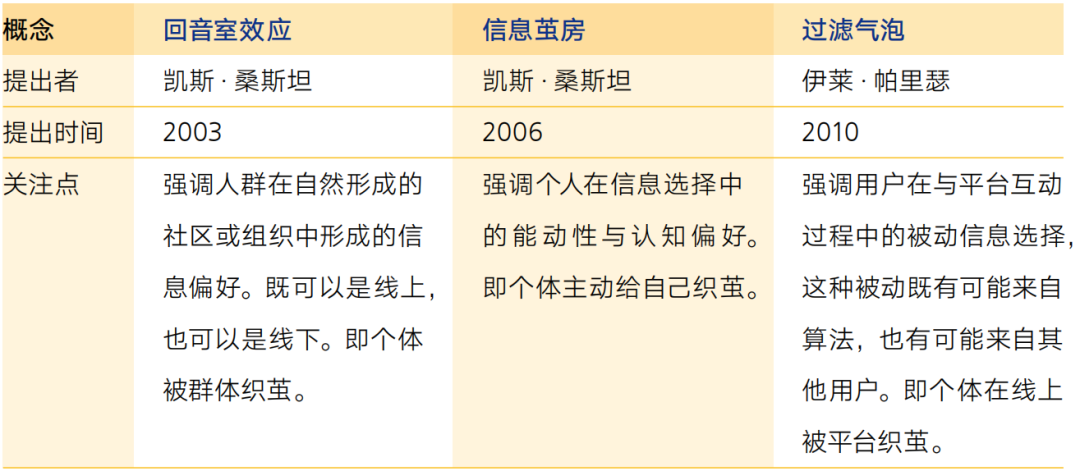
Core Viewpoint - The article discusses the concept of "information cocoons" and the emergence of "information beehives" as a solution to enhance information diversity and break free from algorithm-driven content filtering [11][56]. Group 1: Information Cocoon Concept - The term "information cocoon" was introduced by Cass Sunstein in 2006, highlighting how individuals tend to consume information that aligns with their existing beliefs, leading to a narrow perspective [16][18]. - The phenomenon of information cocoons existed before the rise of algorithms, but the advent of social media and algorithmic recommendations has exacerbated the issue, creating "filter bubbles" [19][24]. - The article outlines the differences between "echo chambers," "information cocoons," and "filter bubbles," emphasizing how each concept relates to user behavior and algorithmic influence [22][23]. Group 2: Algorithmic Influence - Algorithms play a crucial role in shaping user experiences by personalizing content based on user preferences, which can lead to a lack of exposure to diverse viewpoints [30][31]. - The design of algorithms aims to maximize user engagement, often resulting in a feedback loop that reinforces existing interests and limits the discovery of new information [30][31]. - Various types of algorithms, such as collaborative filtering and content-based filtering, are identified as significantly contributing to the formation of information cocoons [27][28]. Group 3: Information Beehive Concept - The "information beehive" concept is proposed as a countermeasure to information cocoons, promoting a more open and diverse information ecosystem [59][60]. - The beehive metaphor encourages users to actively seek out varied information sources and engage with different perspectives, contrasting with the closed nature of cocoons [12][61]. - The article suggests that fostering an information beehive requires collaboration among content producers, platforms, and consumers to ensure high-quality content is accessible to a broader audience [12][13].




算法破茧|腾讯研究院三万字报告
腾讯研究院· 2025-07-10 08:50
Core Viewpoint - The article discusses the concept of "information cocoons" and proposes the idea of "information beehives" as a method to break free from these cocoons, aiming to create a better information ecosystem in the algorithm-driven era [5][34][35]. Group 1: Information Cocoon Concept - The term "information cocoon" was introduced by Cass Sunstein in 2006, highlighting how individuals tend to consume information that aligns with their existing beliefs, leading to a narrow perspective [8][9]. - The article differentiates between "information cocoons," "echo chambers," and "filter bubbles," noting that all three concepts describe how individuals can become isolated in their information consumption [9][11]. - The rise of algorithms has exacerbated the information cocoon phenomenon, as users are increasingly exposed to content that reinforces their existing views, limiting their exposure to diverse perspectives [20][22]. Group 2: Algorithm's Role - Algorithms are designed to maximize user engagement and satisfaction, often leading to a cycle of reinforcing existing interests and preferences [17][18]. - The article identifies four mechanisms of algorithms that contribute to the formation of information cocoons: goal orientation, positive feedback loops, data dependency, and similarity matching [18]. - The transition from a "search for information" model to an "information finds people" model has made it easier for users to access content but has also led to the risk of becoming trapped in echo chambers [19][20]. Group 3: Proposed Solutions - The concept of "information beehives" is introduced as a proactive approach to encourage users to seek diverse information sources and engage with different viewpoints [5][35]. - Recommendations for breaking free from information cocoons include actively subscribing to unfamiliar content, participating in cross-disciplinary discussions, and regularly challenging one's own viewpoints [6][35]. - The article emphasizes the importance of building a collaborative mechanism among content producers, platforms, and consumers to foster a healthier information ecosystem [5][34].

Hinton为给儿子赚钱加入谷歌,现在痛悔毕生AI工作,“青少年学做水管工吧”
量子位· 2025-07-09 09:06
Core Viewpoint - Geoffrey Hinton, known as the "Godfather of AI," expresses regret over his life's work in AI, highlighting the potential risks and consequences of AI development, urging humanity to reconsider its direction [2][4][17]. Group 1: Hinton's Background and Career - Hinton joined Google to support his son, who has learning disabilities, and has since become a prominent figure in AI, winning prestigious awards like the Nobel Prize in Physics and the Turing Award [3][13][15]. - He initially focused on neural networks, a choice that was not widely accepted at the time, but has proven to be correct as AI has advanced significantly [9][10]. Group 2: AI Risks Identified by Hinton - Hinton categorizes AI risks into short-term and long-term threats, emphasizing the need for awareness and caution [21]. - Short-term risks include a dramatic increase in cyberattacks, with a reported 12,200% rise from 2023 to 2024, facilitated by AI technologies [22][25]. - The potential for individuals with basic biological knowledge to create highly infectious and deadly viruses using AI tools is a significant concern [26]. - AI's ability to manipulate personal habits and decisions through data analysis poses a risk of creating echo chambers and deepening societal divides [29][30]. Group 3: Long-term Risks and Predictions - Hinton warns of the emergence of superintelligent AI that could surpass human intelligence within 20 years, with a predicted extinction risk of 10%-20% for humanity [32][35]. - He compares humanity's relationship with superintelligent AI to that of chickens to humans, suggesting that humans may become subservient to their creations [37]. - The potential for widespread unemployment due to AI replacing cognitive jobs is highlighted, with recent layoffs at Microsoft exemplifying this trend [39][41]. Group 4: Recommendations for the Future - Hinton suggests that individuals consider careers in trades, such as plumbing, which are less likely to be replaced by AI [43][47]. - He advocates for increased investment in AI safety research and stricter regulatory measures to manage AI development responsibly [44][54]. - The importance of fostering unique personal skills and interests is emphasized as a way to thrive in an AI-dominated future [48][49].

“每个男人都需要有自己的喉结罩”
虎嗅APP· 2025-07-05 03:09
Core Viewpoint - The article discusses the emergence and cultural significance of the "Adam's Apple Cover," a satirical fashion item for men, reflecting contemporary gender discussions and societal norms [21][22][45]. Summary by Sections Cultural Significance - The "Adam's Apple Cover" is seen as a new fashion item for men, symbolizing a shift in gender dynamics and societal expectations [9][21]. - It serves as a parody of traditional gender roles, suggesting that just as women have clothing to conceal their secondary sexual characteristics, men should also have similar items [22][25]. Product Description - The item is essentially a piece of fabric designed to cover the throat area, primarily to hide the Adam's apple, and is suggested to be worn from puberty onwards [13][15]. - Different materials and styles are recommended based on the wearer's age and aesthetic preferences, with an emphasis on modesty in more conservative areas [16][18]. Market Trends - The Adam's Apple Cover has gained popularity, with businesses beginning to mass-produce it, often marketed alongside other fashion accessories [36][45]. - Prices for these items are generally affordable, around several dozen yuan, and they come in various styles and materials [36]. Gender Dynamics - The rise of the Adam's Apple Cover is linked to the broader trend of "gender-reversal" content on social media, which often critiques traditional male behavior through a female lens [49][50]. - This content has become a popular genre, with many female creators participating, leading to a surge in viewership and engagement [51][54]. Social Commentary - The article critiques the entertainment value derived from gender-based humor, suggesting that while it may provide temporary amusement, it perpetuates a cycle of inequality and resentment between genders [66][72]. - It raises questions about the effectiveness of such narratives in resolving deeper societal issues, emphasizing the need for more constructive dialogue rather than superficial entertainment [72][110].