具身智能

Search documents
鼎泰高科20260327
2026-03-30 05:15
Company and Industry Summary Company Overview - **Company Name**: 鼎泰高科 (Ding Tai High-Tech) - **Industry**: Precision Tool Manufacturing, specifically focusing on drill bits and cutting tools Key Financial Performance - **2025 Total Revenue**: 21.44 billion CNY, a year-on-year increase of 35.7% [3] - **2025 Net Profit**: 4.34 billion CNY, a year-on-year increase of 91.14% [3] - **Q4 2025 Revenue**: 6.86 billion CNY, a quarter-on-quarter increase of 19.41% [3] - **Q4 2025 Net Profit**: 1.51 billion CNY, a quarter-on-quarter increase of 19% [3] Revenue Breakdown by Product Line 1. **Cutting Tools (金力刀具)**: - Revenue: 17.4 billion CNY, year-on-year increase of 46%, accounting for 81.17% of total revenue [4] 2. **Grinding and Polishing Materials**: - Revenue: 1.92 billion CNY, year-on-year increase of 27.61%, accounting for 8.98% of total revenue [4] 3. **Functional Film Materials**: - Revenue: 73.68 million CNY, year-on-year decrease of 52%, accounting for approximately 3% of total revenue [4] 4. **Intelligent Conveying Equipment**: - Revenue: 76 million CNY, year-on-year increase of 17%, accounting for 3.58% of total revenue [4] Product Insights - **Drill Bit Sales**: - Q4 2025 total shipment: 326 million units, generating approximately 4.12 billion CNY [3] - Coated drill bits accounted for 39% of sales in 2025, expected to reach 60% in 2026 [5] - Average price of products increased from 1.26 CNY in Q4 2025 to over 1.5 CNY in Q1 2026 [7] Capacity Expansion Plans - **Current Capacity Gap**: Driven by the GB300 project, significant capacity shortages are noted [2] - **Phase II Factory**: Expected to commence production in April 2026, aiming for a monthly output increase of over 10 million units [2] - **50 Billion CNY Expansion Plan**: To address capacity saturation post-Q3 2026, with investments planned in three phases [14] Market Dynamics - **AI Demand**: Rapid increase in demand for coated drill bits driven by AI applications [2] - **Price Adjustments**: - First round of price increases completed; second round ongoing due to rising raw material costs, particularly tungsten [8] - Price increases for larger drill bits approaching 50% [8] Challenges and Barriers - **Entry Barriers for New Competitors**: High technical and capital barriers exist for entering the micro drill bit market, including equipment costs and lengthy customer certification processes [12][13] - **Verification Cycles**: Product verification can take 6 months to several years, depending on customer requirements [13] Future Outlook - **Functional Film Materials**: Expected to turn profitable in the second half of 2026 as customer validations progress [20] - **Intelligent Equipment Growth**: Focused on internal demand fulfillment, with potential for future external sales once capacity allows [18] - **Export Growth**: Significant increase in overseas sales, with plans to balance domestic and international production capacities [11] Conclusion Ding Tai High-Tech is positioned for growth with strong financial performance and strategic expansion plans. The company faces challenges related to capacity and market entry barriers but is leveraging AI-driven demand and price adjustments to enhance profitability. The focus on innovation and product development, particularly in high-precision tools, will be critical for sustaining growth in a competitive landscape.
江苏省省长刘小涛会见理想汽车董事长李想
Xin Jing Bao· 2026-03-30 04:58
Group 1 - Jiangsu Province is focusing on developing new quality productivity and nurturing emerging industries such as intelligent connected new energy vehicles, aiming for cross-industry integration and mutual empowerment [1] - The provincial government encourages leading companies like Li Auto to enhance independent research and development of automotive-grade chips and core components, and to deepen cooperation within the supply chain [1] - Li Auto plans to lead with innovation, focusing on application scenarios and accelerating the layout of embodied intelligence to contribute to Jiangsu's high-quality development [2] Group 2 - Jiangsu is recognized as a significant manufacturing base for new energy vehicles in China, with a comprehensive strategic cooperation agreement signed between Changzhou and Li Auto in August 2024 [3] - The Jiangsu government is committed to supporting Li Auto's development in the province, with Li Auto planning to invest in areas such as vehicle manufacturing, smart industry, foreign trade sales, and cultural tourism integration [3]

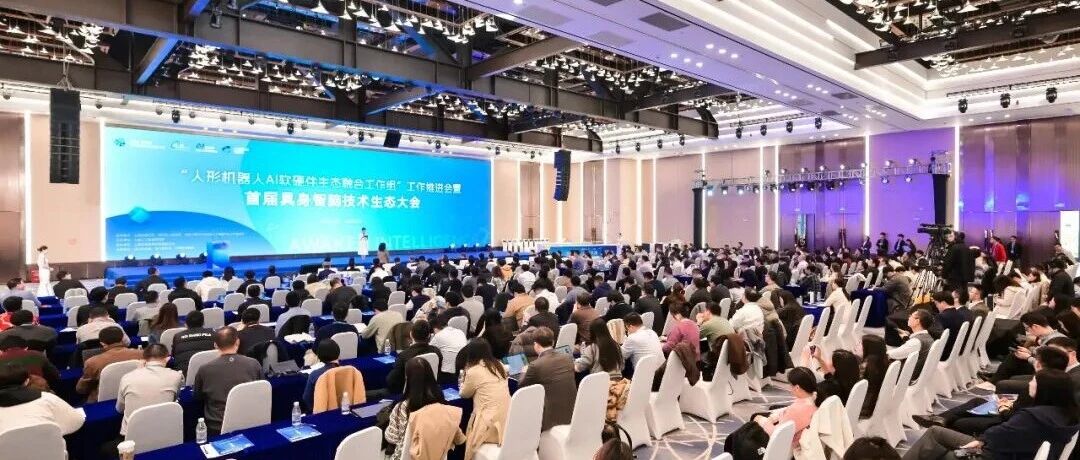
「人形机器人AI软硬件生态融合工作组」工作推进会暨首届具身智脑技术生态大会在沪举行
机器之心· 2026-03-30 04:10
Core Insights - The conference on humanoid robots and AI hardware-software ecosystem integration was held in Shanghai, emphasizing the importance of integrated circuits and AI in modern industrial systems and global value chains [1][3][20] Group 1: Event Overview - The event was organized by Shanghai Jiao Tong University and the Shanghai Minhang District Government, with participation from various industry leaders and academic figures [1][3] - Keynote speeches highlighted the role of integrated circuits and AI in fostering new productive forces and enhancing China's position in the global value chain [3][5] Group 2: Technological Developments - The launch of the domestically produced "ZhiNeng T" series of humanoid robots was announced, showcasing advancements in core technologies such as architecture, perception processing, motion control, and AI foundations [6][19] - The conference included discussions on the evolution from perceptual intelligence to cognitive intelligence, outlining the technological leap necessary for future developments [17][20] Group 3: Strategic Initiatives - Several milestone initiatives were launched, including the establishment of standards for AI hardware-software collaboration and a global ecosystem co-construction plan [10][11] - Strategic partnerships were formed to enhance collaboration within the ecosystem, focusing on integrating hardware and software for humanoid robots [13][15] Group 4: Industry Dialogue - A peak dialogue session addressed the transition of robots from being "body without brain" to "brain and body strong," discussing the industrialization path for this evolution [19] - Roundtable discussions focused on the integration of technology and supply chains, emphasizing the need for collaborative standards and ecosystem synergy [20]

顶配阵容!院士学者与产业领袖4月齐聚北京,第三届中国具身智能与人形机器人产业大会邀你共赴万亿赛道
机器人大讲堂· 2026-03-30 04:02
Core Insights - The article discusses the upcoming third China Embodied Intelligence and Humanoid Robot Industry Conference scheduled for April 28-29, 2026, highlighting the gathering of industry leaders and experts to explore advancements in embodied intelligence and robotics [1][5]. Group 1: Conference Overview - The conference aims to address the core themes of the "year of mass production" in embodied intelligence, focusing on technological breakthroughs, cost control, and practical applications [5]. - Over 30 pioneering companies in the field, including Lingxin Qiaoshou, Yinshi Robotics, and Galaxy General, have confirmed their participation, indicating a strong industry presence [1][10]. - The event will feature a main forum with over 30 experts sharing insights on industry direction and technological evolution [19]. Group 2: Event Structure - The conference will include six high-energy segments designed to foster collaboration and resource sharing within the industry [14]. - A dedicated supply-demand matching session will facilitate direct dialogue between companies involved in robotics, components, and applications [26]. - The event will also host a talent recruitment fair to connect top graduates and researchers with companies in the embodied intelligence sector [28]. Group 3: Awards and Recognition - The conference will feature the LeadeRobot awards, recognizing outstanding contributions across four categories related to embodied intelligence and humanoid robotics [23]. - An industry report titled "Embodied Intelligence and Humanoid Robot Industry Research Report (2026)" will be released, providing insights into policy trends and technological breakthroughs [25]. Group 4: Participation and Collaboration - The conference invites various stakeholders, including manufacturers, suppliers, research institutions, and investors, to participate and explore collaborative opportunities [32]. - Early bird tickets for attendees are available, offering access to the conference and a copy of the industry report [37][38].

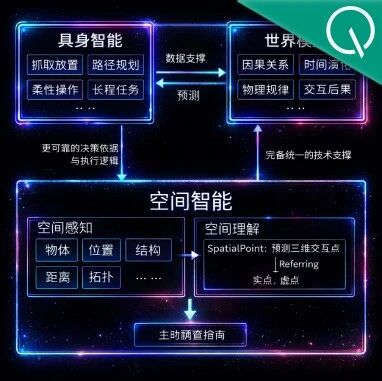
将深度信息作为VLM核心输入!视启未来×清华×IDEA帮机器人看懂物理世界
量子位· 2026-03-30 03:39
Core Viewpoint - The article discusses the limitations of current Visual-Language Models (VLM) in physical interactions and introduces the SpatialPoint framework, which integrates depth information to enhance spatial perception and interaction capabilities of AI systems [5][11][32]. Group 1: Limitations of Current VLM - Current VLMs can recognize objects but struggle with spatial operations due to reliance on RGB images without accurate depth information, leading to issues like misgrabbing and collisions [6][8]. - Traditional VLMs output 2D bounding boxes and semantic labels, which lack actionable 3D coordinates necessary for robotic execution, creating a gap between perception and action [8][9]. - Existing technologies often treat real and virtual points separately, lacking a unified framework to predict both types of critical spatial points needed for effective interaction [9][12]. Group 2: Introduction of SpatialPoint Framework - SpatialPoint is designed to address the shortcomings of traditional VLMs by incorporating structured depth information as a core input alongside RGB and language data, enabling direct output of actionable 3D coordinates [11][12]. - The framework employs a two-stage training strategy to seamlessly integrate depth information without compromising the existing capabilities of pre-trained VLMs [17][19]. - SpatialPoint allows for simultaneous prediction of both TouchablePoints (real points) and AirPoints (virtual points), significantly improving the efficiency and accuracy of robotic tasks [11][13]. Group 3: Technical Implementation - The framework includes a depth encoding process that converts single-channel depth maps into a format compatible with RGB inputs, ensuring aligned feature extraction [16]. - Multi-modal collaborative reasoning is facilitated by introducing specific boundary markers for depth tokens, allowing for integrated processing of RGB, depth, and language features [17][18]. - The output is structured in a 3D coordinate format (u, v, Z), which can be directly interpreted by robotic systems, reducing the complexity of translating model predictions into executable actions [18]. Group 4: Experimental Results - SpatialPoint demonstrated a significant improvement in identifying effective operational positions, achieving a 79% success rate in locating TouchablePoints, compared to 74.1% and 50.3% of other models [23]. - For AirPoints, the model showed a 50.71% success rate in direction finding and a 33.47% success rate in locating specific positions within 5 centimeters, outperforming traditional models [26]. - The framework's performance in complex spatial positioning tasks consistently exceeded that of other models, indicating its robustness across various scenarios [28]. Group 5: Practical Applications - SpatialPoint has been validated in real-world robotic applications, successfully executing tasks such as object retrieval and navigation without the need for model fine-tuning [29][30]. - The framework's unified visual interface allows for integrated multi-task operations, enhancing the efficiency of robotic systems in dynamic environments [31]. - By addressing the core challenges of spatial interaction, SpatialPoint aims to facilitate the transition of AI from virtual environments to real-world applications, contributing to the development of embodied intelligence [32][36].
国产世界模型登顶全球第一!断层领先谷歌英伟达,3D准确度逼近满分
量子位· 2026-03-30 03:39
Core Insights - The article highlights the significant achievement of GigaWorld-1, developed by the Chinese company 极佳视界, which has surpassed major competitors like Google and NVIDIA to become the top-ranked embodied world model globally [1][10]. Group 1: GigaWorld-1 Performance - GigaWorld-1 is the only embodied world model to score over 60 on the WorldArena leaderboard, achieving a score of 62.34% [2]. - It leads in several key dimensions, including Visual Quality (63.04), Motion Quality (39.16), Content Consistency (65.17), Physics Adherence (97.02), and 3D Accuracy (57.28) [2][6]. - The model shows a 16% improvement in Physics Adherence compared to the second-ranked model, Ctrl-World [6]. Group 2: Technical Advancements - GigaWorld-1 is designed as an Action-Conditioned World Model (AC-WM), integrating explicit action modeling and a differentiable physics engine for accurate physical interactions [11][14]. - The model has been trained using high-quality real robot operation video data, enhancing its generalization capabilities in open scenarios [14]. Group 3: Company Background and Funding - 极佳视界 is recognized as the first company in China to focus on world models, combining technology development with substantial financing [20]. - The company recently completed a nearly 1 billion yuan Pre-B round of financing, attracting investments from top firms in the semiconductor and automotive industries [21][22]. - Previous investments include a strategic investment from Huawei's Hubble Investment, indicating strong interest in the world model sector [24][25]. Group 4: Product Ecosystem - The company offers a product matrix that includes GigaWorld, a world model platform, GigaBrain, an embodied foundational model, and Maker, a general-purpose embodied ontology [28]. - GigaWorld serves as a digital sandbox for simulating physical world operations and generating high-fidelity synthetic data, achieving efficiency improvements of 10-100 times compared to traditional simulators [30][32]. Group 5: Team and Expertise - The core team of 极佳视界 includes experts with extensive experience in physical AI, robotics, and world models, led by founder and CEO Huang Guan, who has a strong background in automation and AI competitions [41][46]. - The team has a proven track record of achieving global recognition in AI competitions and has published numerous influential papers in the field [44][47].

——汽车行业周报:华为召开春季新品发布会,零跑A10正式上市-20260330
Guohai Securities· 2026-03-30 03:34
Investment Rating - The report maintains a "Recommended" rating for the automotive industry [1] Core Insights - The automotive industry is expected to face challenges in 2026 due to the reduction of new energy vehicle purchase tax incentives and the decline in trade-in subsidies, leading to limited growth in total vehicle sales. However, there are opportunities for domestic brands to upgrade and penetrate the high-end market, as well as advancements in smart technology [12][10] - The report highlights the launch of several new models by Huawei and the introduction of the Leap A10, a compact electric SUV priced between 65,800 to 86,800 yuan, which aims to compete in the high-end smart driving technology segment [11][10] - The report emphasizes the potential for growth in the heavy truck sector and the acceleration of profitability in the supply chain, recommending companies such as China National Heavy Duty Truck, Weichai Power, and Foton Motor [12][10] Summary by Sections Recent Trends - The automotive sector outperformed the Shanghai Composite Index during the week of March 23 to March 27, with the automotive index declining by only 0.4% compared to the Shanghai Composite's decline of 1.1% [13][2] - Key stocks in the Hong Kong automotive market showed varied performance, with Li Auto increasing by 4.9% and Leap Motor rising by 11.6% [13][2] Weekly Dynamics - Huawei's spring product launch showcased multiple upgraded models, including the Aito M6 and M7, which feature advanced safety and design enhancements [10][11] - Leap Motor's A10 aims to penetrate the compact SUV market with competitive pricing and advanced technology [11][10] Industry Indicators - In February 2026, the automotive production and sales figures showed significant year-on-year declines, with total vehicle production down by 20.5% and sales down by 15.2%. New energy vehicles accounted for approximately 42.4% of total new vehicle sales [38][10] Key Companies and Profit Forecasts - The report provides a detailed forecast for several key companies, including BYD, which is expected to see a slight revenue increase of 3.5% in 2025, while also noting a decrease in net profit by 19% [24][22] - Other companies highlighted include Great Wall Motors, which reported a revenue of 222.82 billion yuan with a 10.2% increase, but a net profit decrease of 22.1% [22][24]



ICRA 2026 | NUS邵林团队提出Goal-VLA:生成式大模型化身「世界模型」,实现零样本机器人操作
机器之心· 2026-03-30 03:00
Core Insights - The article discusses the innovative Goal-VLA framework developed by a team from the National University of Singapore, which addresses the challenge of generalization in robotic manipulation by utilizing an object-centric world model without the need for task-specific fine-tuning or paired action data [3][31]. Group 1: Framework Overview - Goal-VLA employs a decoupled hierarchical framework that connects high-level semantic reasoning with low-level action control through the use of object goal state representations [8][31]. - The system operates using natural language instructions and single-view RGB-D images, eliminating the need for pre-scanned maps or known object meshes [8][31]. Group 2: Execution Process - The execution process of Goal-VLA consists of three key stages: 1. **Natural Language Processing**: Converts user instructions into detailed visual goals using a text-based VLM and an iterative "Reflection-through-Synthesis" mechanism to ensure physical and semantic feasibility of generated images [12][31]. 2. **Spatial Grounding**: Transforms 2D visual goals into precise 3D spatial transformations by extracting pixel-level semantic features and establishing pixel matching between initial and target frames [14][18]. 3. **Low-level Policy**: Converts the object goal poses into executable actions, ensuring collision-free trajectories for task execution [18][22]. Group 3: Experimental Results - In simulations using the RLBench environment, Goal-VLA achieved an average success rate of 59.9% across eight complex tasks, significantly outperforming the MOKA model, which had a success rate of 26.0% [21]. - Real-world tests with the UFACTORY X-ARM 7 robotic arm demonstrated a 60% average success rate across four challenging tasks, showcasing the framework's ability to provide precise spatial guidance for complex operations [22][23]. Group 4: Performance Analysis - The research team conducted an ablation study revealing that enhancing input prompts alone increased the success rate by 27.5%, while the complete "Reflection-through-Synthesis" cycle raised the base success rate from 40.0% to 88.8% with up to three iterations [24].

西部证券晨会纪要-20260330
Western Securities· 2026-03-30 02:44
Group 1: Jin Hui Jiu (金徽酒) - The company reported a revenue of 2.918 billion yuan in 2025, a decrease of 3.40% year-on-year, with a net profit of 354 million yuan, down 8.70% [6][7] - The company’s contract liabilities increased by 28.4% year-on-year to 820 million yuan, indicating a strong sales cash collection of 3.502 billion yuan, up 2.42% [6][8] - High-end product sales above 300 yuan increased by 25.21% to 709 million yuan, contributing to an improved product structure [7][8] Group 2: Jin Li Yong Ci (金力永磁) - The company achieved a total revenue of 7.718 billion yuan in 2025, a year-on-year increase of 14.11%, with a net profit of 706 million yuan, up 142.44% [10][11] - The main revenue source was from new energy vehicles and components, generating 3.941 billion yuan, a growth of 30.31% [11] - The company’s gross margin improved significantly to 21.18%, an increase of 10.05 percentage points year-on-year [10] Group 3: He Huang Yi Yao (和黄医药) - The company reported a revenue of 548.5 million USD in 2025, a decrease of 13%, with a net profit of 456.9 million USD [14][15] - The ATTC platform shows potential, with expected revenue growth of 14.9% to 8.34 billion USD by 2028 [16] - The company has a strong cash position and is focusing on international expansion [16] Group 4: Kai Li Yi Liao (开立医疗) - The company’s revenue for the first three quarters of 2025 was 1.459 billion yuan, a year-on-year increase of 4.37% [18][19] - New product lines are driving growth, with significant increases in sales for minimally invasive surgical products [19][20] - The company is expected to achieve EPS of 0.34, 0.82, and 1.07 yuan for 2025, 2026, and 2027 respectively [20] Group 5: Yi Hai Guo Ji (颐海国际) - The company reported a revenue of 6.613 billion yuan in 2025, a slight increase of 1.12%, with a net profit of 854 million yuan, up 15.49% [22][23] - The overseas market showed strong growth, with third-party overseas sales increasing by 45.4% [23] - The company’s gross margin improved to 32.7%, an increase of 1.5 percentage points year-on-year [24] Group 6: Hai Tian Wei Ye (海天味业) - The company achieved a revenue of 28.87 billion yuan in 2025, a year-on-year increase of 7.3%, with a net profit of 7.04 billion yuan, up 11% [26][27] - The company’s three main product categories saw stable pricing trends, with soy sauce revenue increasing by 8.5% [27][28] - The gross margin improved to 40.22%, an increase of 3.2 percentage points year-on-year [28] Group 7: Hai Er Zhi Jia (海尔智家) - The company reported a revenue of 302.3 billion yuan in 2025, a year-on-year increase of 5.7%, with a net profit of 19.6 billion yuan, up 4.4% [30][31] - The company announced a dividend payout ratio of 55%, an increase of 7 percentage points year-on-year [31] - The company is focusing on AI and smart home innovations, aiming to lead in the smart household sector [31] Group 8: Xing Ye Zheng Quan (兴业证券) - The company achieved a revenue of 11.841 billion yuan in 2025, a year-on-year increase of 21%, with a net profit of 2.87 billion yuan, up 32.6% [33][34] - The brokerage business saw a significant increase in market share, with trading volumes reaching 13.74 trillion yuan, up 81.4% [34] - The company’s asset management scale expanded, with public fund sizes growing by 15% [34] Group 9: Dong Fang Zheng Quan (东方证券) - The company reported a revenue of 15.358 billion yuan in 2025, a year-on-year increase of 26.2%, with a net profit of 5.634 billion yuan, up 68.2% [37][38] - The asset management business showed positive growth, with a significant increase in client accounts [38] - The company completed 15 A-share equity financing projects, ranking 7th in the industry [38] Group 10: Hua Xin Jian Cai (华新建材) - The company achieved a revenue of 35.348 billion yuan in 2025, a year-on-year increase of 3.31%, with a net profit of 2.853 billion yuan, up 18.09% [41][42] - The overseas business contributed significantly, with overseas sales increasing by 25.3% [42] - The company’s gross margin improved to 30.22%, an increase of 5.53 percentage points year-on-year [43] Group 11: Xi Bu Kuang Ye (西部矿业) - The company reported a revenue of 61.69 billion yuan in 2025, a year-on-year increase of 23.3%, with a net profit of 3.64 billion yuan, up 24.3% [45][46] - The company’s copper production decreased by 5.65%, while zinc and lead production increased significantly [46] - The company is expanding its resource reserves, with new exploration projects underway [46][47] Group 12: Shen Huo Gu Fen (神火股份) - The company achieved a revenue of 41.241 billion yuan in 2025, a year-on-year increase of 7.47%, with a net profit of 4.005 billion yuan, down 7% [49] - The electrolytic aluminum business performed well, with production increasing by 8.95% [49] - The company’s gross margin improved to 23.36%, an increase of 2.13 percentage points year-on-year [49]





20万条4D交互数据+运动学锚定,南洋理工让生成式仿真不再「脑补」机器人动作
量子位· 2026-03-30 02:35
Core Viewpoint - The article discusses the development of Kinema4D, a high-fidelity 4D embodied simulator created by NTU MMLab, which aims to enhance robot-environment interaction modeling by overcoming the limitations of traditional simulators and 2D video generation models [2][3]. Background and Challenges - Robot-environment interaction simulation is crucial for data augmentation, policy evaluation, and reinforcement learning in embodied intelligence. Traditional physical simulators face challenges such as insufficient visual realism and reliance on preset physical rules, making them difficult to scale to complex new scenarios [7]. - Recent efforts have utilized video generation models to synthesize robot-environment interactions, bypassing cumbersome physical modeling [8]. - Existing generative simulation methods have key deficiencies, including: 1. Dimensional limitations, as most models are confined to 2D pixel space, lacking the necessary 4D spatiotemporal constraints. 2. Insufficient accuracy due to reliance on high-level language instructions and static environment priors, leading to imprecise control and dynamic guidance [9]. Core Method - Kinema4D's core motivation is to ensure precise robot control while restoring the 4D spatiotemporal essence of interactions. It employs a "simulation decoupling" design philosophy, breaking down the interaction process into robot control and resulting environmental changes [13]. - The two supporting insights are: 1. Kinematics-driven precise 4D action representation, ensuring that robot actions in 4D space are physically deterministic and not predicted by the generative model [13]. 2. Controllable generative modeling of environmental responses in 4D, allowing the model to focus on synthesizing dynamic environmental responses rather than modeling the robot's own kinematics [13]. Dataset - The article introduces Robo4D-200k, the largest 4D robot interaction dataset, comprising 201,426 high-fidelity interaction sequences. This dataset integrates diverse real-world demonstration data and synthetic data to provide robust reasoning capabilities for embodied foundational models [17]. Experimental Analysis - Kinema4D has been benchmarked across three dimensions: video generation quality, geometric quality, and downstream policy evaluation. It achieved leading results in video generation quality, outperforming existing models [18]. - In terms of geometric quality, Kinema4D demonstrated superior performance compared to another 4D generative simulator, accurately replicating real trajectory execution effects [22]. - The simulator's results align closely with actual execution performance, showcasing its ability to synthesize successful execution trajectories and accurately identify failure cases, even under out-of-distribution conditions [29]. Summary and Outlook - Kinema4D represents a significant advancement in robot simulation, transitioning from traditional 2D pixel generation to 4D spatiotemporal reasoning. It successfully integrates deterministic mechanical control with dynamic environmental feedback [30]. - The article highlights the potential for Kinema4D to bridge the gap between virtual and real-world applications, showcasing strong zero-shot generalization capabilities. Future exploration may focus on incorporating explicit physical laws into generative networks to address challenges in extreme physical scenarios [30].