净息差收窄

Search documents
新一轮“降息潮”来袭,有地方行存款利率三年内“腰斩”
3 6 Ke· 2025-05-13 10:57
Core Viewpoint - The recent trend of interest rate cuts in China has led to a significant decline in deposit rates, with many banks adjusting their rates to below 2%, marking a shift to the "1 era" for some long-term deposits [1][4][3] Group 1: Interest Rate Cuts and Deposit Trends - Since April, numerous small and medium-sized banks have announced reductions in deposit rates, with some long-term rates dropping below 2% [1][3] - A report indicates that certain local banks have seen their deposit rates halved compared to three years ago, with specific examples showing a drop from 3.85% to 1.85% for five-year deposits [5][4] - The adjustment in rates reflects a broader trend where banks are managing their liabilities more effectively in response to narrowing net interest margins [7][6] Group 2: Future Outlook on Deposit Rates - Analysts suggest that deposit rates may continue to decline, albeit at a slower pace, as the central bank has recently lowered the policy interest rate [2][10] - The current environment indicates that banks are likely to adjust their rates in a staggered manner, with state-owned banks leading the changes [12][10] - The overall trend shows that the proportion of time deposits has increased significantly, with 97% of new deposits in 2023 coming from time deposits [7][11] Group 3: Implications for Banking Operations - The phenomenon of interest rate inversion, where shorter-term deposits yield higher rates than longer-term ones, has become common, indicating banks' strategic adjustments to manage costs [8][6] - Banks are expected to explore differentiated pricing strategies and diversify their funding sources to alleviate pressure on net interest margins [12][11] - The ongoing adjustments in deposit rates are seen as a necessary measure for banks to maintain profitability while responding to the economic environment [12][11]
多地中小银行密集调降存款利率,有银行却逆势上调,但存1年不如存5年
Mei Ri Jing Ji Xin Wen· 2025-05-13 09:23
Core Viewpoint - The adjustment of deposit rates by local small and medium-sized banks continues, with many institutions lowering rates, while a few are increasing them, leading to a phenomenon of inverted rates between short-term and long-term deposits [1][4][5]. Group 1: Deposit Rate Adjustments - Since May, many local small and medium-sized banks have been adjusting their deposit rates, with some long-term deposit rates falling below 2% [1][2]. - For example, the deposit rates at Liaocheng Hunan Rural Commercial Bank were reduced across all terms, with the one-year rate dropping from 1.95% to 1.8%, a decrease of 15 basis points [2]. - In contrast, Xinjiang Korla Fumin Village Bank announced an increase in rates for certain short-term deposits, with the one-year rate rising to 2.0% and the two-year rate to 2.05%, both higher than the three-year and five-year rates [1][4]. Group 2: Market Trends and Predictions - Analysts expect that deposit rates will continue to decline in the second half of the year, with a potential reduction of 20 to 30 basis points anticipated [8]. - The central bank's recent policy changes, including a 0.1 percentage point reduction in policy rates, are expected to lead to further decreases in deposit rates [6][7]. - The overall trend indicates that banks are under pressure to lower their funding costs to maintain net interest margins, which have been narrowing [5].


安永:2024年上市银行净息差持续收窄 经营环境不确定性加大
Xin Hua Cai Jing· 2025-05-13 07:18
新华财经北京5月13日电 安永13日发布《中国上市银行2024年回顾及未来展望》报告。该报告深度分析 了中国58家上市银行(包括15家A+H股、27家A股及16家H股上市银行)2024年度的经营业绩、资产质 量、业务发展、经营模式等方面的最新变化,并展望未来发展方向,探索银行业在低利率时代下的高质 量发展路径。 受市场利率持续下行、存量按揭贷款利率下调和持续让利实体经济等因素影响,2024年上市银行净息差 进一步收窄,平均净息差为1.52%,较上年下降17个基点,已连续五年下降,最近三年净息差均低于 2%。受净息差收窄的影响,上市银行2024年度净利息收入同比下降2.20%,连续2年下降。 安永大中华区金融服务首席合伙人忻怡表示:"当前的低利率环境预计还将持续一段时期。银行业在进 入'低利率、低息差'周期的同时,还面临宏观环境的不确定性加大,国际上主要经济体增长动能偏弱、 地缘政治冲突持续、贸易冲突和金融市场波动加剧,国内有效需求不足、经济回升向好基础还不稳固。 复杂多变的环境对上市银行的经营发展带来重大挑战。面对挑战,上市银行一方面做加法:多元开源拓 展非息收入,优化营收结构;多渠道补充资本,夯实服务实体经 ...
息差因素影响持续 资产质量保持稳健
Jin Rong Shi Bao· 2025-05-08 04:42
Core Viewpoint - The 10 A-share listed rural commercial banks achieved growth in both revenue and net profit attributable to shareholders in 2024, despite challenges such as a slowing loan growth rate and declining net interest margins [1][5][9]. Financial Performance - Ruifeng Bank was the only institution among the 10 to exceed a 10% growth in total assets, reaching 220.5 billion yuan, with a revenue increase of 15.29% to 4.385 billion yuan and a net profit rise of 10% to 1.922 billion yuan [2]. - Changshu Rural Commercial Bank reported the highest net profit growth at 16.2%, reaching 3.813 billion yuan, and surpassed 10 billion yuan in revenue, totaling 10.909 billion yuan [3]. - Overall, the net interest margin for A-share listed rural commercial banks continued to narrow, with Zhangjiagang Rural Commercial Bank experiencing the largest decline of 37 basis points to 1.62% [3][4]. Non-Interest Income - Non-interest income growth became a significant driver for revenue improvement, with Qingdao Rural Commercial Bank achieving a 28.37% increase in non-interest income to 3.812 billion yuan [4]. - Zhangjiagang Rural Commercial Bank reported a 176.81% increase in investment income, contributing positively to its revenue [4]. Risk Management and Asset Quality - Despite external economic challenges, the asset quality of A-share listed rural commercial banks remained high, with eight out of ten banks reporting stable or improved non-performing loan (NPL) ratios [9][12]. - Jiangyin Rural Commercial Bank showed the most significant improvement in NPL ratio, decreasing by 0.12 percentage points to 0.86% [9]. - The overall capital adequacy ratio for these banks improved, reflecting effective risk management practices [9]. Strategic Focus and Service Differentiation - Banks are enhancing their service models and product systems to adapt to market changes, focusing on their unique competitive advantages [5][6]. - Changshu Rural Commercial Bank is deepening its focus on retail, small and micro enterprises, and innovative business areas, establishing 24 growth centers to explore new growth paths [7]. - Qingdao Rural Commercial Bank has innovated its product offerings to meet local needs, launching a series of financial products tailored to rural revitalization [4][6].
存款利率低于股份行,一些民营银行另辟蹊径加码财富管理
Hua Xia Shi Bao· 2025-05-08 02:05
Core Viewpoint - The continuous reduction of deposit interest rates by private banks indicates a shift in their strategy due to narrowing net interest margins, regulatory constraints, and downward pressure on market interest rates [2][6][9] Group 1: Deposit Rate Adjustments - In May, Huatuo Bank and Yilian Bank announced further reductions in deposit rates, with Huatuo Bank lowering personal notice deposit rates to 0.8% and 1% for 1-day and 7-day deposits respectively [3] - Huatuo Bank has made multiple adjustments since April, with the maximum reduction for unit products reaching 90 basis points and for personal products 45 basis points [4] - Yilian Bank adjusted its fixed deposit rates for 2-year, 3-year, and 5-year terms down by 20 basis points, reflecting a broader trend among private banks to lower rates [4][5] Group 2: Competitive Landscape - The current highest deposit rates for some private banks have fallen to 1.6%, which is lower than many joint-stock banks and some state-owned banks [5] - The competitive advantage of private banks in attracting deposits through high interest rates is diminishing, leading to a shift towards wealth management products [6][7] Group 3: Financial Performance and Strategy - Private banks are facing slowing net profit growth and declining net interest margins, with a reported net profit of 18.8 billion yuan in Q4 2024, down 7.84% year-on-year [7][8] - Many private banks are now focusing on wealth management as a key growth area, with significant increases in fee and commission income reported [8] - The trend of lowering deposit rates is expected to continue as banks seek to manage funding costs and maintain stable interest margins [9]

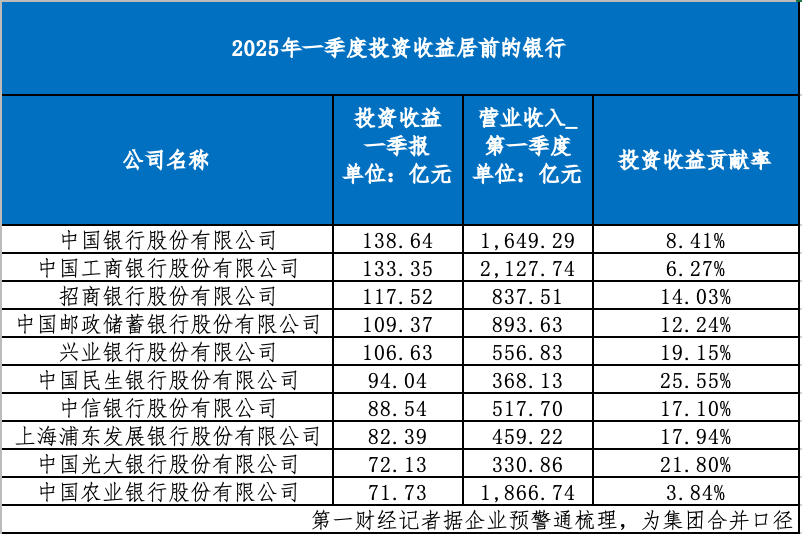
债牛红利兑现,银行一季度投资收益贡献近12%营收
Di Yi Cai Jing· 2025-05-06 12:46
Core Viewpoint - The banking sector has experienced significant growth in investment income in Q1 2025, despite overall revenue pressure, with investment income contributing 11.86% to total revenue, up from 9.2% year-on-year [1][2]. Group 1: Investment Income Growth - In Q1 2025, 100 banks reported a total investment income of 176.29 billion yuan, a substantial increase from 140.4 billion yuan in the same period last year [2][4]. - Among the top five banks by investment income are Bank of China, Industrial and Commercial Bank of China, China Merchants Bank, Postal Savings Bank of China, and Industrial Bank, with respective incomes of 13.86 billion yuan, 13.33 billion yuan, 11.75 billion yuan, 10.94 billion yuan, and 10.66 billion yuan [2][3]. - Approximately 68 out of 100 banks reported an increase in investment income, indicating a growth rate of nearly 70% [3][4]. Group 2: Factors Driving Growth - The growth in investment income is primarily attributed to increased bond market allocations amid a "asset shortage" and narrowing net interest margins [1][6]. - The issuance of government bonds has provided banks with ample opportunities for bond investments, which are considered safe assets [6][9]. - Some banks have realized one-time gains by cashing in on previous floating profits accumulated during the "bond bull" market of 2024 [1][9]. Group 3: Challenges and Market Conditions - The sustainability of the increased investment income is under scrutiny due to potential volatility in the bond market, which may affect future earnings [1][11]. - The yield on 10-year government bonds has fluctuated, impacting the fair value changes of financial assets held by banks [11][12]. - Many banks have reported losses in fair value changes, with a total loss of 42 billion yuan among 38 listed banks, contrasting with a gain of 241.91 billion yuan in the previous year [11][12]. Group 4: Strategic Adjustments - Banks are shifting their investment strategies from "scale-driven" to "refined management" to better navigate the dual challenges of interest margin pressure and bond market volatility [10][13]. - Institutions like Everbright Bank and Shanghai Bank are focusing on enhancing macroeconomic analysis and optimizing investment portfolios to stabilize core trading contributions [13].



广东三家排队上市银行年报出炉:净息差下降明显,两家净利下降超8%
Hua Xia Shi Bao· 2025-04-30 13:56
Core Viewpoint - The annual reports of three banks in the Guangdong-Hong Kong-Macao Greater Bay Area—Dongguan Bank, Shunde Rural Commercial Bank, and Nanhai Rural Commercial Bank—reveal a mixed performance in terms of revenue and net profit, with all three banks experiencing a significant decline in net interest margins [2][4][6]. Group 1: IPO Progress and Challenges - Dongguan Bank was the first to initiate its IPO plan in March 2008, but faced multiple setbacks, including a halted review in 2014 and a stalled process since 2025 due to outdated financial data [3][4]. - As of March 2023, all three banks had their IPO applications moved to the Shenzhen Stock Exchange, but their progress has been repeatedly interrupted due to the need for updated financial information [4][5]. - The total assets of the three banks exceeded 300 billion yuan, with Dongguan Bank at 672.73 billion yuan, Shunde Rural Commercial Bank at 481.05 billion yuan, and Nanhai Rural Commercial Bank at 334.85 billion yuan [4]. Group 2: Financial Performance - Dongguan Bank reported a revenue decrease of 3.69% to 10.197 billion yuan and a net profit decline of 8.20% to 3.733 billion yuan, attributed to market changes and increased support for small and micro enterprises [6][7]. - Shunde Rural Commercial Bank's revenue slightly increased by 1.24% to 8.49 billion yuan, but net profit fell by 8.54% to 3.169 billion yuan, with a narrowing net interest margin from 1.65% to 1.40% [7][8]. - Nanhai Rural Commercial Bank's revenue decreased by 6.30% to 6.429 billion yuan, while net profit grew by 2.99% to 2.453 billion yuan, with a net interest margin contraction from 1.72% to 1.34% [8]. Group 3: Asset Quality and Capital Adequacy - As of the end of 2024, Dongguan Bank's non-performing loan (NPL) ratio rose to 1.01%, while Shunde Rural Commercial Bank's NPL ratio increased to 1.61%. In contrast, Nanhai Rural Commercial Bank's NPL ratio decreased to 1.43% [5]. - Capital adequacy ratios showed improvement across the banks, with Dongguan Bank at 13.93%, Shunde Rural Commercial Bank at 14.90%, and Nanhai Rural Commercial Bank significantly increasing to 16.15% [4].

A股城商行2024财报揭秘:零售不良资产“负重”难销
Sou Hu Cai Jing· 2025-04-30 11:12
Core Insights - The overall asset quality of city commercial banks in A-shares has improved, with a notable decrease in non-performing loan (NPL) ratios, particularly in the southeastern coastal region compared to the central and western regions [2][3][6] - Despite the overall decline in NPL ratios, there is a significant increase in personal loan NPL ratios, indicating a shift in the quality of loan portfolios [2][6][8] - The pressure on net interest margins is expected to increase in 2025, leading to greater provisioning pressures for city commercial banks [2][9] Summary by Category Asset Quality - As of the end of 2024, the NPL ratio for A-share listed city commercial banks was reported at 1.7% or higher for three banks, namely Lanzhou Bank and Zhengzhou Bank, which exceeded the national average NPL ratio of 1.76% [3][4] - A total of 11 out of 17 listed city commercial banks reported a decrease in NPL ratios, while three banks saw their ratios remain stable and three experienced increases [4][6] Regional Differences - City commercial banks in the southeastern coastal regions generally reported lower NPL ratios, with most banks maintaining ratios below 1% [5][6] - In contrast, banks in the western regions, such as Lanzhou Bank and Zhengzhou Bank, reported higher NPL ratios, indicating a stark contrast in asset quality between regions [3][5] Loan Types - The NPL ratio for corporate loans has generally decreased across the majority of city commercial banks, with significant reductions noted for Chongqing Bank and Qilu Bank [7][8] - Conversely, personal loan NPL ratios have increased for most banks, with several banks reporting ratios of 2% or higher, highlighting a growing concern in this segment [8][9] Asset Disposal Challenges - The methods employed by banks for disposing of non-performing assets include collection, restructuring, write-offs, and asset transfers, with retail loans posing higher costs for collection due to their smaller, more dispersed nature [9] - The current environment suggests that city commercial banks will face significant provisioning pressures due to the high costs associated with disposing of personal non-performing loans and the immature state of bulk disposal methods for retail loans [9]
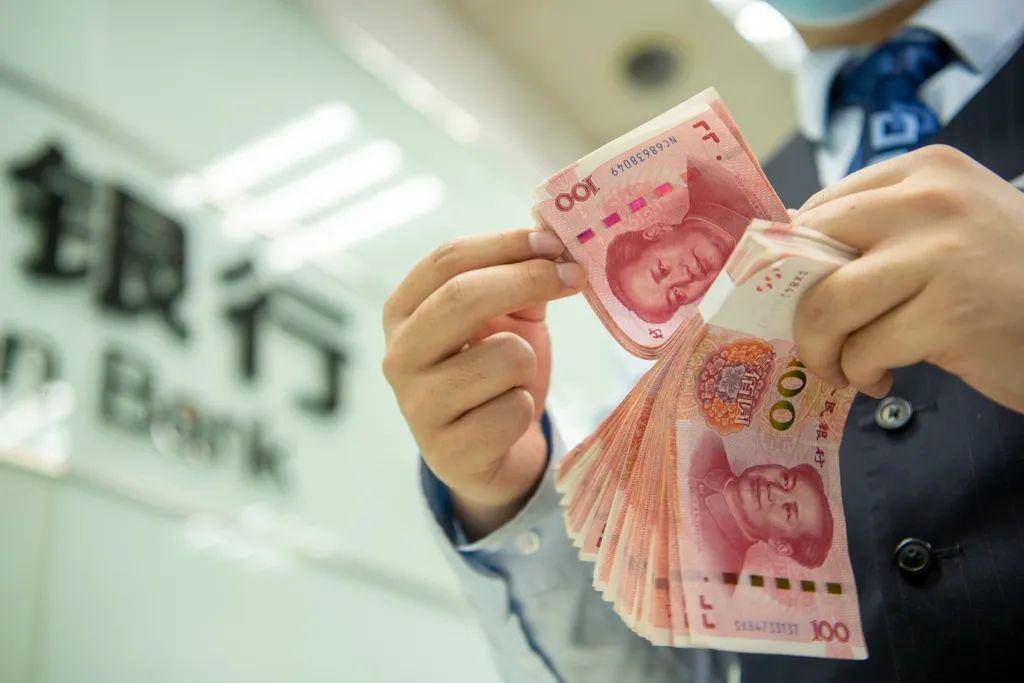
六大行一季报营收、利润表现分化 股价为何齐刷刷回调?
Xin Lang Cai Jing· 2025-04-30 08:12
智通财经记者 | 安震 4月29日晚间,六大国有银行公布了2025年一季度业绩报告,总体情况来看,六大国有银行的营业收入 总和为9,101.84亿元,同比下降1.51%;归母净利润总和为3,444.2亿元,同比下降2.09%。国有大行 普遍出现营收或归母净利润下滑,唯有农业银行营收和净利润均实现增长。 受到银行业绩承压影响,4月30日银行股出现回调,六大国有行股价均出现较大幅度回落。A股工商银 行(601398.SH)、农业银行(601288.SH)、建设银行(601939.SH)跌幅均在3%以上。截至收盘,华 夏银行(600015.SH)跌幅最大,达到8.55%,42家上市银行37家股价下跌,仅浦发银行 (600000.SH)、郑州银行(002936.SZ)、民生银行(600016.SH)、中信银行(601998.SH)上涨, 显示出对于银行一季度业绩的担忧情绪。不过,机构仍然看好银行股后市表现。 营收净利润表现分化 从财务表现来看,六大行营业收入呈现"三升三降",归母净利润"两升四降"。其中,工商银行实现营业 收入2127.74亿元,同比下降3.22%;归属于母公司股东的净利润841.56亿元,同比下降3 ...





成都银行(601838):2024年年报点评:息差降幅收窄,存贷规模扩张
NORTHEAST SECURITIES· 2025-04-29 11:11
Investment Rating - The report assigns a "Buy" rating for Chengdu Bank, indicating a positive outlook for the stock over the next six months [15]. Core Insights - Chengdu Bank reported a total operating income of 22.98 billion yuan in 2024, reflecting a year-on-year growth of 5.89%. The net profit attributable to shareholders reached 12.86 billion yuan, up 10.17% year-on-year [2][3]. - The bank's net interest income grew by 4.57% to 18.46 billion yuan, accounting for 80.33% of total revenue, although this represents a slight decrease in proportion compared to the previous year [3][17]. - The loan portfolio expanded significantly, with total loans amounting to 741.32 billion yuan, a year-on-year increase of 18.72%. Corporate loans grew by 20.25% to 602.62 billion yuan, while personal loans increased by 12.46% to 138.70 billion yuan [3][4]. - Deposits also saw growth, reaching 865.71 billion yuan, up 13.20% year-on-year. Personal deposits grew by 23.79%, now making up 50.64% of total deposits [4]. - The bank's net interest margin was reported at 1.66%, a decrease of 0.15 percentage points year-on-year, but the decline in margin has narrowed compared to previous periods [4][18]. - Asset quality improved, with a non-performing loan ratio of 0.66%, down 0.02 percentage points year-on-year. Corporate loans showed a non-performing rate of 0.63%, while personal loans increased to 0.78% [5][20]. - Capital adequacy ratios improved, with the core Tier 1 capital ratio at 9.06%, up 0.84 percentage points year-on-year [5][22]. Financial Summary - The bank's total assets reached 1.25 trillion yuan, a year-on-year increase of 14.56% [16]. - Forecasted net profits for 2025, 2026, and 2027 are expected to be 14.13 billion yuan, 15.46 billion yuan, and 16.71 billion yuan, respectively, indicating continued growth [5][26].