医药创新

Search documents
跨国药企加码中国市场 深化本土创新布局
Zheng Quan Ri Bao· 2025-10-27 17:47
Group 1 - Recent strategic investments by multinational pharmaceutical companies in China highlight the country's growing importance in the global pharmaceutical innovation landscape [1][2] - Medtronic's digital healthcare innovation base in Beijing aims to develop AI and big data-based disease management solutions, focusing on cardiovascular, minimally invasive surgery, and neuroscience [1] - AstraZeneca has launched a new global strategic R&D center in Beijing, part of a $2.5 billion investment plan, to accelerate the transition of early drug research results to clinical development [2] Group 2 - Sanofi has initiated a €1 billion insulin raw material project in Beijing, marking the first insulin raw material production base established by a multinational company in China [2] - Eli Lilly has launched an innovation incubator in Beijing, its first outside the U.S., reflecting the robust growth and innovation demand in China's biopharmaceutical market [2] - China's continuous optimization of the pharmaceutical industry policy environment is attracting international pharmaceutical companies to invest in R&D and innovation centers [2][3] Group 3 - The National Health Commission emphasized the advantages of China's health development and market size in encouraging foreign investment in the pharmaceutical sector [3] - The strategic focus of multinational pharmaceutical companies is shifting from "manufacturing in China" to "creating in China," recognizing the country as a key innovation source [3] - The deep localization of multinational pharmaceutical companies is fostering collaboration with local firms, enhancing clinical value and driving high-quality innovation in the Chinese pharmaceutical industry [3]


BioPark打造全球医药健康创新合作新枢纽
Xin Jing Bao· 2025-10-27 11:05
Core Insights - BioPark in Beijing Economic-Technological Development Area is becoming a global hub for pharmaceutical and health collaboration, attracting major multinational companies and local innovators [1][2][3] - AstraZeneca has announced a $2.5 billion investment to establish its sixth global strategic R&D center in Beijing, highlighting the area's appeal for international pharmaceutical investments [1][2] - The park covers approximately 5.5 square kilometers and includes four functional zones to support various stages of pharmaceutical development, from R&D to large-scale production [1][2] Group 1 - BioPark is home to multinational giants like AstraZeneca, Eli Lilly, Pfizer, Bayer, and Medtronic, with upcoming projects from Johnson & Johnson, Philips, and Bristol-Myers Squibb [1] - The park's design includes extensive green spaces, making up over half of its area, and aims to create a friendly environment for talent through a slow-moving system connecting the functional zones [2] - The Beijing Economic-Technological Development Area plans to enhance BioPark's infrastructure by integrating education, research, and medical resources, including an AI application pilot base and a world-class health education base [2][3] Group 2 - Over the past year, BioPark has transitioned from concept to reality, receiving support from global partners and attracting participation from 62 renowned international firms in its planning [3] - The development plan for BioPark is set to be accelerated, with a focus on creating a high ground for the pharmaceutical industry, a startup hub for medical talent, and a demonstration area for AI applications [3]

恒瑞医药盘中涨超5% 子公司恒格列净瑞格列汀二甲双胍缓释片获批上市
Ge Long Hui· 2025-10-27 08:06
Core Viewpoint - Heng Rui Medicine (1276.HK) experienced a 5.21% increase in stock price to 80.8 HKD following the announcement of the approval for its innovative oral diabetes medication, marking a significant milestone in the Chinese pharmaceutical market [1] Company Summary - Heng Rui Medicine's subsidiary, Shandong Shengdi Pharmaceutical Co., Ltd., received approval from the National Medical Products Administration for its product, HR20031 tablets, which is the first self-developed oral combination therapy for type 2 diabetes in China [1] - The product is designed for adult patients with type 2 diabetes who have inadequate blood sugar control despite treatment with metformin [1] Industry Summary - According to a report from Galaxy Securities, the pharmaceutical sector has undergone a prolonged valuation adjustment but is now showing a significant structural recovery trend [1] - Public fund holdings in the pharmaceutical sector remain below historical averages, indicating potential for growth [1] - The policy environment supporting the development of commercial insurance is expected to lead to marginal improvements in payment systems by 2025, benefiting innovative drugs and medical devices [1] - The outlook for the pharmaceutical industry remains positive, with continued interest in innovative drug business development (BD) and a potential revival in pharmaceutical investment and financing [1]


机构:医药板块估值已呈现显著结构性修复趋势
Zheng Quan Shi Bao Wang· 2025-10-27 01:24
Group 1: Pharmaceutical Sector Overview - The 2025 Jiangxi Pharmaceutical Development Conference held on October 25 in Ganzhou signed 16 key pharmaceutical projects covering various fields including innovative drugs, traditional Chinese medicine, pet medicine, medical devices, and pharmaceutical innovation platforms [1] - Galaxy Securities indicates that the pharmaceutical sector has undergone a significant structural repair trend after a prolonged valuation adjustment, with public fund holdings still below historical averages. In 2025, under the policy backdrop supporting commercial insurance development, there is potential for marginal improvement in payment [1] - Continuous optimism for pharmaceutical innovation is noted, with expectations that the second half of the year will see ongoing business development (BD) for innovative drugs, and a global trend of central banks lowering interest rates may further enhance valuations [1] Group 2: Retail and Distribution Insights - CITIC Securities highlights that the pharmacy industry is stabilizing, with leading pharmacies operating steadily and valuations at historical lows. Short-term focus includes demand recovery, industry concentration increase, and outpatient coordination policy increments [2] - In the distribution sector, leading companies are stabilizing, with future attention on improving receivables and long-term growth expectations driven by the "14th Five-Year Plan" [2] - The traditional Chinese medicine sector is experiencing easing pressure from base effects, with channel adjustments accelerating. Demand is expected to recover by the end of the year, while both sector valuations and institutional holdings remain low [2]
医药界盛会的“整岁生日”为何落地南京江北?“这里有更多合作机会和想象空间!”
Yang Zi Wan Bao Wang· 2025-10-26 12:42
Core Insights - The 10th Pharmaceutical Innovation and Investment Conference has commenced in Nanjing, attracting nearly a thousand participants from academia, industry, and investment sectors, including leaders from renowned pharmaceutical companies [1][2] - The conference serves as a platform to explore global pharmaceutical innovation trends and has become a "barometer" for pharmaceutical innovation and investment in China since its inception in 2016 [1][2] Group 1: Conference Highlights - The conference features various sub-forums focusing on cutting-edge topics such as anti-tumor new drugs, gene and cell therapy, and AI in pharmaceutical research, along with discussions on commercial insurance and healthcare payment reforms [2] - A special session, "Nanjing Jiangbei New Area-Hong Kong Biopharmaceutical Industry Exchange Conference," facilitates in-depth discussions between Hong Kong representatives and local enterprises [2] Group 2: Industry Development - The Jiangbei New Area is emerging as a vibrant hub for the biopharmaceutical industry, with over 1,300 biopharmaceutical companies and a competitive ranking of 8th nationwide [3] - The area has seen significant achievements, including 402 listed drugs and 1,261 medical device products, with several innovative products being first in the world [3] - The local biopharmaceutical sector is attracting attention from the capital market, with multiple companies, including Yaojie Ankang and Weili Zhibo, recently listing on the Hong Kong Stock Exchange [3][4] Group 3: Future Opportunities - The choice of Jiangbei New Area as the conference venue reflects the growing number of projects and enterprises in the region, which is also home to the first national university technology transfer center for biomedicine [5] - The presence of industry leaders at the conference is expected to inject confidence and vitality into the local biopharmaceutical ecosystem, paving the way for new collaborations and projects [5]
银河证券:医药板块估值近期已呈现显著结构性修复趋势
Zheng Quan Shi Bao Wang· 2025-10-26 04:22
Core Viewpoint - The pharmaceutical sector has shown a significant structural recovery trend after a prolonged valuation adjustment, with public fund holdings still below historical averages, and is expected to benefit from policy support for commercial insurance development in 2025 [1] Group 1: Pharmaceutical Innovation - Continued optimism for pharmaceutical innovation, with expectations that the second half of the year will see ongoing business development (BD) for innovative drugs, and a global trend of central banks lowering interest rates may further enhance valuations [1] Group 2: Investment and Financing in Pharmaceuticals - The recovery of the secondary market is anticipated to drive a rebound in primary market financing, with a positive outlook for CXO and upstream sectors [1] Group 3: Medical Devices - Medical device sector is showing signs of recovery, with improved bidding data and the gradual release of pent-up demand from trade-in programs [1]
诺华三大主题展区即将亮相第八届进博会
Zheng Quan Ri Bao Wang· 2025-10-25 03:13
Core Insights - Novartis will participate in the 8th China International Import Expo, marking its eighth consecutive appearance, emphasizing its commitment to becoming China's most valuable and trusted healthcare partner [1][2] Group 1: Innovation Focus - The "Focus on Innovation" exhibition area will showcase nearly 20 innovative products across four core therapeutic areas: cardiovascular, renal and metabolic, oncology, immunology, and neuroscience [1] - Attendees will have the opportunity to experience award-winning products and new indications for blockbuster drugs, including targeted therapies for cancer and innovative renal treatment pipelines [1] - An immersive interactive experience using advanced spatial computing display technology will allow visitors to explore the journey of innovative drugs within the human body [1] Group 2: Commitment to China - The "Deepening in China" exhibition area will reflect Novartis's century-long relationship with China and its new vision for development in the country [2] - Since 2018, Novartis has aligned its growth strategy with the Import Expo, increasing investments and fostering trust within the industry to contribute sustainably to China's innovative pharmaceutical ecosystem [2] Group 3: Accessibility of Medicine - The "Pharmaceutical Accessibility" exhibition area will highlight Novartis's efforts to enhance medicine accessibility for Chinese patients [2] - The area will showcase collaborations with partners in the pharmaceutical ecosystem, focusing on integrating innovative drugs into the national medical insurance directory and exploring diverse solutions for improving medicine accessibility [2] - A giant curved screen at the exhibition will inspire attendees to envision the future of healthcare through advanced pharmaceutical technologies [2]

打造医药创新高地 国家级药械审评中心落地北京
Bei Jing Shang Bao· 2025-10-17 02:44
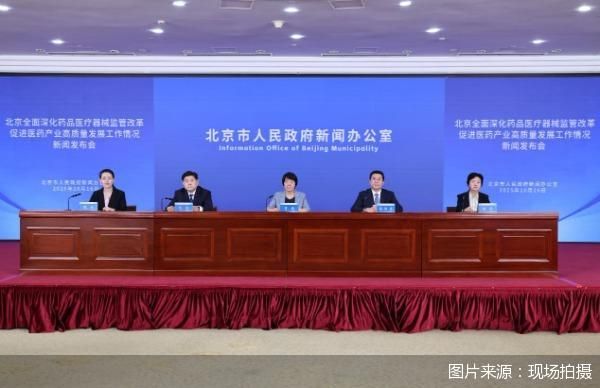
Core Viewpoint - The establishment of the Beijing-Tianjin-Hebei (Jing-Jin-Ji) Center for Drug and Medical Device Review and Inspection aims to enhance the quality and efficiency of drug and medical device regulation, promoting high-quality development in the pharmaceutical industry across the region [1][2]. Group 1: Overview of the Jing-Jin-Ji Center - The Jing-Jin-Ji Center was inaugurated on September 21 and will serve Beijing, Tianjin, Hebei, and Shandong, leveraging three major centers and four service stations to create a comprehensive service network for the biopharmaceutical industry [1][2]. - The center will provide technical services including research and development guidance, consultation, and review communication, focusing on accelerating the review and approval processes for urgently needed innovative drugs and medical devices [2][3]. Group 2: Services and Support for Enterprises - The Jing-Jin-Ji Center will establish flexible communication channels with enterprises to address uncertainties in drug development, offering in-depth discussions on key technical issues to streamline processes and enhance efficiency [3][4]. - The center will implement an annual training plan based on regional industry needs, providing targeted courses to meet diverse training demands [3][4]. Group 3: Integration and Standardization - The center's operations will be integrated into the unified work system of the National Medical Products Administration (NMPA), promoting standardized drug inspection and resource mutual recognition across the four regions [3][7]. - The establishment of the center is expected to enhance the quality of application materials and optimize the allocation of review resources, with over 1,200 enterprises served and more than 3,000 consultation issues resolved by 2025 [6][7]. Group 4: Strategic Collaboration and Future Goals - The Beijing government will strengthen strategic cooperation with the NMPA to create an efficient regional drug and medical device review system, positioning the Jing-Jin-Ji Center as a platform for high-quality integrated development and innovation in the pharmaceutical industry [7][8]. - The center aims to facilitate the integration of research, production, and clinical resources across the Jing-Jin-Ji and Shandong regions, aligning product development with clinical needs and regional health demands [7].
助力首都打造医药创新高地,国家级药械审评中心落地北京
Bei Jing Shang Bao· 2025-10-16 11:41
Core Viewpoint - The establishment of the Beijing-Tianjin-Hebei (Jing-Jin-Ji) Center for Drug and Medical Device Review and Inspection aims to enhance the quality and efficiency of drug and medical device regulation, promoting high-quality development in the pharmaceutical industry across the region [1][3]. Group 1: Overview of the Jing-Jin-Ji Center - The Jing-Jin-Ji Center was inaugurated on September 21 and will serve Beijing, Tianjin, Hebei, and Shandong, leveraging a comprehensive service network to support the biopharmaceutical industry [1][3]. - The center will provide technical services including research guidance, consultation, and review communication, focusing on accelerating the review and approval processes for urgently needed innovative drugs and medical devices [3][4]. Group 2: Service Network and Collaboration - The center will create a "3+1+4+N" service network, integrating resources from the national drug review centers and local innovation service stations to enhance collaboration and efficiency [7]. - It will facilitate early involvement of review experts in key areas such as artificial intelligence, providing tailored guidance to improve the quality of application materials [7][8]. Group 3: Training and Support for Enterprises - The Jing-Jin-Ji Center will establish flexible communication channels with enterprises, offering in-depth discussions on critical technical issues to streamline the development process [4][6]. - An annual training plan will be developed based on industry needs, addressing diverse training requirements to support the pharmaceutical sector [4][8]. Group 4: Regional Coordination and Standardization - The center's operations will be integrated into a unified system under the national drug regulatory framework, promoting standardized inspection processes and resource sharing among the four regions [8]. - The initiative aims to enhance the alignment of product development with clinical needs and regional health demands, fostering a deeper integration of the innovation and industrial chains [8].
解码未来产业|万亿产业南北联动 透视北京医药健康产业创新密码
Bei Ke Cai Jing· 2025-10-15 11:29
Core Insights - The article highlights the role of the Xinchao Innovation Center in Beijing's biopharmaceutical industry, emphasizing its commitment to fostering innovation and supporting early-stage projects [1][4][5]. Group 1: Company Overview - Xinchao Innovation Center has incubated 102 companies since its establishment in 2019, collaborating with prestigious institutions like Tsinghua University, Peking University, and Harvard University [4]. - The center has facilitated the clinical trial phase for six globally innovative drugs and nurtured two unicorns and 25 national high-tech enterprises, with total financing exceeding 6.5 billion yuan [4][5]. Group 2: Industry Growth - Beijing's pharmaceutical and health industry is projected to reach a scale of 1.06 trillion yuan by 2024, marking a significant milestone in its development [9]. - The city has seen a steady increase in the number of approved innovative drugs and medical devices, with four innovative drugs and seven medical devices approved this year alone [8][9]. Group 3: Strategic Initiatives - The "South-North Linkage" strategy is being implemented to enhance the biopharmaceutical industry, with the southern region focusing on the International Pharmaceutical Innovation Park and the northern region centered around the Zhongguancun Life Science Park [9][10]. - The Beijing government has introduced a series of measures to support high-quality development in the pharmaceutical sector, including a reduction in clinical trial approval times and the establishment of a 10 billion yuan pharmaceutical merger fund [10][12][13].