多模态模型

Search documents
大厂AI模型专题解读
2025-09-28 14:57
Summary of Conference Call Records Industry Overview - The conference call focuses on the AI model landscape in China, highlighting the challenges and advancements in the domestic AI industry compared to international counterparts [1][2][4][5]. Key Points and Arguments 1. **Architecture and Innovation** - Domestic AI models heavily rely on overseas architectures like Transformer and MoE, leading to difficulties in surpassing foreign models [1][2]. - There is a lack of self-developed, breakthrough architectural innovations in China, which hampers competitiveness [2]. 2. **Computational Power** - Chinese AI companies have significantly lower GPU computational power compared to international giants like Microsoft, Google, and Meta, often by an order of magnitude [2]. - The ongoing US-China trade war has restricted resource availability, further impacting computational capabilities [1][2]. 3. **Cost and Performance Focus** - Domestic models prioritize inference cost and cost-effectiveness, aligning with local consumer habits, while international models like GPT focus on top-tier performance [1][2]. - The commercial model differences create a substantial gap in model capabilities [2]. 4. **Data Acquisition** - The relatively lenient data laws in China provide an advantage in data acquisition for training models, unlike the stringent regulations in Europe and the US [3]. 5. **Open Source Strategies** - Alibaba adopts a nearly fully open-source strategy, including model weights, code, and training data, to enhance influence and integrate its cloud services [4]. - Other companies like ByteDance and Kuaishou are more selective in their open-source approaches due to their reliance on proprietary technology [4]. 6. **Multimodal Model Developments** - Domestic companies are making strides in multimodal models, focusing on applications in e-commerce and short videos, which cater to local needs [5][6][7]. - Companies like Alibaba, Kuaishou, Tencent, and ByteDance are developing models that integrate text, image, audio, and video generation [7][8]. 7. **MoE Architecture Adoption** - The MoE architecture is becoming standard among major companies, allowing for reduced computational costs and inference times [10]. - Future optimization directions include precise input allocation, differentiated expert system structures, and improved training stability [10][11]. 8. **Economic Viability of Large Models** - Starting mid-2024, pricing for APIs and consumer services is expected to decrease due to the release of previously constrained GPU resources [13]. - The overall cost conversion rate in the large model industry is increasing, despite initial low profit margins [13][14]. 9. **Competitive Differentiation** - Key competitive differences among leading domestic firms will emerge from their unique strategies in technology iteration, data accumulation, and business models [15]. 10. **Future Trends and Innovations** - The focus will shift towards agent systems that integrate user understanding and tool invocation, enhancing overall efficiency [16]. - The MCP concept will gain traction, addressing data input-output connections and reducing integration costs [22]. Additional Important Insights - The acceptance of paid services among domestic users is low, with conversion rates around 3% to 5%, indicating a need for improved user experience to enhance willingness to pay [20][21]. - Successful AI product cases include interactive systems that combine companionship with professional analysis, indicating a potential path for monetization [22]. This summary encapsulates the critical insights from the conference call, providing a comprehensive overview of the current state and future directions of the AI industry in China.
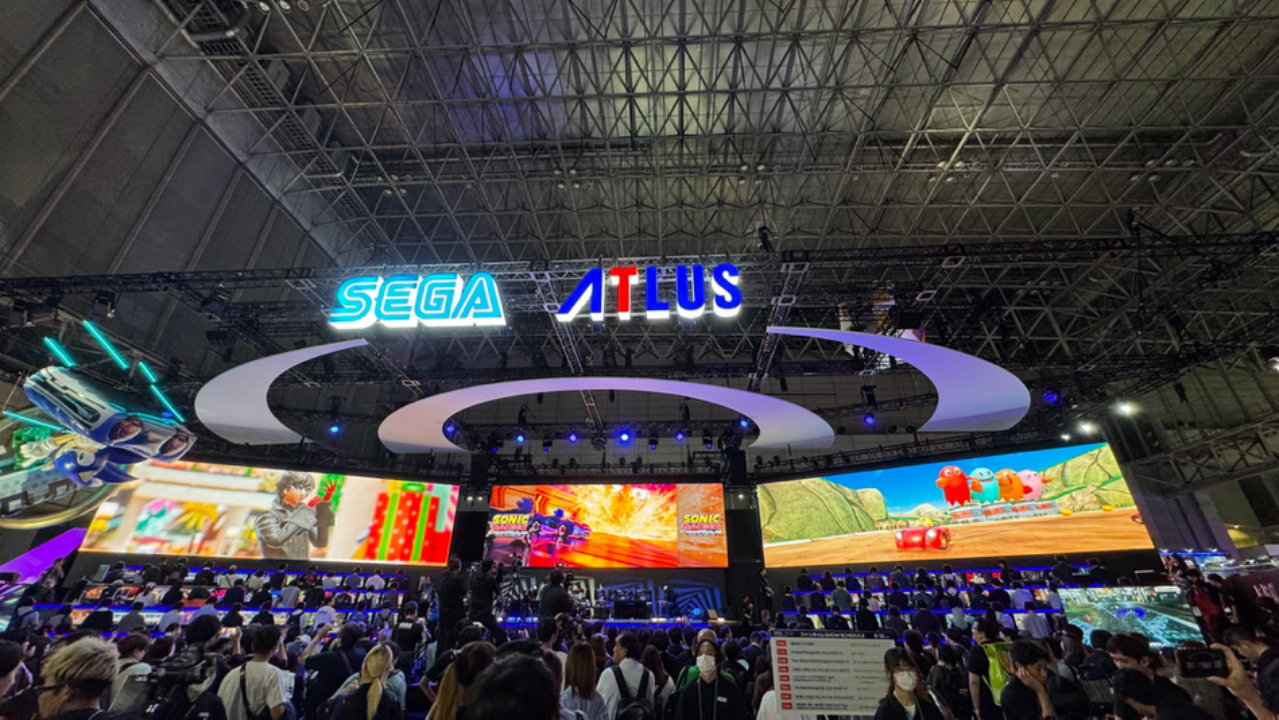
国内的这款“赛博陪玩”闯进了东京TGS
Hu Xiu· 2025-09-28 07:17
Core Insights - The Tokyo Game Show (TGS) is the largest in its 29-year history, covering 160,000 square meters with over 1,000 participating companies, yet only one AI-related company is present [1][3] - The focus of TGS attendees is not primarily on AI, indicating a gap between AI advancements and gaming interests [3][14] - The AI gaming company "Xinying Suixing" is the only domestic AI company to secure a spot at TGS, showcasing its potential in the market [3][4] Company Overview - "Xinying Suixing" aims to combine AI with gaming, focusing on creating virtual companions for players, which is a unique approach compared to traditional AI chatbots [6][8] - The founder, Liu Binxin, emphasizes the importance of understanding user needs and data utilization in developing AI products [21][30] - The company has seen rapid growth, with global users increasing from 9 million to 10 million within a month, although the number of paying users remains low [28][29] Market Trends - The AI gaming sector is viewed as a potential battleground for future competition, despite current limited participation from major players [14][15] - Liu Binxin believes that large gaming companies may enter the AI space but will not share data or resources due to their corporate culture [17][18] - The company is exploring a transition from a consumer-focused model to a business-to-business (B2B) strategy, aiming to collaborate with game developers for advertising opportunities [29][30] Challenges and Opportunities - The company faces challenges in establishing a local presence in Japan, which is crucial for B2B partnerships due to cultural business practices [31][32] - Despite the challenges, Liu Binxin remains optimistic about the global potential of AI products, suggesting that successful models can emerge from China [28][30]

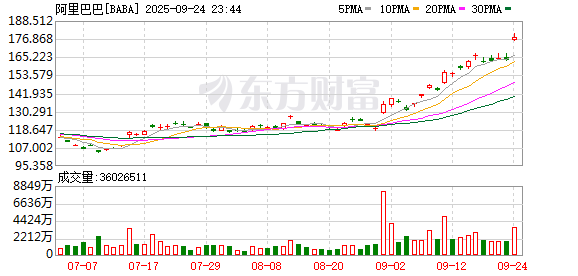
加码下一代“操作系统”和“计算机” 阿里巴巴放出一系列新招
Zheng Quan Shi Bao Wang· 2025-09-24 15:44
Core Insights - The realization of Artificial General Intelligence (AGI) is seen as a certainty, with the ultimate goal being the development of Super Artificial Intelligence (ASI) that can self-iterate and surpass human capabilities [2] - Alibaba's CEO predicts that large models will serve as the next generation "operating system," while Super AI Cloud will be the next generation "computer" [2][3] AI Infrastructure Investment - Alibaba is advancing a three-year plan to invest 380 billion in AI infrastructure, with plans for further investments [3] - By 2032, the energy consumption of Alibaba Cloud's global data centers is expected to increase tenfold compared to 2022 [3] Global Expansion - Alibaba Cloud announced a global infrastructure expansion plan, establishing new cloud computing regions in Brazil, France, and the Netherlands, and expanding data centers in Mexico, Japan, South Korea, Malaysia, and Dubai [4] - Currently, Alibaba Cloud operates 91 availability zones across 29 regions, making it the largest cloud service provider in China and the leading provider in Asia-Pacific [4] AI Model Development - Alibaba launched seven new large model technology products at the conference, covering various fields such as language, speech, vision, and multi-modal models [5] - The flagship model Qwen3-Max outperforms competitors like GPT-5 and Claude Opus 4, ranking among the top three globally [5] Collaboration with NVIDIA - Alibaba Cloud announced a partnership with NVIDIA in the Physical AI domain, integrating NVIDIA's software stack into its AI platform to enhance capabilities in data preprocessing, simulation, and model training [7] AI Penetration in Industries - The AI technology is accelerating its penetration across various industries, with over 200,000 developers creating more than 800,000 agents on Alibaba's platform [8] - Notable applications include the "Merchant Intelligent Review Assistant" by ICBC and AI-assisted game development by NetEase, showcasing significant efficiency improvements [9]

华为,重磅新品发布
中国基金报· 2025-09-24 10:53
Core Viewpoint - Huawei continues to lead the global wearable device market with innovative products and a comprehensive product line, as evidenced by the recent launch of the HUAWEI WATCH GT 6 series and other devices [1][9]. Summary by Sections HUAWEI WATCH GT 6 Series - The HUAWEI WATCH GT 6 series includes two models: 41mm and 46mm, with the GT 6 Pro available only in 46mm [4]. - The series features a significant battery capacity increase of 65% compared to the previous generation, with the GT 6 Pro and 46mm version offering up to 21 days of battery life under light usage, and the 41mm version up to 14 days [4][5]. - The GT 6 series incorporates an upgraded sensing system and supports cycling simulation power and automatic cycling recognition [4]. Pricing and Sales - The starting prices for the GT 6 series are 1588 CNY for the 46mm model and 1488 CNY for the 41mm model, with pre-sales starting on September 29 [5]. - The GT 6 Pro starts at 2488 CNY, with pre-sales beginning on October 14 [5]. - Cumulative global shipments of the WATCH GT series have exceeded 54 million units since its launch in 2018, maintaining Huawei's leadership in the wearable market [5]. HUAWEI FreeClip 2 Earphones - The HUAWEI FreeClip 2 earphones were also launched, featuring a starting price of 1299 CNY and available in three colors [6][7]. - The earphones utilize Huawei's third-generation audio chip and NPU AI processor, enhancing call quality and supporting various smart features [7]. Market Growth and Position - The global wearable device market is experiencing rapid growth, with IDC forecasting a 12.3% year-on-year increase in wrist-worn device shipments by Q2 2025 [9]. - Huawei holds a 20.2% share of the global market and has been the top seller for two consecutive quarters, while in China, it maintains a 33.4% market share [9]. - Since 2015, Huawei has shipped a total of 200 million wearable devices, showcasing its strong brand appeal and ecosystem integration [10]. Future Outlook - The wearable device market is expected to continue expanding, with the global market projected to exceed $100 billion by 2025, and the Chinese market surpassing 100 billion CNY [10]. - The growth of medical-grade wearable devices is particularly notable, with a compound annual growth rate exceeding 40% [10]. - Advances in AI technology and increasing consumer demand for health monitoring are driving the evolution of wearable devices from single-function products to comprehensive health management solutions [10].
微信WeChat-YATT横空出世,腾讯强化学习布局剑指何方
Sou Hu Cai Jing· 2025-09-24 09:56
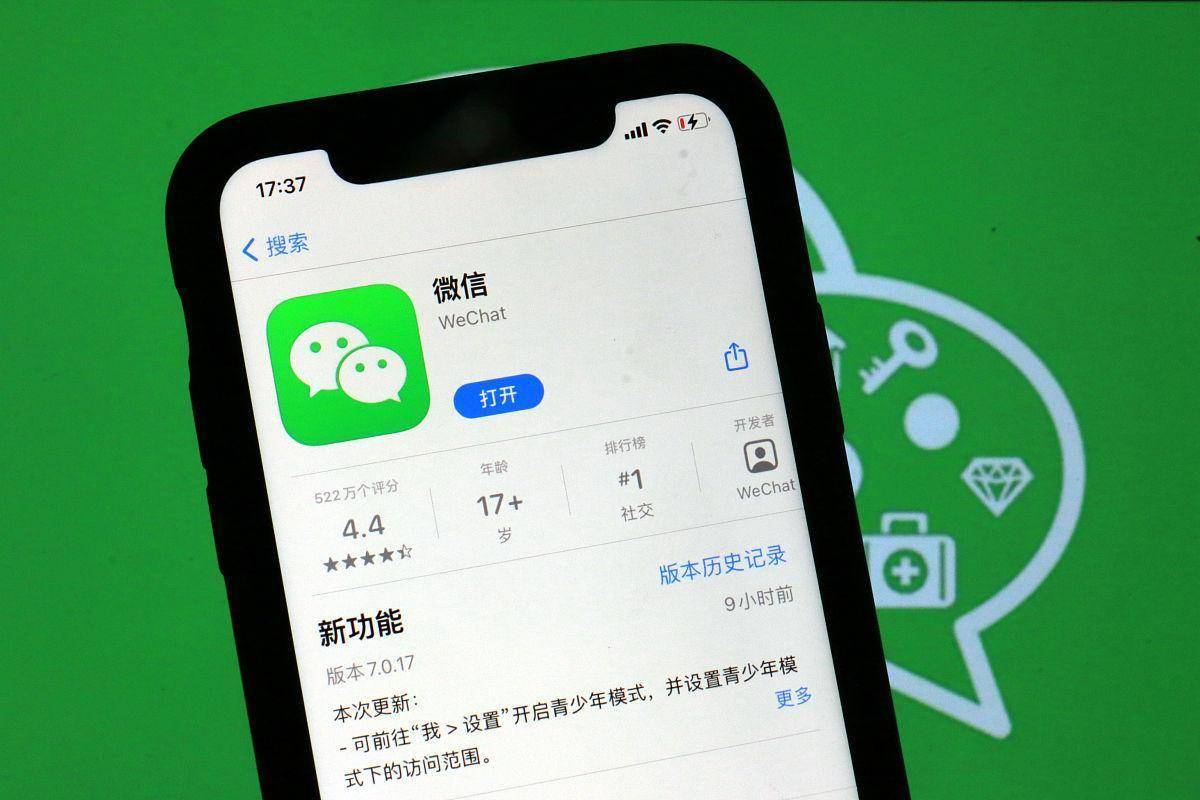
Core Insights - Tencent's open-sourcing of WeChat-YATT training library signifies a strategic move in the competitive landscape of AI model training, particularly as OpenAI's GPT-5 approaches release [1][2] - WeChat-YATT is designed with a focus on reinforcement learning and multimodal models, differentiating itself from mainstream frameworks like TensorFlow and PyTorch [2] Group 1: WeChat-YATT's Innovations - WeChat-YATT achieves significant breakthroughs in three areas: optimized parameter update efficiency for reinforcement learning, flexible multimodal data fusion interfaces, and a modular design that lowers the barriers for distributed training [2][4] - The library's emphasis on "ease of extensibility" reflects Tencent's recognition of the need for rapid iteration in large model training [4] Group 2: Competitive Positioning - Compared to Meta's PyTorch, WeChat-YATT excels in reinforcement learning support; against Google's JAX, it shows advantages in Chinese language scenarios and multimodal processing [4] - WeChat-YATT's deep integration with the WeChat ecosystem sets it apart from similar reinforcement learning frameworks like Ray RLlib [4] Group 3: Strategic Implications - The release of WeChat-YATT aligns with Tencent's broader AI strategy, which includes trademark applications for "WeChat AI Service Platform" and the deployment of the mixed Yuan model in business scenarios [7] - Tencent aims to create a closed-loop AI ecosystem through foundational technology breakthroughs and application deployment, with WeChat-YATT serving as a critical component in this strategy [7] - The focus on reinforcement learning indicates Tencent's commitment to key areas such as gaming, recommendation systems, and autonomous driving, positioning itself for future AI applications [7] Group 4: Long-term Vision - The naming of WeChat-YATT, "Yet Another Transformer Trainer," reflects both a sense of humor and Tencent's long-term investment in AI infrastructure [6] - The competition in the era of large models is fundamentally a competition for infrastructure, with WeChat-YATT representing a piece of Tencent's broader AI blueprint [7]

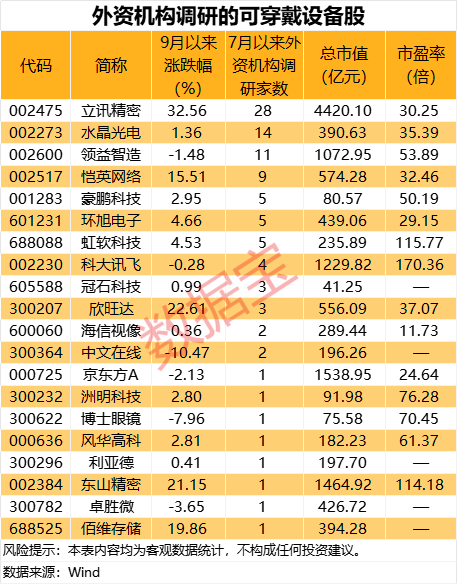
可穿戴设备迎政策利好!这一品类出货量大增超60% 外资机构密集调研4股
Cai Jing Wang· 2025-09-23 02:11
Group 1: Policy and Market Trends - The National Sports Administration of China issued guidelines to promote the digital and intelligent upgrade of sports and health services, emphasizing the use of wearable monitoring devices and technologies like big data and AI [1] - The global wearable device market is experiencing rapid growth, with IDC reporting that by Q2 2025, global wrist-worn device shipments will reach 49.22 million units, a year-on-year increase of 12.3% [2] - China, as the largest market for wrist-worn devices, is projected to ship 20.8 million units in the same period, marking a significant year-on-year growth of 33.8% [2] Group 2: Product Features and Applications - Wearable devices include smart glasses, smartwatches, smart bands, and smart rings, enabling users to monitor physiological states and environmental information in real-time [1] - Current functionalities of wearable devices encompass health management, exercise measurement, social interaction, entertainment, navigation, mobile payment, and smart home control, with potential future applications in healthcare, military, industrial IoT, and financial services [1] Group 3: Stock Performance and Foreign Investment - Among A-shares, 67 companies are involved in wearable devices, with a concept index rising by 2.47% on September 22, 2023, and 11 stocks showing gains exceeding 10% since September [3] - Notable performers include Changying Precision, Tianyue Advanced, and Luxshare Precision, with respective cumulative gains of 43.59%, 35.78%, and 32.56% [3] - Foreign institutional interest is evident, with 20 stocks receiving attention from foreign investors since July, including Luxshare Precision, which had 28 foreign institution inquiries [3][4]

X @外汇交易员
外汇交易员· 2025-09-23 01:45
AI Model Development - Alibaba Cloud releases and open-sources Qwen3-Omni and Qwen3-TTS [1] - Alibaba Cloud releases Qwen-Image-Edit-2509, benchmarking against Google's Nano Banana image model [1] - Qwen3-Omni is the first native end-to-end multimodal AI model in the industry [1] - Qwen3-Omni can process text, images, audio, and video inputs [1] - Qwen3-Omni can output results in real-time streaming via text and natural speech [1] - The model addresses the trade-offs between different capabilities in multimodal models [1]
商汤20250918
2025-09-18 14:41
Summary of SenseTime Conference Call Company Overview - **Company**: SenseTime - **Date**: September 18, 2025 Key Points Industry and Company Performance - SenseTime's overall revenue increased by 36% year-on-year, with generative AI business growing by 73%, accounting for 77% of total revenue, indicating significant revenue scale advantages in the generative AI sector [2][3] - The company has narrowed its adjusted net loss by 50% year-on-year, attributed to revenue and gross profit growth, as well as improved accounts receivable quality [2][4] Financial Adjustments - SenseTime has restructured its financial reporting to categorize revenue into three segments: generative AI, visual AI, and X innovation business, aiming for clearer visibility of core business drivers [2][6] - The company reduced accounts receivable provisions by approximately 450 million RMB, reflecting better collection quality in generative AI compared to other segments [4] X Innovation Business Progress - SenseTime has made significant progress in its X innovation business, with two subsidiaries successfully financing and achieving market presence, enhancing overall competitiveness [2][7] Market Dynamics and Capital Market Impact - The global capital market's deepening understanding of generative AI has positively impacted SenseTime's development, leveraging its decade-long experience in visual AI for infrastructure investment and algorithm breakthroughs [2][8][9] Infrastructure and Model Development - Generative AI infrastructure encompasses not only GPU scale but also software, industry understanding, and data capabilities, requiring tailored training and optimization for specific scenarios [4][11] - SenseTime has developed multi-modal models, with successful commercial applications in finance, education, and e-commerce, showcasing the potential of dynamic fusion models [4][19] Agent Capabilities - SenseTime's "Xiaohuanxiong" product line has shown strong user engagement and conversion rates, indicating effective application of generative AI technologies in various industries [13][14] Strategic Focus and Future Goals - The company emphasizes the importance of end-to-end delivery solutions tailored to customer needs, rather than merely providing raw computing power [16] - SenseTime is committed to achieving profitability but has not set a specific timeline due to the complexities involved in revenue and cost structures [20] Challenges and Innovations - Current market skepticism regarding the ceiling of generative AI models has prompted SenseTime to pivot towards multi-modal integration, focusing on hardware and customer scenarios for enhanced interaction [18][19] Competitive Landscape - The company recognizes the rapid changes in technology and customer demands within the generative AI space, highlighting the need for adaptability and innovation to maintain competitive advantage [10][12] Additional Important Insights - SenseTime's strategic partnerships and resource acquisition strategies, including a light asset model for chip supply, enable quick adaptation to market changes [17] - The company has established a leading AI computing center in Shanghai, enhancing its capabilities in AI model development and deployment [12]
超讯通信:已在若干客户场景中完成了少量元醒训练推理一体机的交付应用
Ge Long Hui· 2025-09-17 07:58
Core Viewpoint - The domestic large model industry is experiencing rapid growth, particularly in the areas of AIGC (Generative Artificial Intelligence), multimodal models, and vertical industry models, leading to a significant increase in demand for computing infrastructure [1] Group 1: Industry Growth - The demand for computing infrastructure is significantly increasing due to the accelerated application of AIGC, multimodal models, and vertical industry models [1] - The company has launched the Yuanxing training and inference integrated machine, built on the Muxi GPU, to cater to full-stack application scenarios for large models like DeepSeek-R1/V3 [1] Group 2: Product Offering - The Yuanxing machine provides a one-stop delivery capability from underlying computing power to model deployment, meeting the needs of various industries such as government, enterprise, scientific research, finance, and manufacturing [1] - The company has completed a small number of delivery applications of the Yuanxing training and inference integrated machine in several customer scenarios, accumulating industry practical experience [1] Group 3: Future Outlook - As various vertical application scenarios mature, the delivery scale and market demand for such products are expected to continue to grow in the future [1]

后端到端时代:我们必须寻找新的道路吗?
自动驾驶之心· 2025-09-01 23:32
Core Viewpoint - The article discusses the evolution of autonomous driving technology, particularly focusing on the transition from end-to-end systems to Vision-Language-Action (VLA) models, highlighting the differing approaches and perspectives within the industry regarding these technologies [6][32][34]. Group 1: VLA and Its Implications - VLA, or Vision-Language-Action Model, aims to integrate visual perception and natural language processing to enhance decision-making in autonomous driving systems [9][10]. - The VLA model attempts to map human driving instincts into interpretable language commands, which are then converted into machine actions, potentially offering both strong integration and improved explainability [10][19]. - Companies like Wayve are leading the exploration of VLA, with their LINGO series demonstrating the ability to combine natural language with driving actions, allowing for real-time interaction and explanations of driving decisions [12][18]. Group 2: Industry Perspectives and Divergence - The current landscape of autonomous driving is characterized by a divergence in approaches, with some teams embracing VLA while others remain skeptical, preferring to focus on traditional Vision-Action (VA) models [5][6][19]. - Major players like Huawei and Horizon have expressed reservations about VLA, opting instead to refine existing VA models, which they believe can still achieve effective results without the complexities introduced by language processing [5][21][25]. - The skepticism surrounding VLA stems from concerns about the ambiguity and imprecision of natural language in driving contexts, which can lead to challenges in real-time decision-making [19][21][23]. Group 3: Technical Challenges and Considerations - VLA models face significant technical challenges, including high computational demands and potential latency issues, which are critical in scenarios requiring immediate responses [21][22]. - The integration of language processing into driving systems may introduce noise and ambiguity, complicating the training and operational phases of VLA models [19][23]. - Companies are exploring various strategies to mitigate these challenges, such as enhancing computational power or refining data collection methods to ensure that language inputs align effectively with driving actions [22][34]. Group 4: Future Directions and Industry Outlook - The article suggests that the future of autonomous driving may not solely rely on new technologies like VLA but also on improving existing systems and methodologies to ensure stability and reliability [34]. - As the industry evolves, companies will need to determine whether to pursue innovative paths with VLA or to solidify their existing frameworks, each offering unique opportunities and challenges [34].