
多边主义

Search documents
中国对经济全球化的支持更趋重要
Zhong Guo Xin Wen Wang· 2026-02-11 06:09
Group 1 - The core argument emphasizes that any attempts to exclude China from global supply and value chains will ultimately backfire on those making such attempts, highlighting the interdependence of the global economy [1][2] - The current international environment is marked by uncertainty and geopolitical conflicts, which pose unprecedented challenges to economic globalization [1][2] - China has reiterated its strong support for economic globalization, free trade, and multilateralism, asserting that development is a right for all countries, not just a privilege for a few [1][2] Group 2 - European leaders are warned that the greatest risk to the global economy is not from openness itself, but from the artificial creation of "decoupling" and "disconnection" from China, which could raise costs and weaken competitiveness [3] - The call for cooperation in trade, investment, technology, and green development with China aligns with the concerns of many developing countries, emphasizing the need for a stable and predictable international economic environment [2][3] - The importance of soft power and cultural exchanges in supporting globalization is highlighted, with a focus on the need for understanding and trust between societies [4]
新年外交彰显大国格局与担当
Jing Ji Ri Bao· 2026-02-11 03:07
Core Viewpoint - The article emphasizes China's commitment to global cooperation and multilateralism, showcasing its role as a stabilizing force in a turbulent world through a series of diplomatic engagements and economic collaborations with various countries [1][2][3][4][5] Group 1: Diplomatic Engagements - In early 2026, leaders from South Korea, Ireland, Canada, Finland, the UK, and Uruguay visited China, signaling a warm diplomatic climate [1] - China engaged in video meetings with Russian President Putin and a phone call with US President Trump, highlighting its proactive role in stabilizing major power relations [3] Group 2: Economic Collaborations - China signed 15 cooperation documents with South Korea covering technology innovation, environmental protection, transportation, and trade [2] - Agreements with Canada included an economic cooperation roadmap and 8 other cooperation documents [2] - China and Uruguay reached 19 cooperation agreements in trade and investment [2] Group 3: Global Governance - China expressed a desire to enhance global governance and cooperation with various countries, aiming for a more just and reasonable international system [4] - The country emphasized the importance of multilateralism and international fairness, seeking to address global challenges collectively [4] Group 4: Commitment to Development - China aims to contribute approximately 30% to global economic growth during the 14th Five-Year Plan, with a projected economic total exceeding 140 trillion yuan by 2025 [1] - The article underscores China's intention to deepen international cooperation and build a community with a shared future for humanity [5]
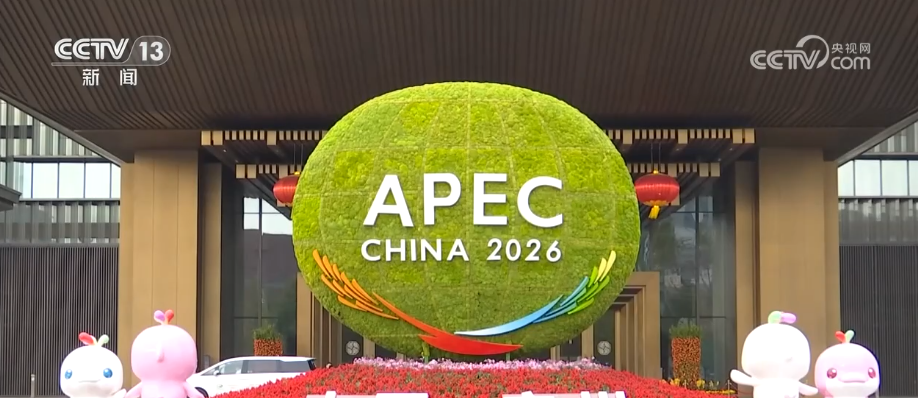
APEC“中国年”扬帆起航 中国始终与亚太及世界共享机遇、共同发展
Yang Shi Wang· 2026-02-11 02:13
Group 1 - The APEC "China Year" officially commenced with the first senior officials' meeting held in Guangzhou, Guangdong Province from February 1 to 10, 2026, marking a significant event for APEC [1] - The meeting focused on the theme of "building an Asia-Pacific community and promoting common prosperity," with discussions on three priority areas: openness, innovation, and cooperation [3] - APEC member economies have maintained stable growth over the past 12 years, accounting for nearly 40% of the global population and over 60% of the global economic output, while also embracing the digital economy with internet penetration rising from 52% to nearly 90% [5] Group 2 - The upcoming APEC leaders' meeting week in Shenzhen in November 2026 is highly anticipated, with China emphasizing the importance of sharing opportunities and development within the Asia-Pacific region [7] - The APEC Economic Committee Chair highlighted that protectionism and unilateralism pose significant threats to APEC and the global community, underscoring the importance of multilateralism [8] - Thailand's APEC senior official expressed the need for strengthened cooperation and global partnerships in the face of rapid changes and unpredictability in the world [5]

2天会谈结束,中美都没签字
Xin Lang Cai Jing· 2026-02-10 23:24
Core Viewpoint - The third "Responsible Use of Artificial Intelligence in Military" summit held in Spain saw 85 countries participating, but neither the US nor China signed the joint declaration, reflecting underlying strategic concerns from both nations [1][2][6]. Group 1: US Concerns - The US is wary that binding international rules could limit its technological flexibility and competitive edge in military AI, as it seeks to accelerate development through a "rapid iteration" model similar to SpaceX [1][2]. - The US aims to maintain a technological gap and a "technological crushing" advantage by combining rapid iteration with measures to contain competitors, particularly China, through export controls and investment reviews [2][4]. - The US prefers to establish a "Western-centric" governance system by creating standards with allies outside of multilateral frameworks, thereby excluding countries like China and reinforcing its own technological and regulatory dominance [2][4]. Group 2: China's Position - China refrained from signing the declaration due to concerns over vague principles regarding "responsible use" and the lack of mechanisms to balance the technological advantages of leading nations, fearing it could entrench Western dominance [6][8]. - China advocates for multilateral governance and emphasizes that international rules should consider both security and development, opposing the politicization of technology issues [6][8]. - The Chinese delegation highlighted the importance of risk prevention in military AI applications and reiterated its commitment to a human-centered approach to military AI, aiming to ensure national sovereignty and security [6][8]. Group 3: Structural Challenges - The sensitivity of military AI, involving national defense secrets, presents verification and enforcement challenges for any international rules, leading to a "prisoner's dilemma" where countries are hesitant to commit [8]. - The rapid pace of AI technological advancement outstrips the rule-making process, rendering the principles in the declaration inadequate to address specific risks associated with autonomous weapons and algorithmic biases [8].

中国对经济全球化的支持更趋重要(国际论坛)
Ren Min Ri Bao· 2026-02-10 22:23
Group 1 - The core argument emphasizes that attempts to exclude China from global supply and value chains will ultimately backfire in a highly interdependent world economy [1][2][3] - The current international landscape is marked by uncertainty and geopolitical conflicts, leading to discussions about the end of globalization at the World Economic Forum [1][2] - China reiterates its commitment to economic globalization, free trade, and multilateralism, asserting that development is a right for all nations, not just a privilege for a few [1][3] Group 2 - European perceptions of China are heavily influenced by ideological and geopolitical narratives, which can hinder rational economic judgments and increase costs of trade and connectivity [2][3] - The risk of "decoupling" from China is highlighted as a significant threat to Europe's competitiveness and economic transformation, advocating for pragmatic cooperation in trade, investment, and technology [3][4] - The importance of soft power and cultural exchange in supporting globalization is stressed, with a call for more direct engagement with China rather than relying on third-party narratives [4]
世界正在加速重新认识中国
Xin Lang Cai Jing· 2026-02-10 20:03
Group 1 - The article highlights a significant shift in global perceptions of China, moving from a singular understanding to a more nuanced and objective recognition of the country [1][3][4] - There is an increasing trend of foreign leaders and citizens engaging with China, indicating a growing interest in experiencing Chinese culture and lifestyle [1][3][7] - The narrative around China is evolving, with many countries recognizing China's economic resilience and contributions to global growth, countering negative portrayals in some Western media [9][10][13] Group 2 - China's economic performance during the "14th Five-Year Plan" period has been notable, with GDP surpassing 130 trillion yuan and contributing approximately 30% to global economic growth [9][10] - Despite external pressures, China's economy is characterized by strong resilience and adaptability, leading to a shift in perception among foreign nations regarding economic opportunities [10][13] - The article emphasizes China's role as a major global market and its increasing importance as an export destination for many countries, with retail sales surpassing those of the United States [15][16] Group 3 - The article discusses China's commitment to high-quality development and openness, which contrasts with the protectionist tendencies of some Western nations [6][10] - China's technological advancements and innovations are gaining international recognition, with foreign visitors experiencing the benefits of these developments firsthand [11][12] - The narrative of "China as a threat" is being challenged as more countries acknowledge the positive aspects of China's growth and its contributions to global stability [4][7][16]

外交部副部长马朝旭同印方举行中印战略对话
Xin Lang Cai Jing· 2026-02-10 14:55
Core Viewpoint - The recent strategic dialogue between China and India emphasizes the importance of viewing each other as partners rather than competitors, aiming to enhance mutual trust and cooperation while managing differences [1] Group 1: Strategic Dialogue Outcomes - The dialogue involved discussions on international situations, domestic policies, and bilateral relations, highlighting the need for in-depth communication [1] - Both parties agreed to support each other in their roles as chair countries of BRICS in the coming years, reinforcing their commitment to multilateralism and the core position of the United Nations [1] Group 2: Future Cooperation - China and India aim to promote global South solidarity and cooperation, advocating for international fairness and justice [1] - The dialogue seeks to contribute to the peace and development of Asia and the world, pushing for a multipolar world [1]
联合国秘书长新春致辞送农历马年祝福
Zhong Guo Xin Wen Wang· 2026-02-10 06:30
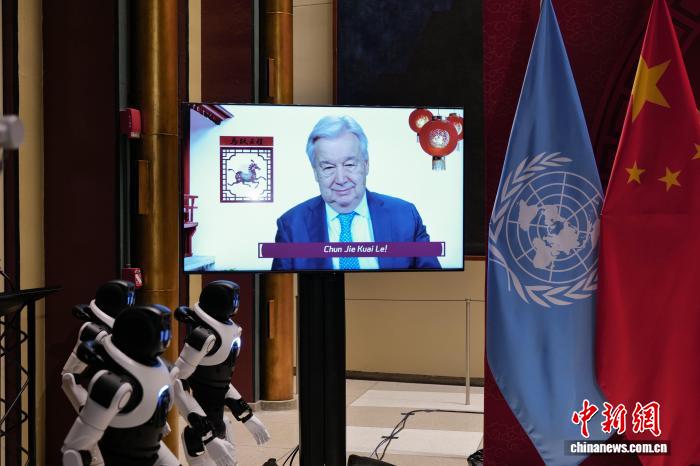
联合国秘书长新春致辞送农历马年祝福 中新社联合国2月9日电 (记者 王帆)联合国秘书长古特雷斯9日通过视频发表新春致辞,向中国人民和全 球华人致以农历丙午马年的祝福。 广告等商务合作,请点击这里 本文为转载内容,授权事宜请联系原著作权人 当地时间2月9日,联合国秘书长古特雷斯新春致辞视频在纽约联合国总部播放。 中新社记者 王帆 摄 中新经纬版权所有,未经书面授权,任何单位及个人不得转载、摘编或以其它方式使用。 关注中新经纬微信公众号(微信搜索"中新经纬"或"jwview"),看更多精彩财经资讯。 古特雷斯感谢中国和中国人民对联合国、多边主义和全球合作的大力支持,呼吁人们继续致力于人人享 有和平、尊严和可持续发展的承诺。他祝大家在马年健康、幸福和繁荣。 自2017年1月就任联合国秘书长以来,古特雷斯每年都会通过视频发表致辞,祝贺农历新年。(完) 来源:中国新闻网 古特雷斯在视频中首先用中文"春节快乐"送上祝福。他说,农历马年即将到来。马象征着能量、成功和 勇往直前。在当今世界面临冲突、不平等和气候危机等多重挑战的背景下,人类社会迫切需要这些品 质。唯有齐心协力,才能建设一个更安全、更包容的未来。 编辑:王永乐 ...
联合国喊话美国:说好的数周内缴欠款,请明确时间和金额
Xin Lang Cai Jing· 2026-02-10 03:34
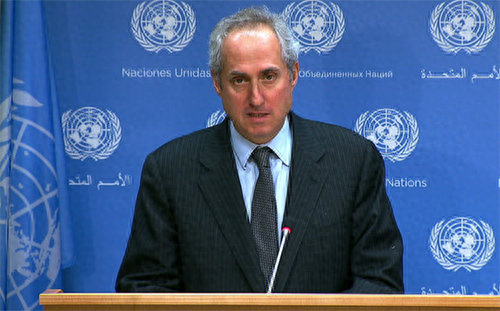
在美国长期拖欠联合国会费、致使联合国财政状况不断趋紧之际,美方驻联合国代表在近日终于"松 口",表示特朗普政府将于未来数周内支付一笔"数额可观"的首期款项。不过,在这笔款项实际到账之 前,联合国显然已不打算再继续被动等待。 据路透社报道,当地时间2月9日,联合国秘书长发言人斯特凡纳·迪雅里克在记者会上表示:"我们已经 注意到了相关表态。坦率地说,秘书长古特雷斯就这一问题,与美国常驻联合国代表迈克·沃尔兹已经 保持了相当长时间的沟通。" 迪雅里克还补充说,"为此,我们的预算主管也一直在与美方保持对接。虽然美方已表达了出资意愿, 但我们仍在等待其明确具体的到账时间与拨款金额。" 斯特凡纳·迪雅里克(资料图) 此外,美国总统特朗普曾多次表示,联合国虽然拥有"巨大潜力",但尚未充分发挥。随后,他还成立了 所谓的"和平委员会",并宣称只要支付10亿美元即可获得永久成员身份,这一表态引发了外界对联合国 影响力可能被削弱的广泛担忧。 为此,古特雷斯去年成立了一个名为"联合国80周年改革"的改革工作小组,旨在通过削减成本和提高效 率来应对当前的财务与信任危机。 或许是对初步改革的成效有所满意,又或许是害怕被剥夺投票权失了面子 ...
德媒:“亚洲世纪”启幕,西方如何“管理衰落”
Huan Qiu Shi Bao· 2026-02-09 22:39
Group 1 - The article discusses the transition into an "Asian Century," highlighting the decline of American dominance and the rise of China as a global power [1][2] - It emphasizes that while the U.S. is abandoning multilateralism, globalization's winners are primarily in Asia, with China and the U.S. now on equal footing in many areas [2][3] - The article notes that China's industrial strength and innovation capabilities have significantly increased, with statistics showing that from 2011 to 2013, China's cement consumption exceeded that of the U.S. for the entire 20th century [3] Group 2 - The article argues that the current global power structure is in a complex transition, where the rise of one power often leads to the decline of another, specifically pointing out Germany's diminishing role in the new order [4] - It highlights that the political mechanisms known since 1945 are becoming ineffective, and there is a need for European strategic autonomy in shaping a multipolar world [4] - The article suggests that the future political landscape should focus on resilience and managing decline with dignity, as the traditional narratives of progress may no longer hold true [4]