智能眼镜

Search documents
比依股份涨3.27%,成交额1.21亿元,后市是否有机会?
Xin Lang Cai Jing· 2025-12-15 08:08
Core Viewpoint - The company, Zhejiang Biyi Electric Co., Ltd., is experiencing growth in its smart home appliance sector, particularly benefiting from the depreciation of the RMB and advancements in AI technology [2][3]. Group 1: Company Overview - Zhejiang Biyi Electric Co., Ltd. was established on March 20, 2001, and went public on February 18, 2022. The company specializes in the design, manufacturing, and sales of kitchen appliances [7]. - The main revenue sources for the company include air fryers and air ovens (85.12%), coffee machines and others (9.43%), deep fryers (4.43%), and environmental appliances (1.03%) [7]. - As of October 31, the number of shareholders is 16,600, a decrease of 4.28% from the previous period, with an average of 11,258 circulating shares per person, an increase of 4.47% [8]. Group 2: Financial Performance - For the period from January to September 2025, the company achieved a revenue of 1.756 billion yuan, representing a year-on-year growth of 18.66%. However, the net profit attributable to the parent company was 72.204 million yuan, a decrease of 29.00% year-on-year [8]. - The company has distributed a total of 266 million yuan in dividends since its A-share listing, with 215 million yuan distributed over the past three years [9]. Group 3: Strategic Developments - The company has initiated the development of its own AI smart platform, aiming to enhance user experience through features like smart voice, visual control, remote control, and product simulation [2][3]. - In 2024, the company invested 30 million yuan in Shanghai Lipai Guangjing Technology Co., Ltd., acquiring a 5.3764% stake. This company is the largest domestic supplier of optical waveguide modules for AR glasses and has begun production on a 100,000-level production line to meet the growing AR consumer market [2][3]. Group 4: Market Position and Trends - The company's overseas revenue accounts for 92.25% of total revenue, benefiting from the depreciation of the RMB [3]. - The stock price of Biyi shares increased by 3.27% on December 15, with a trading volume of 121 million yuan and a market capitalization of 3.92 billion yuan [1].

激流时代 智变新章!2025中国科技风云榜正式启动
Sou Hu Cai Jing· 2025-12-13 02:18
Group 1 - The year 2025 is marked by rapid technological advancements and a significant transformation in various industries, particularly in the fields of storage chips and memory prices, which are experiencing tight supply and soaring costs [1] - The food delivery and instant retail sectors are undergoing major changes, with new players entering the market and engaging in a subsidy war exceeding 10 billion yuan, leading to a competitive landscape dominated by Meituan, Alibaba, and JD.com [1] - The competition in the e-commerce sector is shifting from being capital-driven to algorithm-driven and value-driven, emphasizing quality and service capabilities as key differentiators [1] Group 2 - The penetration rate of domestic new energy vehicles has surpassed 50% for the first time, indicating a significant transformation in the transportation sector [2] - Breakthroughs in humanoid and embodied robots, the clarity of 6G network architecture, and the redefinition of human-computer interaction through smart glasses are reshaping industry and future lifestyles [2] - China's technological strength is increasingly confident and pragmatic in participating in global competition, showcasing rapid advancements in cutting-edge technologies and the deep integration of the internet with the real economy [2]


苹果 AI 眼镜深度爆料汇总:重量低至 40g,2026 发布
3 6 Ke· 2025-12-12 03:32
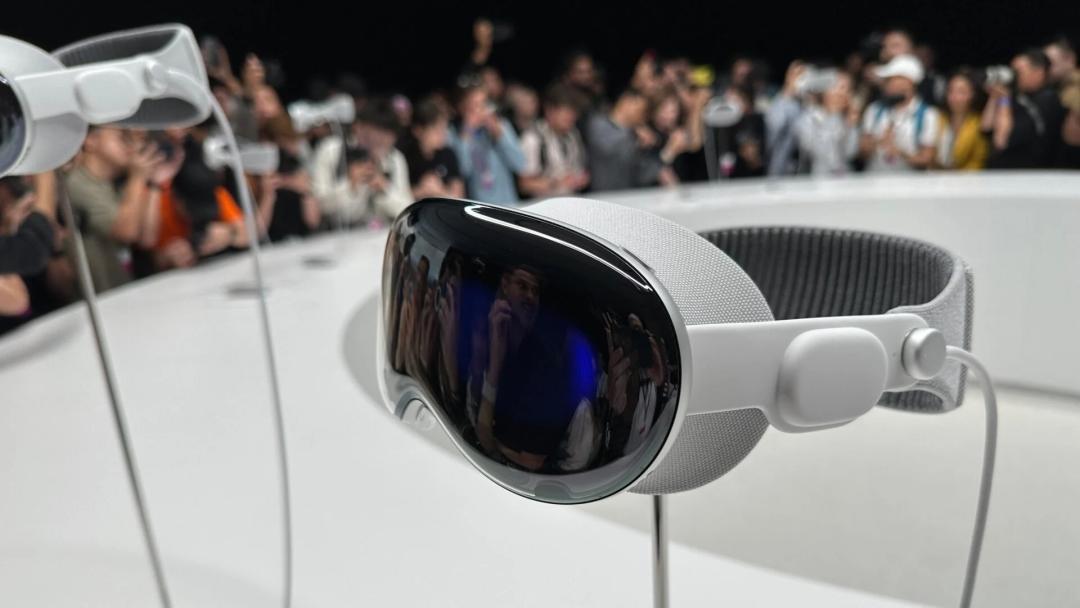
Core Insights - Apple Vision Pro is currently the leading hardware in the "spatial computing" field, showcasing Apple's strength in the XR sector with two generations of products [1] - Apple is reportedly developing a new product, referred to as Apple AI Glasses, which aims to redefine the concept of smart glasses and is expected to be announced by late 2025 or in 2026/2027 [3][4] Product Development - The internal project, codenamed "Project Atlas," indicates Apple's shift from conceptualization to practical exploration in the smart glasses market [4] - Apple has conducted extensive user research to gather feedback on existing smart glasses, particularly Meta's Ray-Ban series, suggesting a strategic approach to product development [4] - The first generation of Apple AI Glasses is likely to adopt a "screenless" design, focusing on AI and audio capabilities [5][6] Features and Technology - The core interaction of Apple Glasses is expected to combine AI, Siri, and camera functionalities, providing a more intuitive user experience compared to traditional smartphone interactions [6][8] - Advanced audio features may include directional speakers to enhance Siri interactions in noisy environments, potentially utilizing technology from AirPods Pro 2 [8][10] - The glasses are anticipated to rely on the iPhone for processing power, ensuring lightweight design and extended battery life [10] Competitive Landscape - Apple is entering a competitive market dominated by Meta and Google, with Meta's Ray-Ban smart glasses already achieving significant market success [10][11] - Apple's strategy appears to focus on capturing market share with AI glasses before the release of more advanced AR glasses like Meta's Orion [16] - Google is also active in the smart glasses space, showcasing Project Astra, which emphasizes a unified Android XR platform rather than focusing solely on hardware [18][20] Design and Pricing - Apple aims to keep the weight of the glasses between 30g-50g, making them comparable to regular eyeglasses, which is crucial for user comfort [21][23] - The expected pricing for Apple Glasses is projected to be around $499, positioning it competitively against Meta's offerings [25] - The glasses are designed to appeal to a broader audience, including those with vision impairments, by potentially offering customizable prescription lenses [23][26] Future Outlook - The release of Apple Glasses is likely to be delayed until 2026 or 2027, with significant advancements in software, particularly in Siri's capabilities, expected to accompany the hardware launch [24][28] - Apple's approach emphasizes practicality and user integration, aiming to create a device that seamlessly fits into daily life rather than merely being a technological novelty [28]

乐奇Rokid这一年,一路狂飙不回头
量子位· 2025-12-10 12:02
梦瑶 发自 凹非寺 量子位 | 公众号 QbitAI 2025的硬件战场一开局就跑偏到眼镜上,而冲到最前面的,叫 乐奇Rokid 。 据IDC预测,2025年中国智能眼镜出货量预计同比暴涨107%,冲到275万台,手机厂说要重做交互,创业公司跟着一起涌过来,连车企都忍 不住来占个"眼镜位"。 满地都是新品,满眼都是入局者,智能眼镜正从极客玩具变成一门真正的抢手生意,在这场从年初卷到年尾的百镜混战里,有一家创业公司始 终稳稳站在「节奏」的前面。 今年2月, 乐奇Rokid 创始人 祝铭明 一句"发言稿就在我的眼镜里"让乐奇Rokid火爆出圈,之后Rokid Glasses五天售出 4万台 的渠道成 绩、Kickstarter 401万美元 的众筹纪录,像连环重拳一样砸进行业里。 不到一年, 乐奇Rokid 在产品、生态、全球化上的几次关键落子,让智能眼镜这条赛道的节奏和坐标系都悄悄换了版,越来越多厂商开始不 自觉地对齐它的路径。 而 乐奇Rokid 的2025,比这一串数字呈现的故事,更完整,也更耐看。 今年智能眼镜的路子被乐奇Rokid跑明白了 今年看一轮又一轮的智能眼镜新品,会发现行业的重心已经悄悄换了方向 ...

夸克AI眼镜二手溢价飙到5000元 订单排期延至45天后
Xin Hua Cai Jing· 2025-12-10 11:17
新华财经北京12月10日电近日,夸克AI眼镜S1在多渠道频频"上架即售罄"。发货周期已被拉长至45天, 而在二手交易市场,现货价格更是被炒到4000-5000元。天猫、抖音、京东等主流电商平台显示,夸克 AI眼镜S1均处于售罄状态。 (文章来源:新华财经) 针对"一镜难求"的现状,天猫旗舰店官方客服回应称,由于当前产能有限,每天上午10点会限量上架一 批货,"但通常不到半个小时就会被抢光,建议有需要的用户10点准时来选购"。客服表示,目前正在紧 急增产备货,尽快让消费者能收到货。 据统计,在夸克AI眼镜S1开售后的短短4个小时内,产品便迅速登顶天猫、京东、抖音三大平台的智能 眼镜相关热销榜。11月27日晚的数据显示,该款产品一举夺得天猫XR设备行业销量与店铺双第一、抖 音电商智能设备榜榜首,并牢牢占据京东智能眼镜实时销售排行首位。 线上抢不到,线下同样面临严重的缺货问题。据线下合作门店工作人员透露,目前门店并无现货,新订 单普遍需要等待一个月左右。这意味着,夸克AI眼镜目前的订单量已经透支了未来约45天的产能,供 应链正面临极限考验。 在闲鱼等二手交易平台上,夸克AI眼镜S1已成为硬通货。数据显示,该款眼镜的 ...
Google眼镜杀回来了!最强AI上头,两大潮牌站台,还有一款中国造
36氪· 2025-12-09 13:35
Core Viewpoint - Google is re-entering the smart glasses market with a new strategy focused on Android XR and AI capabilities, aiming to create a robust ecosystem for XR devices and applications [4][47]. Group 1: Android XR Overview - Android XR is a new system designed for XR devices, compatible with most applications from the Google Play Store, providing a comprehensive platform for developers and manufacturers [12][15]. - The system is expected to attract more third-party manufacturers, expanding the XR ecosystem and increasing the production of applications and content [17][49]. - Google has partnered with various companies, including Samsung and XREAL, to develop Android XR, which is seen as a more open and appealing platform compared to competitors like Meta and Apple [44][47]. Group 2: Product Launches - Google introduced several XR devices, including Project Aura, a wired XR glasses product that offers dual-eye XR effects in a lightweight form, suitable for outdoor use [21][30]. - Two additional wireless glasses were announced, focusing on fashion and everyday wear, with one being an AI glasses model without a display and the other featuring a single AR display for basic notifications [33][40]. - The new products are set to launch in 2024, with Google emphasizing the importance of user experience and privacy features [31][39]. Group 3: Market Position and Future Outlook - Google aims to learn from past experiences with Google Glass, focusing on a more structured approach to product development and market entry [47][51]. - The company is optimistic about the growth potential of the XR market, leveraging its existing app ecosystem and AI capabilities to create unique use cases for smart glasses [49][54]. - Future developments will include a wireless dual-eye XR glasses product, which is expected to be a significant upgrade but will not be available until 2027 [46].


刚刚,Google 眼镜重新发布, Nano Banana 首次上头,联手中国厂商杀疯了
3 6 Ke· 2025-12-09 02:32
Core Insights - Google is re-entering the smart glasses market with its new Android XR platform and Gemini AI, aiming to capitalize on the growing demand for XR devices [3][23][30] Group 1: Product Development - Google has unveiled four types of XR devices: XR headsets, wired XR glasses, wireless XR glasses, and AI glasses [3][9] - The Android XR system is designed to be compatible with most existing Android applications, enhancing its appeal to developers and manufacturers [5][28] - Project Aura, a wired XR glasses product, aims to provide a lightweight alternative to traditional headsets while offering dual-eye XR effects [12][14] Group 2: Market Positioning - Google positions Android XR as a more open and attractive platform compared to Meta's Horizon and Apple's offerings, potentially leading to a larger ecosystem of third-party developers [9][30] - The collaboration with established eyewear brands like Warby Parker and Gentle Monster indicates a focus on fashion and everyday usability for the new AI glasses [18][22] Group 3: Technological Features - Project Aura features a 70° field of view and supports gesture interactions, making it suitable for immersive experiences [14][17] - The AI glasses will utilize voice commands and context-aware capabilities through Gemini, enhancing user interaction [20][21] Group 4: Future Outlook - Google is expected to gradually release these products, learning from past experiences with Google Glass to ensure a more structured approach [23][32] - The company aims to reduce smartphone dependency through its single-eye XR glasses, which will primarily operate as accessories to smartphones [21][22]
星宸科技跌0.28%,成交额2.93亿元,今日主力净流入-1904.75万
Xin Lang Cai Jing· 2025-12-04 08:09
Core Viewpoint - Starshine Technology's stock has shown a slight decline, with a market capitalization of 23.856 billion yuan and a trading volume of 293 million yuan on December 4 [1] Group 1: Company Overview - Starshine Technology Co., Ltd. is located in Xiamen, Fujian Province, and was established on December 21, 2017, with its IPO on March 28, 2024 [6] - The company specializes in the design, research, and sales of edge AI SoC chips, primarily for applications in intelligent security, IoT, automotive, and other ICs [2][6] - As of November 30, the number of shareholders has increased to 30,600, with an average of 6,120 circulating shares per person [6] Group 2: Financial Performance - For the period from January to September 2025, Starshine Technology achieved a revenue of 2.166 billion yuan, representing a year-on-year growth of 19.5%, and a net profit attributable to shareholders of 202 million yuan, up 3.03% year-on-year [6] - The company has distributed a total of 126 million yuan in dividends since its A-share listing [7] Group 3: Market Activity - The stock experienced a net outflow of 19.0475 million yuan today, with a continuous reduction in main funds over the past three days [3][4] - The average trading cost of the stock is 60.45 yuan, with the current price near a support level of 56.17 yuan, indicating potential for a rebound if it holds above this level [5] Group 4: Strategic Developments - The company has developed chips suitable for AI glasses and is in ongoing discussions with various clients, including mobile brands and startups [2] - Starshine Technology has invested 10 million yuan for a 4% stake in Nanjing Qipao Electronic Technology Co., which specializes in low-power satellite navigation chips for smart wearables [2]
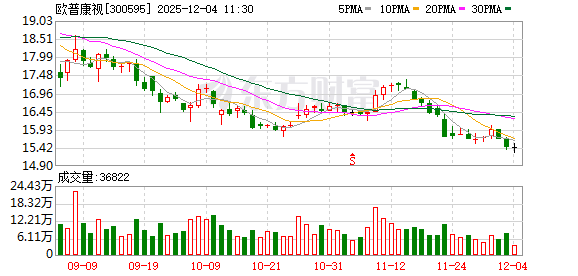
欧普康视:公司参股的智能眼镜企业计划近期先推出可以日常佩戴使用的音频类眼镜
Mei Ri Jing Ji Xin Wen· 2025-12-04 03:59
Group 1 - The company has received inquiries from investors regarding the development status of its AI glasses and AI lenses [2] - The company stated that its affiliated smart glasses enterprise plans to launch audio glasses for daily wear in the near future [2]

拯救理想汽车,李想可能选错了“路线”?
3 6 Ke· 2025-12-04 02:24
Core Viewpoint - Li Auto urgently needs a new narrative as it enters the smart glasses market with its AI glasses, Livis, amid declining sales and performance in its core electric vehicle business [1][3][5]. Group 1: Market Context - The smart glasses market is heating up, with numerous products launched recently, indicating a growing interest and competition in this sector [6]. - Li Auto's entry into the smart glasses market may be a strategic move to diversify its offerings as its electric vehicle sales have seen a significant decline, particularly in Q3 2023 [3][4]. Group 2: Performance Metrics - In 2023, Li Auto delivered 376,000 vehicles, a year-on-year increase of 182.2%, but faced a sharp decline in Q3 with deliveries of 93,000 vehicles, down 39.0% from the previous year [3]. - The company's Q3 vehicle sales revenue was 25.9 billion yuan, a decrease of 37.4% from 41.3 billion yuan in the same period last year, with an overall revenue drop of 36.1% to approximately 27.4 billion yuan [3][4]. - Li Auto reported a net loss of 624 million yuan in Q3, contrasting with a profit of 8 billion yuan for the entire previous year [4]. Group 3: Stock Market Performance - Li Auto's stock has been on a downward trend, closing at 69.75 HKD on December 3, down over 33% from its peak of 105.3 HKD in late September, resulting in a market capitalization of 149.3 billion HKD [4][5]. Group 4: Product Details - The Livis AI glasses feature a 12-megapixel camera, 105° ultra-wide angle, and support for 4K photo and 1K video recording, with a weight of 36 grams and a typical battery life of 18 hours [20][23]. - Livis is priced starting at 1,999 yuan, with a promotional price of 1,699 yuan available until December 31, including Zeiss lenses [25]. - The glasses utilize a non-Type-C charging method and are designed to connect seamlessly with Li Auto vehicles, allowing for features like trunk opening via voice commands [19][23]. Group 5: Industry Challenges - There are concerns regarding the choice of the main control chip for Livis, as it deviates from the industry standard of Qualcomm chips, which may impact performance [27]. - The industry consensus suggests that smart glasses could become independent consumer products, but Li Auto's approach may mislead market perceptions and consumer confidence in the smart glasses sector [27][28].