
美丽中国建设

Search documents
中国“调色盘”增新绿!森林覆盖率超25%
Xin Hua She· 2025-12-06 03:46
Group 1 - The core objective of building a beautiful China is highlighted as an important goal in the comprehensive modernization of the socialist nation, with specific plans outlined in the "14th Five-Year Plan" to accelerate the green transformation of economic and social development [1] - During the "14th Five-Year" period, a total of 5.49 million acres of land were afforested, resulting in a forest coverage rate exceeding 25%, contributing approximately one-fourth of the world's new greening area [1] - The "Three North" project has completed the construction of 164 million acres, reinforcing the ecological security barrier in northern China through various innovative methods of combating desertification [2] Group 2 - The forest and grassland industry is projected to exceed a total output value of 10 trillion yuan in 2024, creating job opportunities for over 60 million people, with a stable workforce of over 1.7 million ecological forest rangers [3] - The green coverage rate in urban built-up areas reached 43.32%, while village green coverage reached 32.01% during the "14th Five-Year" period, indicating significant progress in urban and rural greening efforts [4] - The construction of ecological corridors and pocket parks in cities like Beijing and the promotion of park city demonstration areas in Chengdu are enhancing the quality of urban green spaces, making nature more accessible to the public [3][4]
新华鲜报·“十四五”发展亮点|中国“调色盘”增新绿!森林覆盖率超25%
Xin Hua She· 2025-12-06 03:02
Core Points - The construction of a beautiful China is a significant goal for the comprehensive modernization of the socialist nation, with the "14th Five-Year Plan" emphasizing the acceleration of green transformation in economic and social development [1] - During the "14th Five-Year" period, land greening efforts achieved a task completion of 5.49 million acres, with forest coverage exceeding 25%, contributing approximately one-fourth of the global increase in greening area [1] Group 1 - The "Three North" project has made significant progress, completing a greening task of 1.64 million acres, enhancing the ecological security barrier in northern China [3] - Various innovative methods such as road-based, photovoltaic, and industrial sand control have revitalized many regions, showcasing a shift from traditional sand control methods [3] - The integration of tree planting and economic benefits is highlighted, with the national forest and grass industry expected to exceed 10 trillion yuan in total output value by 2024, creating employment for over 60 million people [5] Group 2 - The demand for quality ecological products has increased as people's living standards rise, making it a crucial task in building a beautiful China [7] - Urban greening coverage reached 43.32% in built-up areas and 32.01% in villages during the "14th Five-Year" period, indicating significant progress in urban ecological development [9] - Future plans aim to achieve new major advancements in the construction of a beautiful China, with a focus on enhancing green spaces for the public [9]

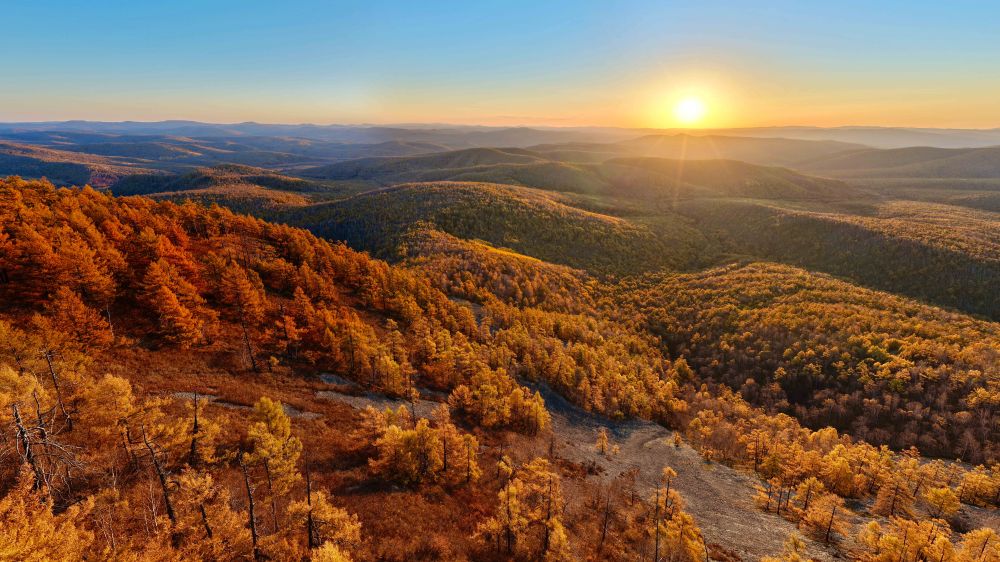
新华鲜报·“十四五”发展亮点丨中国“调色盘”增新绿!森林覆盖率超25%
Xin Hua She· 2025-12-06 01:59
Core Viewpoint - The construction of a beautiful China is a significant goal in the comprehensive modernization of the socialist nation, with a focus on accelerating green transformation during the "14th Five-Year Plan" period [1] Group 1: Green Development Achievements - During the "14th Five-Year Plan," a total of 5.49 million acres of land were afforested, increasing the forest coverage rate to over 25%, contributing approximately one-fourth of the world's new greening area [1] - The "Three North" project has completed the construction of 164 million acres, enhancing the ecological security barrier in northern China [2] Group 2: Economic and Employment Impact - The total output value of the national forestry and grass industry is expected to exceed 10 trillion yuan in 2024, creating employment and income opportunities for over 60 million people [3] - The forestry food products have become the third most important agricultural product after grains and vegetables, indicating a growing market for forest-derived food [3] Group 3: Urban and Rural Green Coverage - The urban greening coverage rate reached 43.32%, while rural greening coverage was at 32.01% during the "14th Five-Year Plan" [4] - Future efforts will focus on achieving significant progress in building a beautiful China, with an emphasis on enhancing green spaces for the public [4]
平行分论坛二:“十五五”美丽中国建设战略任务与实践路径|2025年深入学习贯彻习近平生态文明思想研讨会
Zhong Guo Huan Jing Bao· 2025-12-03 01:49
Group 1 - The core viewpoint emphasizes the importance of ecological civilization and the strategic deployment of building a beautiful China, particularly in regions like Guizhou, Xinjiang, Heilongjiang, and Hubei, under the guidance of Xi Jinping's ecological civilization thought [1][3][5][7]. - The "14th Five-Year Plan" period is identified as a crucial time for ecological transformation and high-quality development, with a focus on pollution prevention, green economic transformation, and ecological protection [2][4][6][8][22]. - The integration of ecological culture and economic development is highlighted as a means to enhance the value of ecological products and promote sustainable rural development [19][20]. Group 2 - Specific measures for pollution prevention include enhancing air quality management, protecting key water bodies, and implementing comprehensive soil pollution control actions [2][4][11]. - The promotion of green production and living styles is emphasized, with initiatives aimed at reducing carbon emissions and improving energy efficiency across various sectors [4][10][12][16]. - The establishment of a robust ecological governance system is crucial for ensuring effective environmental protection and sustainable development [8][11][17].
本报评论员:学习贯彻习近平生态文明思想推进美丽中国建设取得新的重大进展
Zhong Guo Huan Jing Bao· 2025-12-03 00:48
2025年深入学习贯彻习近平生态文明思想研讨会近日在厦门召开。在全党全国深入学习贯彻党的二十届 四中全会精神之际,会议紧扣"深入学习贯彻习近平生态文明思想,奋力推进美丽中国建设取得新的重 大进展"这一主题进行深入研讨交流,对于我们保持战略定力,增强必胜信心,自觉在大局中统筹谋划 和推进生态环境保护工作具有重要的指导意义。 党的十八大以来,我国生态文明建设从理论到实践都发生了历史性、转折性、全局性变化,美丽中国建 设迈出重大步伐,创造了举世瞩目的生态奇迹和绿色发展奇迹。这些成就的取得,根本在于习近平总书 记领航掌舵,在于习近平新时代中国特色社会主义思想特别是习近平生态文明思想的科学指引。 持续提升生态系统多样性稳定性持续性。要统筹推进重要生态系统保护和修复重大工程。严守生态保护 红线,加强生物多样性保护。强化对生态和环境的统筹协调和监督管理,开展生态保护修复成效评估。 完善多元化生态补偿机制,因地制宜拓展生态产品价值实现渠道。加强重要江河湖库系统治理和生态保 护。 推动构建美丽中国建设新格局。要持续深化生态文明体制改革,健全生态环境治理体系。完善美丽中国 建设实施体系和推进落实机制,统筹推进"美丽系列"建设,把 ...
奋力推进美丽中国建设取得新的重大进展——2025年深入学习贯彻习近平生态文明思想研讨会综述
Zhong Guo Huan Jing Bao· 2025-12-02 14:05
坚持思想引领,推进习近平生态文明思想的体系化学理化阐释 党的十八大以来,我国生态文明建设从理论到实践都发生了历史性、转折性、全局性变化,美丽中国建 设迈出重大步伐,创造了举世瞩目的生态奇迹和绿色发展奇迹。 与会代表、学者表示,实践证明,习近平生态文明思想既是我们过去在生态文明建设上为什么能够取得 成功的密码,也是未来指引我们继续取得成功的法宝,必须深刻感悟这一伟大思想蕴含的真理力量和实 践伟力。 习近平生态文明思想是新时代谋划和推进生态文明建设的总方针、总依据和总要求。党的二十届四中全 会明确提出加快经济社会发展全面绿色转型,建设美丽中国。 在12月1日举行的2025年深入学习贯彻习近平生态文明思想研讨会上,与会专家、学者就深入学习贯彻 习近平生态文明思想,奋力推进美丽中国建设取得新的重大进展进行深入细致的研讨和精辟透彻的阐 述,进一步推动习近平生态文明思想的学习宣传、贯彻落实。 有关专家表示,要深刻把握"十五五"时期增强绿色发展动能的战略重点,更加注重统筹协调,在协同推 进降碳、减污、扩绿、增长中提升绿色发展新效能。 "降碳是牵引性目标,以碳达峰碳中和推动发展方式绿色低碳转型;减污是基础性任务,以精准科学依 ...
2025年深入学习贯彻习近平生态文明思想研讨会举行
Xin Hua She· 2025-12-01 12:21
福建省委书记周祖翼表示,福建将聚焦高水平保护,加快构建从山顶到海洋的保护治理大格局, 推动生态环境质量保持全国前列;聚焦高质量发展,着力推动经济社会发展全面绿色转型,努力 形成崇尚生态文明的社会氛围;聚焦高效能治理,接续推进国家生态文明试验区建设,努力探索 更多具有福建特色的制度创新成果。 新华社厦门12月1日电(记者陈弘毅、高敬)12月1日,由生态环境部主办的2025年深入学习贯彻 习近平生态文明思想研讨会在福建厦门举行。研讨会以"深入学习贯彻习近平生态文明思想,奋力 推进美丽中国建设取得新的重大进展"为主题,通过开展研讨交流,深入学习贯彻习近平生态文明 思想,全面落实党的二十届四中全会精神,推动加快经济社会发展全面绿色转型、建设美丽中 国。 本次研讨会设主论坛和"习近平生态文明思想的标识性概念和原创性贡献""'十五五'美丽中国建设 战略任务与实践路径""以'双碳'牵引经济社会发展全面绿色转型""全球治理倡议与共建清洁美丽可 持续的世界"4个平行分论坛。 生态环境部党组书记孙金龙在主论坛致辞中说,党的十八大以来,我国生态文明建设从理论到实 践都发生了历史性、转折性、全局性变化,生态环境持续改善,绿色低碳转型 ...
当好自然资源“大管家”和美丽中国“守护者”
Ren Min Ri Bao· 2025-11-29 01:05
Core Viewpoint - The construction of a beautiful China is a crucial goal for the comprehensive modernization of the socialist nation, emphasizing the harmonious coexistence of humans and nature [1] Group 1: Regional Economic Layout and Land Space System - The natural resources department aims to optimize the land space development pattern by balancing population, resources, and environmental factors [2] - Policies will be refined to enhance the implementation of the main functional area strategy, promoting differentiated development based on local advantages [2][3] - The department will maintain stability in urbanization areas, agricultural production zones, and key ecological function areas while optimizing specific functional areas [2] Group 2: Land Space Planning and Protection - The focus will be on dynamic assessment and optimization of land space planning, integrating major projects into a unified management system [3] - Strict adherence to the three control lines: farmland protection, ecological protection red lines, and urban development boundaries will be enforced [3] - The goal is to ensure the preservation of 1.865 billion acres of arable land and 1.546 billion acres of permanent basic farmland [3] Group 3: Resource Allocation and Support - The department will enhance the quality and efficiency of natural resource allocation, promoting comprehensive land supply and redevelopment of inefficient land [4] - Provincial governments will be granted greater autonomy in land use management, with a focus on integrated approval processes for various land uses [4] Group 4: Marine Economy and Ecological Protection - The "14th Five-Year" plan emphasizes strengthening marine development and protection, with a focus on high-quality marine economic growth [5] - The department will promote innovation in marine technology and establish platforms for marine research and development [6] - Collaborative efforts will be made to balance marine resource utilization with ecological protection, including the development of marine ecosystems [6] Group 5: Resource Security and National Safety - The natural resources sector is integral to national security, focusing on food, energy, and supply chain security [7] - Emphasis will be placed on protecting farmland and enhancing the quality of agricultural land through strategic planning [7] - The department will implement a new round of mineral exploration strategies to ensure resource security [7] Group 6: Geographic Information and Disaster Management - A new national spatial reference system will be established to support digital China initiatives and enhance disaster monitoring and response capabilities [8] - The department will focus on geological disaster prevention and response, particularly in high-risk areas [8] Group 7: Ecological Protection and Restoration - The department will prioritize the establishment of a natural protection area system, focusing on national parks and ecological restoration [9] - Efforts will be made to enhance the quality of forests and grasslands through large-scale greening initiatives [10] - The development of a market mechanism for ecological compensation and resource rights will be explored to promote sustainable resource management [10]
当好自然资源“大管家”和美丽中国“守护者”——访自然资源部党组书记、部长关志鸥(权威访谈·学习贯彻党的二十届四中全会精神)
Ren Min Ri Bao· 2025-11-25 23:02
Core Viewpoint - The construction of a beautiful China is a crucial goal for the comprehensive modernization of the socialist nation, emphasizing the harmonious coexistence of humans and nature [1] Group 1: Regional Economic Layout and Land Space System - The natural resources department aims to optimize the land space development pattern by balancing population, resources, and environment, while promoting economic and ecological benefits [2] - The strategy includes enhancing policy mechanisms, implementing functional area strategies, and stabilizing the overall layout of urbanization, agricultural production areas, and ecological function zones [2][3] Group 2: Land Space Planning and Management - The department will improve the land space planning system by integrating various special planning projects into a unified natural resource management framework [3] - Strict adherence to the protection of arable land, permanent basic farmland, ecological protection red lines, and urban development boundaries is emphasized [3] Group 3: Resource Allocation and Quality Assurance - The focus is on optimizing resource allocation to enhance the quality and efficiency of natural resource support for economic development [4] - Measures include promoting the redevelopment of low-efficiency land and granting provincial governments greater autonomy in land use management [4] Group 4: Marine Economy and Ecological Protection - The department plans to strengthen marine development and ecological protection, promoting high-quality marine economic growth through policy support and social capital involvement [5][6] - Initiatives include advancing marine strategic emerging industries and enhancing marine resource utilization while ensuring ecological sustainability [5][6] Group 5: Resource Security and National Safety - The natural resources sector is crucial for national security, focusing on food and energy resource security, and the safety of key supply chains and infrastructure [7] - Strategies include strict enforcement of farmland protection and enhancing the exploration and development of strategic mineral resources [7] Group 6: Geographic Information and Disaster Management - The establishment of a new national spatial reference system aims to support digital China construction and enhance disaster monitoring and early warning capabilities [8] - Efforts will be made to improve geological disaster prevention and response mechanisms [8] Group 7: Ecological System Optimization - The department will promote the establishment of a natural protection area system centered on national parks, enhancing ecosystem diversity and stability [9][10] - Key projects will focus on ecological restoration and the management of historical mining sites [10] Group 8: Ecological Product Value Realization - The strategy includes developing a market-oriented mechanism for resource rights trading and diversifying ecological compensation systems [10] - Emphasis is placed on enhancing the value of ecological products and promoting sustainable forest and grassland industries [10]
权威访谈 | 孙金龙书记:努力推动美丽中国建设取得新的重大进展
Ren Min Ri Bao· 2025-11-25 07:20
绿色发展是中国式现代化的鲜明底色。党的二十届四中全会对"十五五"时期生态文明建设和生态环境保 护作出重大部署,明确提出"加快经济社会发展全面绿色转型,建设美丽中国"。为深入学习贯彻党的二 十届四中全会精神,人民日报记者采访了生态环境部党组书记孙金龙。 第二,这是实现高质量发展的应有之义。协同推进降碳、减污、扩绿、增长,以高水平保护推动高质量 发展、创造高品质生活,是美丽中国建设的战略路径。必须加快发展方式绿色转型,推动实现更高质 量、更有效率、更加公平、更可持续、更为安全的发展。 第三,这是满足人民日益增长美好生活需要的内在要求。提供更多优质生态产品以满足人民日益增长的 优美生态环境需要,是美丽中国建设的重要任务。必须持续改善生态环境质量,让人民群众在绿水青山 中共享自然之美、生命之美、生活之美。 第四,这是共建清洁美丽世界的中国贡献。美丽中国建设既是中国以自身努力推动解决全球环境问题的 重要行动,也是为其他国家推进生态环境治理和可持续发展提供的重要借鉴。必须秉持人类命运共同体 理念,以美丽中国建设引领全球环境治理进程,为实现绿色低碳可持续发展贡献中国智慧和中国力量。 新时代美丽中国建设迈出重大步伐 记者:新 ...