自动驾驶技术

Search documents
驭势科技递表港交所 中信证券为独家保荐人
Zheng Quan Shi Bao Wang· 2025-12-01 00:50
Group 1 - The core point of the article is that Yushi Technology has submitted its listing application to the Hong Kong Stock Exchange, with CITIC Securities as the sole sponsor [1] - Yushi Technology is a leading technology-driven company in the Greater China region, focusing on L4-level autonomous driving technology, primarily for commercial vehicles in closed environments such as airports and industrial parks [1] - The company's solutions are versatile and applicable to L2 to L4 level autonomous driving, covering logistics, operations, and motor vehicles [1] Group 2 - According to Frost & Sullivan, Yushi Technology is the only global supplier providing large-scale commercial L4-level autonomous driving solutions for airports [1] - The company has successfully implemented unmanned electric towing vehicles, shuttle buses, and patrol vehicles at Hong Kong International Airport, along with related hardware and software for services such as baggage handling, shuttle, and patrol [1]

港股异动 | 小马智行-W(02026)再涨超3% 第三季度Robotaxi服务同比增长89%...
Xin Lang Cai Jing· 2025-11-27 02:23
来源:智通财经网 消息面上,近日,小马智行-W披露2025年三季度业绩。美银证券指出,小马智行-W第三季收入按年增 长72%至2,540万美元,其中Robotaxi服务按年增长89%;毛利率达18.4%,按年及按季分别提升9.1及2.2 个百分点,因收入结构改善且Robotaxi服务贡献提高。期内研发费用为6,000万美元,按年增长80%,主 要投入于第七代车辆研发及研发人员扩充。非公认会计准则净亏损为5,500万美元,对比去年同期及上 季分别为4,100万美元及4,600万美元。 该行续指,截至11月23日,小马智行Robotaxi车队规模达961辆,管理层有信心在今年底突破1,000辆目 标,并预期2026年底将超过3,000辆。管理层又表示,车辆密度更高将缩短候车时间、提升用户体验, 从而令定价及利用率更高,并预期2026年Robotaxi收入增长将进一步加速,受稳健订单及营运效率提升 推动。 小马智行-W(02026)再涨超3%,截至发稿,涨3.59%,报104港元,成交额1643.87万港元。 ...
每天车闻:蔚来2025年三季度财报,毫末智行被爆拖欠工资,集度汽车申请预重整
Xin Lang Cai Jing· 2025-11-26 01:41
Group 1: NIO Financial Performance - NIO reported a record delivery of 87,071 vehicles in Q3 2025, representing a year-on-year increase of 40.8% and a quarter-on-quarter increase of 20.8% [4] - The company's revenue for Q3 2025 reached 21.79 billion yuan, up 16.7% year-on-year and 14.7% quarter-on-quarter, also a historical high [4] - NIO's gross margin for Q3 2025 was 13.9%, the highest in nearly three years, indicating improved profitability in products and services [4] - The cash reserves stood at 36.7 billion yuan, showing a significant increase of nearly 10 billion yuan quarter-on-quarter, with positive operating cash flow and free cash flow [4] - For Q4 2025, NIO expects to deliver between 120,000 to 125,000 vehicles, a year-on-year growth of 65.1% to 72.0%, and revenue guidance of 32.76 billion to 34.04 billion yuan, reflecting a year-on-year increase of 66.3% to 72.8% [4] Group 2: Didi Charging Brand Update - Xiaojuchongdian has rebranded to "Didi Charging," aiming to enhance user experience with the slogan "7 out of 10 electric vehicle owners use Didi Charging" [6] - The company reported a charging pile utilization rate of over 97% [6] - Didi Charging introduced an industry-first "jump gun compensation" service to address user pain points related to charging interruptions due to equipment malfunctions [6] Group 3: Volkswagen's R&D Expansion in China - Volkswagen's new testing facility in Hefei, China, has officially opened, marking a significant upgrade in the company's R&D capabilities in the region [9] - The facility spans approximately 100,000 square meters and includes over 100 advanced laboratories, integrating software and hardware testing, battery and powertrain testing, and vehicle-level validation [9] - This development establishes a complete end-to-end R&D system for Volkswagen in China, enabling comprehensive verification and compliance for new vehicle platforms and key technologies [9] Group 4: Shanghai Jidu Auto's Restructuring - Shanghai Jidu Auto has initiated a pre-restructuring process, aiming to attract new strategic investors and revitalize existing assets and resources [10][14] - The company has submitted a pre-restructuring application to the Shanghai Third Intermediate People's Court, which has been formally accepted [14] - A temporary administrator has been appointed to oversee the restructuring process while ensuring the stability of core business operations and protecting user rights [15] Group 5: Haomo Zhixing's Operational Challenges - Haomo Zhixing announced a suspension of work and leave for all employees starting November 24, 2025, due to the company's operational status [16] - Reports indicate that the company has been delaying salary payments for two months, with no communication from management regarding compensation or future arrangements [19] - The company, established in November 2019, focuses on the commercialization of autonomous driving technology and is controlled by Great Wall Motors' chairman [23]


布局自动驾驶出租车,欧洲青睐中企
Huan Qiu Shi Bao· 2025-11-25 22:57
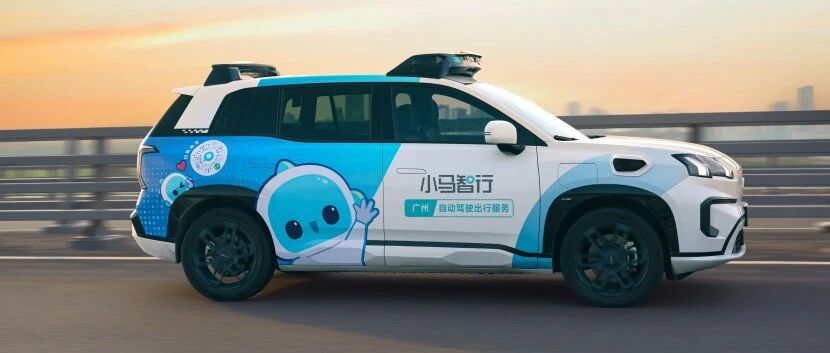
Group 1 - Bolt, an Estonian ride-hailing platform, announced a partnership with Chinese autonomous driving technology company Pony.ai to accelerate the deployment of autonomous taxis in Europe [1] - The collaboration will integrate Pony.ai's autonomous driving technology into Bolt's ride-hailing system, focusing initially on road testing, safety validation, and user experience design before launching fully autonomous services [1] - The initial deployment will target cities in EU member states and other European countries, although specific timelines for vehicle deployment have not been disclosed [1] Group 2 - The European Commission President Ursula von der Leyen called for a Europe-wide autonomous vehicle research initiative to advance autonomous driving technology, emphasizing that artificial intelligence can help revitalize Europe's struggling automotive industry and enhance road safety [2]

佑驾创新与新吉奥汽车及必应货滴签署无人物流领域战略合作框架协议
Zhi Tong Cai Jing· 2025-11-25 14:36
Core Viewpoint - The strategic partnership between Youjia Innovation, Zhejiang Xinjiao Automobile, and Zhejiang Biying Huodi Technology aims to develop and deploy 800 autonomous logistics vehicles, enhancing efficiency and establishing a leading market position in the industry [1][2]. Group 1: Strategic Cooperation - The three parties will focus on "strategic cooperation, complementary advantages, and win-win creation" in the research, manufacturing, and commercialization of autonomous logistics vehicles [2]. - The collaboration will leverage each party's strengths: Youjia Innovation will handle the development and upgrade of the entire vehicle and autonomous driving technology, while Xinjiao Automobile will manage hardware maintenance and production [2]. - Biying Huodi will act as the sales and operations agent for the autonomous logistics vehicles, responsible for sales, leasing, and maintenance services [2]. Group 2: Goals and Implementation - The partnership aims to achieve large-scale deployment of 800 autonomous logistics vehicles across various scenarios, improving logistics efficiency and cost-effectiveness [2]. - The collaboration seeks to break traditional industry barriers and promote the large-scale application of autonomous driving technology in urban logistics [2]. - The board believes that the cooperation will effectively reduce logistics costs and provide a replicable model for cost reduction and efficiency improvement in the industry [2].
佑驾创新(02431.HK)携手新吉奥汽车及必应货滴 合作生产800台无人物流车
Ge Long Hui· 2025-11-25 14:31
Core Viewpoint - The strategic cooperation agreement among Youjia Innovation, Zhejiang Xinjiao Automobile, and Zhejiang Biying Huodi Technology aims to leverage each party's strengths in autonomous driving technology, manufacturing, and operational management to produce 800 market-competitive unmanned logistics vehicles by November 2025 [1] Group 1: Strategic Cooperation - The three parties will integrate their core capabilities to establish a comprehensive strategic partnership focused on market demand [1] - The collaboration seeks to break traditional industry barriers and promote the large-scale application of autonomous driving technology in urban logistics [1] Group 2: Advantages and Goals - Each party possesses complementary strengths, providing a solid foundation for cooperation and broad development prospects [1] - The agreement is expected to achieve resource and technology synergies, reducing logistics costs and creating replicable cost-saving models for the industry [1] - The partnership will contribute to the construction of a smart logistics ecosystem by utilizing the group's self-developed L4-level autonomous driving technology and production experience, combined with Xinjiao's manufacturing capabilities and Biying Huodi's operational network [1]
佑驾创新(02431) - 自愿性公告签署无人物流领域战略合作框架协议
2025-11-25 14:19
香港交易及結算所有限公司及香港聯合交易所有限公司對本公告的內容概不 負 責,對 其 準 確 性 或 完 整 性 亦 不 發 表 任 何 聲 明,並 明 確 表 示,概 不 對 因 本 公 告 全部或任何部分內容而產生或因依賴該等內容而引致的任何損失承擔任何責 任。 Minieye Technology Co., Ltd 深圳佑駕創新科技股份有限公司 (於中華人民共和國註冊成立的股份有限公司) (股份代號: 2431) 自願性公告 簽署無人物流領域戰略合作框架協議 本 公 告 乃 由 深 圳 佑 駕 創 新 科 技 股 份 有 限 公 司(「本公司」,連 同 其 附 屬 公 司 統 稱 「本集團」)自 願 刊 發。 本 公 司 董 事 會(「董事會」)欣 然 宣 佈,於2025年11月25日,本 公 司 與 浙 江 新 吉 奧 汽 車 有 限 公 司(「新吉奧汽車」)及 浙 江 必 應 貨 滴 科 技 服 務 有 限 公 司(「必應貨滴」)正 式 達 成 戰 略 合 作 協 議(「合作協議」)。三 方 將 以 市 場 需 求 為 導 向,充 分 整 合 各 自 在 自 動 駕 駛 技 術、生 產 製 造、運 營 ...
小马智行给出超预期Robotaxi规模指引:明年扩至3000辆以上,城市级别UE已转正
IPO早知道· 2025-11-25 10:34
Core Viewpoint - Pony.ai has entered a new phase of "self-sustaining" and "scale expansion" as evidenced by its recent financial performance and strategic initiatives [2][7]. Financial Performance - In Q3 2025, Pony.ai reported total revenue of 181 million RMB, marking a 72% year-over-year increase, with the Robotaxi business generating 47.7 million RMB, up 89.5% year-over-year, and passenger fare revenue surging over 200% [4][6]. - The company has achieved three consecutive quarters of rapid growth in 2025 [4]. Robotaxi Business Expansion - Pony.ai's Robotaxi fleet has reached 961 vehicles, with 667 being the seventh-generation models, and is expected to exceed 1,000 vehicles by the end of 2025, with plans to triple this number to over 3,000 by the end of 2026 [6][8]. - The seventh-generation Robotaxi has achieved profitability on a per-vehicle basis in urban settings [6]. Capital and Funding - Following its dual listing in the US and Hong Kong, Pony.ai has raised approximately 6 billion RMB, which will be used to accelerate the mass production of L4 autonomous vehicles, commercialization, R&D, and market expansion [8][20]. - The dual listing provides long-term and stable capital support for the company's commercialization efforts [8]. Cost Reduction and Production Efficiency - The production cost of the seventh-generation Robotaxi is expected to decrease by 20% in 2026, supported by efficient mass production and ongoing cost optimization [10][24]. - The company has initiated fully autonomous commercial operations of the seventh-generation Robotaxi in major cities like Beijing, Guangzhou, and Shenzhen [10][17]. Strategic Partnerships and Global Expansion - Pony.ai has established partnerships with major players like Uber and Bolt, which have invested in the company, enhancing its global market presence and operational capabilities [20]. - The Robotaxi business has expanded to eight countries, with ongoing tests in regions such as Dubai and Singapore [18][20]. Robotruck Development - The Robotruck business also saw growth, with revenue of 72.5 million RMB in Q3 2025, and plans for the fourth-generation Robotruck to begin production in 2026 [22][24]. - The fourth-generation Robotruck is expected to reduce per-kilometer freight costs by 29% and increase total freight profits by 195% [24].
罗兰贝格:中国加速成为全球汽车行业技术领军者
Xin Hua Cai Jing· 2025-11-24 14:58
全球自动驾驶技术狂奔,消费者兴趣有限 新华财经上海11月24日电(记者王鹤)罗兰贝格近日发布《汽车行业颠覆性数据探测》报告显示,全球 汽车行业迎来关键转折点,中国正加速成为全球汽车行业的技术领军者,在所有被调研国家中位居榜 首。汽车行业的区域性生态圈正加速分化,各国在技术标准、法规政策和消费者偏好等维度的差异愈发 显著。 罗兰贝格全球高级合伙人、亚洲区汽车业务负责人郑赟表示,汽车行业正经历全面转型,但各国家、地 区的进程有所差异。中国在电动车市场份额、补能基础设施、人工智能驱动的驾驶辅助系统等汽车行业 关键维度均处于领先地位,正迅速拉开与其他地区的差距。不仅如此,中国主机厂的研发周期仅为24至 40个月,而欧洲主机厂则需要48至60个月。 中国凭借在技术和基础设施两大维度上的最高得分,在电气化和自动驾驶等关键领域巩固了领先地位。 与此同时,中国消费者对新款电动车表现出较高兴趣,95%的受访者表示愿意考虑购买电动车作为下一 辆车;而中国汽车制造商持续推出电动车产品组合及不断完善的补能基础设施。 罗兰贝格全球合伙人时帅指出,不同地区间的差距日益显著,尤其体现在软件、标准和新车开发速度等 方面,同时消费者预期也呈现 ...
突发!国内知名公司原地解散!约 200 人被通知“周一别来了”
程序员的那些事· 2025-11-24 13:14
Core Viewpoint - The company Haomo Zhixing, a subsidiary of Great Wall Motors, is facing significant operational challenges, leading to a suspension of work for its employees starting November 24, 2025, with its accounts reportedly frozen [1][2]. Group 1: Company Status - Haomo Zhixing has approximately 200 employees and has not provided specific details on whether the suspension is temporary or a complete dissolution [2]. - The company has raised around 2 billion RMB in total funding, achieving a valuation that once exceeded 1 billion USD, placing it among the unicorns valued at over 10 billion RMB [2]. - Following operational difficulties in November 2024, the company began layoffs, affecting its R&D department, and several high-level executives have since left for other opportunities [2]. Group 2: Ownership and Future Prospects - There is speculation within the company regarding the potential acquisition by its major shareholder, Great Wall Motors, although no definitive intentions have been communicated from Great Wall [2]. - Haomo Zhixing was established on November 29, 2019, focusing on autonomous driving and artificial intelligence technologies, and was incubated from Great Wall Motors' intelligent driving division [2].