
藏粮于地

Search documents
饭碗端得更牢 我国粮食供给保障能力持续增强
Yang Shi Wang· 2025-10-07 01:02
Core Viewpoint - Food security is a top priority for China, emphasizing self-sufficiency to ensure the food supply for over 1.4 billion people [1][2]. Group 1: Food Production Capacity - During the 14th Five-Year Plan, China's grain production capacity has been solidified, maintaining an annual output of over 1.3 trillion jin, with a target to exceed 1.4 trillion jin in 2024 [2][3]. - The comprehensive production capacity of grain has steadily increased across major production areas, with improvements in sowing area, yield per unit, and total production compared to the end of the 13th Five-Year Plan [4]. Group 2: Agricultural Infrastructure and Technology - Over 1 billion acres of high-standard farmland have been established, with more than half of the arable land capable of irrigation and drainage [5]. - The mechanization rate of crop farming has exceeded 75%, with advanced machinery improving operational efficiency [5]. - Agricultural technology advancements contribute 63.2% to production progress, with effective pest control saving over 280 billion jin in yield losses annually [6]. Group 3: Policy and Strategic Initiatives - The government has implemented various policies to enhance food security, including strict land protection measures, seed industry revitalization actions, and the establishment of the Food Security Guarantee Law [3][5]. - By 2030, the goal is to increase grain production capacity by over 100 billion jin, reinforcing the foundation of food security for economic and social development [7].
打造更高水平“天府粮仓”——四川加快推进农业现代化观察
Xin Hua She· 2025-10-06 12:37
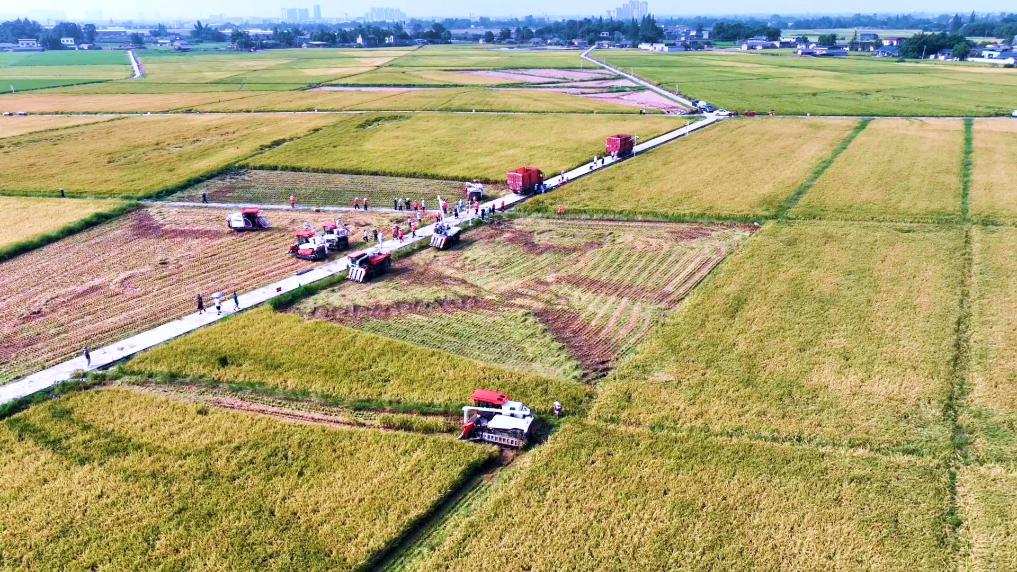
Core Insights - Sichuan province is experiencing a bountiful harvest this year, particularly in rice production, with over 70% of the autumn crop already harvested [1][4] - The province is focusing on seed quality and land improvement as key strategies to enhance agricultural productivity during the 14th Five-Year Plan period [1][2] Group 1: Agricultural Production - The rice yield in Sichuan is significantly boosted by the use of high-quality seeds, such as the "super rice" variety "Bamboo Fragrance Rice," which can yield over 1500 jin per mu [1][2] - The area dedicated to autumn grain planting in Sichuan exceeds 70 million mu, indicating a strong commitment to agricultural expansion [1] Group 2: Seed Industry Development - Meishan's Dongpo District is recognized as a national hybrid rice seed production area, with plans to establish a core seed production base of 55,000 mu by 2025 [2] - The province is implementing a comprehensive management system for rice seed production, ensuring scientific and standardized practices throughout the cultivation process [2] Group 3: Land Improvement Initiatives - High-standard farmland is increasingly common in Sichuan, with significant improvements made to previously unstructured land, resulting in higher rice yields [3][4] - From 2021 to 2024, Sichuan plans to construct 13.29 million mu of new high-standard farmland and upgrade 4.44 million mu of existing farmland [4]
决胜“十四五” 打好收官战丨打造更高水平“天府粮仓”——四川加快推进农业现代化观察
Xin Hua Wang· 2025-10-06 09:12
Core Insights - Sichuan province is accelerating agricultural modernization to enhance its reputation as a "heavenly granary" during the 14th Five-Year Plan period [1][2] - The focus is on improving seed quality and land management to ensure high yields, with significant investments in hybrid rice seed production and high-standard farmland construction [2][3] Group 1: Agricultural Production - Sichuan's summer grain production has achieved another bumper harvest, with over 70% of the autumn grain sowing area of more than 70 million acres showing good crop growth [2] - The use of superior rice varieties, such as "Zhu Xiang Li Si," has led to yields exceeding 1,500 pounds per acre [2] - The establishment of a comprehensive standard management system for rice seed production in Meishan's Dongpo District has been highlighted, ensuring scientific and standardized practices throughout the cultivation process [2][3] Group 2: Infrastructure Development - High-standard farmland has become increasingly common in Sichuan, with improved irrigation and land management practices contributing to higher rice yields [3][6] - The province has implemented a strategy of "storing grain in the land and technology," focusing on both new construction and the upgrading of existing farmland [8] - From 2021 to 2024, Sichuan plans to build 13.29 million acres of new high-standard farmland and upgrade 4.44 million acres [8]

听,“十四五”答卷|饭碗端得更牢 餐桌更加丰富
Bei Jing Ri Bao Ke Hu Duan· 2025-10-03 10:17
Core Insights - China's grain production has reached new heights during the "14th Five-Year Plan" period, ensuring food security and a diverse food supply system for its citizens [1][3][24] Group 1: Grain Production and Security - The per capita grain availability in China has reached 500 kg, ensuring basic self-sufficiency in grains and absolute safety in staple food [1][3] - The implementation of the national food security strategy has strengthened the foundation of food security through technological advancements and improved agricultural practices [3][7] - The average grain yield per mu (approximately 0.067 hectares) is projected to reach 394.7 kg in 2024, an increase of 12.5 kg compared to the end of the "13th Five-Year Plan," with yield growth contributing over 60% to the overall grain production increase [7][24] Group 2: Agricultural Technology and Practices - The integration of advanced agricultural technologies, such as satellite navigation and precision planting, has significantly improved yields, with some farms reporting net incomes of around 1000 yuan per mu [5][7] - The development of new crop varieties, such as "Yunmai 114," has led to higher and more stable yields, with reported maximum yields of 708.1 kg per mu [10][12] Group 3: Farmer Income and Economic Impact - Rural residents' per capita disposable income is expected to reach 23,119 yuan in 2024, reflecting a steady increase in farmers' income [16] - The establishment of stable purchasing relationships with grain processing enterprises and the promotion of contract farming have reduced market risks for farmers [16][18] Group 4: Diversified Food Supply System - The construction of a diversified food supply system has accelerated, with significant increases in the production of meat, eggs, and dairy products, reaching a total of 175 million tons by the end of 2024, an increase of 18.8% since 2020 [24][26] - The average annual consumption of meat and eggs per capita in China exceeds global averages, with dairy consumption also showing significant growth [26][28]
庆农业丰收 享美好生活——陕西府谷县2025中国农民丰收节侧记
Huan Qiu Wang· 2025-09-30 03:12
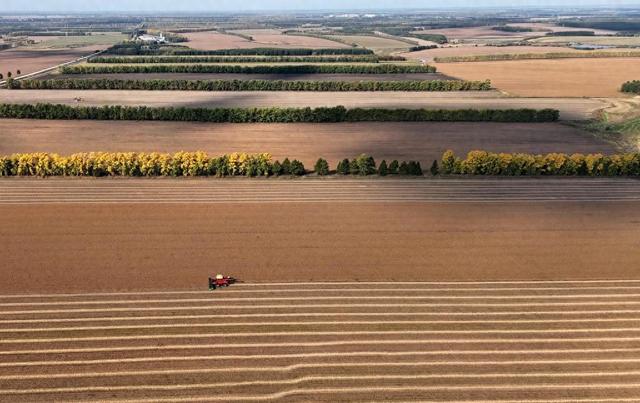
Core Viewpoint - The 2025 Chinese Farmers' Harvest Festival in Fugu County, Yulin City, showcases a vibrant celebration of agricultural achievements, emphasizing the integration of technology and traditional farming practices to enhance productivity and community engagement [1][3][5]. Group 1: Event Overview - The festival features a main venue and three sub-venues, creating a comprehensive "exhibition-consumption-culture" matrix with activities such as agricultural product exhibitions, public welfare live broadcasts, and harvest song gatherings [1][3]. - The opening ceremony included a traditional "adding grain" ritual, symbolizing a bountiful harvest and community joy [3]. Group 2: Agricultural Achievements - Fugu County has implemented the "storing grain in the land and technology" strategy, resulting in the establishment of 251,300 acres of high-standard farmland and the promotion of drought-resistant agriculture on 63,400 acres [5]. - The county's total agricultural machinery power reached 266,000 kilowatts, with a mechanization rate of 70% for major crops, facilitating full mechanization from tilling to harvesting [5]. - The expected total grain production for the year is 85,000 tons, reflecting a 6% increase in grain yield per unit area [5]. Group 3: Economic Development - Fugu County has developed a diverse agricultural industry, focusing on specialty products like sea red fruit, meat sheep, and yellow rice, enhancing the agricultural value chain [7]. - The county has established platforms for industrial strength and has seen the emergence of 1,849 new agricultural business entities, promoting collective development among farmers [7]. Group 4: Rural Development and Income Growth - The county prioritizes increasing farmers' income through various models, achieving a rural collective economic income exceeding 100,000 yuan [8]. - The disposable income of rural residents is projected to reach 22,504 yuan in 2024, a 37% increase from 2020, indicating effective agricultural policies and improved living standards [8].

美国豆农的血泪教训:天量大豆烂在地里,背后真相更残酷!
Sou Hu Cai Jing· 2025-09-29 03:26
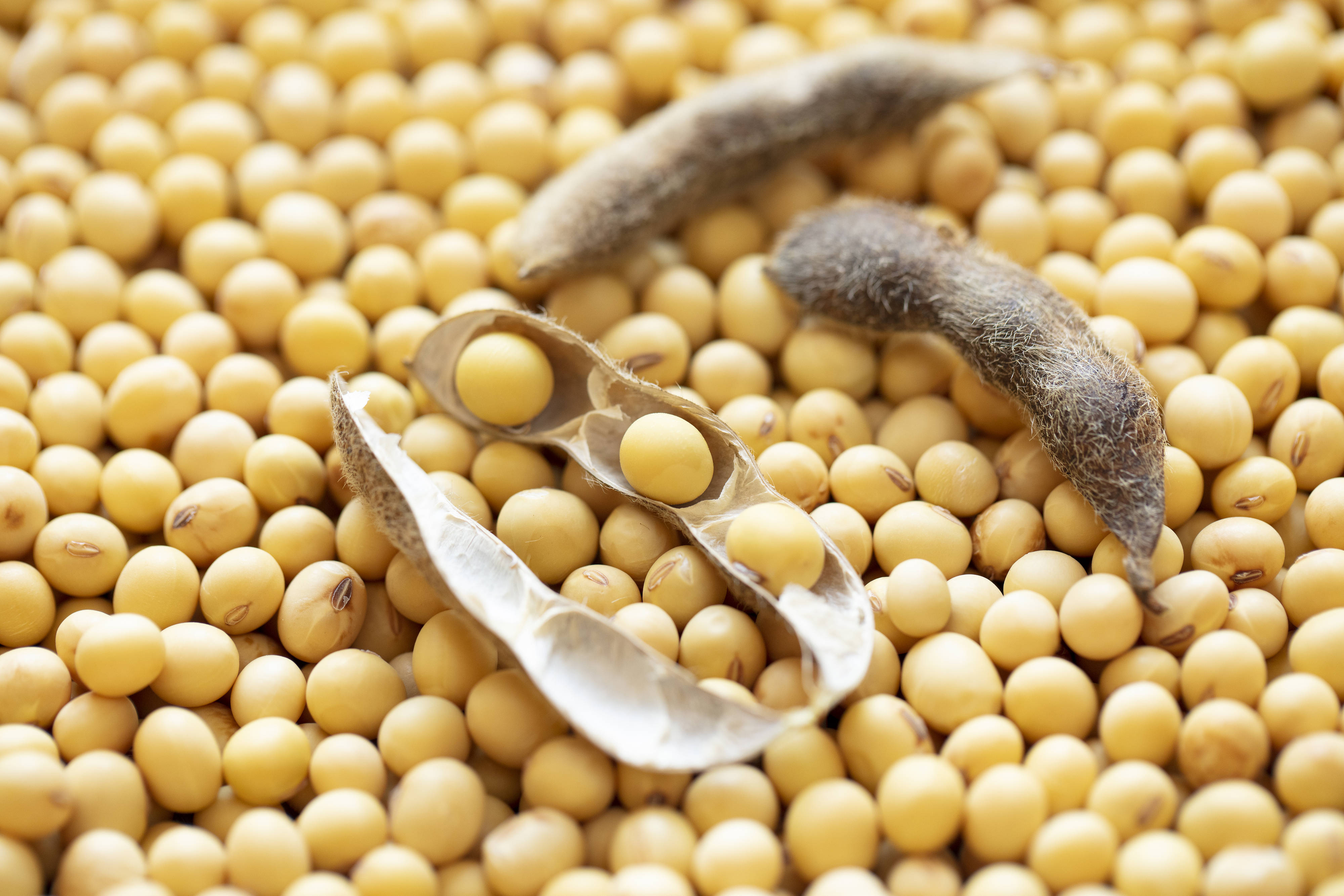
Core Insights - The article highlights the severe crisis faced by U.S. soybean farmers due to a significant drop in demand from China, which has shifted its imports to Brazil, leading to a drastic decline in soybean prices and increased production costs [1][4][7]. Group 1: Market Dynamics - Since May, China has not purchased any U.S. soybeans, while it imported 66 million tons from Brazil from January to August, marking a significant shift in sourcing [1]. - Soybean prices have plummeted by 23% compared to the same period last year, while production costs have risen by 15% due to tariffs, resulting in substantial losses for farmers [4]. Group 2: Agricultural Competitiveness - The decline in U.S. agricultural competitiveness is attributed to factors such as aging soil and inadequate market diversification strategies among U.S. farmers [7]. - Brazilian soybeans are favored for their lower prices and higher protein content, benefiting from younger, more fertile soil and better climate conditions compared to U.S. farmland [7]. Group 3: Strategic Agricultural Practices - China has been focusing on improving soil health and agricultural quality through initiatives like soil testing and fertilization strategies, which are seen as crucial for enhancing agricultural competitiveness [9][11]. - The shift towards data-driven agricultural practices is reshaping the competitive landscape, emphasizing the importance of soil health and scientific approaches to farming [11]. Group 4: Future Outlook - The future of agriculture is expected to focus on quality and technology rather than just price, with producers who prioritize soil health and scientific farming practices gaining market power [11]. - The article suggests that the agricultural market will increasingly favor participants who respect scientific methods, value data, and prepare for future challenges [11].
新华时评:秋分岁稔道丰年
Xin Hua She· 2025-09-24 06:27
Core Viewpoint - The article highlights the successful agricultural production in China despite challenges posed by natural disasters, emphasizing the importance of technology and policy support in achieving food security and quality improvement [1][2] Group 1: Agricultural Production - China's agricultural production has managed to overcome droughts and floods, leading to stable summer grain production and increased early rice yields, with expectations for another bumper harvest [1] - The article stresses the impact of global climate change on food production, noting the rising frequency of extreme weather events that pose challenges to maintaining and improving grain production [1] Group 2: Policy and Technological Support - The government is committed to prioritizing agricultural and rural development, implementing strong policies to support farmers and enhance agricultural foundations [1] - The article advocates for the development of new agricultural production capabilities and the cultivation of new farmers, moving away from traditional farming methods [1] Group 3: Recognition of Farmers - The article recognizes the hard work of farmers and agricultural workers, highlighting their crucial role in achieving harvests and maintaining agricultural land [1] - It emphasizes the contributions of various agricultural professionals, including those involved in forestry and marine resources, in ensuring food supply [1] Group 4: Future Outlook - The year marks the end of the 14th Five-Year Plan and the final year of the transition period for consolidating poverty alleviation achievements and rural revitalization [2] - The article calls for reflection on valuable experiences and successful practices during the harvest festival, while also focusing on the upcoming planting season for next year's crops [2]
高标准农田保险: 让“巴掌田”变高产田
Jin Rong Shi Bao· 2025-09-24 04:39
Core Viewpoint - The development of high-standard farmland is crucial for enhancing national food security and agricultural productivity, with insurance playing a significant role in supporting this initiative [2][4]. Group 1: High-Standard Farmland Development - The concept of high-standard farmland was first introduced in the 2005 Central Document No. 1, making it a key focus for local governments [2]. - Approximately 30% of high-standard farmland suffers from reduced effectiveness due to poor management and maintenance [2]. - The insurance products tailored for high-standard farmland cover potential defects in construction quality, maintenance costs, and damages from natural disasters, providing comprehensive protection for agricultural development [1][4]. Group 2: Insurance and Risk Management - The "insurance + service" model has emerged as a mainstream approach to address the complexities and risks associated with high-standard farmland construction and maintenance [3]. - Insurance companies are encouraged to organize professional oversight for design, construction, and supervision to mitigate engineering quality risks [2]. - The integration of technology, such as drone surveillance and AI for risk identification, enhances the efficiency of farmland management and maintenance [3][4]. Group 3: Financial Support and Impact - As of December 2024, insurance products related to high-standard farmland have been promoted across 31 provinces, with total compensation payments exceeding 1.35 billion yuan [1]. - High-standard farmland insurance fills a critical gap in risk management throughout the entire lifecycle of farmland development, transitioning from passive compensation to proactive risk prevention [4]. - This insurance not only boosts farmers' confidence but also supports the strategic goals of food security and agricultural modernization, contributing to rural revitalization [4].

奋力书写农业强省建设新答卷
He Nan Ri Bao· 2025-09-23 23:56
Core Viewpoint - The article emphasizes the commitment of Henan province to enhance agricultural productivity, improve rural environments, and increase farmers' incomes, aiming to achieve the goal of becoming an agricultural strong province while ensuring food security and rural revitalization [2][3]. Agricultural Efficiency - Henan's grain production has remained stable at over 130 billion jin for eight consecutive years, contributing significantly to national food security [3]. - The province has implemented the strategy of "storing grain in the ground and technology," leading to the construction of high-standard farmland covering 88.08 million acres, which is about 78% of the total arable land [4]. - By 2025, Henan plans to build and upgrade over 5 million acres of high-standard farmland, ensuring long-term benefits for grain production [4]. - The number of farmer cooperatives and family farms has reached 196,000 and 275,000 respectively, with a cultivated area of 36.65 million acres, accounting for 33.26% of the total [5]. - Henan is a major producer of oilseeds, edible fungi, and vegetables, ranking first in oilseeds and edible fungi production and second in vegetable production nationally [5]. Rural Quality Improvement - The enhancement of rural quality is crucial for Henan's transition from an agricultural province to an agricultural strong province [6]. - Infrastructure improvements have led to better living conditions, with 93.7% of rural households having access to tap water and 5G network coverage in all administrative villages [8]. - The village of Dongyue has transformed from a poor area to a prosperous one, generating an annual income of 13 million yuan from tourism [8]. - Cultural initiatives and community engagement have fostered a sense of responsibility among villagers, promoting cleanliness and neighborly harmony [9]. Farmer Income Increase - The focus on increasing farmers' income is central to the agricultural strong province initiative, with efforts to involve farmers as active participants in rural revitalization [10]. - The promotion of mushroom cultivation in Xixia County exemplifies the successful implementation of the "leading enterprises + cooperatives + farmers" model, enhancing the value of agricultural products [11]. - By 2024, the per capita disposable income of rural residents in Henan is projected to reach 21,330 yuan, a significant increase from 16,107 yuan in 2020 [11]. - Skills training programs are being implemented to help farmers adapt to modern agricultural demands, with 355,000 individuals trained in 2024 [12].
新华时评|秋分岁稔道丰年
Xin Hua She· 2025-09-23 13:33
Core Viewpoint - The article highlights the successful agricultural production in China despite challenges posed by natural disasters, emphasizing the importance of technology and policy support in achieving food security and quality improvement [2][3]. Group 1: Agricultural Production - China's agricultural production has overcome challenges such as drought and flooding, leading to stable summer grain production and increased early rice yield, with expectations for another abundant harvest [2]. - The article stresses the impact of global climate change on food production, noting the increasing frequency of extreme weather events that pose challenges to maintaining and improving grain production [2]. Group 2: Policy and Technological Support - The government is committed to prioritizing agricultural and rural development, implementing strong policies to support farmers and enhance agricultural foundations [2]. - The article advocates for the development of new agricultural production capabilities and the cultivation of new farmers, moving away from traditional farming methods [2]. Group 3: Recognition of Farmers - The article emphasizes the role of farmers and agricultural workers as the main contributors to the harvest, acknowledging their hard work and dedication [2]. - It highlights various roles played by agricultural workers, including those involved in land protection, scientific research, and marine farming, showcasing their contributions to food supply [2]. Group 4: Future Outlook - The year marks the end of the "14th Five-Year Plan" and the final year of the transition period for consolidating poverty alleviation achievements and rural revitalization [3]. - The article calls for reflection on valuable experiences and successful practices in agriculture, while also emphasizing the importance of planning for future harvests [3].