资源循环利用

Search documents
又一套乙烯装置,将关停!
Zhong Guo Hua Gong Bao· 2025-12-26 09:02
Core Viewpoint - The two major Japanese chemical companies, Idemitsu Kosan and Mitsui Chemicals, have reached a final agreement to integrate their ethylene production operations in Chiba, Japan, which includes the closure of a 370,000 tons/year ethylene facility [1] Group 1: Business Integration - Idemitsu Kosan and Mitsui Chemicals will consolidate ethylene production at Mitsui's Chiba ethylene plant, shutting down Idemitsu's Chiba cracking facility [1] - The integration plan has progressed to the Front End Engineering Design (FEED) stage, focusing on raw material procurement, production, and supply systems [1] - The integration is expected to be completed by 2027, with the closure of Idemitsu's 370,000 tons/year ethylene capacity [1] Group 2: Market Context - The Japanese petrochemical industry is facing a challenging operating environment due to the continuous construction of large petrochemical facilities centered in China and a persistent decline in domestic ethylene demand [1] - The consolidation aims to enhance competitiveness in response to these market changes [1] Group 3: Historical Collaboration - Since 2010, both companies have operated their ethylene production facilities in Chiba through a joint venture, achieving an annual ethylene production capacity of 920,000 tons [1] Group 4: Future Initiatives - Idemitsu Kosan and Mitsui Chemicals will deepen their collaboration to promote the construction of a new generation of green industrial complexes, contributing to resource recycling [2]
中国轻工业联合会:1至11月全国家电以旧换新超1.28亿台 中高端智能家具产品成消费升级新增长点
智通财经网· 2025-12-26 07:34
Core Viewpoint - The "Two New" standard enhancement action has achieved positive results in supporting market demand expansion, promoting equipment updates, and enhancing consumer spending through the implementation of new national standards [3][5][19]. Group 1: Industry Standards and Economic Impact - From January to November, over 128 million home appliances were replaced under the old-for-new policy, generating sales exceeding 2.5 trillion yuan [1][14]. - The market for intelligent furniture has surpassed 10 billion yuan, driven by standards for smart grading, leading to the introduction of mid-to-high-end intelligent furniture products by leading companies [1][14]. - The light industry achieved a revenue of 19 trillion yuan with a year-on-year growth of 1.9% and profits of 1.14 trillion yuan, contributing significantly to the national economy [13]. Group 2: Standard Development and Implementation - A total of 294 national standards have been developed, focusing on energy consumption, product quality, and recycling standards across various sectors [5][10]. - The new standards include 113 for energy efficiency, 115 for consumer goods, and 66 for recycling, aimed at enhancing product quality and promoting sustainable practices [6][10]. - The introduction of mandatory safety standards for electric vehicle batteries has significantly improved consumer confidence in new energy vehicles [7][10]. Group 3: Future Directions and Policy Support - The China Light Industry Federation plans to continue focusing on core areas of public welfare, ensuring that high-quality light industry products reach households, thereby supporting domestic demand and safeguarding livelihoods [1][14]. - The market regulatory authority will enhance the promotion and implementation of standards to drive industrial innovation and consumer growth [8][19]. - Future efforts will include updating standards in traditional industries, accelerating consumer goods standard upgrades, and strengthening service standards to support high-quality economic development [19][20].
摩洛哥索玛钢铁公司引领该国钢铁产业升级
Shang Wu Bu Wang Zhan· 2025-12-24 06:30
Core Insights - The completion of the expansion project of Somasteel in Morocco marks a significant step in the company's integrated layout within the steel industry [1] - The project represents an investment of approximately $76 million, enhancing the company's production capabilities and competitiveness in the domestic market [1][2] Group 1: Company Developments - Somasteel's new electric arc furnace facility will increase its annual production capacity of steel billets to 400,000 tons, providing a stable upstream raw material source for construction steel products [1] - The expansion has increased direct employment from 250 to 850 positions, tripling job opportunities, and is expected to create around 1,800 indirect jobs through related services [1] Group 2: Industry Context - The project is viewed as a key implementation of Morocco's strategy for industrial localization and "Made in Morocco," emphasizing resource recycling and carbon reduction [2] - The use of electric arc furnace technology aligns with Morocco's focus on energy efficiency and sustainable industrial practices, showcasing the maturity of the local steel industry in terms of technology and talent [2]
正丹股份:募投项目反应尾气综合利用制氮项目试生产
智通财经网· 2025-12-23 10:08
"反应尾气综合利用制氮项目"是公司通过对现有偏苯三酸酐生产装置排放的中压富氮尾气进行综合回收 利用。本项目是公司践行节能减排、实现资源循环利用的重要举措,有助于公司降低综合能耗、巩固偏 苯三酸酐产品的竞争优势,并有望产生良好的经济效益,符合国家环保双降、绿色低碳的可持续发展战 略。 智通财经APP讯,正丹股份(300641.SZ)发布公告,公司向不特定对象发行可转换公司债券募集资金投资 项目中的"反应尾气综合利用制氮项目"已完成工程主体建设及设备安装、调试工作,试生产方案及试生 产条件论证报告经专家评审通过,该项目进入试生产阶段。 ...

正丹股份(300641.SZ):募投项目反应尾气综合利用制氮项目试生产
智通财经网· 2025-12-23 09:57
Core Viewpoint - The company Zhengdan Co., Ltd. has completed the main construction and equipment installation of its "Reaction Tail Gas Comprehensive Utilization Nitrogen Project," which has now entered the trial production phase [1] Group 1: Project Development - The "Reaction Tail Gas Comprehensive Utilization Nitrogen Project" utilizes medium-pressure nitrogen-rich tail gas emitted from the existing production facility of phthalic anhydride for comprehensive recovery and utilization [1] - The trial production plan and conditions have been approved by expert review, indicating readiness for the next phase of operations [1] Group 2: Environmental and Economic Impact - This project is a significant initiative for the company to practice energy conservation and emission reduction, contributing to resource recycling [1] - It is expected to lower overall energy consumption and strengthen the competitive advantage of phthalic anhydride products, while also promising good economic benefits [1] - The project aligns with national strategies for environmental protection and sustainable development, focusing on reducing emissions and promoting a green, low-carbon economy [1]
解码嘉戎技术并购重组预案,技术协同激活发展新动能
Sou Hu Cai Jing· 2025-12-23 07:58
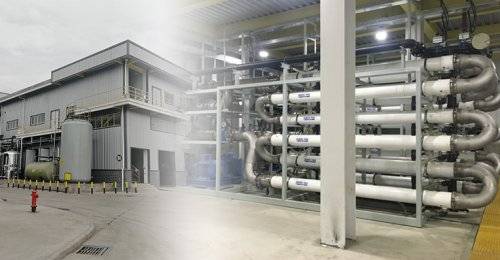
Group 1 - The core viewpoint of the news is that Xiamen Jiarong Technology Co., Ltd. is strategically acquiring 100% equity of Hangzhou Lanran to enhance its position in the membrane separation technology industry, aligning with national policies promoting green and low-carbon development [1] - The acquisition is a response to national policies such as the "2030 Carbon Peak Action Plan" and the encouragement from the China Securities Regulatory Commission for listed companies to transition towards new productive forces, indicating strong governmental support for environmental technology and resource recycling industries [1] - Hangzhou Lanran specializes in electrodialysis technology, which is applicable in scenarios like green preparation of industrial acids and bases, wastewater resource utilization, and carbon capture and utilization (CCUS), aligning with national low-carbon transformation goals [1] Group 2 - The technological synergy between Jiarong Technology's pressure-driven membrane technology and Hangzhou Lanran's electrodialysis technology creates a complementary relationship, enhancing the overall capabilities in industrial separation and purification [3] - Post-merger, Jiarong Technology will establish a dual technology platform combining pressure-driven and electrodialysis technologies, enabling the development of green process solutions for lithium extraction and recycling, as well as efficient treatment of high-concentration industrial wastewater [3] - The collaboration aims to address industry challenges in green transformation, providing significant environmental and economic benefits through innovative solutions for carbon resource utilization [3]

出光兴产、三井化学整合千叶乙烯业务
Zhong Guo Hua Gong Bao· 2025-12-23 03:52
中化新网讯 12月19日,出光兴产与三井化学宣布,双方此前公布的千叶蒸汽裂解装置整合优化乙烯产 能计划已顺利推进至前端工程设计(FEED)阶段。经过对整合影响尤其是原料采购、生产及供应体系等 方面的深入研讨,两家企业最终确认此前决议:将千叶地区的乙烯生产业务集中至三井化学千叶乙烯工 厂,同时关停出光兴产旗下千叶裂解装置。 本次整合工作预计在2027年完成。出光兴产千叶裂解装置的乙烯产能37万吨/年,整合完成后,三井化 学旗下55万吨/年千叶乙烯工厂将成为当地唯一运营的裂解生产基地。 出光兴产与三井化学还宣布将深化合作,共同推进新一代绿色产业综合体的建设,助力实现资源循环利 用。自2010年起,两家企业便通过合资设立的千叶化学制造有限责任合伙公司,对各自位于千叶的乙烯 生产设施进行协同运营,以实现产能优化。 此次整合,亦是日本石化行业整合趋势的缩影。今年9月,三菱化学、旭化成与三井化学曾联合宣布成 立濑户内乙烯有限责任合伙公司,旨在优化日本西部的乙烯生产布局。 ...
为旧电子产品装上“数据安全锁”
Jing Ji Ri Bao· 2025-12-23 00:03
Group 1 - The core viewpoint of the article is the introduction of the mandatory national standard "Technical Requirements for Data Security - Information Clearing Technology for Electronic Products," which aims to address consumer concerns about data privacy when disposing of old electronic devices [1][2][3] - The new standard will be implemented on January 1, 2027, and it provides clear guidelines on what data to clear, how to clear it, and who is responsible for the clearing process [1][2] - The standard covers all traces of user information generated by electronic devices, specifies scientifically validated methods for data clearing, and mandates that manufacturers provide built-in data clearing functions or free tools for users [1][2] Group 2 - During the 14th Five-Year Plan period, China has an estimated 6 billion idle mobile phones, with only 10% entering the second-hand market due to consumer fears of incomplete data clearing [2] - The implementation of the new standard is expected to alleviate consumer concerns about privacy, thereby promoting resource recycling and allowing dormant electronic products to regain value [2][3] - A 13-month transition period has been established to allow the industry to adapt to the new requirements, ensuring orderly technical upgrades and process development before the standard takes effect [3]
天臣控股(01201.HK)携手时代星云及中汇智慧 引入光储充检一体化技术 推动香港电池梯次利用产业发展
Ge Long Hui· 2025-12-22 10:10
Group 1 - The company Tianchen Holdings (01201.HK) has signed a strategic cooperation agreement with Fujian Times Star Cloud Technology Co., Ltd. and Zhonghui Smart Technology Co., Ltd. to introduce advanced energy storage applications in Hong Kong [1] - The collaboration aims to establish a high-power charging facility with leading battery service performance testing technology and create a zero-carbon industrial internet ecosystem service platform in Hong Kong [1] - The introduction of battery testing technology is expected to create opportunities for the development of power battery cascade utilization in Hong Kong [1] Group 2 - Power battery cascade utilization refers to the process of reusing recovered power batteries from electric vehicles through various procedures before they enter recycling facilities, maximizing battery lifespan and promoting resource recycling and green low-carbon development [2]
总投资近50亿元的化工项目,奠基!
Zhong Guo Hua Gong Bao· 2025-12-22 09:05
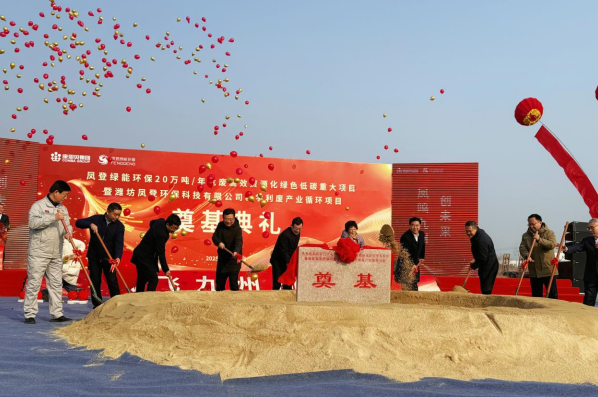
Group 1 - The project by Zhejiang Fengdeng Green Energy Environmental Co., Ltd. aims to establish a hazardous waste resource utilization and green low-carbon project with a total investment of nearly 5 billion yuan, divided into four phases [3] - The first phase of the project, with an investment of 1.04 billion yuan, will take 2 years to complete and is expected to process 200,000 tons of organic waste annually, producing green methanol and low-carbon hydrogen [3] - The project is designed to save approximately 100,000 tons of coal and reduce carbon emissions by about 400,000 tons annually compared to traditional disposal methods [3] Group 2 - The innovative technology developed by Fengdeng Green Energy for hazardous waste resource utilization integrates multiple advanced techniques, enabling the conversion of hazardous waste into high-value chemical products [4] - The project is recognized as a revolutionary innovation in waste disposal methods and serves as a benchmark for the green transformation of the petrochemical industry [4] - The estimated annual revenue from the project is projected to reach 1 billion yuan, with tax contributions of nearly 150 million yuan, alongside a reduction of 400,000 tons of carbon emissions per year [4]