AI for Science

Search documents
利德健康完成数千万元Pre-A轮融资,以AI系统驱动生命科学基础设施提质增效
IPO早知道· 2026-01-05 08:08
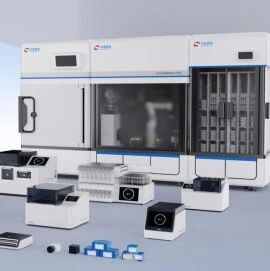
Core Viewpoint - Lide Health Technology (Guangzhou) Co., Ltd. has successfully completed a multi-million yuan Pre-A round financing, aiming to enhance its capabilities in AI life science instruments and biomanufacturing equipment, aligning with national strategic goals in the "14th Five-Year Plan" [4][8]. Group 1: Company Overview - Since its operation began in March 2024, Lide Health has established a multidisciplinary team of over 100 members, with more than 60% being R&D personnel, covering various fields such as AI, optics, mechanics, and biology [5]. - The company has launched over 10 high-end AI life science instruments and services, including AI models for cell identification and high-throughput imaging systems, addressing inefficiencies and high costs in traditional life sciences [5][6]. Group 2: Future Product Development - Lide Health plans to continue developing competitive product solutions, including virtual cell AI models and high-throughput drug screening systems, to provide large-scale, high-quality data production tools for the AI for Science sector [6]. - The company has built several innovative laboratories to prepare for large-scale production and delivery of its products [6]. Group 3: Intellectual Property and Standards - Lide Health has applied for over 110 patents, with around 50% being invention and PCT international patents, and has been recognized as an excellent case for patent transformation by the National Intellectual Property Administration [7]. - The company has participated in the formulation of 26 standards, including 7 national standards, promoting the automation and intelligent transformation of the life sciences sector [7]. Group 4: Investment and Market Position - The lead investor in the Pre-A round highlighted Lide Health's exceptional technological innovation and industrialization capabilities, aligning with national strategic directions and industry trends [8]. - The company has signed contracts worth several million yuan with nearly 100 leading clients, including top universities, research institutions, and major biopharmaceutical companies [6].

国家超算互联网科学计算智能体亮相
Ke Ji Ri Bao· 2026-01-05 00:31
Group 1 - The National Supercomputing Internet Scientific Computing Intelligent System was officially launched in Tianjin, significantly reducing the time required for scientific tasks from one day to approximately one hour through natural language interaction [1] - The integration of AI in scientific research is reshaping research and engineering innovation, leading to increased demand for computing power and more sophisticated organization and scheduling of resources [1][2] - The intelligent system covers nearly a hundred high-frequency scientific computing scenarios and supports three major disciplines and dozens of computing software, creating over 120 industry knowledge bases across seven application scenarios [1] Group 2 - The emergence of the scientific computing intelligent system is seen as a key development in the transition from computational science to intelligent science, providing more efficient and inclusive innovation support for researchers [2] - The combination of the supercomputing intelligent system and integrated computing network is expected to systematically enhance research efficiency and innovation quality, contributing to breakthroughs in critical fields [2] - The establishment of the National Supercomputing Internet in Tianjin is anticipated to gather high-end innovation resources and strengthen Tianjin's role as a crucial node in the national integrated computing network [2] Group 3 - The "AI for Science Tianjin in Action" initiative was launched, promoting a "2511" model that includes two leading platforms, five supporting modules, one resource pool, and the cultivation of a hundred billion-level industrial cluster [3] - The initiative aims to construct an innovative ecosystem of shared computing power, shared algorithms, and collaborative development, supporting high-quality digital economic development in Tianjin [3] - A joint initiative from six founding organizations calls for collaborative innovation to overcome technological bottlenecks and promote the healthy and orderly development of AI for Science [3]
大咖再扩列!“WAIC UP!全球年终盛会”议程上新,马上锁定你的那一趴!
3 6 Ke· 2026-01-04 10:04
Group 1 - The World Artificial Intelligence Conference (WAIC) focuses on exploring cutting-edge trends and fostering inspiration through various keynote sessions and panels [1][5][15] - Key topics include generative AI, AI for science, and the future of technology, highlighting the importance of international cooperation and multi-modal integration [9][12][13] - The conference features practical case studies and discussions on entrepreneurship, investment, and the evolution of education, emphasizing the role of young talent in shaping the future [11][13] Group 2 - The event includes multiple zones for free talks and networking, aimed at breaking down barriers and creating limitless possibilities in the AI ecosystem [16][15] - Panels will address critical themes such as AI ethics and safety, embodied intelligence, and quantum computing, reflecting the diverse applications of AI technology [13][12] - The conference is actively promoting ticket sales, indicating strong interest and engagement from the industry [18]

2026年度策略:迎接破晓时刻
GOLDEN SUN SECURITIES· 2026-01-03 07:58
Group 1 - The report highlights the cyclical nature of the chemical industry, indicating that there are excellent investment opportunities almost every year driven by various factors such as market cycles and supply-side reforms [3][4]. - In 2024, the report anticipates a continuation of value dividend styles in the first half, with growth opportunities emerging in specific sectors by the end of September [4]. - The report identifies significant growth in the chemical sector, particularly in lithium battery materials and AI-related technologies, with companies like Jiangsu Hualin and Yunnan Tin expected to perform well [4][25]. Group 2 - The report emphasizes the importance of the energy storage market, predicting explosive growth in demand driven by reforms in pricing and capacity subsidies, with China's market share in energy storage cells exceeding 93% [25][26]. - It notes that the price of lithium hexafluorophosphate has been rising sharply, indicating strong demand and cost pressures in the battery supply chain [29][30]. - The report discusses the structural tightness in lithium iron phosphate production, driven by increased demand for energy storage, with production in the first nine months of the year showing a 70.2% year-on-year increase [33]. Group 3 - The report outlines the correlation between oil prices and the performance of the chemical sector, suggesting that chemical stocks tend to outperform during periods of rising oil prices [34][35]. - It predicts that if oil prices enter a phase of recovery, the petrochemical sector could present strategic investment opportunities [34][40]. - The report provides forecasts for global oil demand and supply, indicating a potential oversupply situation in the international oil market, which could impact chemical sector performance [40]. Group 4 - The report discusses the transformative potential of AI in chemical research and development, highlighting the emergence of AI for Science as a new paradigm that could lead to significant market growth [42][44]. - It identifies companies like Crystal Technology as leaders in the AI for Science space, leveraging AI and robotics to enhance chemical research efficiency [49]. - The report emphasizes the importance of high-quality data in AI-driven research, suggesting that the future of AI in science will depend on the availability of robust datasets [48].
万华化学集团董事长2026年新年致辞
Xin Lang Cai Jing· 2025-12-31 14:44
Core Viewpoint - The company is undergoing a significant transformation towards becoming a leading "chemical + new energy" enterprise, focusing on value creation and internal motivation to enhance its competitive edge in a challenging environment [1][5]. Group 1: Transformation and Innovation - The company has established "transformation year" as a management theme, shifting from investment thinking to operational thinking, and creating a more precise incentive system that aligns employee income with value creation [6][1]. - The company is deepening its research and development (R&D) organizational reform, optimizing talent allocation, and integrating business value with technological innovation, particularly in battery and high-performance materials [2][6]. - The company has successfully launched multiple high-end new materials into the market, leveraging AI for scientific advancements and focusing on key technological breakthroughs [2][6]. Group 2: Core Business Strengthening - The company is enhancing its core business by implementing new polyurethane manufacturing technologies and optimizing its petrochemical industry, with successful operations in the ethylene phase two project [7][2]. - The fine chemical business is rapidly evolving, with a series of self-developed new products being launched, contributing to a more diversified and high-end product matrix [7][2]. - The battery materials segment is experiencing significant breakthroughs in technology, aiming to become the "chief innovator" in the industry through strong R&D investments [7][2]. Group 3: Customer Focus and Brand Recognition - The marketing team is committed to delivering exceptional products and services, optimizing the global supply chain, and creating value that exceeds customer expectations [3][8]. - The company has been awarded the "China Quality Award," becoming the only chemical enterprise to receive this honor, which underscores its commitment to quality as a fundamental principle [3][8]. Group 4: Future Strategy and Goals - The year 2026 marks the beginning of the "15th Five-Year Plan," emphasizing the need for proactive evolution and continuous improvement to remain competitive in a challenging global economy [8][5]. - The company aims to enhance operational quality and create integrated competitive advantages through closed-loop management and international expansion [9][4]. - The focus will be on key technological breakthroughs in battery materials, high-end new materials, and biomanufacturing, aiming to establish a core technology cluster with independent intellectual property rights [9][4].

字节跳动跨界冷冻电镜,布局千亿科学仪器市场
仪器信息网· 2025-12-31 09:02
Core Viewpoint - ByteDance is making significant strides in the "AI for Science" sector, particularly through its recent patent in cryo-electron microscopy, indicating a comprehensive strategy that integrates algorithm development, capital investment, and cloud service implementation [1][3]. Market Context - The global cryo-electron microscopy market is projected to exceed $4 billion by 2035, marking a shift from traditional physical models to data and algorithm-driven approaches in structural biology [3]. - Cryo-electron microscopy has become foundational in structural biology and modern drug discovery, yet faces challenges such as low signal-to-noise ratios in images and complex, time-consuming data processing reliant on expert experience [4]. Technological Innovation - The newly patented "cryo-electron microscopy image processing method" offers a novel solution to the core challenges in the field, utilizing a deep learning framework that directly maps raw images to protein models [5]. - This innovation incorporates physical and chemical constraints into the AI model, allowing for a more accurate understanding of biological structures and their dynamic conformational changes [5]. Validation and Impact - The patent, published in 2023, has quickly transitioned from concept to validation, with results from ByteDance's research being published in a leading journal in November 2024 [6][8]. - The successful validation of the technology demonstrates ByteDance's capability to produce scientifically rigorous results, indicating a potential paradigm shift in data analysis processes across various scientific fields [9]. Capital Strategy and Ecosystem - ByteDance's strategy includes significant investments in key companies within the cryo-electron microscopy sector, revealing a dual focus on technology development and industry application [10]. - Collaborations with industry leaders have led to the creation of cloud-based solutions aimed at reducing data processing costs by over 50%, establishing a clear "AI-technology-industry investment-cloud platform" ecosystem [12]. Competitive Landscape - The entry of major tech companies like Google, NVIDIA, and Microsoft is fundamentally altering the competitive dynamics in cryo-electron microscopy, shifting the focus from software functionality to integrated AI-driven workflows [15]. - The industry is moving towards a model where AI capabilities are deeply integrated into scientific tools, redefining efficiency boundaries in research [15]. Conclusion - ByteDance's comprehensive approach, characterized by a patent, a published paper, strategic investments, and a cloud platform, outlines a clear strategic map for the future of scientific instrumentation [16]. - The industry is transitioning from "software-defined instruments" to "intelligent-driven discoveries," emphasizing the importance of building an "AI + instruments + cloud" ecosystem for future competitiveness [16].

卡位港股AI技术赋能稀缺赛道,英矽智能背靠顶级投资阵容长期配置价值可期
Zhi Tong Cai Jing· 2025-12-30 02:16
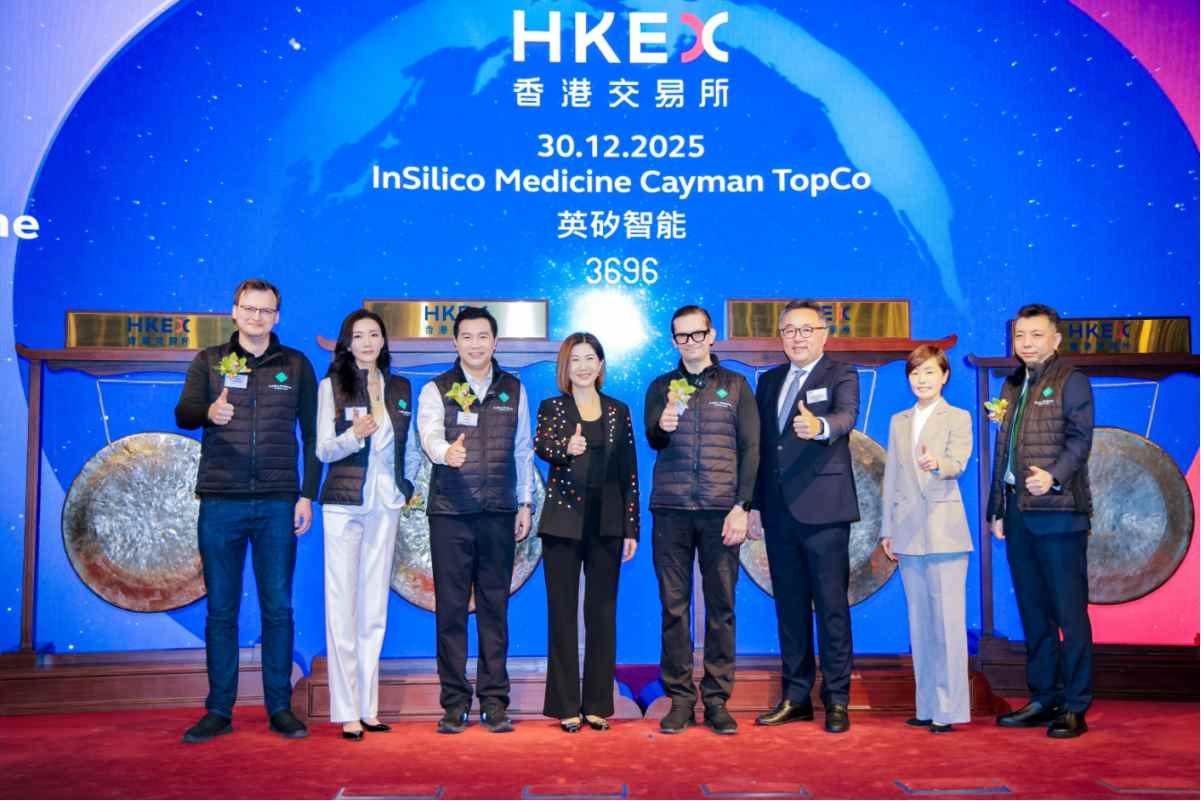
近年来,人工智能(AI)正以惊人的速度从"技术突破"走向"全要素赋能"。尤其在AI制药领域,受益于AI算法和计算能力的深度赋能,生物医药研究达到了前 所未有的速度和精度,由此进入一个高效、个性化和革命性新时代。国际知名咨询公司麦肯锡在此前报告中预测,AI赋能每年有望为制药和医疗行业带来 600-1100亿美元的经济价值。 作为一家拥有独家AI技术平台,还能实现创新药研发及多领域深度赋能的独角兽企业,英矽智能(03696)如今登陆港股,为港股投资者在稀缺的AI赋能投资 赛道带来了一个重磅可选项。 12月30日,英矽智能正式在香港联交所主板挂牌交易。 在全球AI制药赛道更看重平台验证与商业化落地的下半场,作为全球少数实现AI药物发现和开发全流程覆盖的企业之一,英矽智能此次港股IPO能同时得到 豪华基石背书和市场投资者追捧,足以说明当下港股市场已在这家公司上达成了"价值共识"。 相较于随IPO进程逐渐对公司加深价投理解的众多散户投资者,更早之前就站队英矽智能的一众顶级资本,显然更深谙公司的长期价值。 此次IPO发行过程中,英矽智能集聚了包括全球制药巨头礼来公司、互联网龙头企业腾讯、新加坡主权基金淡马锡,以及施罗德、 ...
卡位港股AI技术赋能稀缺赛道,英矽智能(03696)背靠顶级投资阵容长期配置价值可期
智通财经网· 2025-12-30 02:12
智通财经APP了解到,英矽智能此次港股IPO备受市场关注。一方面,公司预计募资最高约22.77亿港元,由此成为2025年港市规模最大的生物科技IPO;另一 方面,在此次英矽智能IPO发行过程中,不仅得到了摩根士丹利、中金公司和广发证券的联合保荐,更吸引了包括全球制药巨头礼来、科技巨头腾讯以及橡 树资本、施罗德、淡马锡、瑞银资产等多达15家顶级投资机构的青睐,基石阵容可谓强大。 值得一提的是,按照现行港股通"冲通规则",英矽智能134.06亿港元的发行市值已高于目前入通门槛,只要在调整考察期结束前2个交易日稳定公司市值与 流动性,公司便有望在明年3月的新一期港股通调整中顺利入通。 近年来,人工智能(AI)正以惊人的速度从"技术突破"走向"全要素赋能"。尤其在AI制药领域,受益于AI算法和计算能力的深度赋能,生物医药研究达到了前 所未有的速度和精度,由此进入一个高效、个性化和革命性新时代。国际知名咨询公司麦肯锡在此前报告中预测,AI赋能每年有望为制药和医疗行业带来 600-1100亿美元的经济价值。 作为一家拥有独家AI技术平台,还能实现创新药研发及多领域深度赋能的独角兽企业,英矽智能(03696)如今登陆港股, ...
人工智能专家凌海滨全职加入西湖大学,创立智能计算与应用实验室
生物世界· 2025-12-30 00:18
Core Viewpoint - Westlake University has announced the full-time appointment of Haibin Ling, an Empire Innovation Professor from Stony Brook University, to lead the establishment of the Intelligent Computing and Applications Laboratory, focusing on artificial intelligence and interdisciplinary research [2]. Group 1: Appointment and Research Focus - Haibin Ling will serve as a chair professor at Westlake University, leading research in areas such as computer vision, multimodal AI, augmented reality, AI for Science, and quantum information [2]. - The newly established laboratory aims to advance research and applications in artificial intelligence [2]. Group 2: Academic Background and Career - Haibin Ling, born in 1974 in Anshun, Guizhou, holds a Bachelor's and Master's degree from Peking University and a Ph.D. from the University of Maryland [4][5]. - His career includes positions at Microsoft Research Asia, UCLA, Siemens Research, and Temple University, before joining Stony Brook University in 2019 [5]. - Ling's research has significantly impacted the field of computer vision, particularly in dynamic object tracking, which is crucial for various applications including security monitoring and medical imaging [5]. Group 3: Achievements and Contributions - Ling has received multiple awards, including the ACM UIST Best Student Paper Award (2003), the NSF CAREER Award (2014), and the IEEE VR Best Journal Paper Award (2021) [6]. - He has served on editorial boards for several prestigious journals and has been involved in leading roles at top AI conferences [6].
两位90后,又融8亿
创业家· 2025-12-29 10:57
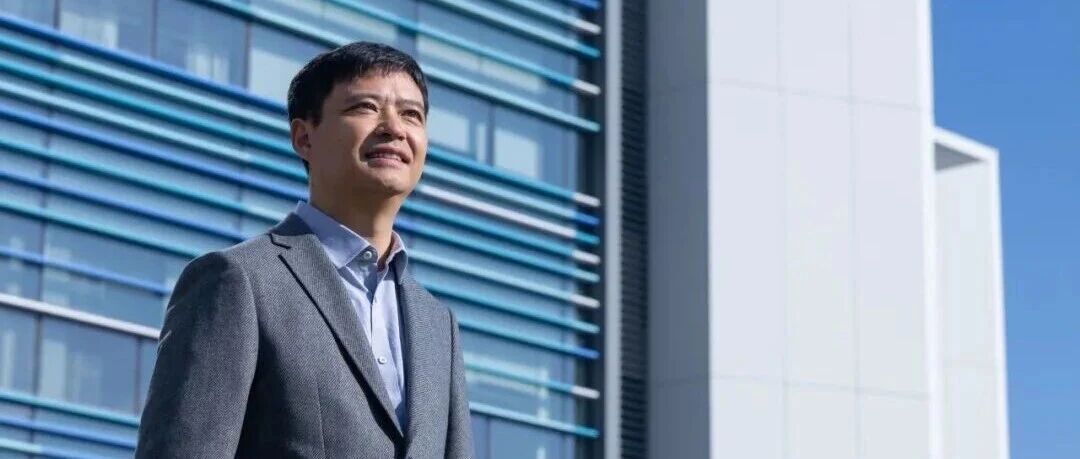
Core Viewpoint - DeepMind Technology, a global AI for Science infrastructure company, has completed a C-round financing exceeding 800 million RMB, officially entering the unicorn club with total financing reaching several billion RMB [5][6]. Group 1: Company Overview - Founded in 2018 by two Peking University alumni, Zhang Linfeng and Sun Weijie, DeepMind Technology focuses on AI applications in scientific research, particularly in solving complex problems in fields like pharmaceuticals and materials science [6][11]. - The company has developed a series of intelligent scientific tools and platforms, including the Science Navigator and SciMaster, which have significantly improved research efficiency [12][13]. Group 2: Financing Journey - Initially, the company faced challenges in securing funding, with their first investment of 12 million RMB coming from a government project rather than venture capital [15][16]. - After winning the Gordon Bell Award in 2020, the company gained recognition and successfully completed multiple financing rounds, including a significant A-round led by Hillhouse Capital [16][18]. - In 2023, the company attracted investments from various capital sources, including state-owned funds, leading to a substantial increase in valuation [16][19]. Group 3: Industry Context - AI for Science has emerged as a key focus area within the AI sector, with significant investments flowing into companies in this space globally [18][19]. - The unique positioning of DeepMind Technology lies in its comprehensive platform approach, which integrates various AI tools and services for scientific research [19][20]. - Experts believe that AI for Science represents a critical opportunity for technological innovation in China, with the potential to reshape the future of scientific research and industrial development [20][21].