
技术创新

Search documents
新疆上市公司协会组织“走进上海”活动,共绘高质量发展蓝图
Quan Jing Wang· 2025-11-11 10:36
Core Insights - The event organized by the Xinjiang Listed Companies Association aimed to enhance the vision of local companies and promote high-quality regional economic development through a three-day learning exchange in Shanghai [1][2] Group 1: Event Overview - The event took place from November 5 to 7, involving over 40 representatives from 27 listed companies and related institutions in Xinjiang [1] - The main theme was "Benchmarking Advanced Practices and Empowering Enhancement," focusing on policy interpretation, capital practices, and company visits [1] Group 2: Training and Workshops - On the first day, representatives received specialized training on capital market regulatory policies at the Shanghai Stock Exchange, covering compliance requirements in information disclosure, corporate governance, and capital operations [1] - The training included case studies to deepen understanding of standardized operations and risk prevention [1] - A session on capital operations featured analysis of merger and acquisition trends and innovative models by Shenwan Hongyuan Securities, emphasizing value management for high-quality corporate development [1] Group 3: Corporate Governance and ESG - The integration of party building and corporate governance was a significant topic, with Kaiying Network sharing its experience in using party building to foster team consensus and drive business innovation [2] - The company also highlighted its achievements in ESG construction and social responsibility [2] Group 4: Company Visits and Knowledge Exchange - Representatives visited benchmark companies in Shanghai, such as Aiwei Electronics, Ruizhi Medicine, and Bolai Technology, to exchange insights on technological innovation, corporate governance, and sustainable development [2] - The visit included discussions with Tianshan Co., a Xinjiang-listed company in Shanghai, focusing on green transformation and compliance management in the building materials industry [2] Group 5: Future Initiatives - The "Walk into Shanghai" event effectively broadened the development perspectives of Xinjiang listed companies and enhanced their ability to utilize capital market tools for industrial upgrading [2] - The Xinjiang Listed Companies Association plans to continue building high-quality exchange platforms to promote cross-regional cooperation and inject sustained momentum into the high-quality development of Xinjiang's capital market and real economy [2]
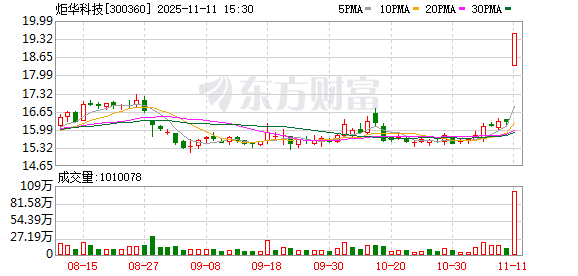
炬华科技:公司将继续聚焦主业,坚持技术创新
Zheng Quan Ri Bao· 2025-11-11 10:10
Group 1 - The company will continue to focus on its core business and emphasize technological innovation [2] - The company aims to enhance management efficiency and achieve high-quality development through deepening its industry engagement [2]


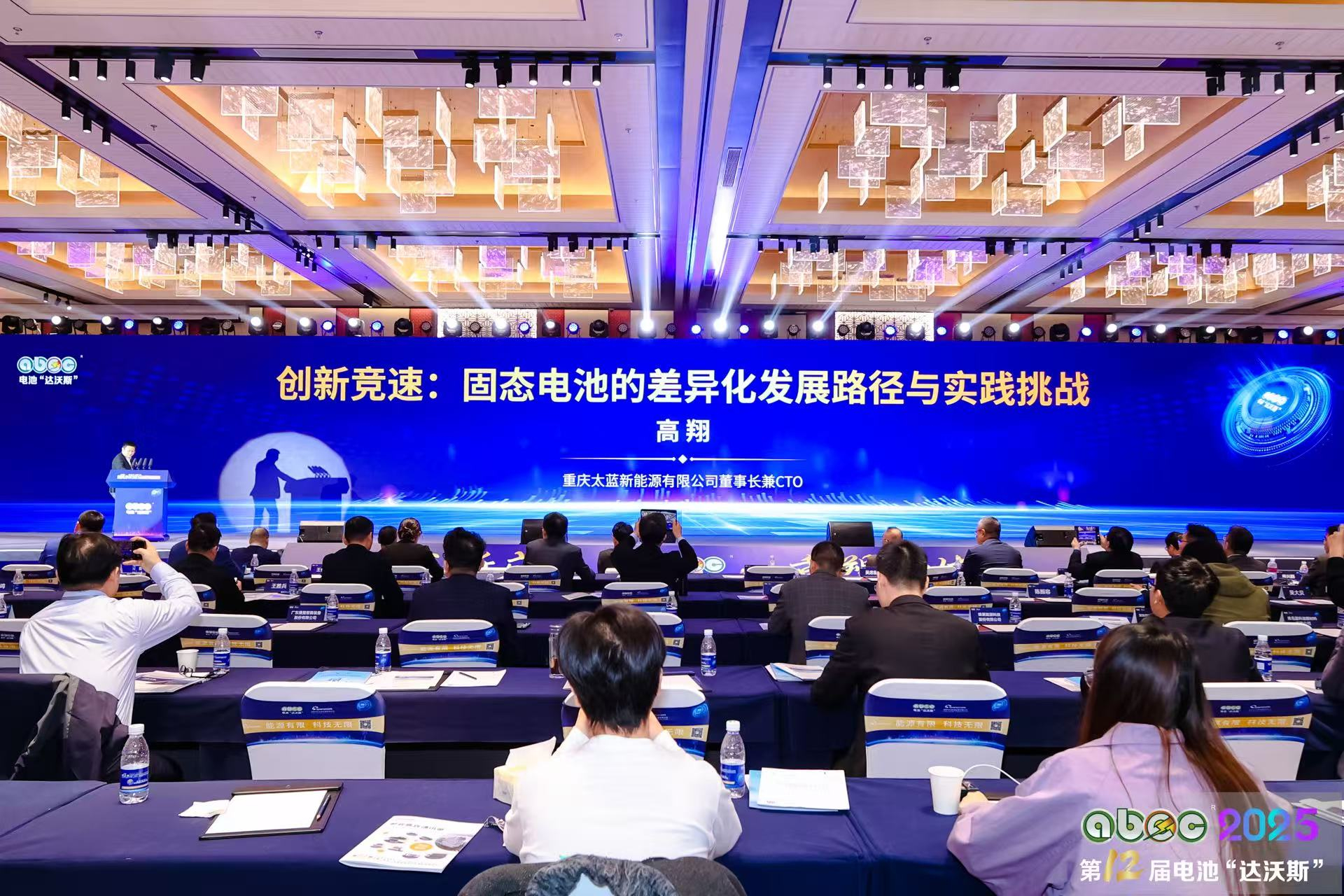
“十五五”启幕在即,固态电池逐步突破产业化难点
Guo Ji Jin Rong Bao· 2025-11-11 06:04
Core Insights - The 12th China (Suzhou) Battery New Energy Industry International Summit Forum (ABEC) focuses on technological innovation and ecological restructuring in the battery new energy industry, highlighting the rapid development of next-generation battery technologies such as sodium batteries and solid-state batteries [1][3] Industry Trends - The forum emphasizes that sodium batteries have achieved batch applications, while semi-solid batteries are gradually moving towards mass production and commercialization. Solid-state batteries are entering a critical development phase, indicating a clear progression in battery technology [3] - The solid-state battery market is projected to exceed 156 GWh by 2030, driven by its potential applications in emerging fields like low-altitude economy and robotics [11] Challenges and Opportunities - The battery industry is currently undergoing a deep adjustment period, facing challenges such as price wars, international trade barriers, and raw material price volatility. The industry must navigate these uncertainties while focusing on technological breakthroughs and strategic positioning [5][6] - Key challenges for solid-state batteries include quality, cost, and delivery, with various technical routes facing production difficulties. The industry is exploring solutions to overcome these challenges [8] Technological Innovations - Sodium-ion batteries are highlighted for their resource abundance, cost advantages, and safety features compared to traditional lithium-ion and lead-acid batteries. The sodium's crustal abundance is significantly higher than lithium, and sodium-ion batteries can reduce raw material costs by approximately 50% [13] - Solid-state batteries are seen as a transformative technology in the lithium battery industry, offering high energy density, improved safety, and cost optimization. However, their development requires systemic innovation across materials science, electrochemistry, and interface engineering [12][13]
新股前瞻 | 光伏银粉“头牌”的盈利之惑,建邦高科港股IPO能否摆脱低毛利困局?
智通财经网· 2025-11-11 01:49
Core Viewpoint - The photovoltaic industry is experiencing strong growth, attracting significant capital, while Jianbang High-Tech, a leading Chinese silver powder manufacturer, is seeking to go public in Hong Kong despite facing challenges in profitability and market pressures [1][2]. Company Overview - Jianbang High-Tech has submitted a listing application to the Hong Kong Stock Exchange, aiming for a mainboard listing, with CITIC Securities International as the sole sponsor [1]. - The company ranks among the top three domestic manufacturers in China for photovoltaic silver powder sales revenue from 2022 to 2024, with market shares of 10.1%, 10.0%, and 9.8% respectively [1]. Financial Performance - Revenue is projected to grow from RMB 1.759 billion in 2022 to RMB 3.95 billion in 2024, while net profit is expected to increase from RMB 24.2 million to RMB 79.03 million during the same period [2]. - However, by August 31, 2025, net profit dropped to RMB 52.7 million, a year-on-year decline of 32.1%, indicating a decline in profitability despite revenue growth [2]. - The company's gross margin has remained low, fluctuating between 3.3% and 3.9%, and net profit margin between 1.4% and 2.2%, primarily due to pricing mechanisms linked to silver nitrate costs [2]. Market Challenges - The company faces significant market pressures, including a trend towards "silver reduction" and "silver-free" technologies in downstream photovoltaic cells, which could drastically reduce silver powder demand [5]. - High concentration of customers and suppliers poses risks, with the top five customers accounting for 84.4% to 95.4% of revenue, and the top five suppliers representing over 97.7% of total procurement [3]. Cash Flow and Financial Health - Jianbang High-Tech has experienced negative cash flow from operating activities, with a cumulative outflow of approximately RMB 620 million over three years, indicating insufficient cash reserves to meet operational needs [3]. - Accounts receivable surged to RMB 175 million in 2024, 2.2 times the profit for the same period, increasing credit risk exposure [3]. Industry Dynamics - The utilization rate of photovoltaic silver powder production facilities in China is approximately 31.7%, with Jianbang High-Tech's utilization rates at 36.7% and 43.4% for 2023 and 2024, respectively, indicating underutilization [4]. - The industry is facing overcapacity, leading to increased competition and price reductions, further compressing profit margins [5]. Strategic Initiatives - The company aims to leverage its upcoming IPO to diversify and innovate, focusing on research and development for non-photovoltaic silver powders and alternative conductive materials [6]. - Plans include establishing R&D centers in East Asia and a new production facility in the Middle East to capitalize on regional photovoltaic growth [6]. - The company must demonstrate its capability to transition from a trade-dependent model to an innovative technology platform amid significant challenges in its core business [6].
2025年中国多肽合成试剂制备方法、行业产业链全景、细分市场及未来发展趋势研判:下游多肽药物需求爆发,驱动合成试剂市场扩容与升级[图]
Chan Ye Xin Xi Wang· 2025-11-11 00:56
Core Insights - The peptide synthesis reagent industry is experiencing rapid growth driven by the expanding global peptide drug market, which is projected to reach $110.7 billion in 2024 and $121.7 billion in 2025, with the U.S. holding a dominant share and China showing significant potential [1][6][8] - China's peptide drug market is expected to grow from approximately 55.44 billion yuan in 2024 to 61.2 billion yuan in 2025, providing a solid demand foundation for upstream reagent industries [1][8] - The Chinese peptide synthesis reagent market is projected to grow from about 2.44 billion yuan in 2024 to 2.68 billion yuan in 2025, with strong growth in the ion-type condensation reagent segment [1][9] Industry Overview - Peptide synthesis reagents are specialized chemical agents that facilitate the formation of peptide bonds between amino acids, protect active groups, and suppress side reactions, making them essential in peptide drug development and biomedical research [2][3] - The industry is transitioning from traditional fermentation and extraction methods to chemical synthesis and gene recombination methods, which now dominate the market [5][6] Market Dynamics - The global peptide drug market is expanding due to advancements in synthesis and modification technologies, with a notable increase in demand for innovative therapies targeting chronic diseases [6][8] - In China, the rapid development of the peptide drug market is supported by policy initiatives, clinical demand, and technological advancements, with a projected market size of approximately 554.4 billion yuan in 2024 [8][9] Competitive Landscape - The Chinese peptide synthesis reagent industry features a fragmented competitive landscape with a mix of specialized and comprehensive companies, where most focus on specific types of reagents [10][11] - Leading companies like Haofan Bio are establishing a strong position by offering a full range of peptide synthesis reagents, while other firms focus on niche markets [11][12] Development Trends - The industry is moving towards technological innovation, with a focus on green and efficient synthesis methods, and a shift from single-function to multifunctional reagents [12][13] - Domestic companies are increasingly penetrating high-end markets, breaking the monopoly of international brands in high-purity and low racemization reagents [13][14] - The competitive landscape is evolving from fragmented product competition to an ecosystem of collaborative competition, with leading firms building comprehensive product matrices and enhancing vertical integration [14]

平高电气年内中标国网项目75.92亿 近六年研发费23.9亿筑牢技术根基
Chang Jiang Shang Bao· 2025-11-10 23:48
Core Insights - Pinggao Electric has secured a significant contract with State Grid Corporation, with a total bid amount of approximately 858 million yuan, representing 6.92% of the company's projected revenue for 2024 [1][2][3] Group 1: Contract Wins - The recent contract marks the sixth successful bid by Pinggao Electric for State Grid projects in 2025, with cumulative bid amounts reaching 7.592 billion yuan since the beginning of the year [3] - The latest bid is part of the fifth centralized procurement for substation equipment by State Grid, which includes both bidding and single-source procurement [2] Group 2: Financial Performance - For the first three quarters of 2025, Pinggao Electric reported revenues of 8.436 billion yuan, a year-on-year increase of 6.98%, and a net profit attributable to shareholders of 982 million yuan, up 14.6% year-on-year [4] - The company has demonstrated consistent revenue growth over the past three years, with revenues of 9.274 billion yuan, 11.077 billion yuan, and 12.402 billion yuan for 2022, 2023, and 2024 respectively, reflecting year-on-year growth rates of 0.01%, 19.44%, and 11.96% [4] Group 3: R&D Investment - To enhance its core competitiveness, Pinggao Electric has increased its investment in "bottleneck" technology, with total R&D expenses reaching 2.34 billion yuan, 3.10 billion yuan, 3.96 billion yuan, 5.24 billion yuan, 5.50 billion yuan, and 3.76 billion yuan from 2020 to the first three quarters of 2025, totaling 2.39 billion yuan over six years [5] - The company aims to strengthen its technological support for the construction of new power systems through continuous innovation [5]

图解| 2025互联网企业家论坛掠影:聚焦技术变革,解码产业转型
Zhong Guo Jing Ji Wang· 2025-11-10 10:47
中国在立法方面开展了卓有成效的实践探 索,如制定个人信息保护法、网络安全法 等。不妨在此基础上,在更广泛范围内探索 构建人工智能相关法律法规,实现技术创新 和社会秩序稳定的平衡。 京东集团战略执行委员会委员 在不起眼的地方做颠覆性创新。创新不是盲目 追风口,而是用自身核心能力解决行业长期存 在的成本和体验痛点。创新不是独享技术红 世界互联网大会 利,而是让中小企业以低成本用上世界级的供 World Internet 应链技术。 Conference 山 - 自联网大会 World Internet 2025互联网企业家论坛掠 从创新到落地,从挑战到突破 互联网大佬AI时代的思想交锋 C, Horid Internal 互联网企业家论坛 郭凯天 腾讯集团高级副总裁 在新一轮科技周期中,民营企业的时 代使命,就是做好价值创造者和社会 助力者,用实实在在的技术和产品, 回应时代命题。 世界互联网大会 World Internet Conference 蛋 哔哩哔哩董事长兼首席执行官 在视频日益成为主流传播渠道的今天,如何生 产优质内容是我们一直思考的问题。其中最关 键的因素是创作者。平台要大力扶持创作者, 把好内容 ...

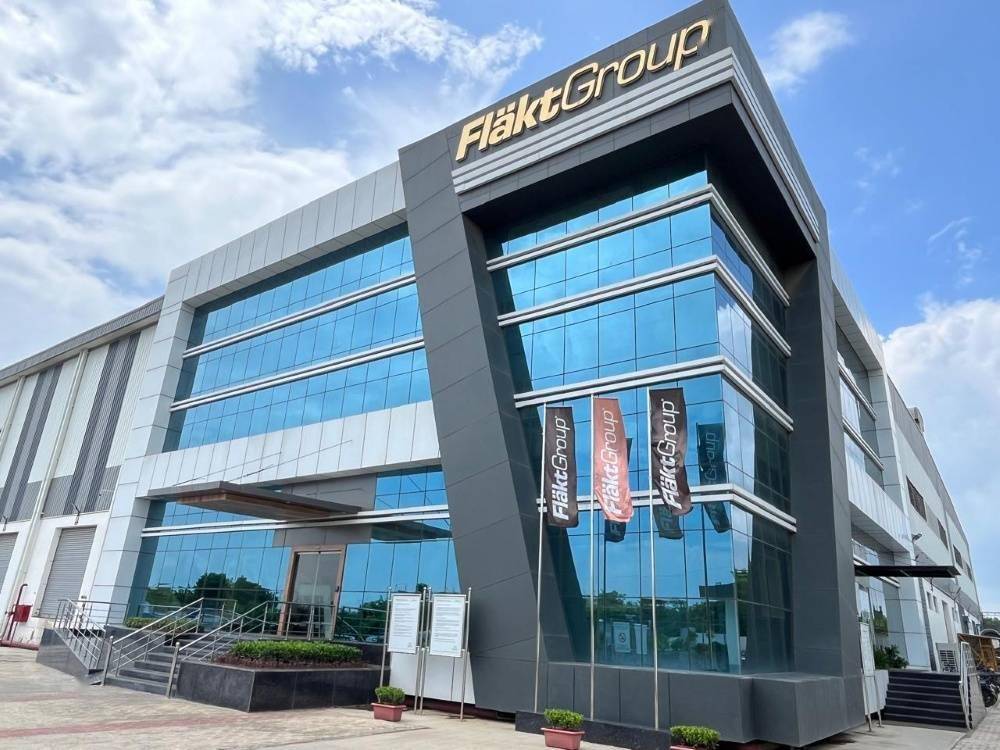
三星电子完成对欧洲最大暖通空调 (HVAC) 企业 FläktGroup 收购
Sou Hu Cai Jing· 2025-11-10 09:33
FläktGroup 首席执行官 Trevor Young 表示: 加入三星将加速 FläktGroup 的全球市场扩张,并推动技术创新。我们两家公司之间的协同效应将成为开发面向未来的暖通空调解 决方案的一个重要转折点。 IT之家 11 月 10 日消息,三星电子韩国当地时间本月 6 日宣布,已完成对欧洲最大 HVAC(采暖、通风、空调)企业 FläktGroup 的收购。这笔 交易今年 5 月宣布时的价值为 15 亿欧元(IT之家注:现汇率约合 123.44 亿元人民币)。 收购完成后,FläktGroup 将作为三星的一家独立子公司运营,名称、现有管理团队、员工和设施均将得到保留。 通过此次收购,三星电子将战略性培育 HVAC 业务,使其成为 DX 事业部的新增长引擎。公司计划持续投资商用 HVAC 解决方案,并拓展至 AI 数据中心等高增长领域。 ...
祥和实业(603500.SH):控股子公司获得发明专利
Ge Long Hui A P P· 2025-11-10 07:58
Core Viewpoint - The company has received a patent for an invention related to railway track inspection technology, which enhances its core technological capabilities and intellectual property protection [1] Group 1 - The company announced the receipt of a patent certificate from the National Intellectual Property Administration of the People's Republic of China for a method and device for detecting track surface flaking on switch rail components [1] - The patent number is ZL 2023 1 0570814.8, indicating the formal recognition of the company's innovation in this area [1] - This patent is seen as an important extension of the company's core technology, providing strong technical support for its comprehensive railway track inspection products [1] Group 2 - While the patent acquisition is significant, it is noted that it will not have a major impact on the company's recent operations [1] - The development of this patent is expected to enhance the company's intellectual property protection system and leverage its proprietary technology advantages [1] - The focus on technology innovation through this patent is aimed at improving the company's core competitiveness in the industry [1]

从121.9到126:上海重点产业国际竞争力指数六年间持续提升
Xin Hua Cai Jing· 2025-11-10 07:29
Core Insights - The "2024-2025 Shanghai Key Industries International Competitiveness Index Report" indicates that Shanghai's key industries competitiveness index increased from 121.9 in 2019 to 126 in 2024, reflecting a cumulative growth of 4.1 over six years, transitioning from "speed chasing" to "quality leading" in strategy [1][2]. Industry Analysis - The report highlights that in 2024, industries such as new energy vehicles, biomedicine, integrated circuits, and shipbuilding and marine engineering are the primary contributors to the competitiveness index, forming the "first tier" of Shanghai's key industries [2]. - Advanced materials, artificial intelligence, and civil aviation are identified as "frontier fields" in a critical phase of technological accumulation and market expansion, expected to become new growth points for Shanghai's industrial competitiveness [2]. - Traditional industries like petrochemicals and steel are undergoing transformation and upgrading, with a reduction in output value but still maintaining large scale, potentially reshaping competitive advantages through integration with emerging industries [2]. Sector-Specific Insights - The competitiveness of the new energy vehicle industry reflects Shanghai's early advantages in green and low-carbon transformation, with recommendations to deepen smart factory construction and supply chain collaboration to enhance industrial efficiency [2]. - The integrated circuit sector has seen the largest competitiveness increase in both international and domestic markets, attributed to its comprehensive industry chain layout and large-scale production of high-end equipment, with a call for continued investment in cutting-edge fields to overcome key technological bottlenecks [2][3]. Strategic Recommendations - The report suggests that global industrial competition has shifted from relying on scale, cost, and single-point technological advantages to focusing on rule systems, technological innovation, green compliance, digital operations, and regional collaboration [3]. - It emphasizes the need for Shanghai's industrial policies to transition from "factor aggregation" to "system capability," forming a systemic competitiveness structure centered on technology, institutions, and ecology [3].