双碳战略

Search documents
钛石膏“上路”,齐临高速变废为宝筑新途
Qi Lu Wan Bao· 2025-09-24 23:41
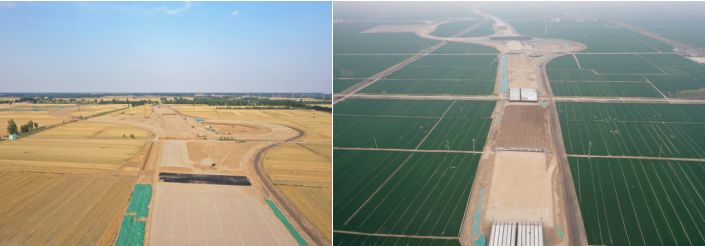
Core Viewpoint - The construction of the Qilin Expressway demonstrates a commitment to the national "dual carbon" strategy and the concept of "green mountains and clear waters are as valuable as mountains of gold and silver" by utilizing modified titanium gypsum waste as a roadbed material, thus promoting sustainable development and resource recycling [1][2]. Group 1: Project Overview - The Qilin Expressway, approximately 57.1 kilometers long, connects key towns in western Shandong and serves as an important transportation link between the western Shandong region and the provincial capital economic circle [1]. - The project addresses the challenges of material shortages for roadbed filling and the disposal of industrial solid waste by converting accumulated titanium gypsum waste from local titanium dioxide production into qualified roadbed filling material [1][2]. Group 2: Environmental Impact - Traditional roadbed construction methods require extensive extraction of natural soil and stone materials, which can lead to ecological damage and increased carbon emissions due to long-distance transportation [2]. - The project utilizes a mature and reliable technology for using titanium gypsum waste, which has been validated in multiple scenarios within the province, offering a cost-effective alternative to traditional filling materials [2]. Group 3: Technical Innovations - To ensure the safety and stability of the roadbed using industrial waste, a dedicated team developed a specialized curing agent and established standardized mixing processes, overcoming previous limitations of titanium gypsum [5]. - The modified titanium gypsum mixture exhibits superior performance in load-bearing capacity, water stability, and resistance to shrinkage and cracking compared to traditional materials, fully complying with high-grade highway design standards [5]. Group 4: Replicable Solutions - The Qilin Expressway project exemplifies a shift from traditional resource extraction to waste recycling, promoting a green ecological concept in highway construction [6]. - Each kilometer of the titanium gypsum roadbed reflects the spirit of "resource recycling," providing a replicable and scalable technical model for similar projects across the country [6][8].

新刊速读 | 可持续发展挂钩债券“五维协同”驱动低碳转型
Xin Hua Cai Jing· 2025-09-24 20:15
Core Viewpoint - The article discusses the role of Sustainable Linked Bonds (SLB) in promoting the transformation of high-carbon enterprises in China, emphasizing that the true value of SLBs lies in their ability to enforce substantial transformation commitments through institutional design rather than merely expanding financing scale [1][6]. Group 1: Institutional Logic of Core Elements - The effectiveness of SLBs depends on the institutional design of five core elements: Key Performance Indicators (KPI), Sustainability Performance Targets (SPT), bond characteristics, information disclosure and reporting, and third-party verification [2]. - These elements are interrelated; for instance, if KPIs lack direct correlation with carbon reduction, subsequent target setting and constraints will lose focus [2]. Group 2: International Practices as Reference - International markets provide valuable insights for the evolution of SLBs, with examples such as Enel's phased design and Schneider Electric's inclusion of social issues in performance assessments [3]. - Compared to international practices, China's SLB design remains relatively simplistic, particularly in terms of constraint clauses and target aggressiveness, indicating a need for market-oriented incentives and international benchmarking [3]. Group 3: Progress and Issues in China's Market - China's SLB market has developed a diverse indicator system covering various areas, and most enterprises provide historical performance data for comparability [4]. - However, issues persist, such as KPIs not being closely linked to carbon emission targets and the need for enhanced flexibility and constraint in bond characteristics [4]. Group 4: Case Analysis and Common Issues - The "22 Tianan Coal Industry MTN002 (Sustainable Linked)" bond serves as a case study, showing reasonable KPI and SPT settings, but with room for improvement in direct correlation with carbon emission indicators [5]. - This case illustrates that while SLBs can incentivize enterprises to fulfill transformation commitments, there are still areas for enhancement in terms of penalty clauses and overall effectiveness [5]. Group 5: Optimization Paths and Policy Implications - The article proposes four optimization strategies to address the "five-dimensional mismatch": establishing unified performance target standards, introducing phased goals and dynamic adjustment mechanisms, enhancing mandatory information disclosure, and promoting the marketization of third-party verification [7]. - By addressing these shortcomings, SLBs can evolve from mere financing innovations to key institutional tools for driving low-carbon transformation and implementing the "dual carbon" strategy [7].
能链智电:聚焦碳普惠|2025华夏ESG实践环境友好案例
Hua Xia Shi Bao· 2025-09-24 09:36
Company Overview - Zhejiang Anji Zhidian Holdings Co., Ltd. (NASDAQ: NAAS), known as Nengchain Zhidian, is a leading provider of new energy asset operation solutions based in Anji, Zhejiang, which is the birthplace of the "Green Mountains and Clear Water are Invaluable Assets" philosophy [2] - The company utilizes self-developed AI algorithms to analyze charging demand and station resource allocation, achieving precise and intelligent matching of charging supply and demand [2] - Nengchain Zhidian aims to provide a one-stop service for electric vehicle owners, enhancing the charging experience while offering operational optimization solutions for charging stations and operators to improve efficiency and profitability [2] Vision and ESG Commitment - The company's vision is to "enable everyone to use green energy," focusing on enhancing the stability and efficiency of the global transportation energy network [2] - Nengchain Zhidian actively practices ESG principles, contributing to the national "dual carbon" goals while continuously releasing social value, with a target of achieving a carbon reduction of 3.22 million tons from electric vehicle charging by 2024 [2] Carbon Account Initiative - In 2022, Nengchain Zhidian launched a carbon account feature for electric vehicle owners, surpassing 1 million users by December 2024 [3] - This carbon account mechanism aims to systematically address structural contradictions in climate change governance by creating a closed-loop system that quantifies behavior, transforms value, circulates in the market, and feeds back into revenue [3] - According to the company's methodology, charging an electric vehicle can effectively reduce carbon emissions by 0.5 kg to 0.8 kg per kilowatt-hour, with carbon credits generated at a 1:1 ratio for users [3] Collaboration with Local Governments - Nengchain Zhidian has integrated with multiple carbon benefit service platforms led by local governments, expanding the coverage of new energy charging services and engaging the public in carbon reduction activities [4] - In December 2024, the company completed the first carbon benefit emission reduction issuance in the domestic electric vehicle charging service industry in Wuhan, with a total of 1,962 tons of carbon reduction certified [4] - This certification marks a significant step in the trading and monetization of carbon reduction from electric vehicle charging, showcasing a replicable model for green low-carbon transformation in the transportation energy sector [4]


山西临汾供电公司:获山西省首家电力设施拆解资质 走出退役电力设备绿色循环利用新路径
Zhong Guo Neng Yuan Wang· 2025-09-24 09:27
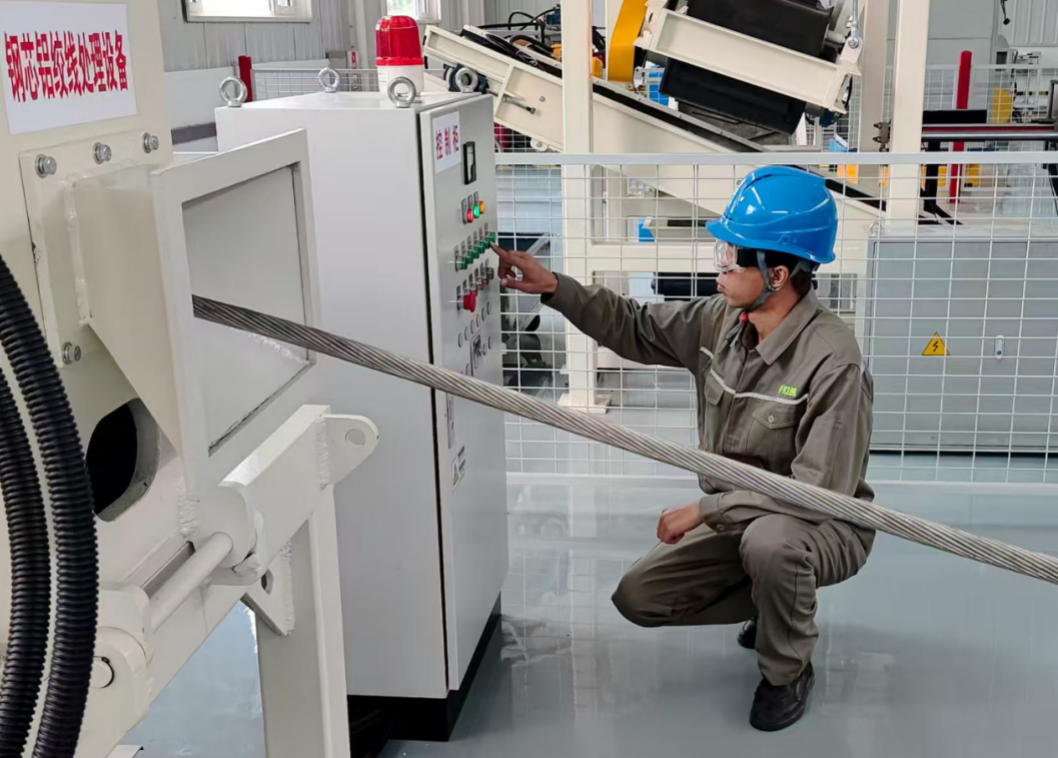
9月22日,在临汾供电公司新建成的再生资源绿色循环中心,一批废旧开关柜、电缆线正经由专业设备实现精细化拆解和分类。全 副武装的操作人员熟练操作拆解平台和剥线机,将铜、铝等有价值材料高效分离、回收利用。这里没有轰鸣的噪音和飞扬的粉尘,取 而代之的是安静、清洁、规范的作业场景——这座全省首个由供电企业自主运营的拆解中心,正以实际行动将"退役设备"转化为"绿色 资源",走出了一条电网循环经济发展的新路径。 4月10日,山西临汾供电公司正式获得电力设施拆解作业资质,成为山西省内首家具备该资质的市级供电企业。标志着临汾公司在 退役电力设备绿色循环利用方面实现重要突破,也为全省电力行业探索资源集约化、低碳化发展路径树立了新标杆。 随着电网升级改造进程加快,大量电力设备陆续退役,如何实现环保、高效、资源化处置,成为该公司面临的一项重要课题。以 往简单破碎、填埋或粗放式回收的方式,不仅存在环境污染隐患,也造成资源严重浪费。临汾公司积极响应国家"双碳"战略,率先布 局退役设备绿色拆解领域,成功打通资质、设备、人才、运营全链条,实现退役电网资产从"退役"到"再生"的闭环管理。 "资质的取得,意味着我们有了对退役电网资产进行专业化 ...
中国工程机械市场向“高智绿”发展
Zhong Guo Xin Wen Wang· 2025-09-24 06:32
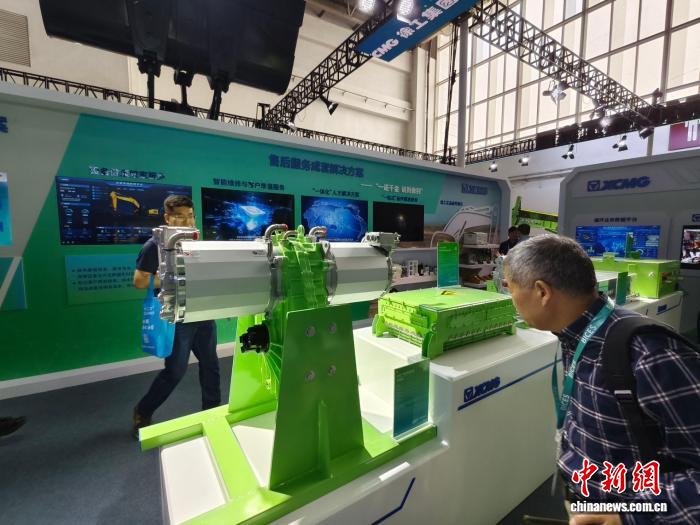
中新网北京9月24日电 (记者 胡默达)第十七届中国(北京)国际工程机械、建材机械及矿山机械展览会 (BICES2025)23日在中国国际展览中心顺义馆启幕,一众高端化、智慧化、绿色化新产品及配套服务亮 相,展示出中国工程机械市场向高、向智、向绿发展的趋势。 第十七届中国(北京)国际工程机械、建材机械及矿山机械展览会(BICES2025)23日启幕。图为民众在徐 工集团展台内参观动力、电控等核心配套件。 中新社记者 胡默达 摄 "今年是卡特彼勒进入中国50周年。50年来,中国始终是卡特彼勒全球市场的最重要组成部分之一。未 来,我们将继续深耕中国市场。"卡特彼勒公司全球高级副总裁杨程建说,面对新需求,该企业根据中 国客户的反馈,新设计推出Cat3101百吨级超大型液压挖掘机,在节约能耗的同时,专为大方量煤矿工 程制造,海拔高度4500米时依然能保持满功率输出作业。 国内参展商方面,三一集团展出SW956E系列无人智能驾驶与远程遥控产品,徐工集团推出全系列新能 源主机产品。两家国内头部企业均着眼于构建覆盖全产业链条的完整技术生态,为多场景作业提供一站 式解决方案。三一集团大客户经理刘亚飞说,以人工智能为引领的数字 ...
国家能源局局长王宏志:新能源平均度电成本低于煤电三成,新型储能等多元技术快速发展
中关村储能产业技术联盟· 2025-09-24 05:59
Core Viewpoint - The article emphasizes the significant progress and transformation in China's renewable energy sector, highlighting the need for high-quality development to address energy security and environmental challenges [4][5][8]. Investment and Economic Impact - In 2024, the investment in key renewable energy projects is expected to reach approximately 1.2 trillion yuan, accounting for over 50% of the investment in key electricity projects and more than 2% of national fixed asset investment [7]. - Renewable energy generation and equipment manufacturing contribute over 20% to fixed asset investment in certain resource-rich provinces [7]. Cost Reduction and Competitiveness - Since the 18th National Congress, the cost of onshore wind power has decreased by over 60%, and solar power costs have dropped by 80%, making renewable energy 30% cheaper than coal power [6][8]. - The average cost of renewable energy per kilowatt-hour is now lower than that of coal power, particularly during peak electricity usage times [6]. Technological Advancements - The development of new technologies such as multi-energy integration, including green hydrogen production and energy storage solutions, is accelerating [11][12]. - Innovations in energy storage and smart grid technologies are enhancing the efficiency and reliability of renewable energy systems [7][11]. Market Dynamics and Policy Framework - The article discusses the transition from resource-driven to market-driven renewable energy development, emphasizing the importance of market participation and pricing mechanisms [12][13]. - The establishment of a unified national electricity market is facilitating the integration of renewable energy into the grid [12]. Future Directions and Strategic Goals - The focus for the 14th Five-Year Plan is on achieving carbon peak targets, with a strong emphasis on expanding renewable energy supply and enhancing its role in the energy mix [15][16]. - The article outlines the need for integrated development strategies that combine renewable energy with other energy sources to optimize resource utilization and enhance energy security [16][17].
齐鲁银行:以金融创新为笔,绘就齐鲁绿色转型新图景
Qi Lu Wan Bao· 2025-09-24 02:16
Core Insights - Shandong is promoting a green transformation with a focus on high-quality development, supported by green finance as a key driver [1][8] - By the end of 2024, the province's green loan balance is expected to reach 2.2 trillion yuan, with a year-on-year growth rate exceeding 30% [1][9] Green Financial Services - Qilu Bank is actively breaking down barriers between traditional finance and green industries by offering tailored financial services to meet diverse needs [2][3] - The bank has introduced innovative products like "Carbon-linked Loans" that provide favorable terms based on a company's carbon performance, exemplified by a 10 million yuan loan to Qingguo Food Co. [2][5] - The bank's green financial services extend to personal consumption, including green mortgages and financing for electric vehicles [3][4] Local Innovation in Green Finance - Qilu Bank has developed localized financial products to address the unique challenges of Shandong's traditional manufacturing sector, such as the "Sustainable Development-linked Loans" [5][6] - These loans tie interest rates to sustainability performance metrics, incentivizing companies to reduce emissions and improve resource efficiency [7][8] Building a Green Financial Ecosystem - Qilu Bank is committed to establishing a comprehensive green financial ecosystem, integrating strategic planning, organizational structure, and risk management [8][9] - The bank has set clear targets for green loan growth and has implemented an ESG risk rating system to evaluate environmental and social responsibilities during the loan approval process [8][9] Performance and Recognition - As of mid-2025, Qilu Bank's green loan balance exceeded 43.6 billion yuan, with a growth rate surpassing 30% [9] - The bank has received multiple accolades for its green finance initiatives, including recognition as a top green financial institution in Shandong [9]

研判2025!中国汇流带焊接机行业产业链、市场规模及重点企业分析:能源转型驱动光伏产业爆发,行业市场迎扩张机遇[图]
Chan Ye Xin Xi Wang· 2025-09-24 01:23
Core Viewpoint - The photovoltaic industry is experiencing explosive growth driven by the increasing global demand for renewable energy, which in turn is expanding the market for busbar welding machines in China, projected to reach 776 million yuan in 2024, a year-on-year increase of 14.79% [1][5]. Industry Overview - Busbar welding machines are efficient electronic welding devices primarily used in the production of photovoltaic panels, welding busbars onto solar cells through high-frequency current to create strong joints in a short time [2]. - The industry is categorized into fully automatic and semi-automatic busbar welding machines based on automation levels [2]. Industry Value Chain - The upstream of the busbar welding machine industry includes materials like copper and tin, as well as electronic components such as electromagnetic induction heating modules and high-precision sensors [2]. - The midstream involves the manufacturing of busbar welding machines, while the downstream applications span photovoltaic, wiring, cabling, and electronic components [2]. Market Size - The busbar welding machine market in China is projected to reach 776 million yuan in 2024, with a growth rate of 14.79% driven by the acceleration of global energy transition and the surge in photovoltaic installations [1][5]. - Technological advancements, such as AI visual correction with precision of 0.1mm and a 30% reduction in energy consumption for electromagnetic induction heating modules, support efficient production of photovoltaic components [1][5]. Key Companies' Performance - The industry shows a clear competitive landscape with high concentration, where leading companies dominate the market. For instance, Ningxia Xiaoniu Automation Equipment Co., Ltd. is a key player with a strong product lineup including busbar welding machines [6]. - Wuxi Xian Dao Intelligent Equipment Co., Ltd. reported a revenue of 6.61 billion yuan in the first half of 2025, marking a year-on-year increase of 14.92%, with a net profit of 740 million yuan, up 61.19% [8]. Industry Development Trends 1. Customization is increasingly prominent, driving technological upgrades to meet diverse market demands, such as the need for different sizes and materials of busbars [9]. 2. Environmental and energy-saving policies are pushing the industry towards green technology, with standards like a 30% reduction in energy consumption becoming common [10]. 3. The "Belt and Road" initiative is enhancing the global layout of Chinese busbar welding machine companies, with significant international market opportunities and a global market share exceeding 95% for some companies [10].


国家能源局局长王宏志署名文章!
中国能源报· 2025-09-24 00:55
Core Viewpoint - The article emphasizes the importance of developing renewable energy in China to improve energy structure, ensure energy security, and promote ecological civilization, while addressing challenges such as high demand pressure and the need for a green transition [2][3]. Group 1: Achievements and Current Status - China has built the world's largest and fastest-growing renewable energy system, with total installed capacity of wind and solar power exceeding 1.69 billion kilowatts, which is more than three times the capacity at the end of the 13th Five-Year Plan [3]. - Renewable energy has contributed to 80% of the new power installations since the beginning of the 14th Five-Year Plan, with non-fossil energy consumption increasing by approximately 1 percentage point annually [3][4]. Group 2: Economic Impact - The renewable energy sector has created significant investment and job opportunities, with an estimated investment of about 1.2 trillion yuan in key projects in 2024, accounting for over 50% of investment in the power sector [5]. - In regions with abundant resources, renewable energy generation and equipment manufacturing contribute over 20% of fixed asset investment [5]. Group 3: Technological Advancements - The cost of renewable energy has significantly decreased, with onshore wind power costs dropping by over 60% and solar power costs by 80%, making renewable energy 30% cheaper than coal power [4][5]. - New technologies and models are emerging, enhancing the efficiency and integration of renewable energy systems, such as multi-energy integration and virtual power plants [9][10]. Group 4: Future Development Strategies - The article outlines a focus on expanding renewable energy supply and enhancing its utilization, with plans for large-scale wind and solar bases and promoting non-electric uses of renewable energy [12][13]. - Emphasis is placed on market-driven approaches to transition from resource-oriented to benefit-oriented development, with over half of renewable energy pricing determined by the market [10][11]. Group 5: Policy and Collaborative Efforts - The article stresses the need for coordinated policies to support the transition to renewable energy, ensuring a balance between energy supply structure adjustments and consumption changes [13]. - International cooperation in renewable energy is highlighted as a key area for China to enhance its global leadership in addressing climate change [6].
署名文章丨国家能源局局长王宏志:以更大力度推动我国新能源高质量发展
国家能源局· 2025-09-24 00:15
Core Viewpoints - The development of renewable energy is crucial for improving energy structure, ensuring energy security, and promoting ecological civilization in China [2][3][4] - China has achieved historic accomplishments in renewable energy, becoming the largest and fastest-growing renewable energy system globally, with a complete industrial chain [3][5] - Renewable energy is a key driver for energy transition and economic development, contributing significantly to non-fossil energy consumption [3][4][5] Group 1: Achievements and Current Status - As of August this year, China's total installed capacity for wind and solar power exceeded 1.69 billion kilowatts, three times that of the end of the 13th Five-Year Plan, contributing 80% of new power installations since the beginning of the 14th Five-Year Plan [3][4] - The average cost of renewable energy has decreased significantly, with onshore wind power costs down by over 60% and solar power costs down by 80%, making renewable energy cheaper than coal power by 30% [4][5] Group 2: Future Development Strategies - The focus for the 14th Five-Year Plan is on expanding renewable energy supply and ensuring it plays a major role in achieving carbon peak goals [11][12] - Emphasis on non-electric utilization of renewable energy, such as biomass and geothermal energy, to diversify and scale up applications [12][13] - The integration of various energy sources and technologies is essential for enhancing efficiency and resource allocation in renewable energy development [8][12] Group 3: Market Dynamics and Challenges - The transition from resource-driven to benefit-driven development is necessary as the national unified electricity market progresses, with over half of renewable energy prices determined by the market [9][10] - The industry faces challenges such as price volatility and competition, necessitating a focus on cost control and operational efficiency [9][10] Group 4: Policy and Collaborative Efforts - A strong policy framework is needed to support the reliable replacement of traditional energy sources with renewable energy, ensuring a coordinated approach to energy supply and consumption [13] - Collaborative development across various sectors and technologies is vital for optimizing renewable energy utilization and enhancing overall system performance [13]