
一揽子增量政策

Search documents
当“投资于人”崛起:年度十大经济热词背后的事情
Sou Hu Cai Jing· 2025-12-30 13:46
Core Insights - The article discusses the emergence of new economic terms that reflect significant transformations in China's economy, emphasizing the importance of understanding these terms to grasp future trends and policies [1][11] Group 1: New Economic Concepts - "New Quality Productivity" has become the central focus of China's economic policy for 2025, transitioning from a theoretical concept to a practical framework implemented across various regions [2] - Industries guided by "New Quality Productivity" have seen their total factor productivity growth reach 2.3 times that of traditional sectors, becoming a key driver of economic growth quality [3] Group 2: Policy and Legislative Developments - A comprehensive set of incremental policies for 2025 aims to precisely target new growth areas such as digital economy, green economy, and silver economy, enhancing microeconomic vitality through coordinated fiscal, monetary, and industrial policies [3] - The legislative progress of the "Private Economy Promotion Law" in 2025 is expected to provide a stable legal environment for over 55 million private enterprises, enhancing market expectations and property rights protection [3] Group 3: Innovation and Technology - The theme of "Deep Exploration" in 2025 signifies a shift in China's technological innovation focus from efficiency-driven commercial model innovation to foundational scientific research and original theories [4] - Companies are increasingly investing in foundational breakthroughs in cutting-edge fields like artificial intelligence and quantum computing, moving towards practical applications in manufacturing and logistics [5] Group 4: Consumer Behavior and Market Trends - The concept of "Ticket Root Economy" has evolved to emphasize cultural experiences and emotional resonance over mere physical products, reflecting a deeper consumer philosophy [6] - "Special Forces-style tourism" has transitioned into a widespread consumption philosophy, optimizing personal resource allocation for maximum experiential value [6] Group 5: Economic Philosophy and Human Investment - The shift towards "Investing in People" represents a fundamental change in resource allocation priorities, focusing on education, health, and skill enhancement rather than traditional infrastructure projects [9] - This economic logic highlights the need to enhance human capital quality and well-being to unlock sustainable consumption potential and innovation vitality [10] Group 6: Resilience and Societal Values - The concept of "Resilience" has emerged as a key societal value, emphasizing proactive strategies to build robustness in economic systems and individual psychological resilience [10] - The interplay of these new terms illustrates a broader narrative of China's economic transformation, moving from growth speed to quality and resilience [11]


一揽子增量政策实施超一年·“数”读经济“晴雨表” 多维度透视经济向好态势更稳
Yang Shi Wang· 2025-10-26 07:19
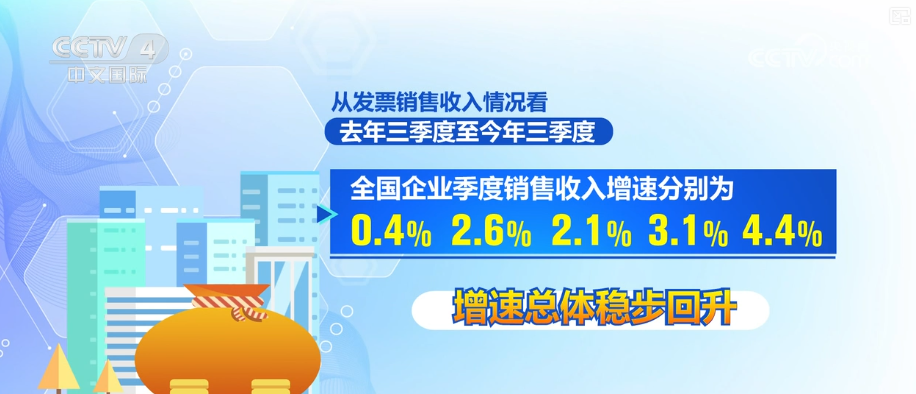
Core Insights - The implementation of a comprehensive incremental policy since September 26, 2024, has led to a steady recovery in both invoice sales and tax revenue across major industries and tax categories, indicating an overall improvement in the Chinese economy [1][21] Invoice Sales and Tax Revenue - From Q3 2024 to Q3 2025, the quarterly sales revenue growth rates for enterprises were 0.4%, 2.6%, 2.1%, 3.1%, and 4.4%, showing a steady upward trend [3] - In October 2024, tax revenue turned positive after seven months of negative growth, with a cumulative increase in tax revenue from February 2025 showing consistent positive growth for eight months [5] Capital Market Performance - The capital market has become more active, with the total market value of A-share companies surpassing 100 trillion yuan in August 2025, and the Shanghai Composite Index reaching a ten-year high in September [7] - Tax revenue from capital market services increased by 56.8% year-on-year, with securities transaction stamp duty rising by 110.5% [7] Corporate Performance and Tax Growth - The manufacturing sector saw a year-on-year tax revenue increase of 5.4%, accounting for 31% of total tax revenue, indicating a significant stabilizing effect [11] - Major tax categories showed positive growth, with domestic value-added tax increasing by 3.2% and corporate income tax rising by 4.1%, reflecting improved profitability in certain industries [14] Policy Impact and Market Dynamics - The "Two New" policies have effectively released market vitality, with significant growth in machinery and equipment purchases, particularly in high-tech manufacturing, which saw a 11.8% increase [18] - Retail sales in consumer goods, such as refrigerators and televisions, experienced substantial year-on-year growth of 55.4% and 35.3%, respectively [18]
一揽子增量政策实施效果如何?税收数据揭示经济向好态势
Yang Shi Xin Wen· 2025-10-26 03:57
Core Insights - The implementation of a comprehensive set of incremental policies since September 26 last year has led to a steady recovery in both invoice sales and tax revenue, indicating a strengthening economic outlook in China [1][2] Group 1: Tax Revenue and Invoice Sales - The growth rate of national enterprise sales revenue has shown a steady increase, with quarterly growth rates from Q3 last year to Q3 this year recorded at 0.4%, 2.6%, 2.1%, 3.1%, and 4.4% respectively [2] - Tax revenue has turned positive after seven months of negative growth, with a cumulative increase in tax revenue since February this year, showing month-on-month growth of 2.6% and 6.9% in Q2 and Q3 respectively [2][6] Group 2: Capital Market Tax Revenue - Tax revenue related to the capital market has maintained a high growth rate, with a year-on-year increase of 56.8% in capital market service tax revenue, and a 110.5% increase in securities transaction stamp duty [3] - The total market value of A-share companies surpassed 100 trillion yuan in August, and the Shanghai Composite Index reached a ten-year high in September, with average daily stock trading volumes of 2.3 trillion yuan and 2.4 trillion yuan in August and September respectively [3] Group 3: Improvement in Business Conditions - The manufacturing sector has seen a year-on-year tax revenue growth of 5.4%, accounting for 31% of total tax revenue, with high-end manufacturing sectors like railway, shipbuilding, and aerospace experiencing a tax revenue increase of 31.5% [4] - In Dalian, the automotive manufacturing sector reported a sales revenue of 68.69 billion yuan, a year-on-year increase of 21%, while equipment and raw material purchases grew by 33.6% [5] Group 4: Emerging Industries and Consumption - The information transmission, software, and IT services sectors have seen tax revenue growth of 15.3%, while scientific research and technical services have grown by 13.2% [5] - Consumer goods sectors, particularly home appliances, have experienced significant sales growth, with retail sales of refrigerators and televisions increasing by 55.4% and 35.3% respectively [7]
中国经济向好态势不断稳固
Jing Ji Wang· 2025-10-17 02:29
Group 1 - The implementation of a package of incremental policies since September 26 last year has led to a steady recovery in both invoice sales and tax revenue growth, indicating a positive trend in the Chinese economy [1][3] - From Q3 of last year to Q3 of this year, the quarterly sales revenue growth rates for enterprises were 0.4%, 2.6%, 2.1%, 3.1%, and 4.4%, showing a gradual increase [1] - Tax revenue has turned positive after seven months of negative growth, with a cumulative increase in tax revenue since February this year, reflecting improved fiscal income collection [1] Group 2 - Tax revenue from the manufacturing sector increased by 5.4%, accounting for 31% of total tax revenue, with high-end manufacturing sectors like railway and aerospace seeing significant growth [2] - The domestic value-added tax grew by 3.2%, indicating improved business operations, while corporate income tax rose by 4.1%, reflecting better profitability in certain industries [2] - The real estate sector's tax revenue decreased by 9.8%, but the decline has narrowed significantly compared to earlier periods, aided by tax incentives aimed at stabilizing the market [2] Group 3 - The acceleration of equipment updates and the continuation of the old-for-new consumption policy have boosted consumer activity, with machinery equipment purchases rising by 9.7% year-on-year [3] - Retail sales of household appliances, such as refrigerators and televisions, have seen substantial growth, with increases of 55.4% and 35.3% respectively [3] - The incremental policies are viewed as effective measures to address economic challenges, focusing on stimulating consumption, stabilizing the real estate market, and activating the capital market [3]
全国企业季度销售收入增速总体稳步回升
Shang Hai Zheng Quan Bao· 2025-10-14 18:27
Core Insights - The latest VAT invoice data indicates a steady recovery in national enterprise sales revenue growth, with quarterly growth rates of 0.4%, 2.6%, 2.1%, 3.1%, and 4.4% from Q3 last year to Q3 this year, reflecting an overall upward trend in economic recovery [1] - Tax revenue has increased due to improved business conditions, with tax revenue (excluding export tax rebates) showing positive growth for eight consecutive months since February this year, with year-on-year growth rates of 2.6% and 6.9% in Q2 and Q3 respectively [1] - The significant increase in tax revenue in September, particularly in Q3, is attributed to both economic improvement and a lower base from the previous year, alongside a narrowing decline in PPI [1] Industry Analysis - The manufacturing sector accounts for 31% of total tax revenue, contributing 48% of the total increase in tax revenue, highlighting its critical role as an economic "ballast" [1] - High-end manufacturing industries have shown rapid tax revenue growth, indicating a positive trend in this segment [1] - Domestic VAT has increased by 3.2% year-on-year, reflecting improved business operations, while corporate income tax has grown by 4.1%, indicating an improvement in profitability for certain industries [1]
税收数据显示中国经济向好态势不断稳固
Zhong Guo Xin Wen Wang· 2025-10-14 08:15
Group 1 - The core viewpoint of the articles indicates that China's tax revenue and invoice sales are showing steady recovery, reflecting a positive economic trend driven by various policies and improved market confidence [1][2][3] Group 2 - Tax revenue from the manufacturing sector increased by 5.4%, accounting for 31% of total tax revenue, with high-end manufacturing showing rapid growth [2] - Domestic value-added tax (VAT) rose by 3.2%, while corporate income tax grew by 4.1%, indicating improved profitability in certain industries [2] - Capital market-related tax revenue surged by 56.8%, with securities transaction stamp duty increasing by 110.5%, highlighting active stock market trading [3] - Real estate-related tax revenue decline has narrowed, reflecting the effectiveness of policies aimed at stabilizing the real estate market, with nearly 800 billion RMB in new tax reductions implemented this year [3] - The overall tax data illustrates the effectiveness of incremental policies aimed at boosting consumption, stabilizing the real estate market, and activating the capital market [3]
9月税收增幅较高
第一财经· 2025-10-14 03:14
Core Insights - The article highlights the continuous growth of tax revenue in China, with a year-on-year increase of 6.9% in the third quarter, driven by economic recovery and favorable policies [3][4]. Tax Revenue Growth - Tax revenue for the first eight months of the year reached 121,085 billion yuan, showing a slight increase of 0.02% year-on-year [3]. - The capital market's activity, particularly after the implementation of a series of incremental policies, has significantly contributed to tax revenue growth, with a 56.8% increase in tax revenue from the capital market service industry [3][4]. Sector Performance - The manufacturing sector saw a tax revenue increase of 5.4%, accounting for 31% of total tax revenue and contributing 48% to the overall revenue increase [5]. - Real estate-related tax revenue has declined by 9.8% year-on-year, but the decline has narrowed due to ongoing policies aimed at stabilizing the real estate market [5]. Economic Indicators - The article emphasizes that tax data serves as an economic "barometer," reflecting the effectiveness of policies and the gradual improvement in corporate profitability and consumer activity [6].

税收数据显示:一揽子增量政策实施以来 增值税发票销售和税收收入增速双双稳步回升
Xin Hua Cai Jing· 2025-10-14 02:57
Group 1 - The core viewpoint of the article highlights the steady recovery of VAT invoice sales and tax revenue growth, reflecting an improving economic environment driven by a series of policies implemented by the central government [1][5] - From Q3 of last year to Q3 of this year, the quarterly sales revenue growth rates for enterprises were 0.4%, 2.6%, 2.1%, 3.1%, and 4.4%, indicating a consistent upward trend [1] - Tax revenue has shown a positive turnaround after seven months of negative growth, with a cumulative increase in tax revenue since February, reflecting improved fiscal collection capabilities [1] Group 2 - Capital market-related tax revenues have maintained a high growth rate, indicating active stock market trading, with a 56.8% year-on-year increase in capital market service tax revenue and a 110.5% increase in securities transaction stamp duty [2] - The total market capitalization of A-share companies surpassed 100 trillion yuan for the first time in August, and the Shanghai Composite Index reached a ten-year high in September [2] Group 3 - Major industries and tax categories have shown stable growth, with manufacturing tax revenue increasing by 5.4%, accounting for 31% of total tax revenue, and high-end manufacturing sectors like aerospace and transportation equipment seeing a 31.5% increase [3] - The domestic VAT grew by 3.2%, and corporate income tax increased by 4.1%, reflecting improved profitability among certain industries [3] Group 4 - The decline in real estate-related tax revenue has narrowed, with a year-on-year decrease of 9.8%, indicating the effectiveness of policies aimed at stabilizing the real estate market [4] - The implementation of consumption policies has spurred a significant increase in the purchase of machinery and household appliances, with a 9.7% increase in machinery equipment purchases and a 55.4% increase in retail sales of refrigerators [4] Group 5 - The article emphasizes that the series of incremental policies introduced on September 26 last year are a targeted response to economic challenges, focusing on stimulating consumption, stabilizing the real estate market, and activating the capital market [5] - Tax data serves as a clear indicator of the effectiveness of these policies, showing a steady recovery in economic activity and corporate profitability [5]