中国通缩

Search documents
中美GDP比值,3年从78%跌到65%,现人民币升值破7,能回到70%吗?
Sou Hu Cai Jing· 2026-02-10 06:59
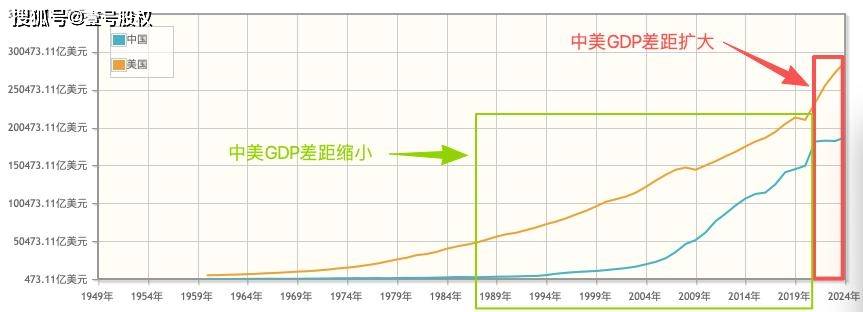
Group 1 - The core financial events anticipated are the appreciation of the RMB breaking 7 by the end of 2025 and the Shanghai Composite Index returning to 4000 points in early 2026, marking a ten-year high [1] - The appreciation of the RMB is expected to have positive impacts, particularly in the re-evaluation of China's GDP in USD, which will narrow the GDP gap between China and the US [1] Group 2 - The goal of the Chinese nation is to surpass the US in GDP and become the world's largest economy, supported by a population of 1.4 billion, which is four times that of the US [3] - Historical data shows that the GDP gap between China and the US has significantly narrowed over the past 30 years, with China's GDP increasing from 0.27 trillion USD in 1987 to 18.2 trillion USD in 2021, reaching 78% of the US GDP [5] - 2021 was a pivotal year as China's GDP reached 78% of the US GDP, but subsequent years saw a decline in this ratio due to slower growth in China compared to the US [7] Group 3 - In 2022, China's GDP growth was only 0.7%, while the US GDP grew by 9.8%, leading to a significant drop in the GDP ratio to 71.6% [7] - By 2023, China's GDP further declined to 18.27 trillion USD, while the US GDP increased to 27.29 trillion USD, resulting in a GDP ratio of 67% [7] - The depreciation of the RMB since 2022 has contributed to the slow growth of China's USD GDP, with a maximum depreciation of 17.8% impacting the nominal GDP growth [9] Group 4 - By the end of 2025, if the RMB appreciates to 7, China's USD GDP could reach approximately 20 trillion USD, with a GDP ratio of 65.4% compared to the US [11][13] - Projections for 2026 suggest that China's GDP could grow to 21.3 trillion USD, achieving 66.4% of the US GDP, with a potential return to the 70% threshold by 2028 depending on the RMB's appreciation [13]

宏观研究焦点:美联储独立性担忧再起、地缘风险升温、美国通胀放缓、中国通缩-What's Top of Mind in Macro Research_ Renewed Fed independence concerns, heightened geopolitical risk, less US inflation China deflation
2026-01-15 02:51
Summary of Key Points from the Conference Call Transcript Industry Overview - **Macro Environment**: The discussion highlights concerns regarding the independence of the Federal Reserve, geopolitical risks, and inflation trends in the US and China [2][5][11]. Core Insights and Arguments - **Fed Independence Concerns**: - There are worries about the potential impact of the Department of Justice's investigation into Fed Chair Powell on Fed policy. A less independent Fed could lead to increased inflation and diminish the appeal of the US Dollar, affecting its status as a reserve currency [2][5]. - The report suggests that a less independent Fed may reduce foreign investment in US Treasuries, while gold could see price increases as a hedge against these risks, with a forecast of $4,900 per ounce by the end of 2026 [2][3]. - **Geopolitical Risks**: - Ongoing tensions in Venezuela and Iran are noted as significant factors that could increase the value of commodities, particularly gold. Central banks are expected to diversify into gold to hedge against geopolitical risks [3][4]. - Oil markets are described as vulnerable to geopolitical disruptions, with potential price spikes due to sanctions on countries like Iran, Russia, and Venezuela. The forecast for Brent oil prices has been adjusted down to $58 per barrel for 2027 [4][6]. - **Inflation Trends**: - The US core Consumer Price Index (CPI) rose by 0.24% in December, with expectations for a return to 0.3% in January. A decline in inflation is anticipated throughout 2026, with a year-over-year core CPI forecast of 2.0% by December [11][12]. - In contrast, China's Producer Price Index (PPI) is expected to rise due to government efforts to manage price-cutting and overcapacity, although the reflation process is expected to be gradual [12]. Additional Important Insights - **Earnings Reporting Season**: - The 4Q25 US earnings reporting season is underway, with expectations for S&P 500 earnings growth of 7% year-over-year, which may be conservative. Revenue growth is anticipated to exceed consensus expectations due to solid GDP growth and a weaker Dollar [13]. - **AI and Labor Market**: - The potential impact of AI on the labor market is being monitored, with forecasts suggesting a 15% increase in productivity but also a displacement of 6-7% of jobs as AI is adopted [17]. - **US Policy Implications**: - The report discusses President Trump's proposals to cap credit card interest rates and support homeownership, which could impact credit card profitability and benefit builders and building product companies [17]. Conclusion - The macroeconomic landscape is influenced by Fed independence, geopolitical tensions, and inflation trends, with significant implications for investment strategies in commodities, equities, and the broader market. The upcoming earnings season and AI developments are also critical areas to watch for potential market shifts [2][3][11][13][17].
中国经济与外汇策略_上调人民币预期,但通缩使我们低于共识-China Economics & FX Strategy-Revising Up RMB, but Deflation Keeps Us Below Consensus
2026-01-09 05:13
Summary of Key Points from the Conference Call Industry Overview - **Industry**: Foreign Exchange (FX) and Economic Strategy in China - **Company**: Morgan Stanley Asia Limited Core Insights and Arguments - **RMB Forecast Revision**: The forecast for the USDCNY exchange rate has been revised upward, expecting it to reach 6.85 by Q1 2026 and finish at 7.0 by the end of 2026, compared to previous estimates of 7.05 for both periods [8][11] - **Export Strength**: Robust export momentum is anticipated to continue through 2026-27, with expected growth rates of 5-6% in export volume, supported by a strong external balance and improved competitiveness [12][9] - **Deflationary Pressures**: Lingering domestic deflation is a significant constraint on the RMB's appreciation potential, limiting the economy's ability to sustain a stronger currency [17][18] - **Dollar Dynamics**: The dollar is expected to weaken in the first half of 2026 due to anticipated Fed rate cuts, followed by a rebound in the second half as US economic growth accelerates [10][41] - **Policy Guidance**: The People's Bank of China (PBoC) has maintained a consistent FX policy aimed at managing volatility and preventing excessive exchange rate fluctuations, indicating a preference for stability around an equilibrium level [19][11] Additional Important Insights - **Geopolitical Risks**: Potential risks to the RMB outlook include renewed geopolitical tensions and capital outflows, which could negatively impact the currency [23] - **Technical Analysis**: The USD/CNH pair is currently oversold, and a break below 6.97 could lead to further downside towards approximately 6.80 [30][29] - **Limited Spillover Effects**: The recent strength of the CNH has had limited positive implications for other Asian currencies, with only the Malaysian Ringgit (MYR) showing a potential benefit due to its stronger relationship with the CNY [36][37] - **Exporters' FX Conversion**: Seasonal increases in exporters' FX conversion are expected, particularly in December, but may slow in January due to historical trends [24][26] This summary encapsulates the key points discussed in the conference call, focusing on the RMB's outlook, export dynamics, and the broader economic context affecting currency movements.
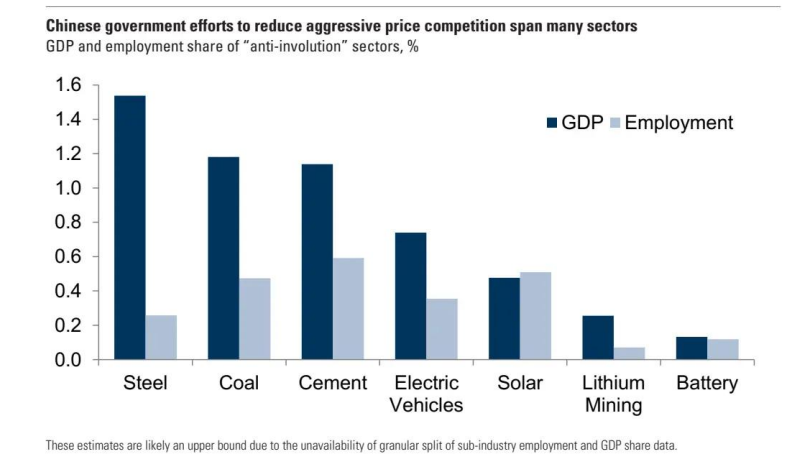
高盛最新宏观研判:美国通胀、中国通缩引关注,这些大事或影响市场
Zhi Tong Cai Jing· 2025-08-15 14:49
Group 1: Inflation Trends - In the US, the core Consumer Price Index (CPI) rose by 0.32% in July, aligning with expectations, with forecasts suggesting a monthly increase of 0.3%-0.4% in the coming months due to tariffs affecting core goods prices, particularly in electronics, automobiles, and clothing [1][2] - The forecast for core CPI/PCE inflation rates is projected to reach 3.2% by December, with expectations of a decline towards target levels next year as tariff impacts diminish and the labor market cools [1][2] Group 2: China's Economic Situation - In contrast to the US, China's Producer Price Index (PPI) fell into deep deflation, with a forecasted PPI inflation rate of -2.8% for this year and -1.0% for next year, attributed to severe overcapacity issues [2][3] Group 3: Economic Data Reliability - Concerns have been raised regarding the reliability of US economic data, with evidence of a slight decline in data quality over the long term, potentially impacting the information value of economic indicators [6] Group 4: Geopolitical Events - The upcoming meeting between Trump and Putin has generated skepticism in the market regarding its potential to significantly alter Russian gas supplies or lead to a lasting peace agreement in Ukraine, with natural gas prices remaining stable [7] - The meeting is not expected to result in substantial changes to Russian oil supply, as constraints are primarily due to OPEC+ quotas and investment levels rather than US sanctions [7] Group 5: UK Monetary Policy - Following hawkish signals from the Bank of England, the expected timeline for interest rate adjustments has been pushed back, with forecasts for the terminal rate now anticipated to be reached in April instead of March [8] - The GBP is expected to face depreciation risks, leading to revised forecasts for EUR/GBP and GBP/USD exchange rates [8] Group 6: Tariff Impacts - The US has announced higher tariffs on India and Switzerland, which are expected to negatively impact economic growth in these countries [9] Group 7: Economic and Market Predictions - Global GDP growth is projected at 2.5% for 2025, with specific forecasts for major economies including the US (1.7%), China (4.7%), and the Euro area (1.2%) [10] - Policy rates are expected to adjust, with the US rate forecasted at 3.13% for 2026 [10] Group 8: Commodity and Currency Markets - Predictions for commodity prices include Brent crude oil at $111 per barrel and natural gas prices at $3.90 per million British thermal units for 2025 [12] - Currency forecasts indicate a potential increase in the EUR/GBP exchange rate to 0.87 over the next three months [8]