
二级市场

Search documents
X @Yuyue
Yuyue· 2026-03-28 08:18
传统金融现在的情况跟币圈的 2024 年初越来越像了,愈发感觉币圈就是传统金融的加速版本最近和几个投一级的传统 VC / PE 圈子朋友交流了一下,发现有些人正在试图往二级跳,极端案例是直接辞职专职炒股(虽然可能有幸存者偏差)主动退场一级的核心原因是不想再敷衍 LP,想抓住 AI 红利的二级机会及时上车。曾经以为做一级市场是和最聪明的大脑碰撞,投最前沿的叙事;现在发现,自己名义上是“做投资”,实际上成了个走流程的高级合规文员偶尔出个基本面过硬的标的,一堆机构还要挤破头去抢那一丁点份额作为常年在二级市场搏杀的人,我太懂这种心态的切换了。二级市场真的好做吗?绝对不是。在这台极其反人性的绞肉机里,犯错的即时代价比一级市场惨烈得多,而且美股从今年年初开始就是以板块轮动为主,大盘股没那么好拉了2024 年初币圈一级有相似的场景出现:好项目份额供不应求,基本都是超认购,一级能投的项目越来越少,于是有了几波一级机构转二级机构的潮流只是这些币圈的一级机构,最终大多都折戟沉沙于残酷且高频的二级操作周期中 ...
利率债周报:通胀升温扰动显现,长端利率承压-20260313
BOHAI SECURITIES· 2026-03-13 07:25
1. Report Industry Investment Rating No relevant content provided. 2. Core View of the Report The report anticipates that the interest rate will continue to oscillate within a range and the curve will remain steep. In the short - term, it is advisable to observe inflation changes and focus on short - term investment opportunities with certainty. If the 10Y Treasury bond yield rises more than 5bp from the previous low, it may present an opportunity to participate in medium - and long - term varieties. Caution should be exercised regarding ultra - long - term varieties [2][23][26]. 3. Summary of Each Section According to the Catalog 3.1 Important Event Review - **Inflation Data**: In February 2026, CPI increased by 1.3% year - on - year and PPI decreased by 0.9% year - on - year. Input factors and the Spring Festival effect drove inflation up. It is expected that in March, the year - on - year increase of CPI will remain stable, the month - on - month increase will drop to near 0, the month - on - month increase of PPI will expand further, and the year - on - year growth rate may turn positive [8]. - **Import and Export Data**: From January to February 2026, China's exports increased by 21.8% year - on - year and imports by 19.8% year - on - year, with a trade surplus of $213.6 billion. The Spring Festival holiday timing led to a significant increase in export growth. In March, export growth is expected to decline due to rising oil prices, a high base, and seasonal factors, but the medium - term fundamentals supporting exports are expected to continue [9][10]. 3.2 Capital Price: Central Bank Withdraws Funds From March 6th to March 12th, the central bank net - withdrew nearly 50 billion yuan from the open market. Capital prices rose slightly compared to early March. DR007 rose to 1.47%, DR001 to 1.33%, and the 1Y interbank certificate of deposit yield dropped to 1.55%, mainly affected by the reduction of interbank deposit interest rates [11]. 3.3 Primary Market: The Issuance Scale of Special Bonds Decreases Month - on - Month From March 6th to March 12th, 63 interest - rate bonds were issued in the primary market, with a total issuance of 414.2 billion yuan and negative net financing. The issuance of both national bonds and special bonds decreased. Although the issuance of special bonds slowed in March, it was still faster than in previous years. The supply pressure of government bonds in March is limited [15][17]. 3.4 Secondary Market: The Curve Steepens and Long - Term Interest Rates Are Under Pressure From March 6th to March 12th, short - term Treasury bond yields declined while medium - and long - term Treasury bond yields rose, with a steeper curve. The 10Y Treasury bond yield rose to 1.81%. The weak performance of the bond market was mainly due to the rising inflation data in February and the continuous increase in international oil prices since March, which further boosted inflation expectations. The strong trade data at the beginning of the year also had a negative impact on the bond market [18]. 3.5 Market Outlook - **Fundamentals**: The export and inflation data at the beginning of the year have disrupted the bond market. However, there is no need to be overly pessimistic about the persistence of the disruption, as some data improvements are related to the Spring Festival date change and inflation pressure from the supply side has a relatively limited impact on the bond market. Future attention should be paid to the contribution of the demand side to inflation [2][23]. - **Policy**: The government work report maintains a "more proactive" stance on fiscal policy and a "moderately loose" stance on monetary policy. In the next 1 - 2 months, there is no need to be overly worried about the supply pressure of government bonds. However, early disclosure of the use and scale of policy - based financial instruments may accelerate major project implementation, which is negative for the bond market [23][26]. - **Capital**: The optimization of the interbank deposit structure helps banks relieve interest - margin pressure, reducing the necessity of a full - scale reserve - requirement ratio cut. The central bank still has room to passively inject base money through foreign - exchange purchases, and the capital market is expected to remain moderately loose [26].
初灵信息(300250.SZ):与昆仑芯没有业务上合作
Ge Long Hui· 2026-02-26 13:16
Core Viewpoint - The company, Chuling Information (300250.SZ), clarified that it has not directly invested in Kunlun Chip (Beijing) Technology Co., Ltd. and only holds a minor stake in the Beijing Zhongyi Digital New Economy Industry Fund, which is approximately 1.08% of the fund's total contributions [1]. Group 1 - The company participates as a limited partner (LP) in the Beijing Zhongyi Digital New Economy Industry Fund [1]. - The investment share in the fund is very small, indicating limited exposure [1]. - There is no business collaboration between the company and Kunlun Chip [1]. Group 2 - The secondary market remains uncertain regarding the company's investments [1].

X @Yuyue
Yuyue· 2026-02-18 16:44
为什么我说 “打工,不如投资” 呢?因为二级的红利每个人都有机会吃到。如果你在 AI 或者显卡需求刚火的时候就买了英伟达,那么收益率其实未必比不上 BTC。而你想吃到这波红利,其实只需要一个能买到 $NVDA 的券商账户。如今或许机器人赛道的二级也远没到顶今天看到这条微博,我的第一反应就是 “或许机器人板块还能继续涨到年中”。A 股这边的逻辑,就是老美要有的我们也要有,加上国内股市这轮牛感觉远远还没结束,两会在三月,三月或许会出台一系列相关政策促使机器人板块进一步繁荣吧毕竟,宇树都还没正式 IPO 发行,龙头还没上架,你跟我说机器人见顶?不会吧不会吧现在我们想吃到红利就更简单了,甚至不用开通账户,直接买 onchain stocks 都行,虽然目前还有一些费率问题和流动性的问题,但对于大部分小户来说已经可以满足。我有券商账户,还是会选择券商买费率便宜,但是有时候为了速度 / 加杠杆的需求,还是会用一下 hyperliquid 之类的来开一单。而国内的股票由于政策关系,onchain 的部分很难操作,但中国公民开通 A 股券商也没啥难度,还是挺适合去试试水的币圈肯定还是会有钱赚的,我也还持有一些 BTC 现货, ...

《财富》水晶球:对2026年IPO市场与交易活动的预测
财富FORTUNE· 2026-02-16 13:03
Core Insights - The IPO market is experiencing a resurgence, particularly in the tech sector, with strong investor demand and liquidity, although the overall activity remains below historical levels [1][5][6] - Private companies are maintaining high valuations and leveraging their positions to avoid going public, a privilege limited to top-tier firms [1][3] - M&A activity is expected to dominate the market, with significant acquisitions anticipated, particularly in the AI and biotech sectors [7][8] IPO Market - The IPO market is expected to continue its upward trend into 2026, driven by strong performance and investor appetite for tech assets [5][6] - There is a backlog of companies ready to go public, but a significant trigger is needed to accelerate the listing process [6] - Smaller companies face challenges in the IPO process unless there are major reforms to improve efficiency and reduce costs [6] M&A Market - A notable acquisition in the AI software sector exceeding $50 billion is predicted, reshaping the market landscape [7] - The fintech industry is entering a consolidation phase, with companies acquiring smaller competitors to enhance their market position [7] - Biotech firms are expected to see a resurgence in M&A activity, particularly from large pharmaceutical companies with substantial cash reserves [7][8] Private Market Trends - The secondary market for private investments is anticipated to grow significantly, with a projected transaction volume of $250 billion in 2026 [8] - There is a trend towards mergers among venture-backed startups as they seek growth avenues to achieve public or private equity exits [8] - Offerings for buyouts will extend beyond large private firms, as medium-sized companies also seek to retain talent through acquisition offers [8]


利率债周报:债市延续偏强震荡-20260213
BOHAI SECURITIES· 2026-02-13 07:52
1. Report Industry Investment Rating There is no information about the industry investment rating in the provided content. 2. Core Viewpoints of the Report - The bond market continued to oscillate strongly. The 10Y Treasury bond yield was gradually testing downwards around 1.8%. After the Spring Festival, the market will enter the policy waiting period before the Two Sessions, and the pattern of interest - rate bonds oscillating within a range is expected to remain unchanged. The downward space for the 10Y Treasury bond yield is limited. Attention should be focused on varieties around 3Y and the opportunities for the narrowing of the 30Y - 10Y Treasury bond spread and the 10Y term CDB - Treasury bond spread [22]. - In terms of inflation data, it is expected that in February 2026, both the year - on - year and month - on - month increases of CPI will expand, and the month - on - month increase of PPI may be similar to that in January, with the year - on - year decline further narrowing to around - 1.0% [9]. - The possibility of comprehensive reserve requirement ratio cuts and interest rate cuts remains limited. After the Spring Festival, it is difficult for the capital market to loosen significantly, and DR007 is expected to remain above 1.5% [20][22]. 3. Summary According to the Directory 3.1 Important Event Review - In January 2026, CPI increased by 0.2% year - on - year, and PPI decreased by 1.4% year - on - year. The core inflation month - on - month increase reached the highest in the past six months, mainly due to the increase in holiday travel demand, the rise in international gold prices, and the boost from the new round of "trade - in" programs. The PPI year - on - year decline narrowed, and the month - on - month increase expanded. It is expected that in February 2026, both the year - on - year and month - on - month increases of CPI will expand, and the month - on - month increase of PPI may be similar to that in January, with the year - on - year decline further narrowing to around - 1.0% [9]. 3.2 Capital Price: Stable Capital Market Before the Festival - From February 6th to February 12th, the central bank's open - market operations had a net capital injection of 1.1 trillion yuan. The capital price was generally stable, with DR007 remaining below 1.6%, R007 remaining around 1.6%, and the 3M inter - bank certificate of deposit rate remaining basically unchanged [10]. 3.3 Primary Market: Slight Decrease in Special Bond Issuance Scale - From February 6th to February 12th, 96 interest - rate bonds were issued in the primary market, with an actual issuance total of 964.3 billion yuan. The issuance scale of Treasury bonds increased, while the issuance scale of special bonds decreased slightly [12]. 3.4 Secondary Market: The Bond Market Continued to Oscillate Strongly - From February 6th to February 12th, the bond market continued its previous strong - oscillation feature, with an accelerating trend in the last two trading days. On the one hand, it was because the pre - festival capital pressure was relatively controllable; on the other hand, the central bank's fourth - quarter monetary policy implementation report indicated that it would regularly conduct Treasury bond trading operations, which affirmed the current operation state of Treasury bond yields to some extent. The 10Y Treasury bond yield was gradually testing downwards around 1.8%. In terms of the term structure, the short - end performance was weak, the decline of the Treasury bond yield around 7Y was relatively large, and the ultra - long - term Treasury bonds continued to recover [14]. 3.5 Market Outlook - **Fundamentals**: The 2026 Spring Festival holiday was extended to 9 days. The Ministry of Transport estimated that the cross - regional passenger flow during the Spring Festival travel season would reach 9.5 billion person - times, an increase of about 0.5 billion person - times compared with the 2025 Spring Festival travel season. The high - frequency consumption data during the holiday is expected to perform well. Although the current market environment is different from that around the 2025 Spring Festival, caution is still needed regarding the potential disturbances of unexpectedly high consumption data [21]. - **Policy**: The central bank's fourth - quarter monetary policy implementation report mentioned "fiscal and financial coordination to support the expansion of domestic demand". Currently, it focuses on the coordinated efforts of "re - loans + fiscal interest subsidies" and guarantee and other credit enhancement methods to implement a new round of "trade - in" programs and cultivate service consumption growth points. In this context, the possibility of comprehensive reserve requirement ratio cuts and interest rate cuts remains limited [20]. - **Capital**: After the Spring Festival, factors such as reserve requirements, tax payments, a large number of reverse repurchase maturities, and the end - of - month factor are superimposed. It is difficult for the capital market to loosen significantly, and DR007 is expected to remain above 1.5% [20].
利率债周报:债市延续偏强震荡-20260130
BOHAI SECURITIES· 2026-01-30 09:14
1. Report Industry Investment Rating No information provided in the report. 2. Core Viewpoints of the Report - The pattern of interest rate bonds oscillating within a range remains unchanged. In the quarterly dimension, inflation and monetary policy are the anchor factors for the upper and lower limits of the oscillation; in the weekly dimension, it is expected to have narrow - amplitude fluctuations before the Spring Festival. Attention should be paid to the performance of the equity market and the trend of the capital market, and focus on varieties around 3Y and the opportunity for the narrowing of the spread between 30Y - 10Y Treasury bonds [18]. 3. Summary According to Relevant Catalogs 3.1 Funds Price - From January 23rd to January 29th, 2026, the central bank's net investment in the open - market exceeded 90 billion yuan. The MLF operation scale reached 90 billion yuan, with an over - quota renewal of 70 billion yuan. The total net investment of 3M and 6M repurchase with ownership transfer this month was 30 billion yuan. The funds price showed differentiation, with DR001 falling below 1.4%, DR007 rising to 1.59%, and the 3M inter - bank certificate of deposit rate remaining basically flat [9]. 3.2 Primary Market - From January 23rd to January 29th, 2026, 87 interest - rate bonds were issued in the primary market, with an actual issuance amount of 744.1 billion yuan. The issuance scale of special bonds continued to increase. Since the beginning of the year, the issuance term of local bonds has generally been extended, which may be a long - term feature throughout 2026, aiming to take advantage of the low - interest - rate window period and relieve the repayment pressure in recent years [11]. 3.3 Secondary Market - From January 23rd to January 29th, 2026, the bond market continued the previous strong - biased oscillation trend. In terms of the term structure, the yield of Treasury bonds around 5Y declined the most; the 1Y Treasury bonds were relatively weak, mainly affected by the overall increase in the funds price since the beginning of the year; the yield of 30Y Treasury bonds recovered. There were few substantial positive events in the bond market during the statistical period. Three pieces of information on the news were positive: the winning bid rate of MLF in January might decline; the market expected the central bank to launch a new overnight monetary policy tool; the market expected the central bank to significantly increase bond purchases in January [13]. 3.4 Market Outlook - Fundamentally, there is little fundamental data information at the beginning of the year, mainly focusing on the January PMI data and inflation data. If the January PMI month - on - month data improves again, the upper limit of the interest rate oscillation range needs to be further adjusted upward. - In terms of funds, the central bank has released trillions of funds through repurchase with ownership transfer and MLF. It is expected that the repurchase with ownership transfer in February will continue to be renewed in an over - quota manner, and the probability of a reserve requirement ratio cut before the Spring Festival will decrease accordingly. The funds price may continue to rise slightly at the beginning of February [18].
三年不上班了真开心!我的年度总结
佩妮Penny的世界· 2026-01-23 06:45
Group 1 - The article reflects on the author's personal journey over the past three years, highlighting a shift from working in investment institutions to a more independent lifestyle, emphasizing the satisfaction derived from personal freedom and choice [5][10][18] - The author discusses the challenges and limitations faced in the investment industry, particularly the difficulty of achieving financial success and the pressure to conform to societal expectations [9][18] - There is a focus on the importance of maintaining curiosity and a desire for knowledge in the investment field, suggesting that investment is a lifelong endeavor that encompasses various life decisions [24][28] Group 2 - The author mentions the significance of community and networking within the investment space, noting the value of connecting with diverse professionals and sharing insights [12][15][16] - The article emphasizes the need for continuous learning and adaptation, particularly in understanding market trends and investment strategies, especially in the secondary market [28][29] - The author expresses a desire to enhance communication and engagement within their community, aiming to facilitate more discussions and knowledge sharing [23]
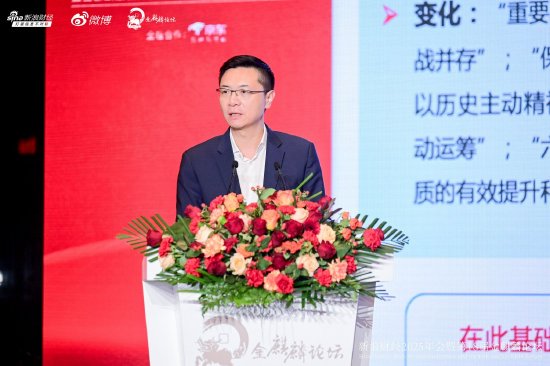
田轩:“十五五”资本市场“三支柱”:包容创投、稳健二级、完善法治
Xin Lang Cai Jing· 2026-01-15 07:13
Core Viewpoint - The forum emphasized the need for a capital market that adapts to the current complex landscape of opportunities and risks, highlighting the importance of supporting the real economy and technological self-reliance, particularly in the context of artificial intelligence [3][7]. Group 1: Current Market Challenges - The past five years have seen geopolitical changes, trade tensions, and the ongoing impact of the pandemic on supply chains, leading to increased uncertainty [3][7]. - The policy direction has shifted from passive responses focused on maintaining strategic stability to a more proactive approach aimed at overcoming challenges and risks [3][7]. Group 2: Development Goals - The focus has transitioned from "six stabilities" and "six guarantees" to promoting effective qualitative economic growth and reasonable quantitative improvement, placing greater emphasis on quality and structure [3][7]. Group 3: Proposed Market Adjustments - A more inclusive venture capital market is needed to provide sufficient early-stage financing for high-risk, long-cycle technology projects, especially in AI and other frontier fields [5][8]. - The secondary market should avoid excessive short-term speculation and volatility, shifting towards a more stable state that emphasizes long-term value and serves the real economy [5][8]. - There is a necessity to improve the legal environment, enhance investor protection, and combat illegal activities to establish a fair, transparent, and predictable market order [5][9].
第十四届全国人大代表、清华大学国家金融研究院院长田轩:构建与科技创新更匹配的资本市场
Zheng Quan Ri Bao· 2025-12-26 16:44
Group 1 - The core viewpoint emphasizes the need for a capital market that supports technological innovation, which requires a more inclusive venture capital market and a less aggressive secondary market [1][2] - The "14th Five-Year Plan" outlines seven development goals focused on the real economy and technological innovation, necessitating strong support from the capital market [1] - Technological innovation is characterized by long cycles, high uncertainty, and high failure rates, which necessitates a more accommodating venture capital environment [1] Group 2 - A less aggressive secondary market is essential for providing a stable environment for innovative companies, which includes five key aspects: strong anti-takeover provisions, moderate stock liquidity, long-term institutional investors, reduced analyst pressure, and less frequent information disclosure [2] - Strong anti-takeover provisions, such as dual-class share structures, can protect the stability of company control and encourage innovation [2] - Moderate stock liquidity is linked to innovation, where low liquidity can be beneficial, but excessive liquidity may attract short-term investors, creating pressure on companies [2] - Long-term institutional investors are crucial as they can better identify and support innovative companies, enhancing their focus on core business and innovation efficiency [2] - Reducing analyst pressure can prevent management from overly focusing on short-term earnings, which may lead to cuts in R&D spending and harm long-term innovation [2] - Less frequent information disclosure is preferred by investors in innovative companies, as it can mitigate short-sighted management behavior [2]