
产能恢复

Search documents
【冠通期货研究报告】螺纹日报:震荡整理-20260122
Guan Tong Qi Huo· 2026-01-22 11:04
Group 1: Report Industry Investment Rating - The report gives a cautious and bullish rating on the short - term outlook of the rebar market, expecting it to fluctuate with a slight upward trend [4] Group 2: Core View of the Report - Currently, the rebar supply side has strong resumption momentum, and the demand side is supported by pre - holiday winter storage and shows resilience. After the Spring Festival, the recovery of terminal demand needs attention. The total and social inventories are at a low level year - on - year with controllable inventory pressure, but the accumulation of factory inventory requires attention to the subsequent inventory removal rhythm. The low inventory and demand resilience support prices, but the significant recovery in production this week suppresses prices to some extent. The raw material end of iron ore and coking coal has stopped falling and stabilized. It is expected that rebar will run with a slight upward trend in the short term [4] Group 3: Summary by Relevant Catalogs Market行情回顾 - Futures price: On Thursday, the open interest of the rebar main contract increased by 5,016 lots. The trading volume shrank compared with the previous trading day, with 615,894 lots. It stopped falling and stabilized, breaking below the 5 - day moving average, supported by the 10 - day, 30 - day and 60 - day moving averages, and stabilized near the 3,100 integer mark. The lowest price was 3,112 yuan/ton, the highest was 3,135 yuan/ton, and it closed at 3,124 yuan/ton, up 11 yuan/ton or 0.35% [1] - Spot price: The mainstream area's spot price of HRB400E 20mm rebar was 3,270 yuan/ton, down 10 yuan from the previous trading day [1] - Basis: The futures price was at a discount to the spot price by 146 yuan/ton. The large basis provided some support, and the on - disk winter storage was cost - effective [1] Fundamental Data - Supply: As of the week of January 22, rebar production increased by 92,500 tons week - on - week to 1,995,500 tons, and increased by 254,200 tons year - on - year. The significant year - on - year increase in production this week reflected that steel mills' resumption momentum was accelerating, which would suppress prices in the short term [2] - Demand: The apparent demand increased significantly year - on - year but decreased slightly week - on - week, indicating that winter storage might have started. As of the week of January 22, the apparent demand data was 1,855,200 tons, a week - on - week decrease of 48,200 tons and a year - on - year increase of 686,100 tons. The overall demand increased significantly compared with last year, showing resilience. There was still support from pre - holiday winter storage demand [2] - Inventory: The inventory decreased slightly, with factory inventory decreasing and social inventory increasing. As of the week of January 22, the total inventory was 4,521,000 tons, a week - on - week increase of 140,300 tons and a year - on - year decrease of 311,100 tons. The social inventory was 3,051,200 tons, a week - on - week increase of 77,100 tons and a year - on - year decrease of 433,700 tons. The factory inventory was 1,489,800 tons, a week - on - week increase of 63,200 tons and a year - on - year increase of 122,600 tons. The total inventory increased week - on - week but was at a low level in recent years year - on - year. The overall inventory pressure was controllable. The continuous accumulation of factory inventory indicated that the production recovery speed was faster than the demand digestion speed, and the inventory pressure at the steel mill end increased marginally. The social inventory increased slightly week - on - week but decreased significantly year - on - year, reflecting better social inventory removal this year, and the pressure in the circulation link was much less than that of the same period last year, which provided some support for prices [2][3] - Macro: The central bank released a moderately loose signal, and the Ministry of Finance emphasized that the expenditure intensity would only increase. However, due to the drag of real - estate demand, the incremental demand was relatively limited macroscopically. The loose cycle provided some support, and the upper limit of demand determined the pressure [3] Driving Factor Analysis - Bullish factors: Inventory at a low level in the past three years, anti - involution production reduction on the supply side, strict control of production capacity, policy support for demand, marginal improvement of post - holiday demand, and loose macro - expectations [4] - Bearish factors: Excessive inventory accumulation after the Spring Festival, slowdown of inventory removal speed, accelerated resumption of blast furnace production, cautious winter storage demand, continuous decline of real - estate demand, restricted exports, and weak economic recovery [4] Short - term View Summary - The rebar market is expected to run with a slight upward trend in the short term, and attention should be paid to the support near the integer mark at this week's low point [4]
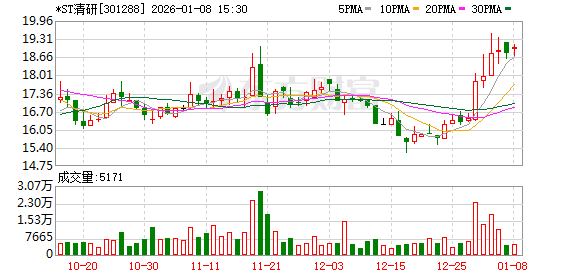
*ST清研:通海镍业目前处于产能持续恢复阶段,实际产能会随市场需求、技术升级等动态调整
Mei Ri Jing Ji Xin Wen· 2026-01-08 13:15
Group 1 - The core point of the article is that the company *ST Qingyan (301288.SZ)* has responded to an investor inquiry regarding the maximum capacity of its subsidiary Tonghai Nickel Industry, indicating that the actual capacity is currently in a phase of continuous recovery and will be dynamically adjusted based on market demand and technological upgrades [2] Group 2 - The company emphasizes that specific capacity details will be disclosed through formal announcements [2]


开发委内瑞拉“全球第一的原油储备”?特朗普“理想很丰满”,但“现实很骨感”
Hua Er Jie Jian Wen· 2026-01-04 03:39
Core Viewpoint - The U.S. military action against Venezuela has significantly altered the country's political landscape and put its energy future in jeopardy, with the recovery of its oil production expected to be a long and challenging process despite promises of investment from U.S. oil companies [1][2]. Group 1: Political and Economic Context - President Trump confirmed the capture of Venezuelan President Maduro and announced that the U.S. would "manage" Venezuela until a "safe" transition is achieved, with plans for U.S. oil companies to invest billions to repair the country's oil infrastructure [1]. - The Venezuelan opposition leader Maria Machado stated that "people's sovereignty" has arrived and is ready to take over power [1]. - Despite geopolitical changes, the immediate impact on global oil markets is limited, as Venezuela's current oil production is only about 1 million barrels per day, representing approximately 1% of global output [1]. Group 2: Challenges to Oil Production Recovery - Analysts believe that even with a regime change, the recovery of Venezuela's oil industry will not be quick due to long-term underinvestment and complex debt disputes [2]. - Venezuela's oil production has drastically declined from a peak of 3.5 million barrels per day in the 1970s to about 1 million barrels per day currently, primarily due to mismanagement, lack of investment, and international sanctions [3]. - Significant physical barriers to restoring production include insufficient drilling, frequent power outages, and equipment theft, with experts estimating that it may take five to seven years to see substantial increases in production [3]. Group 3: Conditions for U.S. Oil Companies' Return - Major U.S. oil companies like ExxonMobil and ConocoPhillips face stringent conditions for re-entering the Venezuelan market, including guarantees of payment, minimum security, and the lifting of U.S. sanctions [4]. - Historical issues, such as the nationalization of the oil industry in the 2000s, have created obstacles for foreign investment, with Chevron being the only major U.S. oil company still operating in Venezuela [4]. - ConocoPhillips may be particularly interested in returning to Venezuela to recover over $10 billion owed to it, although the company has not disclosed specific investment intentions [4]. Group 4: Geopolitical Risks and Market Reactions - Geopolitical uncertainty remains a significant barrier to investment, with warnings of potential internal conflict or civil war following Maduro's ousting [5]. - Market analysts suggest that if the Venezuelan military supports the opposition, it could positively impact the market; however, conflict could lead to negative repercussions [6]. - The current oil supply from Venezuela is easily replaceable by other global producers, limiting the immediate impact on commodity prices, while gold prices are also expected to remain stable unless the situation escalates significantly [7].
星光集团发盈警 预期中期公司拥有人应占亏损不超过3000万港元
Zhi Tong Cai Jing· 2025-11-11 10:29
Core Viewpoint - Starlight Group (00403) anticipates a loss attributable to shareholders of no more than HKD 30 million for the six months ending September 30, 2025, compared to a profit of approximately HKD 7 million in the same period last year [1] Group Summary - The board attributes the anticipated loss primarily to intense market competition and uncertainties related to increased tariffs imposed by the U.S. government, resulting in a significant decline in orders from packaging clients and U.S. customers [1] - The loss from the green group has increased compared to the same period last year, mainly due to higher product development costs for new products and increased promotional costs for both online and offline channels [1] - The company is in the process of relocating several production lines to Malaysia; however, production capacity has not fully recovered, and customers are currently testing purchase orders during this period [1]
Rivian财报在即,投资者将聚焦三大关键点
Ge Long Hui A P P· 2025-08-04 13:56
Core Insights - Rivian is set to release its earnings report, with investors focusing on three key areas: delivery trends, cash reserves, and the progress of the R2 platform [1] Delivery Trends - In Q2, Rivian delivered 10,661 vehicles, representing a 23% year-over-year decline, and produced 5,979 vehicles, which is a significant 38% decrease year-over-year [1] - The company maintains its annual delivery target of 40,000 to 46,000 vehicles, but achieving this goal will require a substantial increase in production in the second half of the year [1] Cash Reserves - Management needs to clarify the speed of capacity recovery and whether it can maintain the trend of improving profit margins despite low production levels [1] R2 Platform Progress - The R2 platform's cross-segment models are expected to play a crucial role in revitalizing growth for the company [1]

镍:消息面扰动情绪,基本面承压运行,不锈钢:现实与宏观博弈,钢价震荡运行
Guo Tai Jun An Qi Huo· 2025-07-17 01:50
1. Report Industry Investment Rating - No relevant content found 2. Core Viewpoints of the Report - The nickel market is affected by news, and its fundamentals are under pressure; the stainless - steel market is in a game between reality and macro factors, and steel prices fluctuate [1] 3. Summary by Related Catalogs 3.1 Fundamental Tracking - **Futures Data**: The closing price of the main contract of Shanghai nickel is 120,550, with changes of 1,170 compared to T - 1, 1,410 compared to T - 5, etc. The closing price of the main contract of stainless steel is 12,670, with a change of - 25 compared to T - 1. The trading volume of the main contract of Shanghai nickel is 131,554, and that of the main contract of stainless steel is 151,703 [1] - **Industrial Chain Data**: The price of 1 imported nickel is 121,450, the price of 8 - 12% high - nickel pig iron (ex - factory price) is 900, and the price of battery - grade nickel sulfate is 27,220. There are also data on price differences, premiums, and other indicators [1] 3.2 Macro and Industry News - In March, Ontario, Canada, may stop exporting nickel to the US due to tariff threats [1] - In April, the first - phase project of Indonesia's CNI nickel - iron RKEF successfully produced nickel - iron and entered the trial - production stage, with an annual output of about 12,500 tons of nickel metal per line [2] - An important nickel smelter in an Indonesian metal processing park has resumed production, and the capacity of PT QMB New Energy Materials has recovered to 70% - 80% [2][3] - An Indonesian cold - rolling mill plans to continue maintenance from June to July, which may affect 110,000 - 130,000 tons of production, mainly 300 - series output, and it cut production by 40% - 50% in May [3] - The Philippine Nickel Industry Association welcomes the removal of the raw - ore export ban clause from the final version of the mining fiscal system bill [3] - Environmental violations were found in the Morowali Industrial Park in Indonesia, and the government may fine the confirmed illegal companies and audit the entire park [3] - Indonesia plans to shorten the mining quota period from three years to one year [3] - The government - approved 2025 production plan and budget (RKAB) output of Indonesian nickel - mining companies is 364 million tons, higher than the 2024 target of 319 million tons [4] 3.3 Trend Intensity - The trend intensity of nickel is 0, and that of stainless steel is 0, with the range of trend intensity being integers in the [-2, 2] interval [5]
镍:矿端支撑有所松动,全球精炼镍边际累库,不锈钢:现实与宏观博弈,钢价震荡运行
Guo Tai Jun An Qi Huo· 2025-07-14 02:25
Report Summary 1. Report Industry Investment Rating No investment rating information is provided in the report. 2. Core Viewpoints - Nickel: The support at the mine end is loosening, and there is marginal inventory accumulation of refined nickel globally [1]. - Stainless steel: There is a game between reality and macro factors, and steel prices are oscillating [1]. 3. Summary by Relevant Catalogs 3.1 Fundamental Data Tracking - **Futures Data**: The closing price of the main contract of Shanghai Nickel was 121,390, with a change of 250 compared to T - 1; the closing price of the main contract of stainless steel was 12,710, with a change of -155 compared to T - 1. The trading volume of the main contract of Shanghai Nickel was 101,921, a decrease of 234 compared to T - 1; the trading volume of the main contract of stainless steel was 156,045, an increase of 55,013 compared to T - 1 [1]. - **Industrial Chain Data**: The price of 1 imported nickel was 121,500, an increase of 1,600 compared to T - 1; the ex - factory price of 8 - 12% high - nickel pig iron was 904, a decrease of 1 compared to T - 1; the price of red土镍矿1.5% (Philippines CIF) was 59, unchanged compared to T - 1 [1]. 3.2 Macro and Industry News - On March 3, Ontario Premier Ford proposed that Ontario's minerals are crucial in the tariff battle and may stop exporting nickel to the US [1]. - On April 27, the first - phase project of Indonesia's CNI nickel - iron RKEF, EPC - contracted by China ENFI, successfully produced nickel - iron, entering the trial production stage. The project is located in Southeast Sulawesi, Indonesia, producing 22% grade nickel - iron, with an annual production of about 12,500 tons of metallic nickel per line [2]. - An important nickel smelter in an Indonesian metal processing park has resumed production. In March this year, it almost stopped all production due to a tailings pond landslide. The capacity of PT QMB New Energy Materials has recovered to 70% - 80% [3][4]. - An Indonesian cold - rolling mill plans to continue maintenance from June to July, with an expected impact of 110,000 - 130,000 tons, mainly affecting the production of 300 - series stainless steel. In May, it had cut production by 40% - 50% due to the sluggish market [4]. - The Philippine Nickel Industry Association welcomes the removal of the raw ore export ban clause from the final version of the mining fiscal system bill [4]. - Environmental violations were found in the Morowali Industrial Park in Indonesia, including improper wastewater management, air pollution, and the use of unlicensed tailings areas. The government may fine the confirmed illegal companies and will audit the entire park [4]. - Indonesia plans to shorten the mining quota period from three years to one year to improve industry governance and better control coal and ore supplies [5]. - The government - approved 2025 work plan and budget (RKAB) production of Indonesian nickel mining companies is 364 million tons, higher than the 2024 target of 319 million tons [5]. 3.3 Trend Intensity - The trend intensity of nickel is 0, and the trend intensity of stainless steel is 0. The trend intensity ranges from - 2 to 2, with - 2 being the most bearish and 2 being the most bullish [6].
光大期货能化商品日报-20250627
Guang Da Qi Huo· 2025-06-27 07:05
1. Report Industry Investment Rating - All the energy and chemical products in the report are rated as "Oscillation", including crude oil, fuel oil, asphalt, polyester, rubber, methanol, polyolefin, and PVC [1][3][4][6][8] 2. Core Viewpoints of the Report - After sharp rises and falls in the market, oil prices are likely to oscillate within a narrow range, and there is room for a slight increase in the oil price center in the future, subject to further guidance from OPEC+ production policies [1] - The Asian high - sulfur fuel oil market will be supported in the short term, but the supply from Iran and Russia is declining, and attention should be paid to the risk of significant oil price fluctuations [3] - The price of asphalt is affected by both the cost - side oil price and weak demand, and it is expected to oscillate [3] - The supply of polyester products is expected to increase, demand support is insufficient, and prices are expected to return to a low - range consolidation, with PX and TA following the cost of crude oil [4] - The rubber market has weak fundamental contradictions, and rubber prices are expected to oscillate [4] - Methanol futures prices are expected to oscillate weakly due to factors such as the expected resumption of Iranian production and the impact on port arrivals in Taicang [6] - The fundamentals of polyolefins have not improved significantly, and prices are expected to oscillate weakly due to the decline in crude oil prices [6] - PVC prices are expected to continue to oscillate as the downstream enters the off - season, but the arbitrage and hedging space is gradually narrowing [8] 3. Summary by Relevant Catalogs 3.1 Research Views - **Crude Oil**: On Thursday, WTI August contract closed up $0.32 to $65.24 per barrel, a 0.49% increase; Brent August contract closed up $0.05 to $67.73 per barrel, a 0.07% increase; SC2508 closed at 498 yuan per barrel, down 7.4 yuan per barrel, a 1.46% decrease. Russian Urals crude oil price has fallen below the $60 per - barrel limit [1] - **Fuel Oil**: On Thursday, the main contract FU2509 of high - sulfur fuel oil on the Shanghai Futures Exchange closed down 0.03% at 3019 yuan per ton; the main contract LU2508 of low - sulfur fuel oil closed up 0.19% at 3693 yuan per ton. Singapore and Fujeirah fuel oil inventories increased week - on - week [1][3] - **Asphalt**: On Thursday, the main contract BU2509 of asphalt on the Shanghai Futures Exchange closed up 0.2% at 3563 yuan per ton. This week, the shipment volume of domestic asphalt manufacturers increased by 0.7% week - on - week, and the capacity utilization rate of modified asphalt enterprises increased [3] - **Polyester**: TA509 closed down 0.42% at 4770 yuan per ton; EG2509 closed down 0.69% at 4293 yuan per ton. Iranian ethylene glycol plants are expected to resume production, and the price center of ethylene glycol is expected to return to a low - range consolidation [3][4] - **Rubber**: On Thursday, the main contract RU2509 of natural rubber on the Shanghai Futures Exchange rose 270 yuan per ton to 14040 yuan per ton; the main contract of 20 - number rubber rose 335 yuan per ton to 12145 yuan per ton. The global natural rubber production in May decreased, and the consumption decreased slightly [4] - **Methanol**: The spot price in Taicang is 2765 yuan per ton. Iranian plants are expected to resume production, and methanol futures prices are expected to oscillate weakly [6] - **Polyolefin**: The mainstream price of East China wire drawing is 7150 - 7250 yuan per ton. Due to the cease - fire between Israel and Iran and the decline in crude oil prices, polyolefin prices are expected to oscillate weakly [6] - **PVC**: The prices in East, North, and South China markets fluctuate. As the downstream enters the off - season, PVC prices are expected to continue to oscillate [8] 3.2 Daily Data Monitoring - The report provides the basis price data of various energy and chemical products on June 26th and 25th, including spot prices, futures prices, basis, basis rates, price increases and decreases, and basis changes [9] 3.3 Market News - The U.S. Energy Information Administration (EIA) reported that as of the week ending June 20th, U.S. commercial crude oil inventories decreased by 5.8 million barrels, gasoline inventories decreased by 2.1 million barrels, and distillate inventories decreased by 4.1 million barrels [12] - An impaired facility at the 14th - phase project of the South Pars Refinery in Iran's Bushehr Province has resumed operation [12] 3.4 Chart Analysis - **4.1 Main Contract Prices**: The report presents the closing price charts of the main contracts of various energy and chemical products from 2021 to 2025, including crude oil, fuel oil, low - sulfur fuel oil, asphalt, etc. [14] - **4.2 Main Contract Basis**: It shows the basis charts of the main contracts of various products, such as crude oil, fuel oil, and asphalt [32] - **4.3 Inter - period Contract Spreads**: Charts of inter - period contract spreads for various products, including fuel oil, asphalt, and PTA, are provided [47] - **4.4 Inter - variety Spreads**: The report includes charts of inter - variety spreads, such as the spread between domestic and foreign crude oil markets, the spread between high - and low - sulfur fuel oil [64] - **4.5 Production Profits**: Charts of production profits for products like ethylene - based ethylene glycol, PP, and LLDPE are presented [73] 3.5 Team Member Introduction - The report introduces the members of the energy and chemical research team of Everbright Futures, including Zhong Meiyan, Du Bingqin, Di Yilin, and Peng Haibo, along with their positions, educational backgrounds, honors, and professional experiences [78][79][80]