
人工智能投资泡沫

Search documents
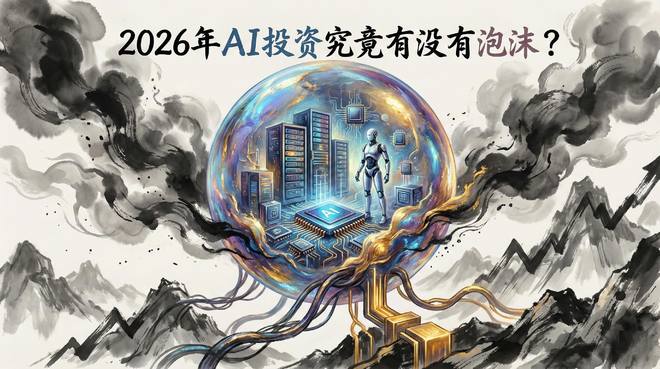
2026年AI投资究竟有没有泡沫?
Zhong Guo Jing Ying Bao· 2025-12-29 10:02
Core Viewpoint - The A-share market's technology sector, particularly AI-related stocks, has shown significant growth since 2025, raising concerns about potential investment bubbles in AI [2][3]. Group 1: Market Performance - The Wind Computing Theme Index closed at 7108 points on December 25, 2025, reflecting an 80% increase since the beginning of the year, indicating strong growth in the computing sector [2]. - A total of 22 stocks in the A-share computing sector have doubled in value since the start of the year, highlighting the rapid price increases in AI-related stocks [2]. Group 2: Investment Sentiment - According to Zhao Yaoting, a strategist at Invesco, AI-related stocks do not exhibit significant bubbles based on their fundamentals and performance [3]. - The current AI investment landscape is viewed as rational by both foreign and domestic analysts, with no clear signs of bubble formation [4]. Group 3: Industry Development Stages - The AI industry is still in the early stages of productivity enhancement, with significant improvements in total factor productivity expected to take several more years [3]. - The current market phase is characterized by rising capital expenditures and valuation increases, which is considered a normal phenomenon in investment cycles [4]. Group 4: Profitability and Valuation - Global tech giants maintain healthy cash flow, with some upstream sectors already realizing profits, such as Nvidia in the US and certain companies in the A-share market [4]. - As of December 28, the NASDAQ index's price-to-earnings ratio was approximately 41.9, significantly lower than the over 100 times seen during the 2000 internet bubble [4]. Group 5: Future Outlook - The AI sector is expected to transition from a "valuation-driven" phase to an "earnings-driven" phase, with companies demonstrating real profitability likely to see continued stock price increases [4][5]. - The macroeconomic environment in 2026 may support the AI sector, with expectations of a Federal Reserve interest rate cut and a more accommodative global liquidity environment [4].

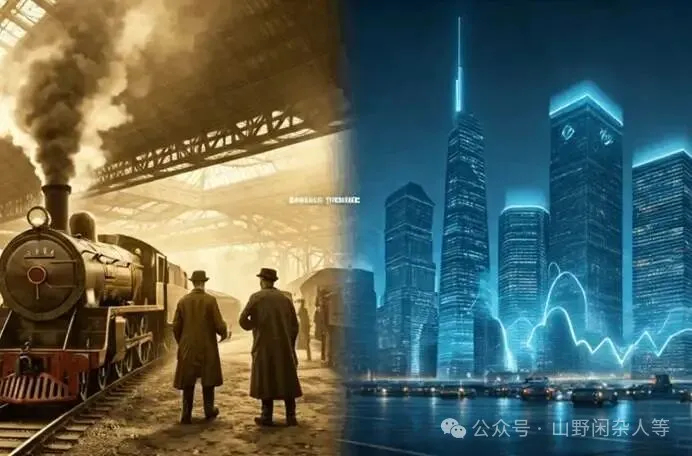
2026,AI泡沫破裂前夜?复盘1847年铁路大崩盘,我看到了惊人的巧合
Xin Lang Cai Jing· 2025-12-15 05:12
Core Viewpoint - The current AI investment surge is compared to historical infrastructure bubbles, particularly the Railway Mania of the 1840s, suggesting that the scale of investment in AI could reshape the economy significantly [1][3]. Group 1: Historical Context - The AI investment trend mirrors the 1845 UK railway boom, where speculative investments surged before any actual infrastructure was built, leading to inflated stock prices and a belief in "buying the future" [5][8]. - The collapse of the railway bubble in 1847 was due to rising interest rates and disappointing returns on investment, resulting in numerous bankruptcies [7][11]. Group 2: Current AI Investment Landscape - Major tech companies are projected to invest over $300 billion in AI infrastructure this year, equating to 1.3% of global GDP, indicating a massive capital influx reminiscent of wartime spending [1][3]. - The current Silicon Valley logic emphasizes building infrastructure first with the expectation of future profits, creating a sense of urgency among investors to participate in AI development [9][12]. Group 3: Economic Implications - Bain & Company estimates that by 2030, the AI industry must generate $2 trillion annually to justify current investments, necessitating the creation of entirely new markets rather than just efficiency improvements [11][19]. - The potential systemic risks associated with AI investments include a disconnect between rapid technological advancement and the ability of institutions to adapt, which could lead to significant economic shocks [11][14]. Group 4: Future Outlook - The aftermath of the AI investment frenzy could leave behind substantial infrastructure, such as data centers and power lines, which may either serve as the foundation for future growth or represent a cautionary tale of overconsumption [15][18]. - The current phase is characterized by optimism and capital influx, but challenges such as power shortages and regulatory pressures are anticipated in the next stages of development [16][18].
国际金融市场早知道:12月3日
Xin Hua Cai Jing· 2025-12-03 00:20
Global Economic Outlook - The UNCTAD warns that global economic growth is expected to slow from 2.9% in 2024 to 2.6% in 2025, highlighting the significant impact of financial market volatility on global trade, which may severely constrain the recovery prospects of developing countries [1] - The OECD maintains its global growth forecasts at 3.2% for 2024 and 2.9% for 2025, with the US and Eurozone growth rates projected at 2.0%/1.7% and 1.3%/1.2% respectively, while noting major downside risks such as increasing trade barriers and an AI investment bubble [1] AI Investment Risks - The Bank of England warns that the AI infrastructure investment boom, driven by debt financing, poses a risk of collapse in the context of currently high stock market valuations, which could threaten financial stability if the AI sector experiences a downturn [2] Inflation and Monetary Policy - Eurozone's November CPI rose by 2.2%, slightly above the market expectation of 2.1%, with core CPI remaining at 2.4%, indicating that the European Central Bank may maintain a tighter monetary policy for a longer period [3] - South Korea's November CPI increased by 2.4%, slightly above the expected 2.3%, while core CPI fell from 2.2% to 2.0%, with the Bank of Korea anticipating a gradual return to the 2% target range in the coming months [3]
孙正义:哭着卖出英伟达股票
Feng Huang Wang· 2025-12-01 12:23
Core Viewpoint - The founder of SoftBank, Masayoshi Son, expressed that if the company had unlimited funds for its next round of investments in artificial intelligence, including a significant bet on OpenAI, he would not have sold shares of Nvidia [1] Group 1: Investment Strategy - SoftBank's decision to sell Nvidia shares was driven by the need to raise capital for projects such as data center construction [1] - Son stated that he was reluctant to sell Nvidia shares, indicating that the sale was a necessity rather than a strategic choice [1] Group 2: AI Investment Perspective - Son dismissed claims of an artificial intelligence investment bubble, arguing that if AI can contribute 10% to global GDP in the long term, the investment of trillions of dollars would be justified [1] - He criticized those discussing the AI investment bubble as "not smart enough," questioning the existence of a bubble in the context of potential economic benefits [1]


孙正义:哭着卖出英伟达股票
财联社· 2025-12-01 12:09
Group 1 - The core viewpoint is that if the company had unlimited funds for its next round of investments in artificial intelligence, including a significant bet on OpenAI, it would not have sold its shares in Nvidia [1] - This is the first time the founder has commented on the unexpected decision to liquidate Nvidia shares in November [2] - The company stated that the sale was necessary to raise capital for projects such as data center construction [3] Group 2 - The founder expressed regret over selling Nvidia shares, stating, "I didn't want to sell a single share; I was crying while selling Nvidia stock" [4] - The founder criticized those discussing an artificial intelligence investment bubble, suggesting they are "not smart enough" and argued that if AI can create 10% of global GDP in the long term, the investment of trillions of dollars would be justified [4] - The founder questioned the existence of a bubble in AI investments, emphasizing the potential long-term economic impact [4]

刚刚,大面积涨停,外围传来三大重磅
Zheng Quan Shi Bao· 2025-10-09 08:19
Group 1 - The AI sector is experiencing a significant surge, with nearly 20 stocks hitting the upper limit and many large-cap tech stocks like Industrial Fulian, ZTE, and SMIC showing strong performance [1][2] - OpenAI's new audio and video generation model, Sora 2, has been released, demonstrating improved accuracy and realism, and has quickly become the top free app in the Apple Store [2] - CoreWeave's CEO argues that the infrastructure investments by major tech companies are driven by real demand, countering the notion of a "circular" flow of funds among companies [6] Group 2 - The Bank of England and IMF have raised alarms about potential AI investment bubbles, comparing current tech stock valuations to the peak of the dot-com bubble [4][5] - Oxford Economics has identified signs of a bubble in the AI sector, noting that tech stocks account for nearly 40% of the S&P 500, with valuations significantly exceeding reasonable values [4] - Some industry experts, including Jeff Bezos, view the current AI trend as an "industrial bubble" rather than a financial one, suggesting that it will ultimately lead to beneficial innovations [6]
从重金挖角OpenAI/谷歌到招聘急刹车:Meta MSL主要人员梳理,半数华人+75%博士成主力
3 6 Ke· 2025-09-05 07:38
Core Insights - Meta has paused hiring in its AI department after an aggressive recruitment strategy aimed at competing with OpenAI and Google, leading to significant employee turnover [1][2][3] - The recruitment freeze is described as a strategic adjustment to build a more stable structure following a massive talent acquisition effort [3][31] - The internal restructuring involves splitting the AI department into four specialized teams, each with distinct missions, to enhance efficiency and collaboration [32][33] Recruitment Strategy - In June 2025, Mark Zuckerberg invested nearly $15 billion to acquire a 49% non-voting stake in Scale AI, aiming to bolster Meta's AI capabilities [2] - The recruitment strategy included offering signing bonuses in the nine-figure range, with total compensation packages for key talents reaching up to $100 million [2][10] - By July 19, 2025, 40% of the 44 employees in the Meta Superintelligence Labs (MSL) came from OpenAI, 20% from DeepMind, and 15% from Scale AI, with salaries ranging from $1 million to $100 million [10] Employee Turnover - Following the recruitment freeze, at least nine employees from MSL have left within two months, including key figures who returned to previous employers [3][34] - The high compensation for new hires has led to feelings of marginalization among long-term employees, prompting several to resign [3][35] - Internal dissatisfaction has been reported regarding the management style and resource allocation, contributing to the turnover [35][36] Leadership and Team Structure - Alexandr Wang, the CEO of Scale AI, leads MSL, which has faced skepticism regarding his leadership due to his lack of deep AI background [4][9] - The MSL is organized into four teams: TBD Lab (focused on superintelligence), AI Products & Applied Research, MSL Infra (infrastructure), and FAIR (long-term exploratory projects) [32][33] - Key hires include Nat Friedman, Daniel Gross, and Yann LeCun, who bring extensive experience and strategic vision to the team [12][13][14][18] Challenges and Market Context - The recruitment freeze coincides with rising concerns about the sustainability of AI investments, as many projects fail to deliver quick returns [31][38] - Meta's AI assistant has seen low user engagement, with only 10% of monthly active users interacting with it, raising questions about the effectiveness of the current strategy [38] - The company is reportedly considering using models from Google Gemini or OpenAI to enhance its AI product capabilities amid internal challenges [38]

