
价值经营

Search documents
腾讯能为书业打开一条确定性增长路径吗?
Xin Lang Cai Jing· 2026-01-21 10:24
Core Insights - The publishing industry is experiencing significant anxiety and differentiation as it faces a declining market size and a historical shift in channel structure, with content e-commerce growing by 30.43% year-on-year and capturing 40.53% of the overall market share, surpassing platform e-commerce for the first time [1][11] - The industry is at a crossroads where abandoning content e-commerce means forfeiting growth, while diving into it may lead to intense competition for traffic and profit pressure [11] - The third Tencent Advertising Education Book Ecosystem Conference aims to address the core question of what will drive the next round of growth in the publishing industry as traffic dividends diminish [11] Transition from "Selling Books" to "Selling Good Books" - The growth engine of the book industry has shifted, but many publishing institutions have not adapted their thinking and operational capabilities accordingly [11] - Tencent Advertising proposes a systematic solution encapsulated in the phrases "selling books well, good books sell, and selling good books," which signifies a strategic shift from "traffic competition" to "value management" [11] Key Strategies for Selling Books - The key to "selling books well" lies in selecting the right platforms and establishing differentiated advantages, with Tencent's "social + content" dual foundation providing unique value to the publishing industry [12] - High-value private domain soil within Tencent's ecosystem allows publishers to build trust and sustainable dialogue with readers, leading to higher repurchase rates and average transaction values compared to other platforms [13] Empowerment through Intelligent Tools - Tencent Advertising's book sector has seen a year-on-year growth of over 65%, with publisher spending increasing by 121%, driven by tools like small store advertising and intelligent investment that significantly lower operational thresholds [13] - For instance, a well-known children's book brand achieved monthly sales exceeding 5 million yuan through small store advertising, with a stable ROI of over 1.5 [13] Continuous Support for Quality Content - Tencent Advertising is committed to nurturing quality book content creators and plans to invest more resources by 2026 to foster a return to value competition in the industry [14] - The launch of the "Good Book New Voice Video Number Excellence Management Creation Camp" aims to provide comprehensive support for publishers to transition from "selling goods" to "long-term management" [14] Collaborative Ecosystem Development - In a stagnant market, the publishing industry must break down "capability silos" and build a collaborative ecosystem to address complex market challenges [15] - Tencent Advertising's "Book Trading Growth Middle Platform" aims to create an efficient collaborative network, allowing publishers to easily list distributable products and connect with suitable supply chains [15] Responding to Market Changes Collectively - The industry is witnessing a shift in consumer demand from "cost-effectiveness" to "emotional value," with emotional resonance and content connection becoming key purchasing factors [16] - The success of the bestseller "Onshore" illustrates the effectiveness of a multi-dimensional content strategy that resonates with readers' emotions [16] Focused Growth Strategies - Tencent Advertising suggests two pathways for publishers: enhancing customer lifetime value or improving content conversion efficiency, emphasizing meticulous cultivation rather than broad-based advertising [17] - The integration of public and private domain traffic within Tencent's ecosystem enhances flow efficiency, allowing for a more effective advertising strategy [17] Long-term Development Approach - The publishing industry is encouraged to adopt a phased strategy for advertising, focusing on high-potential placements in the short term and expanding into deeper user ecosystems over time [18] - This strategic thinking reflects a maturation of operational concepts in the publishing industry, shifting from short-term hits to building sustainable user assets and brand value [18]


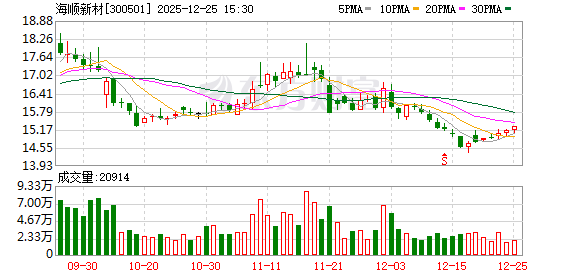
海顺新材:公司将围绕“价值创造、价值实现、价值经营”三位一体理念展开工作
Zheng Quan Ri Bao· 2025-12-25 10:40
Core Viewpoint - The company aims to enhance performance and market value through a three-pronged approach focusing on "value creation, value realization, and value management" [2] Group 1: Strategic Initiatives - The company plans to implement cost reduction and efficiency improvement measures [2] - Accelerating capacity ramp-up is a key focus for the company [2] - Increased investment in research and market development is prioritized to boost company performance [2] Group 2: Financial Management - The company is actively considering external growth opportunities and will continue to execute share buybacks and employee stock ownership plans [2] - In the event that convertible bonds do not convert fully at maturity, the company will arrange for redemption in accordance with the prospectus and relevant regulations to protect investor rights [2] - The company will evaluate various financing methods, including targeted placements and fundraising for new projects, to support ongoing development [2] Group 3: Communication and Compliance - The company emphasizes the importance of strengthening communication with investors to convey its value [2] - Strict adherence to legal and regulatory requirements for information disclosure is a commitment of the company [2]

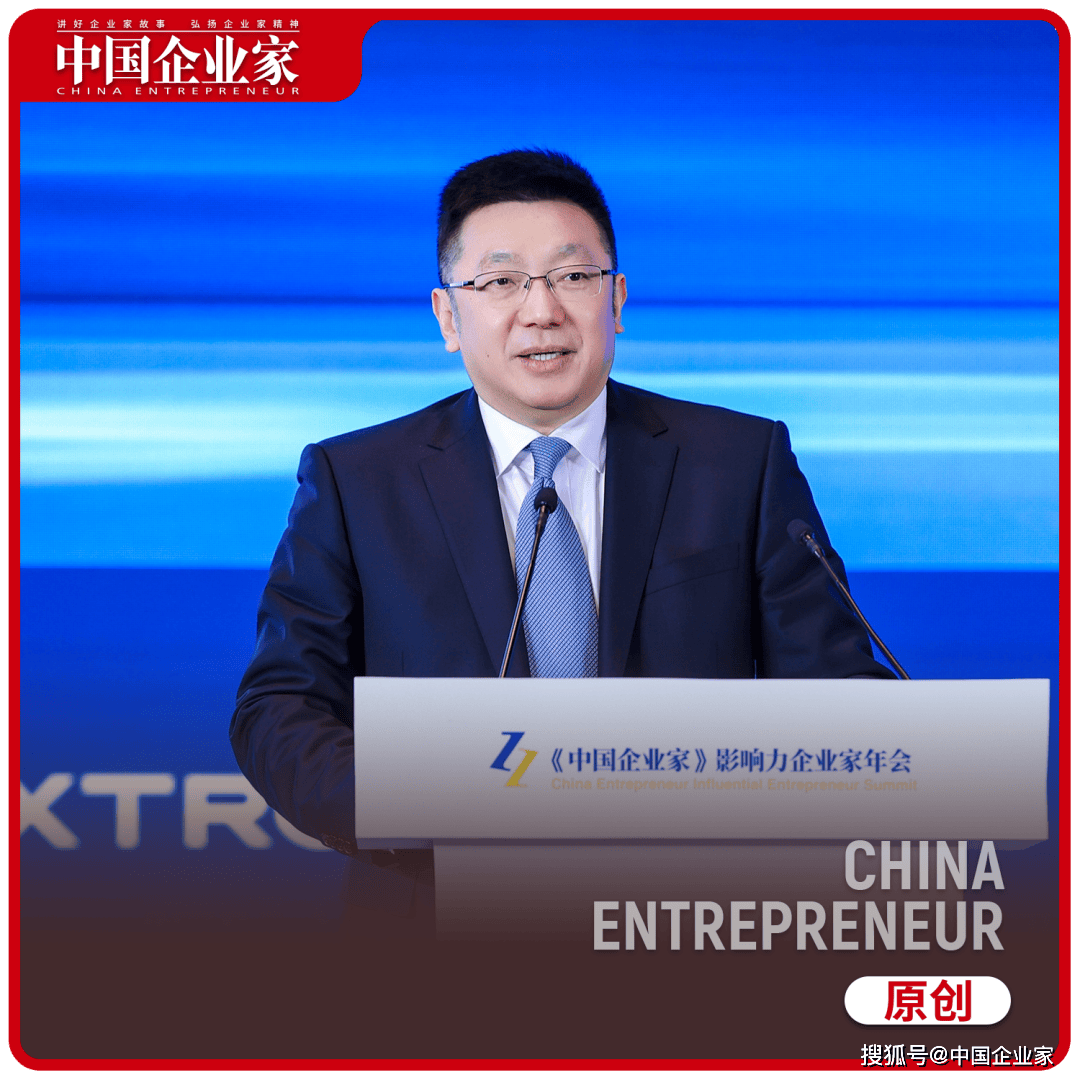
王兵:CEO的“C”是文化,比战略、客户更重要
Sou Hu Cai Jing· 2025-12-13 16:20
Core Viewpoint - The essence of corporate culture is not just what is stated by leadership but is reflected in the actual behaviors and practices of both leaders and employees, which ultimately influences strategic decisions, investments, and risk management [4][6][8]. Group 1: Importance of Culture - Culture is defined as the mission, vision, values, governance, and behavioral norms of a company, and it serves as the foundation for effective corporate governance [6][7]. - A flawed cultural orientation can lead to incorrect strategic, investment, and personnel decisions [4][8]. - The culture of a company is a critical determinant of its competitiveness, vitality, and creativity [7][8]. Group 2: Decision-Making Framework - New employees are advised to consider four key questions to improve decision-making: whether the action aligns with common sense, whether it is logical, whether one can empathize with others' perspectives, and whether one can anticipate future outcomes [4][7]. - The concept of "bias and self-interest" is highlighted as a significant barrier to effective decision-making, emphasizing the need for impartiality in leadership [8][9]. Group 3: Case Studies - The case of Microsoft under CEO Satya Nadella illustrates the importance of cultural transformation in reviving a company's fortunes, with a focus on motivating talent and reshaping corporate culture [10][11]. - Danaher Corporation exemplifies a "value culture" that prioritizes maximizing corporate and shareholder value through strategic acquisitions and divestitures [11][12]. - The experience of a company in the building materials sector demonstrates how a strong sense of mission can guide decision-making and lead to sustainable growth and innovation [13][18]. Group 4: Strategic Insights - Companies should focus on high-quality and sustainable development rather than merely expanding for growth [15][16]. - The importance of financial metrics such as sales net profit margin and operating cash flow is emphasized for assessing business performance [14][15]. - A proactive approach to risk management and strategic foresight is essential for long-term success [17][18].
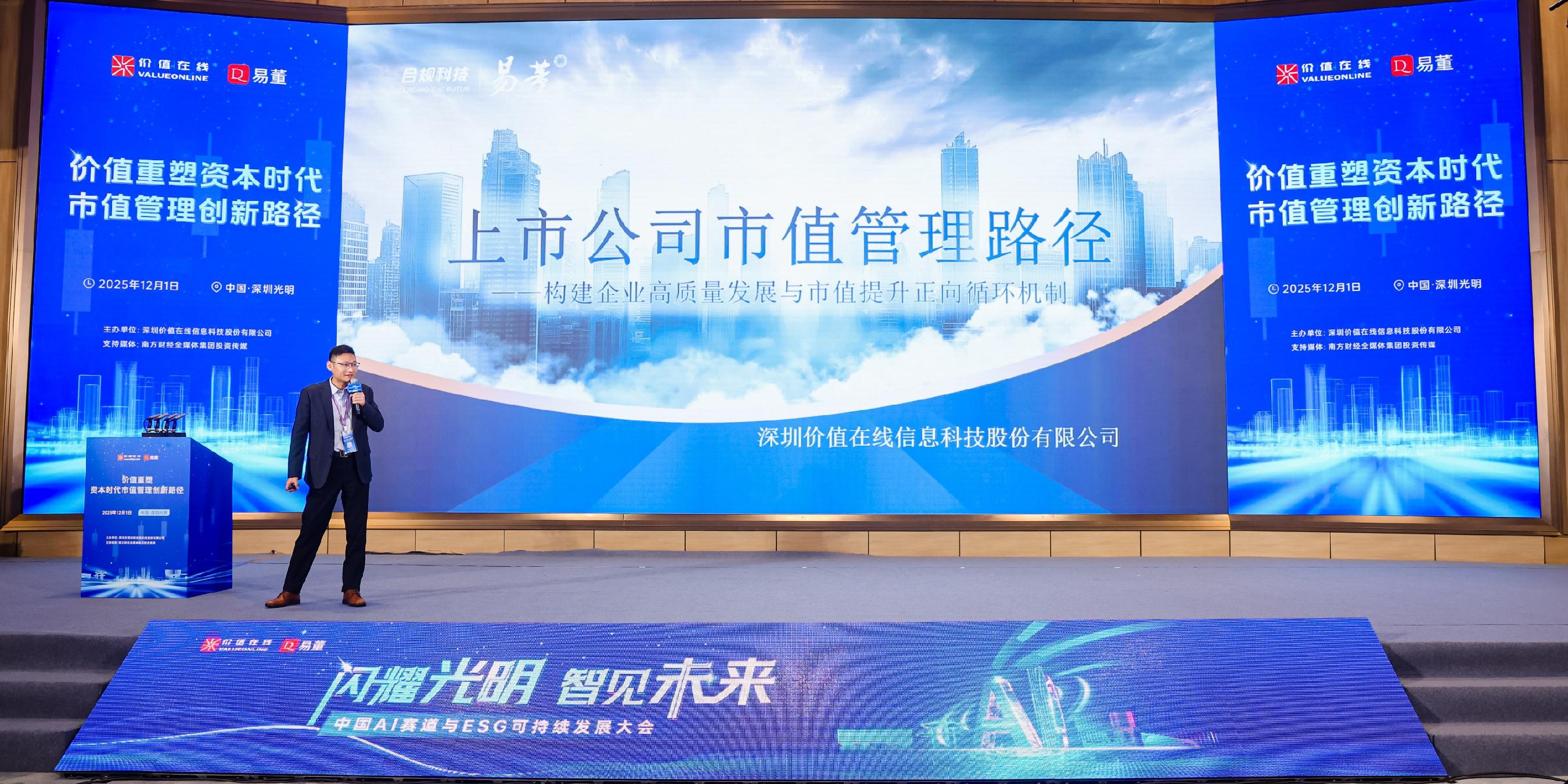
价值在线刘守卫:上市公司应该如何正确进行市值管理?
Jing Ji Guan Cha Wang· 2025-12-02 14:05
Group 1 - The core viewpoint presented by Liu Shouwei emphasizes the importance of effective market value management in the A-share market, highlighting both traditional and pseudo methods of value management [2] - Liu notes that the release of the "Guidelines for the Supervision of Listed Companies No. 10 - Market Value Management" aims to eliminate pseudo value management, enhance valuations of A-shares and state-owned enterprises, and regulate short-term behaviors [2][3] - The relationship between improving operational quality and enhancing market value is described as mutually reinforcing, where better operational quality attracts more quality and long-term investors, further boosting market value [3] Group 2 - Liu outlines a positive feedback loop in market value management consisting of three stages: value creation through improved operational quality, value communication with the capital market, and value operation to reinvest in production and further enhance operational quality [3] - The persistent issue of pseudo value management and the challenges in implementing effective value management are attributed to problems in the value creation phase, leading to over-reliance on value operation and communication [4] - Liu defines market value as the product of enterprise fundamentals (E) and price-to-earnings ratio (PE), stressing that both elements must be strong for a company to achieve good market value performance [4]
陈华:茅台要成为稳定、可持续、负责任的民族品牌
Zheng Quan Shi Bao Wang· 2025-11-28 07:09
Core Viewpoint - The future development direction of Kweichow Moutai is outlined by Chairman Chen Hua, emphasizing value creation, operational vitality, and substantial value realization across five perspectives [1] Group 1: Consumer Perspective - The company aims to provide excellent products and services to consumers, focusing on enhancing their quality of life and overall experience as its core mission [1] Group 2: Employee Perspective - Kweichow Moutai intends to maintain its foundational business, becoming a nurturing environment for employee growth and a stable place for their livelihoods [1] Group 3: Investor Perspective - As a responsible publicly listed company, Kweichow Moutai is committed to creating sustainable value for its shareholders [1] Group 4: Partner Perspective - The company seeks to ensure that every participant in its supply chain finds development opportunities and achieves mutual benefits [1] Group 5: Social Perspective - As a national brand, Kweichow Moutai emphasizes its responsibility to practice accountability and maintain stable, healthy, and sustainable development [1]

北新建材:回应股价表现及市值管理,坚持价值经营促发展
Xin Lang Cai Jing· 2025-10-29 08:47
Core Viewpoint - The management of Beixin Building Materials acknowledges the impact of macroeconomic conditions and industry developments on stock performance, emphasizing a commitment to value management and growth strategies [1] Group 1: Company Performance - Beixin Building Materials' stock price has reached a 10-year low, contrasting with the Chinese stock market hitting a 10-year high [1] - The company plans to continue its long-term strategy of value management and the "Nine-Grid Management Method" to enhance internal growth and external development [1] Group 2: Market Context - The performance of Beixin Building Materials is influenced by various factors, including macroeconomic conditions and changes in the industry over the past decade [1] - The company aims to ensure that its investment value accurately reflects its quality amidst these changing market dynamics [1]

北新建材:公司追求规模、质量、效益的均衡发展
Zheng Quan Ri Bao Wang· 2025-10-28 10:12
Core Viewpoint - The company emphasizes balanced development in scale, quality, and efficiency, aiming to enhance sustainable profitability and create more value for shareholders [1] Group 1 - The company is committed to value management and sustainable development [1] - The company employs a "Nine-Grid Management Method" to guide its operations [1] - The company aims to improve its continuous profitability capabilities [1]
北新建材(000786) - 2025年10月27日投资者关系活动记录表
2025-10-28 00:10
Group 1: Market Conditions and Product Pricing - The decline in gypsum board product prices is attributed to three main factors: insufficient industry demand, intensified market competition, and the company's strategic transformation in response to changing industry needs [2] - The company aims to counteract the decline in market demand and promote gypsum board price increases through product upgrades and technological innovations [2] Group 2: Business Growth and Strategy - The two wings of the business (waterproofing and coatings) have maintained growth due to high-quality offerings and effective brand building, particularly in the context of real estate adjustments [2][3] - The company will continue to adopt a combined strategy of internal growth and external expansion, focusing on niche markets to drive sustainable high-quality development [3] Group 3: International Expansion - The company has established a preliminary layout for overseas business in regions such as Africa, Southeast Asia, Central Asia, Europe, and the Mediterranean, planning to expand from existing production bases [3] - The strategy for overseas business development will involve a combination of internal growth and external development, promoting coordinated growth across all product lines [3] Group 4: Performance Metrics and Goals - The company emphasizes a balanced pursuit of scale, quality, and profitability, aiming to enhance sustainable profitability and create more value for shareholders [3] - In the waterproofing sector, the current focus is on quality and service, with a commitment to industry health and collaboration with peers to drive innovation and market growth [3]
北大方正人寿:以价值经营为引领 实现投产与业绩双优
Bei Jing Shang Bao· 2025-10-22 09:41
Core Viewpoint - The company aims to become a model for the management of small and medium-sized insurance companies in China, focusing on maximizing value as the sole standard for evaluating all work, and achieving synergy between company and individual values [1] Group 1: Channel Transformation and Management - The company recognizes that a scientific and complete system is essential for business development and profit goals, leading to the establishment of a "production-based investment" expense management system [2] - This system focuses on annual business planning and profit targets, ensuring that every expense maximizes its utility, thereby optimizing the company's investment-output ratio year by year [2][5] - A comprehensive channel management approach has been developed, which includes standards for classification, personnel selection, configuration, and cost input, promoting an upgraded channel management model [3] Group 2: Incentive Mechanisms and Team Motivation - The company has reformed the compensation structure for management personnel in individual insurance channels, creating a new mechanism that links fixed salaries and incentives to business scale without increasing costs [4] - This new compensation structure encourages a competitive atmosphere by rewarding high-performing managers and eliminating underperformers, thus enhancing overall team motivation [4] Group 3: Management Efficiency and Performance Monitoring - The company utilizes a visual tracking report system to monitor key operational indicators in real-time, allowing management to quickly identify and address critical issues [5] - This approach ensures that the company's operational strategies align with market demands and corporate goals, providing a strong foundation for stable business development [5] Group 4: Achievements and Future Directions - The company has achieved a 12% year-on-year increase in overall performance while reducing expense inputs by 10%, indicating a continuous optimization of investment-output levels [6] - These results affirm the strategic direction of value management and investment optimization, laying a practical foundation for the company's ongoing high-quality development [6]
北新建材:公司坚持价值经营、九宫格管理法,坚持内生增长和外延发展并举
Zheng Quan Ri Bao Wang· 2025-09-30 09:14
Group 1 - The core viewpoint of the article highlights that Beixin Building Materials (000786) is facing intensified market competition in the gypsum board, waterproof materials, and coatings industries due to a decline in domestic market demand [1] - The company is committed to value management and employs a "Nine-Grid Management" approach, focusing on both internal growth and external development [1] - The performance of the company's stock in the secondary market is influenced not only by its operational performance but also by macroeconomic conditions, the overall capital market environment, and industry development factors [1]