公募REITs市场发展

Search documents
公募REITs周度跟踪:隧道REIT即将询价-20260321
Shenwan Hongyuan Securities· 2026-03-21 12:52
1. Report Industry Investment Rating - Not provided in the given content 2. Core Viewpoints of the Report - This week, the external market environment fluctuated sharply. REITs first rose and then fell, similar to the bond market trend. The warehousing sector declined significantly due to short - term negative news. The primary market finally saw the issuance of the first new product in 2026, and the secondary market liquidity decreased [3]. 3. Summary According to the Directory 3.1 Primary Market: 8 Newly - Issued Public REITs Made Progress - As of March 20, 2026, 20 REITs have been successfully issued since 2025, with a total issuance scale of 40.3 billion yuan. This week, 8 newly - issued public REITs made progress, including the withdrawal of the Zhonghang Tianhong Consumption REIT application, and 1 REIT for expansion also made progress, namely the registration of the CICC Xiamen Anju REIT becoming effective [3]. - The Dongfanghong Tunnel High - speed REIT released an inquiry announcement on Thursday evening, with the inquiry date set for March 25, and the inquiry range from 4.012 yuan to 4.700 yuan per share. The Tianhong Consumption REIT application was withdrawn, and the Xinghe Commercial Real Estate REIT was accepted, planning to raise 1.686 billion yuan [3]. 3.2 Secondary Market: Liquidity Decreased This Week 3.2.1 Market Review: The CSI REITs Total Return Index Declined by 0.13% - As of March 20, 2026, the CSI REITs Total Return Index (932047.CSI) closed at 1021.78 points, a decline of 0.13%, outperforming the CSI 300 by 2.05 percentage points and the CSI Dividend by 2.92 percentage points. The year - to - date increase of the CSI REITs Total Return Index was 1.18%, outperforming the CSI 300 by 2.54 percentage points but underperforming the CSI Dividend by 3.70 percentage points [3]. - In terms of project attributes, property - type REITs fell by 0.33% this week, while franchise - type REITs rose by 0.41%. In terms of asset types, the affordable housing (+0.98%), transportation (+0.67%), data center (+0.10%), and environmental protection and water services (-0.05%) sectors performed well [3]. - Among individual bonds, 39 rose and 37 fell this week. CICC Chongqing Liangjiang REIT (+3.18%), Huaxia Beijing Affordable Housing REIT (+2.77%), and CICC Xiamen Anju REIT (+2.38%) led the gains, while Southern SF Logistics REIT (-4.62%), CICC ProLogis REIT (-4.46%), and Huaxia Hefei High - tech Industrial Park REIT (-3.30%) were at the bottom [3]. 3.2.2 Liquidity: Both Turnover Rate and Trading Volume Decreased - The average daily turnover rates of property - type/franchise - type REITs this week were 0.31%/0.28%, down 5.05/7.36 basis points from last week. The trading volumes during the week were 333 million/94 million shares, down 14.15%/20.81% week - on - week. The data center sector was the most active [3]. 3.2.3 Valuation: The Affordable Housing Sector Had a Higher Valuation - According to the ChinaBond valuation yield, the property - type/franchise - type REITs were 4.02%/4.87% respectively. The transportation (5.97%), warehousing and logistics (5.72%), and park (4.84%) sectors ranked among the top three [3]. 3.3 This Week's News and Important Announcements - News: During the Two Sessions, Chen Zhongni proposed to include REITs in the inter - connectivity to activate the Hong Kong REITs market. Guangdong Hongchuan Smart Logistics Co., Ltd. plans to initiate a REIT with certain assets. Jinan Urban Development Group's rental housing REIT service procurement project is open for bidding. Shaanxi's Huashan Scenic Area public REIT is about to be issued and listed [35]. - Announcements: Several REITs released their February 2026 operation data, including vehicle flow and toll revenue. Some REITs also issued restricted share lifting announcements [36].
【财经分析】扩容提质与进退有序:2026年公募REITs市场呈现发展新格局
Zhong Guo Jin Rong Xin Xi Wang· 2026-02-12 09:35
Core Viewpoint - The REITs market in China is entering a new phase of comprehensive development, focusing on both infrastructure and commercial real estate, with expectations for significant growth by 2026 [2][3]. Group 1: Market Development Characteristics - The domestic public REITs market is now in a "first issuance + expansion" dual-driven development phase, with the market size expected to double by the end of 2024, becoming a core tool for revitalizing capital market stock [2]. - As of January 30, 2026, there are 78 publicly listed REITs with a total market value of 228.7 billion yuan and a circulating market value of 124.7 billion yuan, with 37 additional products pending listing [2]. - The first batch of commercial real estate REITs includes diverse asset types such as shopping centers, hotels, and commercial complexes, with a projected fundraising scale exceeding 31.4 billion yuan in 2026 [3]. Group 2: Mechanisms and Trends - The normalization of the expansion mechanism has been established, with the interval for expansion applications reduced from one year to six months, enhancing market liquidity and asset operation efficiency [4]. - Long-term funds, including insurance and social security, are increasing their allocation to public REITs, leading to a steady rise in average daily trading volume and improved pricing efficiency [4]. Group 3: Project Termination and Market Dynamics - A significant number of projects have been terminated or withdrawn, marking the first large-scale exit cases in the REITs market, indicating a shift towards a more regulated and orderly market environment [5][6]. - The reasons for project withdrawals include stricter regulatory requirements, asset quality not meeting standards, and strategic adjustments by institutions in response to the launch of commercial real estate REITs [6][7][8]. Group 4: Future Outlook and Investment Strategy - The termination of projects is viewed as a necessary phase for the high-quality development of public REITs, with expectations for structural optimization and resilience enhancement in the market [9]. - By 2026, it is anticipated that the number of new public REITs will reach 20, with a total market size aiming for 300 billion yuan, and the potential for the market to reach 2 trillion yuan in the long term [9][10]. - Investment strategies should focus on high-dividend, quality operations, and assets with expansion potential, particularly in the rental housing and core commercial asset sectors [9][10].


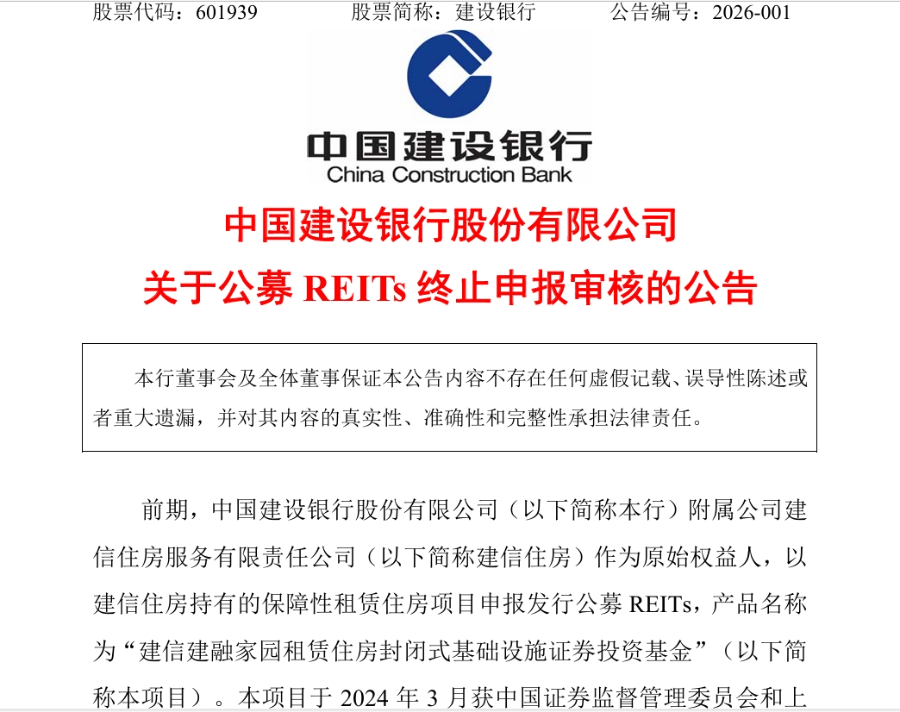
从“申报热”到“赎回潮”,5单公募REITs叫停
2 1 Shi Ji Jing Ji Bao Dao· 2026-01-29 10:45
Core Viewpoint - The public REITs market in China is experiencing a significant downturn, marked by a wave of project withdrawals from major companies, raising questions about the future of the market and potential investment opportunities [1][2]. Group 1: Market Dynamics - The public REITs market, once a hot financing innovation in China's infrastructure sector, has seen its market size rapidly exceed 100 billion, driven by strong policy support and investor demand [2]. - Recent withdrawals of REIT applications, including projects from major financial institutions and listed companies, indicate a shift from a previously bullish market to a more cautious environment [2][5]. - The terminated projects cover various asset types, including affordable rental housing, industrial parks, logistics, renewable energy, and water treatment, reflecting a broad impact across sectors [3][5]. Group 2: Reasons for Withdrawals - The withdrawals are attributed to two main factors: a cooling secondary market leading to decreased investor appetite and challenges in the operational quality of underlying assets [6][7]. - Specific concerns raised by regulatory bodies include rental stability, cash flow predictions, and compliance issues, which have led to prolonged periods of silence from project sponsors before the eventual withdrawal [5][6]. - The market environment has created significant pricing pressure on new issuances, with risks of underpricing and substantial asset impairment for original rights holders [6][7]. Group 3: Future Outlook - Despite the current challenges, there are favorable long-term factors for the REITs market, including regulatory support aimed at high-quality development and the potential for market expansion [8][9]. - The recent policy signals indicate a move towards normalizing REIT applications, suggesting that the market may eventually stabilize and grow, albeit with a more rigorous quality assessment process [7][8]. - The REITs market is projected to remain a significant player in China's macroeconomic landscape, with ongoing demand for stable income-generating assets, particularly from 'fixed income plus' funds [9].

复盘2025,公募REITs震荡中突显韧性,2026年配置瞄准景气赛道与超跌机会
Mei Ri Jing Ji Xin Wen· 2025-12-26 02:14
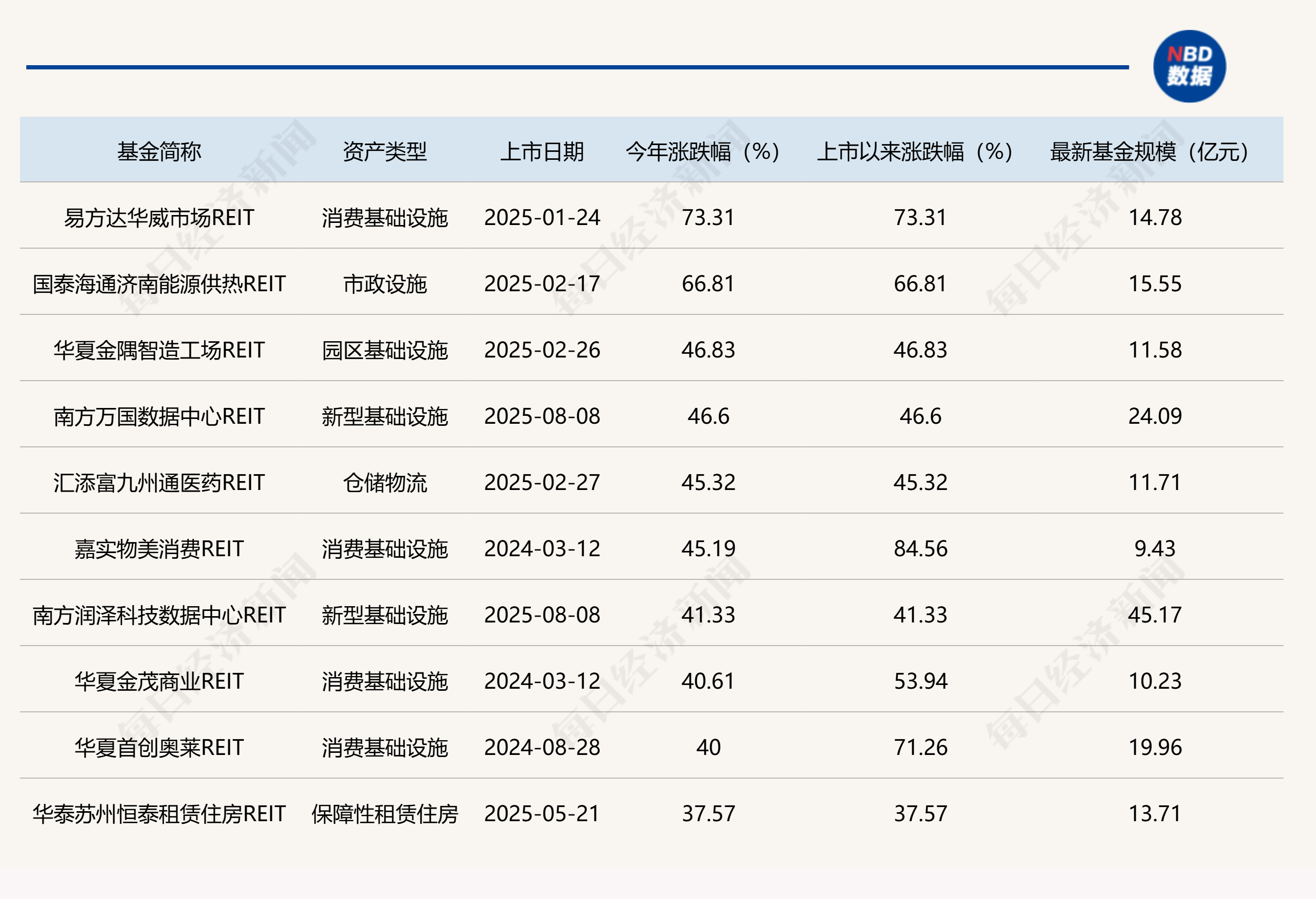
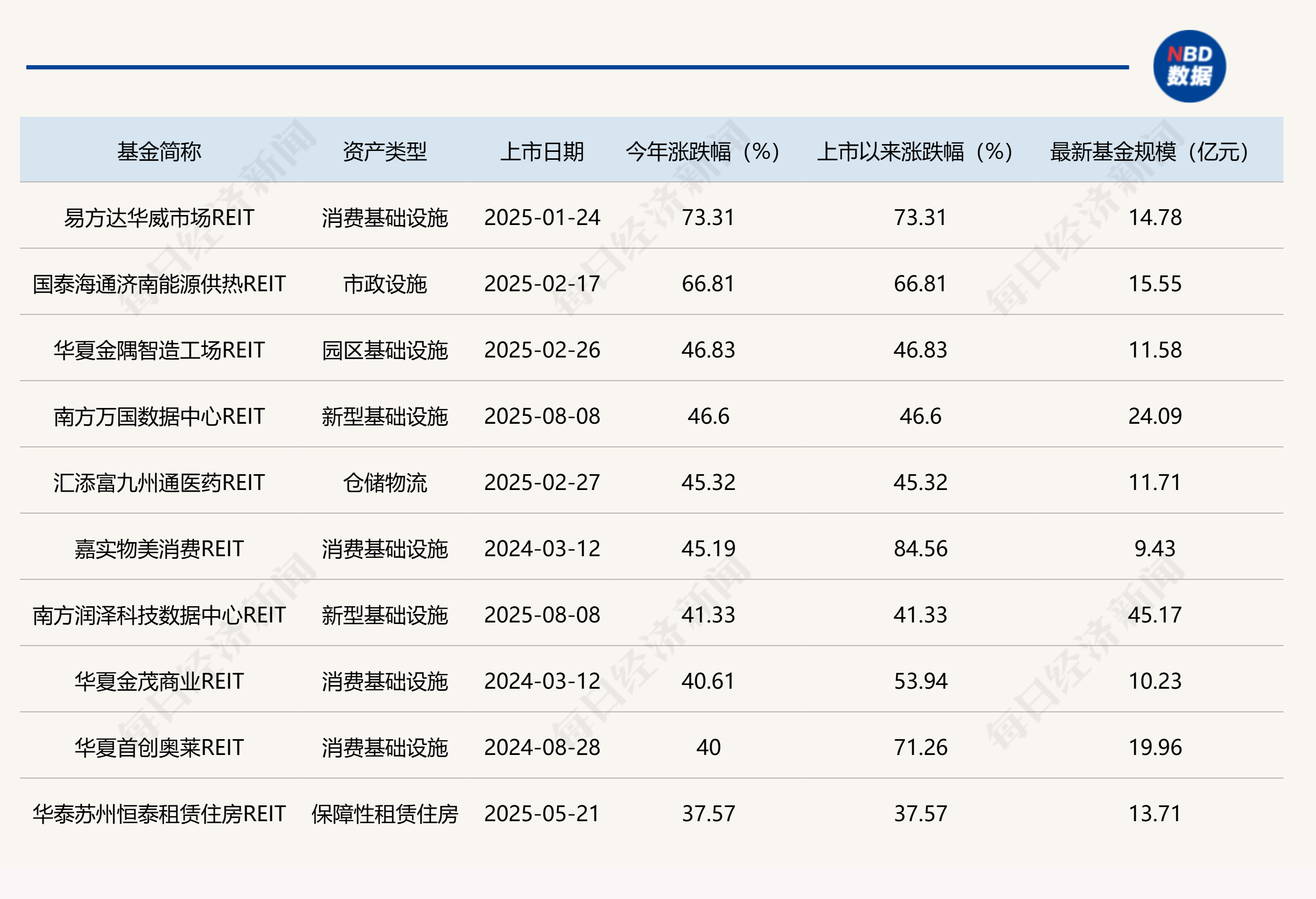
Group 1 - The core viewpoint of the articles indicates that the public REITs market in China is expected to experience rapid growth in 2025, with nearly 80 products issued and a total market value exceeding 220 billion yuan, covering various asset types including parks, consumption, transportation, and energy [1][2] - The secondary market for public REITs showed a "rise first, then fall" trend in 2025, with a cumulative increase of 14.2% in the first half of the year, followed by a noticeable decline in the second half due to rising long-term interest rates and release pressure [1][11] - The issuance of new REITs in the primary market was driven by asset expansion and mechanism improvement, with notable projects including the first data center REITs and the first municipal infrastructure REIT [1][2] Group 2 - As of November 2025, 78 public infrastructure REITs had been issued, raising a total of 209.5 billion yuan, with a market value of approximately 222.3 billion yuan [2] - Among the 77 listed products, 61 saw price increases, with 25 products rising over 20%, and 15 of those exceeding 30% [2][4] - The best-performing product was the Yifangda Huawai Market REIT, which increased by 73.31% since its listing in January 2025, reflecting strong market enthusiasm [4] Group 3 - The worst-performing products were primarily industrial park REITs, with seven out of the ten largest declines being from this category, indicating significant pressure on these assets [6] - Consumer and rental housing REITs showed strong performance, with increases of 22% and 13% respectively, while industrial parks were the only sector with negative returns by the end of November [6][11] - Experts predict that the REITs market in 2026 will see a steady improvement in overall conditions, driven by macroeconomic factors and ongoing policy support, despite potential challenges [7][8] Group 4 - Investment strategies for 2026 should focus on assets with stable cash flows and strong demand, particularly in sectors like consumption infrastructure and public utilities, while also considering opportunities in distressed assets showing signs of recovery [9][10] - A multi-dimensional evaluation framework is recommended for investors, emphasizing the importance of asset quality, management efficiency, and future growth potential [12]
复盘2025!公募REITs震荡中突显韧性,2026年配置瞄准景气赛道与超跌机会
Mei Ri Jing Ji Xin Wen· 2025-12-26 01:45
Core Viewpoint - The public REITs market in China is expected to experience rapid growth in 2025, with nearly 80 products issued and a total market value exceeding 220 billion yuan, potentially driving over 1 trillion yuan in new project investments [1][12]. Market Performance - The secondary market for public REITs showed a "rise then fall" pattern in 2025, with a cumulative increase of 14.2% in the first half, followed by a noticeable decline in the second half due to rising long-term interest rates and unlocking pressures [1][10]. - By December 10, 2025, 61 out of 77 listed REITs had increased in value, representing nearly 80% of the total, while 16 experienced declines [2][13]. Notable Products - The top-performing public REITs included: - E Fund Huawai Market REIT, which rose by 73.31% since its launch in January 2025 [3][18]. - Guotai Junan Jinan Energy Heating REIT, which increased by 66.81% [3][18]. - Consumer REITs dominated the performance rankings, with four out of the top ten and eight out of the top twenty products being consumer-related [4][18]. Underperforming Products - The worst-performing REITs included: - Zhongjin Hubei Keti Guanggu REIT, which fell by 22.57% [5][19]. - E Fund Guangkai Chanyuan REIT, which decreased by 17.11% [5][19]. - A significant number of underperforming products were from the industrial park category, indicating pressure on this asset type [6][20]. Future Outlook for 2026 - Experts predict a dual enhancement in scale and quality for the public REITs market in 2026, with expectations of stable interest rates and a gradual improvement in overall market conditions [7][21]. - The market is seen as being in a "dual window period" of policy benefits and rapid demand growth, with a focus on expanding asset coverage and mature fundraising mechanisms [8][21]. Investment Recommendations - Investors are advised to focus on assets with stable cash flows and strong demand, particularly in sectors supported by clear policy backing [22][23]. - Emphasis is placed on the importance of "good assets, good management, and good future" in evaluating investment opportunities [24].
商业不动产REITs试点启动 公募REITs市场发展进入新阶段
Zheng Quan Shi Bao Wang· 2025-11-28 11:05
Core Viewpoint - The China Securities Regulatory Commission (CSRC) has initiated a pilot program for Commercial Real Estate Investment Trusts (REITs), which is a significant step in revitalizing existing commercial real estate and supporting a new model for real estate development in China [1][2]. Group 1: Pilot Program Announcement - The pilot program for Commercial Real Estate REITs is part of the CSRC's efforts to implement the decisions of the Central Committee and the State Council, aimed at revitalizing existing commercial real estate [1]. - The Shanghai Stock Exchange and other entities are actively working on revising supporting rules, system upgrades, and nurturing pilot projects, with market opinions being solicited [1][6]. Group 2: Market Context and Demand - There is a strong consensus among market participants regarding the need for Commercial Real Estate REITs, driven by the demand for direct financing channels from asset holders in the commercial real estate sector [2][3]. - The public REITs market in China has grown significantly over the past five years, with 77 products listed and a total issuance scale of 207 billion yuan (approximately 30.5 billion USD), indicating a robust market foundation for the new pilot [2][3]. Group 3: Strategic Importance and Benefits - The pilot program is expected to broaden direct financing channels for enterprises, optimize capital structures, and facilitate a strategic shift from developers to asset managers [4][5]. - Commercial Real Estate REITs are anticipated to enhance asset pricing and resource allocation through market mechanisms, promoting healthy competition in the commercial real estate market [4][5]. Group 4: Investor and Market Implications - The introduction of Commercial Real Estate REITs will provide investors with a new investment tool that combines stable cash flow with asset appreciation potential, thereby enhancing investment portfolios [5]. - The pilot program is seen as a critical step in expanding the public REITs market and improving the multi-tiered capital market system in China [5][6]. Group 5: Implementation and Future Outlook - The CSRC and the Shanghai Stock Exchange are making steady progress in preparing for the pilot program, including refining business rules and enhancing market and investor education [6]. - The successful implementation of the Commercial Real Estate REITs pilot is expected to mark a new phase in the development of China's REITs market, serving as a long-term stabilizer and financial engine for high-quality economic growth [6].
首批基础设施公募REITs上市一周年:市场运行平稳 产业聚集效应初显
Xin Hua Wang· 2025-08-12 06:25
Core Viewpoint - The first batch of public infrastructure REITs in China has successfully completed its first year, demonstrating significant potential in promoting infrastructure investment and enhancing asset management efficiency [1][3][12]. Group 1: Market Performance and Impact - The first batch of public REITs has driven the construction of new infrastructure projects worth 300 billion yuan, with an average increase of 22% in share prices since listing [3][10]. - The total distributable cash flow from the first batch of REITs reached approximately 1.78 billion yuan, with a total dividend payout of about 1.22 billion yuan, representing around 60% of the distributable amount [3][10]. - The performance of these REITs has exceeded expectations, with stable operational data and positive market responses noted by various participating institutions [3][4]. Group 2: Regulatory and Institutional Support - Regulatory frameworks have been progressively improved, with various government departments and regulatory bodies actively supporting the development of the REITs market [4][5]. - Key policy announcements have expanded the scope of REITs, allowing for a broader range of assets and enhancing market liquidity through the introduction of insurance capital [4][5][12]. Group 3: Future Development and Asset Diversification - The asset types within the REITs market are gradually diversifying, with projects now covering areas such as affordable rental housing and renewable energy infrastructure [8][13]. - There are ongoing efforts to expand the REITs market, with institutions actively seeking to inject more mature assets into their REITs portfolios [6][7]. - The upcoming unlocking of restricted shares is expected to increase market liquidity and balance supply and demand dynamics within the REITs market [10][11]. Group 4: Strategic Importance - Public REITs are recognized as a crucial tool for revitalizing existing assets and expanding effective investment, aligning with national economic strategies [12][13]. - The development of a trillion-yuan REITs market is seen as essential for both short-term economic stability and long-term growth, with a focus on high-quality infrastructure projects [13].
新产品获批填补空白,这类基金年内最高涨幅超50%
券商中国· 2025-06-22 08:17
Core Viewpoint - The recent approval of public REITs, particularly in the data center sector, marks a significant expansion in China's REITs market, indicating a growing recognition and support for diverse asset types and innovative financing solutions [1][2][7]. Group 1: Recent Developments in Public REITs - Several public REITs, including the first data center REITs, have been approved, filling a market gap in the data center sector [1][2]. - As of June 20, the total number of public REITs in the market has exceeded 85, with underlying assets expanding to ten categories [4][5]. - The average increase in the price of listed public REITs has surpassed 20% this year, with some experiencing gains over 50% [5][6]. Group 2: Specific REITs and Their Characteristics - The first public data center REITs approved include the Southern Universal Data Center REIT and Southern Runze Technology Data Center REIT, with total fundraising amounts of 800 million and 1 billion shares, respectively [2][3]. - The first public REIT from Chuangjin Hexin, the Shou Nong Industrial Park REIT, has a stable occupancy rate of approximately 94.8% as of December 31, 2024 [3]. Group 3: Market Trends and Future Outlook - The public REITs market is expected to continue its growth trajectory, driven by policy support, market efficiency, and increasing investor awareness [1][7]. - Analysts predict that new asset types, such as data centers and smart city facilities, will emerge, aligning with the demands of the digital economy [7][8]. - The market still faces challenges, including the need for improved asset diversity and market scale, as well as the necessity for regulatory enhancements to streamline the issuance and operation of REITs [8].

总市值逾2000亿元!公募REITs四年“蝶变”
证券时报· 2025-06-21 00:21
Core Viewpoint - The REITs market in China has rapidly developed over the past four years, becoming the largest in Asia with a total issuance scale exceeding 180 billion and a market capitalization surpassing 200 billion [2] Group 1: Market Development - In four years, the total issuance scale of China's REITs market has exceeded 180 billion, with a total market value surpassing 200 billion, and 66 REIT products listed, outpacing markets like Singapore and Japan [2] - The REITs market has experienced a complete cycle from initial enthusiasm and blind speculation to a period of deep adjustment and subsequent rationality, focusing on the operational value of underlying assets [2][4] - Regulatory bodies have continuously explored institutional development, focusing on establishing a market-driven pricing mechanism that supports the entire chain of issuance pricing, secondary market trading, and management during the holding period [2] Group 2: Pricing Mechanism - The recent launch of the Bank of China and China Foreign Shipping's logistics REIT utilized an open market pricing range, attracting 575 offline bidders with a subscription multiple of 251.12 times, marking the second-highest in China's public REITs history [3] - The final pricing of this REIT reflected a premium of 16.16% over the assessed value, the highest issuance premium rate since the launch of public REITs [3] - Recognized "good projects" in the secondary market have shown price increases of over 20% from their issuance price, with some exceeding 90%, indicating strong market recognition and trading activity [3] Group 3: Regulatory Improvements - The regulatory framework for the REITs market has been continuously optimized, with a multi-layered rule system established to promote standardized and refined regulatory practices [4] - The principle of "mature one type, launch one type" has guided the development of various regulatory measures, enhancing the overall market structure [4] - As the REITs market matures, it is entering a new phase of expansion and quality improvement, with a broader range of underlying assets and proactive measures being introduced [4]