
利率路径预期

Search documents
综合晨报-20260320
Guo Tou Qi Huo· 2026-03-20 12:20
Report Industry Investment Rating No relevant information provided. Core Viewpoints of the Report - The current core variable of oil price trends depends on the smoothness of the Strait, a global energy transportation artery. Geopolitical conflicts show no sign of easing, and short - term oil price fluctuations may intensify [2]. - Precious metals may maintain weak and volatile operation before the war situation shows signs of easing [3]. - The prices of various commodities are affected by geopolitical conflicts, macro - liquidity, supply - demand relationships, and other factors, and their trends are complex and diverse. Summary by Related Catalogs Energy - **Crude Oil**: Night - session oil prices fell from high levels. Geopolitical factors such as the Israeli - Iranian conflict and the possible toll on the Strait of Hormuz affect the oil price. The release of strategic oil reserves is not a sustainable supply source. The short - term oil price may fluctuate more violently [2]. - **Fuel Oil & Low - Sulfur Fuel Oil**: After the Israeli statement to suspend attacks on Iranian energy facilities and the US hint of lifting sanctions, fuel oil prices fell. However, core issues remain unsolved, and the high - sulfur fuel oil is expected to be strong, while the low - sulfur fuel oil is supported by supply and demand [22]. - **Asphalt**: The April refinery production plan is at a low level in recent years. With the improvement of fundamentals and the boost of crude oil prices, asphalt is expected to maintain an upward trend [23]. Metals - **Precious Metals**: Overnight, precious metals fell significantly. With central banks releasing hawkish signals and inflation risks rising, precious metals may be weak and volatile before the war eases [3]. - **Copper**: Overnight, Shanghai copper rebounded. The market assesses the war risk and inflation trends. Domestic copper buying provides support, and the domestic visible inventory is expected to continue to decline [4]. - **Aluminum**: Overnight, Shanghai aluminum fell. Domestic aluminum inventory is at a high level, while overseas has a shortage concern. High oil prices put pressure on non - ferrous metals, and attention should be paid to the key support at 23,000 yuan [5]. - **Zinc**: Due to concerns about macro - liquidity tightening, zinc prices dropped rapidly. There is cost support at 22,500 yuan/ton, and the annual surplus expectation remains unchanged [8]. - **Lead**: The high LME aluminum inventory and the opening of the import window lead to the transfer of overseas surplus pressure to the domestic market. The price center of the Shanghai aluminum futures is under pressure, and the price may fluctuate more [9]. - **Nickel and Stainless Steel**: Shanghai nickel weakened. The strong US dollar exerts pressure. The upstream price increase supports the mid - stream. The pure nickel inventory increased, and the stainless - steel inventory decreased. It is expected to be weak and volatile [10]. - **Tin**: Shanghai tin opened low and closed up at night. The price is between 310,000 - 350,000 yuan. The market is concerned about the Middle East war risk. It is expected that the social inventory will decline this week [11]. - **Iron Ore**: The iron ore futures rose overnight. The global shipment increased, and the domestic arrival decreased. Terminal demand is warming up, and the price is expected to fluctuate [16]. - **Coke and Coking Coal**: The prices of coke and coking coal fluctuated. The supply of carbon elements is abundant, and the downstream iron - water output decreased. Geopolitical conflicts may make coking coal prices easy to rise [17][18]. - **Silicon Manganese and Silicon Iron**: The prices of silicon manganese and silicon iron fluctuated. The cost of silicon manganese is affected by the increase in manganese ore freight, and the supply and demand of silicon iron are relatively stable [19][20]. Chemicals - **Carbonate Lithium**: Carbonate lithium prices dropped, and the market trading decreased. The downstream production is improving, and the total inventory decreased, but the de - stocking speed slowed down [12]. - **Industrial Silicon**: The price of industrial silicon fell. The supply increased, and the demand weakened due to factors such as the approaching export tax - rebate node [13]. - **Polysilicon**: Polysilicon prices fell below the key support. The supply - demand contradiction is prominent, and the short - term price may be weak [14]. - **Urea**: Urea supply is high, and agricultural demand support is weakening. Under the influence of policies, the short - term market is expected to be weak and volatile [24]. - **Methanol**: Methanol maintained high - level fluctuations at night. The import volume decreased, and the domestic supply and demand improved. It is expected to run strongly [25]. - **Pure Benzene**: The pure benzene futures fluctuated narrowly. The production decreased, and the port inventory decreased. The short - term market is affected by cost and supply [26]. - **Styrene**: The cost fluctuates greatly. The production and demand of styrene are expected to decrease, and the demand reduction may be less than the supply reduction [27]. - **Polypropylene, Plastic, and Propylene**: Geopolitical risks increase market concerns. The downstream of propylene follows demand, and the trading of polyethylene and polypropylene is weak [28]. - **PVC and Caustic Soda**: PVC is expected to be strong in the short - term, affected by geopolitical conflicts and supply - demand changes. Caustic soda is also strong, but attention should be paid to the risk of large fluctuations [29]. - **PX and PTA**: The prices of PX and PTA fell with oil prices, but the impact of crude oil shortage still exists. The PTA load decreased, and the market has negative feedback pressure [30]. - **Ethylene Glycol**: The ethylene glycol load decreased, and the port inventory increased. The supply concern eased, and the demand was dragged down. It is expected to be high - level and volatile [31]. - **Short - Fiber and Bottle - Chip**: The short - fiber load decreased, and the bottle - chip load increased. The prices are affected by the Middle East situation, and attention should be paid to the potential negative feedback [32]. Agricultural Products - **Soybean, Soybean Meal, and Rapeseed Meal**: The cost of soybeans increased. The prices of soybean meal and rapeseed meal will follow the war situation and Brazilian shipments, with short - term volatility risks [36]. - **Soybean Oil, Palm Oil, and Rapeseed Oil**: Under the influence of global economic concerns, the funds of domestic soybean and palm oil flowed out. However, the bio - diesel value is prominent, and the prices are affected by the Middle East situation [37]. - **Soybean No. 1**: The price of domestic soybeans fell, and the funds flowed out. The prices are affected by the Middle East situation and agricultural supply - chain risks [38]. - **Corn**: The government will continue to subsidize corn producers. The spot prices are stable, and the inventory is at a low level. The futures may return to the fundamentals after the Middle East situation stabilizes [39]. - **Pig**: The pig futures price continued to fall. The industry is in a loss, and the inventory pressure needs to be reduced. It is recommended to buy far - month contracts at low prices after the premium narrows [40]. - **Egg**: The egg spot price is stable and strong, while the futures price is weak. In the medium - term, the egg price has the basis to strengthen [41]. - **Cotton**: Zhengzhou cotton prices fell. The downstream procurement is good, and the domestic import is abundant. The short - term is recommended to wait and see [42]. - **Sugar**: The international sugar price is concerned about the new - season Brazilian production. The domestic sugar is in a weak - reality and strong - expectation pattern, and attention should be paid to the weather [43]. - **Apple**: The apple futures price is high - level and volatile. The demand in the northwest is good, while the inventory in Shandong is high. It is recommended to wait and see [44]. - **Timber**: The timber futures price fluctuates. The supply is short - term low, the demand is recovering, and the inventory is low. It is recommended to wait and see [45]. - **Pulp**: The pulp futures price rose. The port inventory decreased, and the overseas quotation is strong. The demand is general, and it is recommended to wait and see [46]. Financial Products - **Stock Index**: A - shares adjusted with heavy volume, and the futures index fell. Geopolitical conflicts and inflation expectations affect the market. It is recommended to pay attention to key support levels and consider balanced allocation [47]. - **Treasury Bond**: Treasury bond futures continued to rise, and the yield curve steepened. The bond market is affected by the FOMC's hawkish stance, and the long - end may continue to repair [48].
贺博生:2.13黄金原油大幅回落最新行情走势分析及今日独家操作建议
Sou Hu Cai Jing· 2026-02-13 03:23
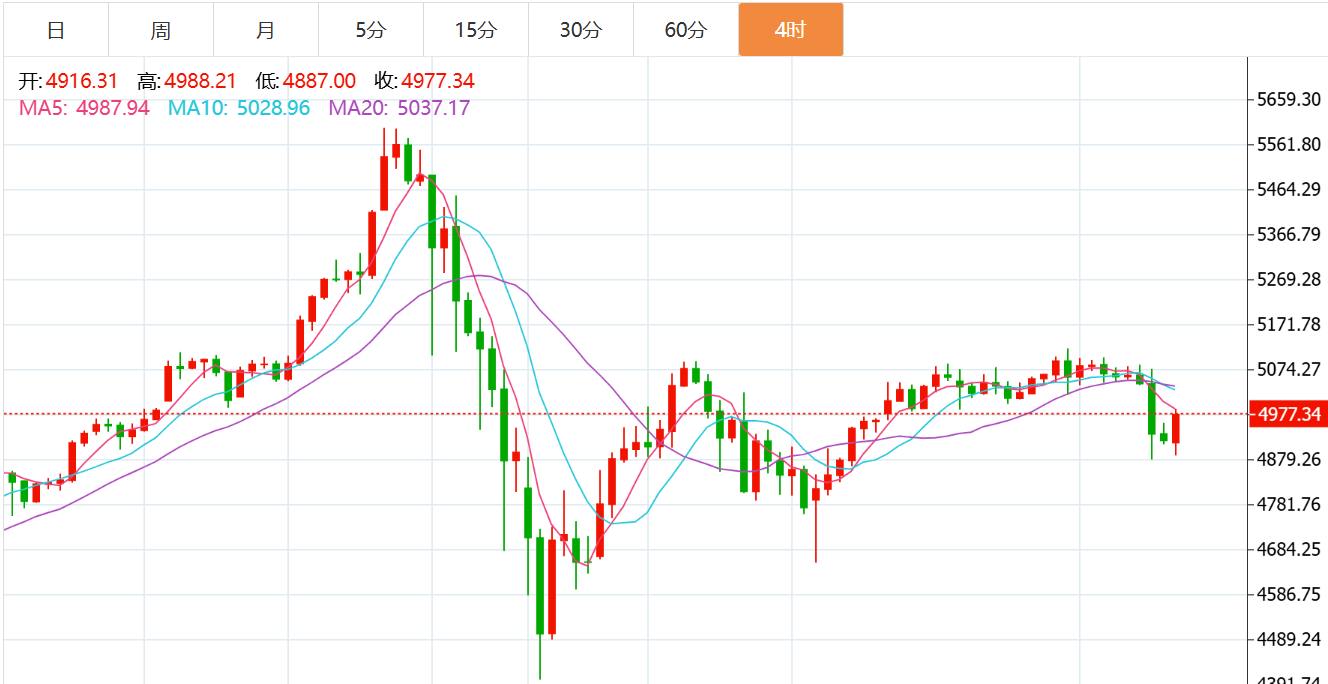
Group 1: Gold Market Analysis - The recent decline in gold prices is attributed to macroeconomic data reinforcing high interest rate expectations and tightening market liquidity, leading to concentrated selling [1] - Gold prices fell to around $4910 before rebounding, indicating a volatile market influenced by artificial intelligence-related asset fluctuations and margin pressure on leveraged funds [1] - Short-term gold price movements will be heavily influenced by inflation data and interest rate expectations, with potential for technical recovery if inflation weakens [1] Group 2: Technical Analysis of Gold - The Relative Strength Index (RSI) has dropped to 41.57, indicating a dominant bearish sentiment in the short term [3] - The Average Directional Index (ADX) has risen to 29.25, suggesting an increasing strength in the current downtrend [3] - Key support levels for gold are identified at $4850 and the 200-period moving average at approximately $4956.476, while resistance is noted at the $5000 mark [3] Group 3: Oil Market Analysis - The International Energy Agency (IEA) reported a significant deterioration in the global oil market supply-demand structure, with global oil inventories expected to increase by 477 million barrels by 2025 [4] - The IEA has revised down the global oil demand growth forecast for 2025 to an average of 769,000 barrels per day, reflecting economic uncertainties and high oil prices impacting consumption [4] Group 4: Technical Analysis of Oil - The daily chart indicates that oil prices have ended a series of upward closes, with a large bearish candlestick formation [5] - The MACD indicator remains above the zero line, suggesting a prevailing bullish momentum in the medium term [5] - Short-term trading strategies recommend focusing on buying on dips and selling on rebounds, with resistance levels at $64.0-$65.0 and support at $61.5-$60.5 [5]

东吴证券晨会纪要-20260106
Soochow Securities· 2026-01-06 00:39
Macro Strategy - The macro timing model for January 2026 has a score of 0, indicating a 76.92% probability of the A-share index rising, with an average increase of 3.18% historically [1][7][19] - The trading volume of the index exceeded 20 trillion yuan in the last week of 2025, indicating a recovery in trading sentiment [1][7] - The Chicago Mercantile Exchange raised the futures margin ratio twice at the end of December 2025, causing significant volatility in the metals sector [1][7] ETF Recommendations - The report recommends a growth-oriented ETF allocation based on the optimistic market outlook for January [1][7] - Notable inflows were observed in ETFs related to robotics, industrial non-ferrous metals, and satellite communications, suggesting increased investor interest in these sectors [1][7] Hong Kong Market - The listing of Wallen Technology and the strong performance of the Hang Seng Technology Index on January 2, 2026, particularly in the semiconductor sector, indicate potential for good absolute returns in the Hong Kong market during the spring rally [1][7][19] Nasdaq 100 ETF Insights - The Nasdaq 100 index experienced a 0.73% decline in December 2025, influenced by cautious sentiment ahead of the Federal Reserve's decision and concerns over AI company earnings [5][22] - As of December 31, 2025, the Nasdaq 100 index had a PE ratio of 35.93, indicating it is at a relatively high historical valuation [5][22] - The index is expected to maintain a volatile upward trend in January 2026, driven by macroeconomic signals and earnings reports from major tech companies [5][22][23] Industry Analysis - The report highlights the importance of the AI and semiconductor sectors, which are expected to see increased attention and funding in early 2026 due to positive sentiment and demand recovery [2][21] - The gaming sector is also benefiting from the regular issuance of game licenses, providing marginal support to content-related stocks [2][21] Company-Specific Insights - The report discusses the performance of specific companies such as the Honey Snow Group, which is positioned as a leading player in the affordable beverage market with a strong supply chain and brand recognition [13] - North Huachuang is noted for its platform-based semiconductor equipment leadership, benefiting from increased capital expenditure and domestic production rate improvements [15]
通胀未至带动债市强劲反弹 美债迎2020年来最佳上半年表现
Zhi Tong Cai Jing· 2025-06-30 22:22
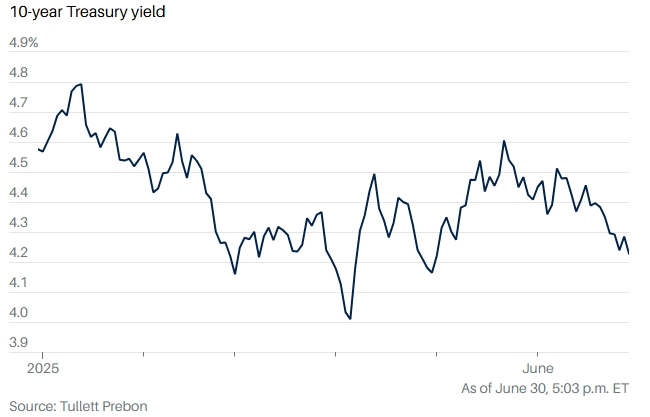
Group 1 - The core narrative of inflation concerns has weakened, leading to a strong performance in the U.S. bond market in the first half of 2025, with the 10-year Treasury yield dropping by 35 basis points, the largest decline in five years [1][3] - The easing of geopolitical tensions in the Middle East, particularly between Israel and Iran, has contributed to a decrease in oil prices from over $75 per barrel to below $65, alleviating inflation fears [3] - Despite increased tariffs leading to higher import costs for businesses, consumer inflation has remained low, with a mere 0.1% month-over-month increase in May, below the expected 0.2% [3][4] Group 2 - Economists believe that the impact of tariffs on inflation may have a lagging effect, with significant price increases potentially reflected in upcoming data [4] - Market participants have reduced their inflation concerns and adjusted their yield expectations downward, anticipating that the Federal Reserve may lower interest rates to the 3.5%-3.75% range by December 2025 [5] - The expectation of a more dovish Federal Reserve chair succeeding Powell has intensified, with market analysts predicting a higher likelihood of declining interest rates if economic conditions remain weak [6]
特朗普拟先打造“影子美联储主席”
news flash· 2025-06-25 23:18
Core Viewpoint - Trump is increasingly dissatisfied with the Federal Reserve's inaction on interest rate cuts, prompting him to consider announcing his next nominee for the Fed Chair earlier than expected [1] Group 1: Potential Nominees - Trump is contemplating potential candidates for the next Fed Chair, including former Fed Governor Kevin Warsh and National Economic Council Director Kevin Hassett [1] - Other recommended candidates include Treasury Secretary Mnuchin, former World Bank President David Malpass, and current Fed Governor Christopher Waller [1] Group 2: Timing and Implications - The current Fed Chair Jerome Powell has 11 months remaining in his term, but Trump may announce a successor as early as September or October [1] - Announcing a nominee this summer or fall would be significantly earlier than the usual three to four months before the transition [1] - This early announcement could allow the nominee to influence market expectations regarding future interest rate paths [1]