反欺诈

Search documents
买保险后举起钢管砸手指!谁来识破外卖员“苦肉计”
Bei Jing Shang Bao· 2026-01-19 12:57
Core Viewpoint - The article highlights a sophisticated insurance fraud scheme led by a delivery rider, revealing the increasing organization and professionalism of insurance fraud in the industry, with a total of over 320,000 yuan defrauded from three insurance companies through self-inflicted injuries and false claims [1][5][6]. Group 1: Fraud Scheme Details - The fraud began when the leader, Zhang, received unexpected insurance compensation after an injury, which motivated him to form a group that systematically exploited insurance claims [3][4]. - By May 2024, the group had established a complete operational process, including obtaining insurance qualifications through employment at delivery stations and inflicting injuries to claim compensation [4]. - The group operated across multiple locations in Hebei and targeted three different insurance companies, committing a total of eight fraud cases [5]. Group 2: Industry Implications - The rise of organized insurance fraud poses significant risks to the insurance industry, as it evolves from isolated incidents to a more structured criminal activity, affecting various types of insurance products [10][11]. - The lack of effective information sharing among insurance companies allows fraudsters to exploit multiple policies across different insurers, leading to repeated successful claims [9][10]. - The negative impact of such fraud extends beyond financial losses for insurance companies, potentially increasing premiums for honest policyholders and damaging the reputation of specific occupational groups like delivery riders [11]. Group 3: Recommendations for Prevention - To combat the growing threat of insurance fraud, a comprehensive "anti-fraud network" is necessary, integrating technology and collaboration among insurance companies [13][14]. - Utilizing big data and artificial intelligence for monitoring unusual insurance behaviors and establishing risk warning mechanisms is crucial for proactive fraud prevention [15]. - The establishment of a national anti-fraud information platform, allowing real-time sharing of suspicious cases and blacklists across companies and regions, is essential for enhancing the industry's defenses against fraud [15].


伪造合同、贿赂理赔 雇主责任险缘何成骗保“重灾区”?
Bei Jing Shang Bao· 2025-12-05 03:40
Core Viewpoint - Employer liability insurance, originally intended as a protective measure for businesses, is being exploited by criminals as a tool for financial gain, leading to a rise in insurance fraud cases in recent years [1] Group 1: Fraud Cases and Mechanisms - A significant insurance fraud case in Jiangsu involved a criminal network spanning multiple industries across 9 provinces and 16 cities, with a total amount involved exceeding 2.7 billion yuan [1][2] - The main perpetrator, an employee of an insurance agency, along with accomplices, created fake labor contracts and inflated injury claims to fraudulently obtain insurance payouts [2] - The investigation revealed that over 200 companies were involved in similar fraudulent activities, indicating a widespread issue [2][3] Group 2: Contributing Factors to Fraud - High-risk industries have a higher probability of accidents, providing opportunities for fraud [3] - Insurance companies have inadequate risk control mechanisms during underwriting and claims processes, leading to insufficient verification of the insured's qualifications and the authenticity of accidents [3] - The complexity of cross-regional operations and the lack of information sharing among industry players complicate investigations [3] Group 3: Recommendations for Prevention - Industry experts suggest establishing a collaborative anti-fraud mechanism involving law enforcement, financial regulators, and insurance associations to enhance fraud detection efforts [4] - Insurance companies are advised to strengthen risk control at the underwriting stage, rigorously verify the qualifications of insured enterprises, and utilize big data and AI technologies to monitor suspicious activities [4] - A national anti-fraud information platform should be developed to facilitate real-time sharing of blacklists and suspicious case data across companies and regions [4] Group 4: Regulatory Actions - The Financial Regulatory Bureau plans to integrate anti-fraud measures into all stages of insurance processes, from product design to claims handling, to improve the effectiveness of underwriting and claims management [5]
伪造合同、贿赂理赔,雇主责任险缘何成骗保“重灾区”?
Bei Jing Shang Bao· 2025-12-04 12:49
Core Viewpoint - Employer's liability insurance, originally intended as a protective measure for businesses, is increasingly being exploited by criminals as a tool for fraud [1][3]. Group 1: Fraudulent Activities - A significant insurance fraud case in Jiangsu involved a criminal network spanning multiple industries across 9 provinces and 16 cities, with a total amount involved exceeding 270 million yuan [4]. - The main perpetrator, an employee of an insurance agency, collaborated with others to create fake labor contracts and inflate claims related to workplace injuries, leading to multiple fraudulent insurance payouts [4][5]. - The rise in fraudulent activities is attributed to high accident rates in high-risk industries, inadequate risk control mechanisms by insurance companies, and the complexity of cross-regional fraud [5][6]. Group 2: Recommendations for Improvement - Industry experts suggest establishing a collaborative anti-fraud mechanism involving law enforcement, financial regulators, and insurance associations to enhance fraud detection and prevention efforts [7]. - Insurance companies are encouraged to strengthen risk control at the underwriting stage, rigorously verify the qualifications of insured entities, and utilize big data and AI to monitor suspicious activities [7]. - A national anti-fraud information platform is recommended to facilitate real-time sharing of blacklists and suspicious cases across companies and regions, along with cross-validation of information with external data sources [7].

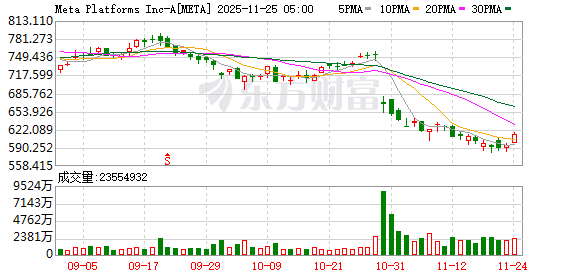
从诈骗广告中获利?美参议员呼吁调查Meta
Guo Ji Jin Rong Bao· 2025-11-25 10:11
Core Viewpoint - U.S. Senators Josh Hawley and Richard Blumenthal have called for a formal investigation into Meta by the FTC and SEC, alleging that the company profits significantly from fraudulent advertisements and fails to adequately protect consumers [2][4]. Group 1: Allegations Against Meta - Meta is accused of generating approximately 10% of its annual revenue, amounting to $16 billion, from illegal advertisements in 2024 [4]. - The company reportedly earns around $3.5 billion every six months from "high-risk" fraudulent advertisements [4]. - Internal documents suggest that Meta's anti-fraud enforcement is influenced by a "revenue red line," where actions that could result in more than a 0.15% loss in advertising revenue are not taken [4]. Group 2: Impact on Consumers - Senators claim that Meta's platforms are linked to one-third of successful fraud cases in the U.S., potentially correlating with over $50 billion in consumer economic losses based on FTC estimates of $158.3 billion in total fraud losses [5]. - In the UK, Meta's platforms are associated with 54% of payment-related fraud, according to a 2024 report [5]. - A Morgan Stanley survey indicates that nearly half of the fraud cases on the Zelle payment platform are related to Meta's services [5]. Group 3: Meta's Response and Criticism - Meta's spokesperson claims that the senators' statements are exaggerated and incorrect, noting a 58% decrease in fraud reports received over the past 18 months [6]. - Senators question Meta's commitment to combating fraud, citing significant layoffs in safety and compliance roles while investing heavily in generative AI [7]. - The senators argue that Meta's focus on short-term regulatory risks and the allocation of only $1 billion for potential fines is insufficient compared to the $7 billion annual revenue from high-risk advertisements [7]. Group 4: Call for Investigation - Senators urge the FTC and SEC to conduct a comprehensive investigation into Meta's reliance on fraudulent advertisements and inadequate anti-fraud measures [7]. - They recommend severe penalties if the investigation confirms the allegations, including the recovery of illegal advertising profits, substantial civil fines, and accountability for executives [7].

消费金融公司应加快迈向高质量发展
Zhong Guo Jing Ji Wang· 2025-11-04 14:17
Core Viewpoint - The revision of the "Management Measures for Consumer Finance Companies" in 2024 aims to strengthen the professional positioning of consumer credit functions, enhance consumer rights protection, and support the recovery and expansion of consumption for high-quality development [1][3]. Regulatory Environment - Recent regulatory policies, particularly the new directive to reduce borrowers' comprehensive financing costs, will impact the business models and pricing strategies of consumer finance companies in the short term, but are expected to promote high-quality development in the long term [1][2]. - The "Loan Facilitation New Regulations" issued by the National Financial Supervision Administration in April 2025, effective from October 1, emphasizes compliance and risk control in the internet loan facilitation business [1][2]. Industry Challenges - Small and medium-sized consumer finance companies that overly rely on loan facilitation face significant pressure due to regulatory changes [2]. - Many consumer finance companies lack independent customer acquisition and risk control capabilities, leading to high financing costs for borrowers [2][5]. Development Strategies - Consumer finance companies should focus on enhancing technology investment and team building to improve core competencies in customer acquisition and risk control [2][3]. - Companies are encouraged to seek differentiated competition by focusing on specific consumer scenarios or target customer groups, leveraging shareholder resources and technological advancements [3][4]. Risk Management and Operational Efficiency - Companies must adopt precise risk pricing and refined operational capabilities, utilizing big data and AI for better customer profiling and differentiated pricing [4]. - There is a need to optimize business models and cost structures by reducing reliance on guarantee and credit enhancement models, transitioning to a model where core risk control is self-managed [4][6]. Compliance and Consumer Protection - Compliance management is becoming essential for survival, requiring integration into all business processes and establishing comprehensive compliance review mechanisms [5]. - Strengthening consumer rights protection and reducing customer complaints are critical, necessitating a robust governance framework that includes consumer rights in daily operations [5][6]. Future Outlook - The consumer finance sector is expected to maintain good development potential, with policies guiding companies towards high-quality growth and responsible consumer finance practices [3][6].
金融教育宣传周丨中意人寿烟台中支金融知识“进农村”之走进西口渔村
Qi Lu Wan Bao· 2025-09-19 11:15
Group 1 - The core theme of the financial education campaign is "Protecting Financial Rights and Supporting a Better Life," aimed at enhancing public financial literacy [1] - The campaign includes outreach to rural areas, specifically targeting villagers to educate them on preventing illegal fundraising and fraud [1] - The initiative involves collaboration with local village committees to disseminate financial knowledge through accessible language and media [1] Group 2 - The "Into the Fishing Village" activity also features a "Hundred Days of Anti-Fraud Education" campaign, distributing educational materials to fishermen [3] - The company engaged with local fishery operators to assess their insurance needs and provide tailored insurance plans [3] - The activities have successfully fostered a closer relationship between the company and the community, creating a positive atmosphere for financial security [3]

建行济南山大南路支行:“中奖”藏陷阱,识破骗局守护客户钱袋子
Qi Lu Wan Bao· 2025-09-02 00:11
Core Viewpoint - The article highlights the importance of anti-fraud measures in banking, showcasing a successful interception of a telecom fraud attempt at a bank branch, emphasizing the need for heightened awareness and training among bank employees to protect customers' funds [1][2]. Group 1 - A middle-aged woman approached the bank staff after receiving a suspicious message claiming she had won a prize, which was identified as a typical telecom fraud attempt [1]. - The bank staff demonstrated a high level of risk awareness and successfully identified the fraudulent message, preventing potential financial loss for the customer [1]. - Key measures contributing to the successful prevention of fraud included employee training, regular anti-fraud drills, and a robust risk response mechanism [1]. Group 2 - The bank plans to enhance employee training and public awareness through various initiatives, including micro-salons, distribution of informational brochures, and displaying warning cases on electronic screens [2]. - The bank is committed to a customer-centric approach, fulfilling its social responsibility as a financial institution to protect the public's financial interests and contribute to the stability of the financial order and social harmony [2].

筑牢反电诈“铜墙铁壁”,同盾科技精准守护数字弱势群体
Cai Fu Zai Xian· 2025-08-14 02:30
Core Insights - The article highlights the increasing vulnerability of digital disadvantaged groups, such as the elderly and those in economically underdeveloped areas, to telecom fraud, which is becoming a significant societal issue [1][2][3] Group 1: Telecom Fraud and Vulnerable Groups - Telecom fraud is particularly targeting digital disadvantaged groups, making it difficult for them to recognize and prevent scams [1][2] - A specific case involving a woman from Huzhou, Zhejiang, illustrates how easily these groups can fall victim to scams, resulting in potential losses of up to 1.48 million yuan [1] - Experts emphasize the need for protective measures and self-defense strategies for these vulnerable populations [1][2] Group 2: Technological Challenges and Responses - Fraudsters are leveraging advanced technologies, including AI, to create sophisticated scams that are hard for the elderly and less tech-savvy individuals to detect [2][3] - The rapid evolution of fraud techniques outpaces the limited anti-fraud knowledge of these vulnerable groups, leading to significant financial losses [2][3] Group 3: Same Technology for Defense - Tongdun Technology has developed a comprehensive "telecom fraud risk defense solution" that analyzes user behavior and fraud patterns from both victim and fraudster perspectives [3][4] - This solution aims to cover the entire fraud process, including warning, detection, handling, tracking, and prevention, to thwart fraud attempts at the earliest stage [3][4] Group 4: Collaborative Efforts in Fraud Prevention - The fight against telecom fraud requires collaboration among banks, government, and enterprises to create a robust defense network [5][6] - Tongdun Technology is actively working with various stakeholders to enhance fraud prevention capabilities and reduce costs associated with anti-fraud measures [5][6] Group 5: Public Awareness and Education - Since 2021, Tongdun Technology has initiated public awareness campaigns to educate communities about telecom fraud, reaching tens of thousands of individuals [6] - The company has successfully assisted banks in developing long-term anti-fraud mechanisms, achieving a 90% accuracy rate in predicting risks in significant fraud cases [6]
践行爱与责任|中意人寿济宁中支密织“金融知识”安全网
Qi Lu Wan Bao· 2025-07-11 02:40
Group 1 - The core theme of this year's National Insurance Publicity Day is "Love and Responsibility, Insurance Makes Life Better" [1] - The event aims to enhance public awareness of financial risk prevention, focusing on anti-fraud, anti-money laundering, and prevention of illegal fundraising [1][5] - The promotional activities included distributing brochures and engaging the community through interactive games to educate residents about common financial scams [3][5] Group 2 - The promotional team provided one-on-one consultation services to address public inquiries regarding insurance claims processes, payout ratios, and special agreements [5] - A total of over 40 promotional materials were distributed during the event, effectively increasing community residents' awareness and ability to respond to financial fraud [5] - The company plans to continue regular financial knowledge dissemination in various community settings to strengthen financial security and protect residents' assets [5]