
数字金融产品

Search documents
【省工业和信息化厅】陕西“一月一链”投融资路演活动成效显著
Shan Xi Ri Bao· 2026-02-26 00:01
Core Insights - The provincial Ministry of Industry and Information Technology is conducting a series of investment and financing roadshows focused on key industrial chains to enhance the participation of small and medium-sized enterprises (SMEs) in the capital market and facilitate the transformation of innovation chain results [1][2] Group 1: Investment and Financing Roadshows - A total of 37 investment and financing roadshow events have been held since 2024, covering 162 enterprises and 807 investment institutions, resulting in a financing demand match of 11.432 billion yuan [1] - The roadshows are part of a broader initiative to connect SMEs with financial institutions, including securities firms, banks, funds, insurance, and venture capital [2] Group 2: Support for Enterprises - The provincial Ministry has organized various activities, including "Walking into the Exchange" and "Walking into Listed Companies," benefiting 80 and 115 enterprises respectively [2] - Two enterprises have successfully gone public, six have been listed on the New Third Board, and 150 enterprises have been identified as provincial-level listing candidates [2] Group 3: Financial Products and Services - The provincial Ministry is promoting diverse financing products to enhance financing efficiency for key enterprises, with a total of 16.975 billion yuan completed in stock and debt transfer transactions [3] - A digital financial platform has been established to integrate data from 2.2 million enterprises, creating dynamic growth profiles covering 253 fields, which aids in enterprise valuation and policy matching [3]
为金融强省建设提供硬核支撑 江苏省金融可信数据空间实验室在南京揭牌
Jin Rong Shi Bao· 2026-01-13 02:08
Core Viewpoint - The establishment of the Financial Trusted Data Space Laboratory in Jiangsu marks a significant step in the digital finance sector, providing robust support for the construction of a strong financial province [1] Group 1: Purpose and Function of the Laboratory - The laboratory aims to address data silos and circulation barriers, facilitating financing for small and micro enterprises and promoting the deep integration of digital technology with the real economy [1] - It is designed as a data circulation infrastructure based on consensus rules, connecting multiple stakeholders to achieve shared use of data resources [1] Group 2: Technological and Collaborative Framework - The laboratory will utilize cutting-edge technologies such as privacy computing, blockchain, and data sandboxes to eliminate data circulation bottlenecks [2] - It will establish a cross-institutional collaboration network characterized by "multi-level governance, clear responsibilities, and controllable security" to enhance the value of data elements [2] Group 3: Goals and Expectations - The laboratory is expected to enhance the efficiency of financial services to the real economy by empowering data elements, innovating digital financial products, and creating an open collaborative platform [2] - Jiangsu Bank expresses optimism about the laboratory's potential to explore new models and paths for data-enabled high-quality financial development [2]
8个重点领域、33项工作任务 金融监管总局最新公布→
Yang Shi Xin Wen· 2025-12-26 18:26
Core Viewpoint - The implementation plan for the high-quality development of digital finance in the banking and insurance sectors has been officially released, outlining eight key areas and 33 tasks to promote digital financial services. Group 1: Key Areas of Focus - Support for the innovation and growth of technology-based enterprises by establishing a big data set to improve credit approval efficiency [1] - Service enhancement for advanced manufacturing by utilizing industrial internet and knowledge graphs to strengthen data collection and analysis capabilities [1] - Assistance for green economic development through technology to identify environmental risks and optimize green financial service models [1] - Deepening financial services for small and micro enterprises by integrating various data sources to optimize credit models and build comprehensive online service platforms [1] - Development of targeted digital financial products in the livelihood service sector to improve financial service capabilities in healthcare and elderly care [1] - Support for rural revitalization by enhancing digital platform systems and financial service capabilities for agriculture [2] - Support for the implementation of national major regional development strategies by providing localized digital financial services [2] - Promotion of trade digitization by participating in shipping trade digitalization and enhancing trade data application [2] Group 2: Technological Integration and Risk Management - Acceleration of the development of "artificial intelligence + finance" by encouraging financial institutions to build enterprise-level AI platforms [2] - Exploration of cutting-edge technologies such as quantum computing, blockchain, and privacy computing for integration into financial scenarios [2] - Strengthening risk management in digital finance, focusing on liquidity, operational, and outsourcing risks, and establishing intervention mechanisms for critical business processes [2] - Emphasis on comprehensive management of financial consumer personal information and enhancing data security awareness through training and education [2]
低成本服务长尾客户,数字金融助力银行“省钱”又“挣钱”
Hua Xia Shi Bao· 2025-12-24 11:52
Group 1 - The core viewpoint of the articles emphasizes the transformative impact of digital technologies, such as artificial intelligence, on the financial industry, highlighting the concept of "borderlessness" in digital finance [2][3] - Jiangsu Province is actively promoting digital financial innovation through a systematic approach, including the launch of over 200 specialized digital financial products and the establishment of the first national digital and technology financial research institute [3][6] - SuShang Bank serves as a case study, demonstrating significant efficiency improvements through digital technology, managing 160 billion yuan in assets with only 700 employees, and achieving a revenue growth rate of 18.8% year-on-year for the first half of 2025 [2][4][5] Group 2 - The integration of digital technologies in finance is seen as a systemic transformation, with a focus on enhancing service quality and operational efficiency in the banking sector [3][6] - The bank's commitment to technology investment is notable, with 6% to 8% of annual revenue allocated to R&D, including 10% specifically for AI applications, which are now comprehensively integrated into its credit operations [5][6] - The forum also highlighted the release of the "China Residents Consumption Trend Report (2025)," indicating a stable consumption market with emerging structural trends, and projecting a moderate recovery in total consumption driven by policies aimed at increasing urban and rural residents' income [7]

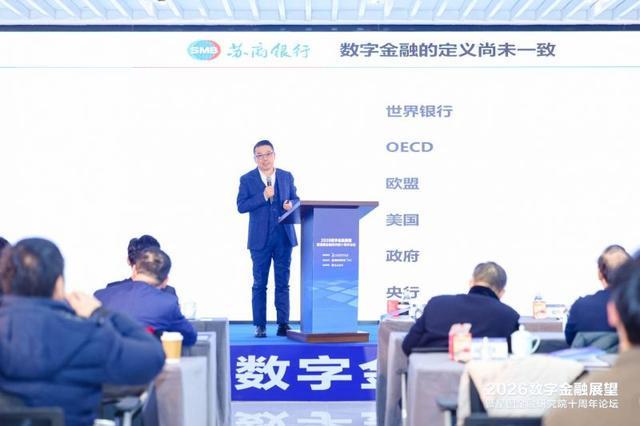
中国人民银行江苏省分行周诚君:打造全国首个“金融可信数据空间”
Zhong Guo Jing Ying Bao· 2025-12-23 03:38
Core Insights - The forum "2026 Digital Finance Outlook and the 10th Anniversary of Star Map Financial Research Institute" highlighted the integration of technology and finance as a systemic transformation in digital finance [1] - Jiangsu Province is leveraging its strong industrial foundation, open advantages, and rich educational resources to innovate in the digital finance sector, launching over 200 specialized digital financial products [1][2] Group 1 - The People's Bank of China Jiangsu Branch emphasized the importance of top-level design and systematic work plans to enhance digital finance [1] - The province is focusing on industry collaboration to empower core sectors of the digital economy [1] - Financial institutions are being encouraged to undergo digital transformation [1] Group 2 - Jiangsu has established the first national Financial Technology and Digital Finance Research Institute, positioning itself as a leader in the field [1] - Notable initiatives include the creation of the first "Financial Trusted Data Space" aimed at ensuring data security and traceability [1] - Research in quantum security has reached a global leading level, focusing on building defenses against future quantum computing threats [1] Group 3 - The integration of digital currency and smart contracts is showing disruptive potential in various applications, such as real-time certification and payment for green electricity and smart ticketing for large events [1] - Looking ahead to the 14th Five-Year Plan, there is a call to strengthen innovation-driven development, deepen the integration of digital and real economies, and activate the data factor market [2] - Jiangsu aims to explore new paths for high-quality national development in digital finance by leveraging its advantages [2]
做好金融“五篇大文章”!江苏发力
Shang Hai Zheng Quan Bao· 2025-09-11 16:14
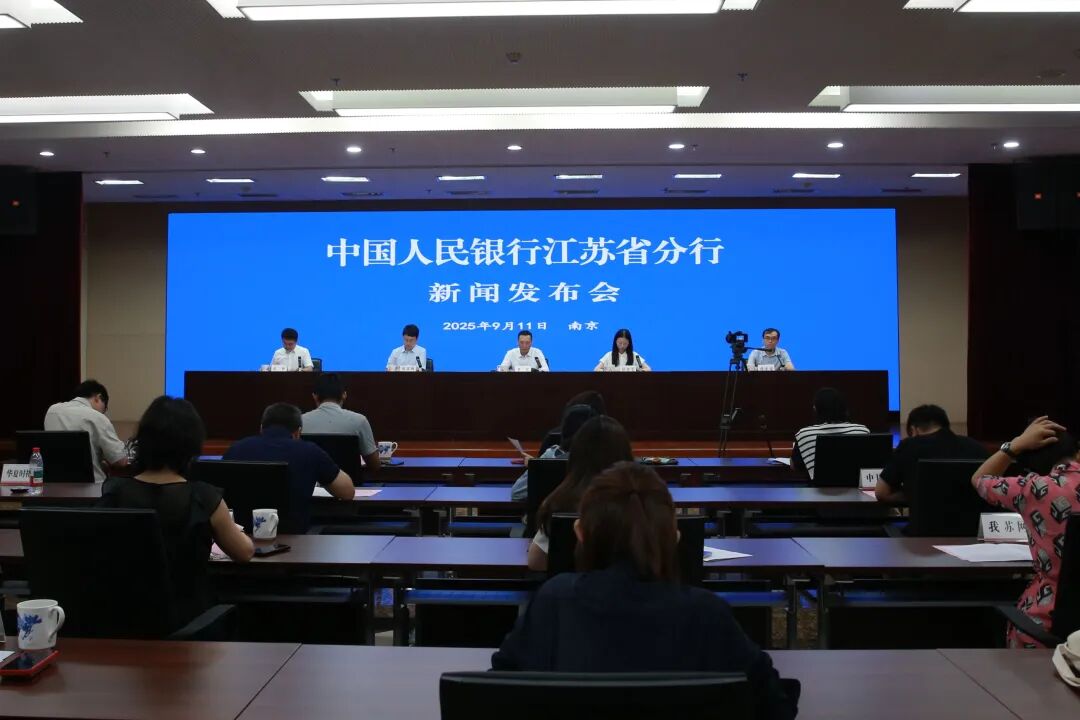
Core Viewpoint - The People's Bank of China Jiangsu Branch, along with various financial regulatory bodies, has drafted an action plan to enhance financial support for high-quality economic development in Jiangsu Province by focusing on five key financial areas [1][3]. Group 1: Action Plan Overview - The action plan consists of seven sections and 25 items, outlining development paths for technology finance, green finance, inclusive finance, pension finance, and digital finance [3]. - The core objective is to significantly improve financing accessibility in key strategic areas by 2027, optimizing the supply-demand match of financial products and services [3][4]. Group 2: Key Financial Areas - **Technology Finance**: The plan emphasizes increasing credit support for technology enterprises through a "stock-loan-bond guarantee" model, promoting investment-loan linkage, and establishing a technology finance alliance [3][6]. - **Green Finance**: It aims to enhance financing for green and low-carbon projects, expand the green financing subject library, and promote environmental information disclosure and ESG evaluation [3][4]. - **Inclusive Finance**: Focuses on expanding services for private enterprises, reducing costs for small and micro businesses, and supporting rural revitalization and poverty alleviation [4][5]. - **Pension Finance**: Plans to develop a collaborative system for pension financial products and services, establish a list of key enterprises in the silver economy, and promote financial education for the elderly [4][5]. - **Digital Finance**: Aims to advance the digital transformation of financial institutions, support the construction of digital economy pilot zones, and enhance data sharing and infrastructure [4][5]. Group 3: Implementation and Achievements - The Jiangsu Province has seen significant achievements in inclusive finance, with over 201 million registered users on its financial service platform, facilitating 6.49 trillion yuan in credit for small and micro enterprises [5]. - The regulatory body is implementing various policies to enhance technology finance, including pilot projects for equity investment and knowledge property finance [6][7]. - The transformation finance framework has been established, with over 2 billion yuan in loans allocated to incentivize enterprise transformation [7].
肖耿:稳定币助力资产增值与财富创造
Sou Hu Cai Jing· 2025-08-14 10:09
Core Viewpoint - The development of stablecoins and RWA (Real World Assets) in Hong Kong is crucial for enhancing the internationalization of the Renminbi and solidifying Hong Kong's status as an international financial center [1][6]. Group 1: Asset Appreciation and Wealth Creation - China faces intense competition in asset appreciation and wealth creation, particularly in trade, investment, technology, and macroeconomic policies [2]. - The U.S. has a long-term trade deficit due to low savings and high consumption, while China maintains a trade surplus due to high savings and low consumption [2]. - China needs to increase spending and implement demand-side reforms to match its strong supply capabilities with income and wealth generation [2]. Group 2: Hong Kong's Role in National Development - Hong Kong's monetary and regulatory advantages can facilitate high-quality outbound ventures for mainland enterprises and attract multinational companies to the Greater Bay Area [3]. - The development of a stablecoin linked to the Renminbi and related RWA asset systems can better connect the internal and external economic cycles [3]. Group 3: Institutional Advantages of Hong Kong - Hong Kong has an efficient supply chain network, a robust banking system, a strong capital market, reliable accounting services, and a trustworthy legal framework [4]. - The establishment of a "special zone within a special zone" in the northern metropolitan area of Hong Kong can enhance the dual circulation strategy [5]. Group 4: Promoting Renminbi Internationalization - Hong Kong plays a significant role in promoting the internationalization of the Renminbi, which is often underestimated due to the exclusion of Hong Kong financial data from mainland statistics [6]. - The asset size of the Hong Kong Monetary Authority is approximately 9.5% of the People's Bank of China, indicating a high level of internationalization in Hong Kong's banking sector [6]. Group 5: Digital Financial Technology - The use of stablecoins, limited blockchain, and digital smart contracts can enhance Hong Kong's international financial center status [7]. - The introduction of a legal framework for stablecoins in Hong Kong will support the creation of a stablecoin linked to the offshore Renminbi [8]. Group 6: Future Development of Digital Financial Infrastructure - Future digital financial infrastructure in Hong Kong should focus on stablecoins, blockchain, and smart contracts to enhance trust and reduce transaction costs [11]. - The regulatory framework should allow for the issuance of offshore Renminbi stablecoins, facilitating easier access to international markets [11]. Group 7: New Financial Products and Services - The development of new offshore Renminbi products and services can complement the existing dollar-dominated international financial system, enhancing resource allocation efficiency [12]. - The integration of AI and big data in digital financial products will improve risk assessment and market responsiveness [12].
加快券商数字金融建设 投身行业智能发展变革
Zheng Quan Shi Bao· 2025-08-05 23:49
Core Viewpoint - The company emphasizes the importance of digital financial construction as a key driver for the healthy and stable development of the capital market, aligning with national policies and industry trends [1][7]. Group 1: Digital Financial Development - The company identifies three dimensions for developing digital financial capabilities: enhancing the digitalization level of financial institutions, strengthening digital financial regulatory capabilities, and aligning with technological revolution trends [2]. - A dedicated Financial Technology Committee has been established to implement over ten specific measures aimed at transitioning from digitalization to intelligence [2][3]. Group 2: Innovation and AI Integration - The company plans to innovate its digital financial service system by accelerating product development, creating a benchmark app for retail clients, and building a comprehensive digital research platform [3]. - AI technology will be integrated across various scenarios, including intelligent investment research and customer service enhancements, while also establishing a cloud service architecture to support business development [3][4]. Group 3: Regulatory Technology and Trends - The company aims to build a leading regulatory technology system by applying optimal technologies to ensure compliance and enhance internal control digitalization [3]. - Four major trends in the securities industry are identified: productization, socialization, ecological integration, and strategic elevation, reflecting the ongoing transformation driven by financial technology [4][5]. Group 4: Investment and Smart Transformation - The company has committed to a long-term strategy of information technology investment, with a projected expenditure of 417 million yuan in 2024, marking a recent high [6]. - A comprehensive risk management system has been established, utilizing a risk data marketplace and various risk control models to enhance overall risk management capabilities [6]. Group 5: Commitment to Digital Finance - The company is dedicated to deepening its technology strategy, enhancing service quality, and optimizing financial service models in line with national policy requirements [7].

工行宁波市分行: 以头雁之姿谱写“五篇大文章”先行曲
Zhong Guo Jin Rong Xin Xi Wang· 2025-05-13 09:07
Core Viewpoint - The Industrial and Commercial Bank of China (ICBC) Ningbo Branch is committed to enhancing its financial services across various sectors, including technology finance, green finance, inclusive finance, pension finance, and digital finance, to support high-quality economic development in Ningbo [1][7]. Group 1: Technology Finance - ICBC Ningbo Branch focuses on serving technology-driven small and medium-sized enterprises, high-tech companies, and national technology innovation demonstration enterprises by optimizing its "five specialized" service system [2]. - The establishment of the ICBC Ningbo Technology Finance Center aims to enhance service quality and provide comprehensive financial support for technology enterprises [2]. - The bank promotes a multi-faceted service approach, integrating innovation, industry, talent, and funding to foster a virtuous cycle among technology, industry, and finance [2]. Group 2: Green Finance - The bank is dedicated to building a green finance ecosystem, supporting clean energy development, energy conservation, and environmental protection initiatives [3]. - As of September, the balance of green loans exceeded 77 billion yuan, an increase of over 16 billion yuan year-on-year, with a growth rate of 27%, outpacing the overall loan growth by 12 percentage points [3]. - ICBC Ningbo Branch is actively involved in projects that contribute to the city's dual carbon goals and the establishment of a high-quality green development framework [3]. Group 3: Inclusive Finance - The bank emphasizes a comprehensive approach to inclusive finance, focusing on small and micro enterprises, individual businesses, and agricultural operators [4]. - By launching various digital inclusive financial products, the bank aims to meet the financing needs of small businesses and the agricultural sector [4]. - As of September 2024, the balance of inclusive loans for small and micro enterprises exceeded 55 billion yuan, with agricultural loans surpassing 100 billion yuan, and nearly 50% of loans being digital [4]. Group 4: Pension Finance - ICBC Ningbo Branch is developing a pension finance service system to meet the needs of an aging society, focusing on pension financial services, pension industry finance, and related services [5]. - The bank is enhancing its service capabilities for elderly clients through a network of flagship and benchmark branches [5]. - The bank has issued over 150 million yuan in loans for the pension industry, supporting qualified pension enterprises [5]. Group 5: Digital Finance - The bank is advancing its digital finance strategy by promoting an integrated service model that combines platforms, products, and scenarios [6]. - ICBC Ningbo Branch serves over 9 million customers, focusing on using digital solutions to benefit agriculture, citizens, enterprises, and governance [6]. - The establishment of an enterprise-level risk control platform enhances the bank's overall risk management capabilities [6].
