合规运营

Search documents
BitMart US 宣布通过纽约监管审批全面落地美国
Xin Lang Cai Jing· 2026-02-28 02:44
Core Insights - BitMart US has officially launched its operations, achieving compliance across all 50 states in the U.S., making it one of the few exchanges authorized to offer cryptocurrency trading nationwide [1][2] - The platform emphasizes its compliance strategy as a key competitive advantage in the fragmented regulatory landscape of U.S. cryptocurrency exchanges [2] Compliance and Regulatory Strategy - BitMart US has completed its compliance licensing across all 50 states and territories, which is a significant achievement given the complex state-level regulatory environment [2] - The company has built its platform architecture around regulatory requirements from the outset to meet local operational standards [2][5] Business Model and User Engagement - The platform has introduced a zero-fee policy for all transactions, including digital asset trading and fiat deposits and withdrawals, aimed at lowering user participation costs [3] - This zero-fee strategy is becoming a key differentiator in the competitive landscape of cryptocurrency exchanges [3] - BitMart US targets both retail investors and international institutional clients seeking compliant trading channels in the U.S. market [3] Future Plans - BitMart US plans to expand its product offerings by 2026, with more services aimed at both retail and institutional users to be announced in the coming months [4]
2026贵金属交易平台排名推荐,选择值得信赖的平台
Sou Hu Cai Jing· 2026-02-10 09:12
Core Viewpoint - Compliance is the cornerstone of stable operations for financial institutions like TopWealthTrading, especially in the complex regulatory environment of Australia and the Asia-Pacific region [1][3]. Group 1: Compliance Management - TopWealthTrading prioritizes compliance in its financial services expansion and multi-asset trading platform development, ensuring all operations adhere to regulatory standards [1]. - The company has established a comprehensive compliance management system, including a dedicated compliance department that monitors and reviews business activities in real-time [3]. - Regular training is provided to employees to enhance compliance awareness and risk prevention capabilities [3]. Group 2: Risk Management - The company emphasizes the importance of risk control, recognizing the volatility and uncertainty of financial markets [3]. - Advanced risk control technologies and models are employed to assess and monitor market, credit, and operational risks [3]. - Reasonable risk warning indicators and stop-loss mechanisms are set to control risk exposure effectively [3]. Group 3: Technological Capabilities - TopWealthTrading leverages modern technology to create an efficient, stable, and secure trading platform [5]. - The platform utilizes advanced encryption and security measures to protect customer information and transaction data [5]. - Strong trading processing and data analysis capabilities are provided to offer clients real-time and accurate trading information and market analysis [5]. Group 4: Future Commitment - The company aims to enhance its compliance, risk control, and technological capabilities continuously, aspiring to be a trusted financial service partner for clients [7].


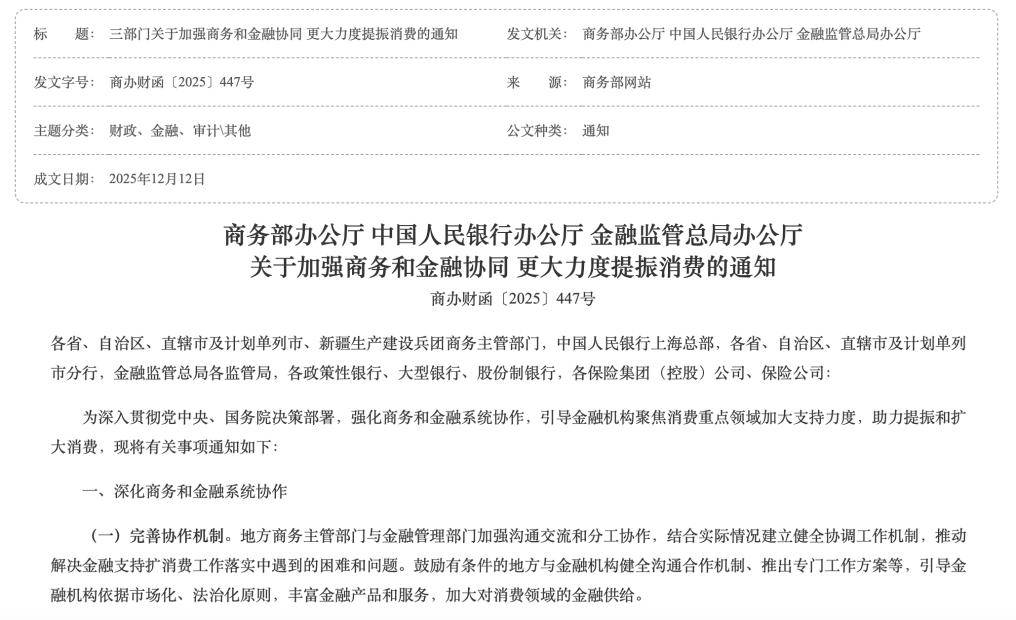
响应三部门协同促消费号召 合规分期服务激活消费潜力
Sou Hu Cai Jing· 2026-02-03 02:48
Core Viewpoint - The joint issuance of the notification by three departments indicates a clear direction for high-quality development in the consumer finance industry, presenting structural development opportunities for compliant consumer installment malls under favorable policies and regulatory guidance [1][2]. Group 1: Policy Benefits Driving Consumer Finance Upgrade - The notification emphasizes the need to enhance financial services for durable consumer goods and digital products, aiming to tap into the potential for upgrading consumer spending [4]. - Financial institutions are expected to provide more low-cost, compliant funding support based on market principles, ensuring a reliable funding source for consumer installment malls [5]. - The notification encourages personalized installment products and service combinations through refined risk control and differentiated pricing, aligning with the operational logic of consumer installment malls that utilize big data and AI algorithms [5]. Group 2: Offline Scenarios Expected to Scale Up - The notification advocates for financial services to penetrate physical retail environments, promoting a comprehensive "online + offline + scenario integration" model for installment malls [6]. - Collaborations with large supermarkets and brand stores will extend online installment services to offline consumption scenarios, enhancing brand exposure and reaching consumer groups that traditional e-commerce cannot access [8]. Group 3: Compliance Operations and Innovative Development - Despite the opportunities presented by favorable policies, the industry must remain vigilant against compliance risks, as some entities misuse the "installment mall" concept for illegal operations [11]. - The notification sets clear compliance standards, emphasizing differentiated credit granting, reasonable pricing, risk control, and service transparency [13]. - Industry experts suggest that installment malls should establish dedicated compliance committees and enhance risk control mechanisms to ensure transparency and compliance in product services [15][17]. Group 4: Conclusion - The release of the notification marks the beginning of a new phase in consumer finance development characterized by "policy guidance + market drive + compliance constraints" [18]. - The industry is entering a period of both development opportunities and significant restructuring, with compliant platforms expected to play a crucial role in driving consumption recovery and industrial upgrades [19].
低价之后,中国电商出海靠什么?
2 1 Shi Ji Jing Ji Bao Dao· 2026-01-26 12:08
Core Insights - The cross-border e-commerce landscape for Chinese platforms is shifting from a price war to a focus on sustainability and compliance by 2025 [1][4] - The "Four Little Dragons" (AliExpress, Temu, TikTok Shop, and Shein) are transitioning from low-cost strategies to brand enhancement and local market integration due to increasing global trade regulations and geopolitical challenges [1][9] Group 1: Market Dynamics - The initial price advantage of the "Four Little Dragons" is being challenged by rising global trade protectionism and changes in major market policies, particularly in the U.S. [2][3] - The cancellation of the $800 de minimis exemption in the U.S. has significantly impacted the competitiveness of Chinese cross-border e-commerce platforms, leading to a decline in daily active users for Shein and Temu [3][9] - The revenue growth for Pinduoduo's Temu has been severely affected, with transaction service revenue growth dropping to 5.8% and 0.7% in the first two quarters of 2025 [3] Group 2: Strategic Shifts - Platforms are focusing on brand building, localization, and high-quality growth as part of a systemic transformation to adapt to the new market environment [5][6] - AliExpress has launched a "Super Brand Going Global" initiative, aiming to compete directly with Amazon and has seen a significant increase in brand presence during major sales events [6] - Temu is also shifting its operational model to enhance brand value and is targeting high-quality development through its supply chain [7] Group 3: Compliance Challenges - The regulatory environment is becoming increasingly stringent, with compliance in data security, product safety, and environmental standards becoming critical for long-term success [9][10] - Temu is under investigation by the EU Commission, highlighting the growing scrutiny of Chinese platforms regarding compliance with international regulations [9] - The focus on compliance is expected to become a core competitive advantage for Chinese cross-border platforms, shifting the emphasis from rapid growth to sustainable and compliant operations [10]
新手2026年做大苗Tk跨境电商有哪些注意事项?
Sou Hu Cai Jing· 2026-01-14 06:22
Core Insights - In 2026, TikTok's cross-border e-commerce has entered a refined operational stage, and newcomers must avoid four core pitfalls: product selection, content localization, compliance, and supply chain management [1] Product Selection - New sellers often fall into the trap of blindly following domestic bestsellers, leading to issues such as cultural insensitivity. For instance, selling phone cases with Buddhist images in India or promoting short skirts in Saudi Arabia can result in account suspension. The recommended approach is to use the Echotik tool to filter categories with over 200% search volume growth in the last 30 days and a competition level below 0.3, focusing on lightweight, high-demand, and culturally appropriate products [3] Content Localization - Content is crucial for traffic conversion, but language barriers and cultural differences can hinder effectiveness. For example, a seller's video with a fast-paced Chinese voiceover translated into English received minimal views. New sellers are advised to adopt a formula of "3 seconds of pain point + 5 seconds of function + 2 seconds of promotion," using localized subtitles and slang. For the European and American markets, scene-based content like "quick makeup for going out" is suggested, while Southeast Asia may benefit from local dialects and festive themes [4] Compliance - With increasing global regulations in 2026, new sellers must prioritize compliance certifications. For example, sellers in Mexico need to register for an RFC tax number to avoid high tax rates, while the EU and US have strict requirements for FDA and CE certifications. Violations can lead to account suspension or legal action. It is recommended to use official music libraries and templates to avoid copyright issues and to use vague language in product descriptions to avoid absolute claims [6] Supply Chain Management - New sellers often compromise on quality by choosing low-cost suppliers, leading to delays and high return rates. For instance, a seller's choice of unregulated logistics resulted in a month-long customs delay. A suggested strategy is to implement a "small order quick response + local warehousing" approach, starting with 50-100 trial orders and maintaining a cash flow turnover rate within 90 days. Collaborating with suppliers that support drop shipping and provide after-sales service can help mitigate inventory risks [7] Conclusion - The 2026 TikTok cross-border e-commerce market presents both opportunities and challenges. By carefully addressing product selection, content localization, compliance, and supply chain management, new sellers can establish a foothold in this promising market. Each step taken with caution and each experience gained will contribute to their growth in the cross-border e-commerce sector [9]

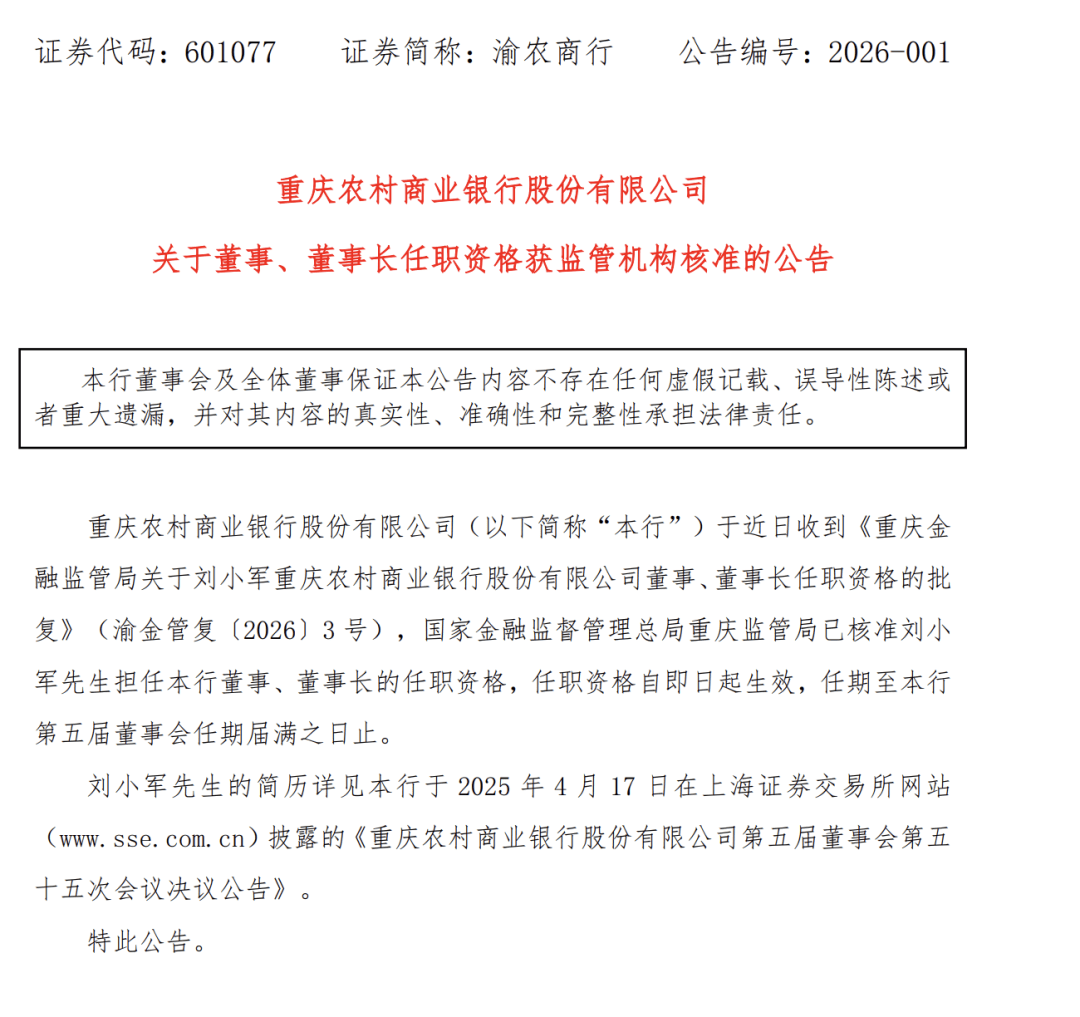
渝农商行新董事长就位
Sou Hu Cai Jing· 2026-01-09 11:48
Group 1 - Liu Xiaojun has been appointed as the Chairman of Chongqing Rural Commercial Bank, following a meeting with the main leaders of Beibei District to deepen practical cooperation [2] - Liu Xiaojun has a diverse management background, having worked in major state-owned banks, trust companies, and local financial platforms, with a master's degree in economics [2] - His career includes significant roles at China Construction Bank and CITIC Trust, and he took over as the Party Secretary of Chongqing Rural Commercial Bank in March 2025 [2] Group 2 - With Liu Xiaojun's official appointment, he will form a core management team with President Sui Jun, and the board has also agreed to appoint Liu Yi, a post-80s executive, as Vice President [3] - The management structure will consist of a combination of executives from the 60s, 70s, and 80s, aiming to enhance decision-making efficiency and compliance operations within the bank [3]

洞察2025|告别规模竞速 助贷业的分化与新生
Bei Jing Shang Bao· 2025-12-29 13:45
Core Insights - The core focus of the news is the significant regulatory changes in the lending industry in 2025, particularly the introduction of the "Lending New Regulations" which reshaped the operational landscape and competitive dynamics of the industry [1][2][3]. Regulatory Changes - The "Lending New Regulations" were introduced in April 2025, leading to a shift from rapid expansion to a focus on compliance and quality [1][2]. - The regulations established three main frameworks: a list management system for banks and lending institutions, a requirement for banks to enhance their own risk control capabilities, and the inclusion of all hidden costs in the annualized interest rate calculation with a cap set at 24% [2][3]. Industry Impact - The regulations have forced a contraction in the overall scale of the lending industry, particularly impacting platforms that relied on high-interest loans, leading to a more cautious operational state [2][3]. - The shift in competition from "scale racing" to "quality competition" has emerged, with firms focusing on high-quality customer segments and improving asset quality as a core competitive advantage [3][4]. Financial Performance - The overall revenue of the lending industry showed stability, but there were significant disparities in net profit growth among listed platforms, indicating a need for firms to adapt their strategies to maintain competitiveness [5][6]. - The overdue rates for major platforms increased, reflecting the heightened risk environment and the necessity for firms to focus on lower-risk customer segments to sustain profitability [6][8]. Strategic Shifts - Companies are transitioning from a "light capital" model to a "heavy capital" model, which involves more substantial investment but offers deeper competitive advantages and better risk management capabilities [6][7]. - The regulatory environment has prompted firms to enhance their technological capabilities and focus on sustainable profit paths, moving away from previous reliance on high-volume lending [7][8]. Future Outlook - The lending industry is expected to see further differentiation in 2026, with smaller platforms potentially exiting the market due to regulatory pressures and operational challenges [9]. - Companies are exploring international markets and diversifying their service offerings, with a focus on technology and integrated risk management solutions to adapt to the evolving landscape [8][9].
京东消金换帅,董事长李波面临合规运营新挑战
Sou Hu Cai Jing· 2025-12-29 13:14
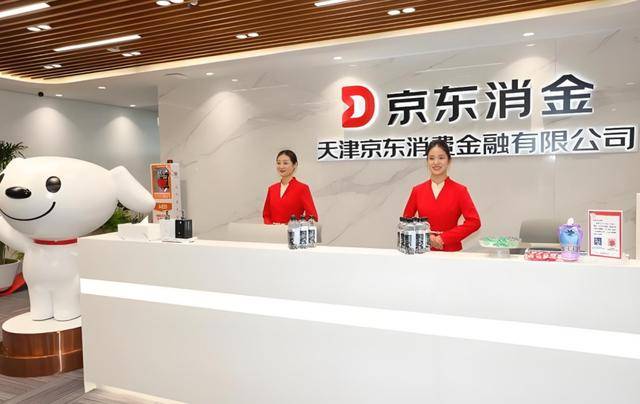
Group 1 - The core point of the news is the leadership change at Tianjin JD Consumer Finance Co., Ltd. (JD Finance), previously known as Jiexin Consumer Finance Co., Ltd., with Li Bo appointed as chairman and a complete overhaul of the board of directors [1][3] - JD Finance was established in 2010 with a registered capital of 5 billion yuan and was acquired by JD through Guangzhou Jingdong Trading Co., Ltd. in October last year, leading to its rebranding [1] - As of the end of 2024, JD Finance's total assets are reported to be 4.842 billion yuan, with total equity of 2.574 billion yuan [1] Group 2 - Li Bo, with over 20 years of experience in the financial industry, previously served as the deputy general manager of the Hunan branch of the Industrial and Commercial Bank of China and joined JD in March 2021 [3] - Li Bo's primary challenge as chairman will be addressing potential compliance risks that have been criticized during the Jiexin era [3] - Complaints against Jiexin Finance have exceeded 80,000 on the Black Cat Complaints platform, with less than 60,000 complaints resolved, highlighting issues such as high interest rates and collection practices [5] - Jiexin Finance has faced criticism for its handling of personal information, being listed among 67 applications that illegally collected personal data, with specific violations noted regarding user consent and privacy policy transparency [5]
洞察2025|告别规模竞速,助贷业的分化与新生
Bei Jing Shang Bao· 2025-12-29 13:06
Core Insights - The core viewpoint of the articles is that the lending industry in 2025 underwent significant changes due to new regulatory frameworks, which reshaped the competitive landscape and forced companies to adapt to compliance, risk, and cost pressures [1][3][5]. Regulatory Changes - The introduction of the "Lending New Regulations" in April 2025 marked a pivotal moment for the industry, leading to a shift from rapid expansion to a focus on compliance and quality [1][3]. - The regulations established three main frameworks: a list-based management system for banks working with lending institutions, a requirement for banks to enhance their own risk management capabilities, and the inclusion of all hidden costs in the annualized interest rate calculation, with a cap set at 24% [3][4]. Industry Transformation - The new regulations prompted a significant transformation in the lending industry, with a notable shift from a focus on scale to one on quality, as companies tightened risk management standards and concentrated on high-quality customer segments [5][6]. - The overall lending volume in the industry contracted as companies adjusted to the new compliance requirements, leading to a more cautious operational state [4][6]. Financial Performance - Analysis of quarterly reports from listed lending platforms revealed a mixed performance, with some companies like Xinye Technology and Xiaoying Technology achieving growth in both revenue and net profit, while others faced challenges with rising overdue rates [7][8]. - The transition from a "light capital" to a "heavy capital" model was observed, as companies sought to enhance risk control in response to regulatory pressures [7][8]. Future Outlook - The industry is expected to see further differentiation in 2026, with smaller platforms potentially exiting the market due to compliance challenges, while larger players will likely focus on technology services and integrated risk management solutions [11][12]. - Companies are exploring international markets and technological advancements as new growth avenues, with an emphasis on reducing customer acquisition costs and improving customer quality [10][11].

品牌出海哪家强?出海帮与深跨协深度对谈:揭秘跨境营销获客新路径
Sou Hu Cai Jing· 2025-12-18 10:01
Core Insights - The discussion highlights the transformation in cross-border marketing from individual heroism to systematic operations, emphasizing the need for a structured approach in navigating the complexities of global markets [3][10] - The collaboration between industry associations and technology platforms is identified as a key driver in overcoming challenges faced by enterprises in their international expansion efforts [7][10] Industry Transformation - The cross-border e-commerce landscape has evolved significantly, moving from reliance on personal efforts to a more systematic and strategic approach [3] - Many traditional manufacturers face challenges in transitioning to cross-border e-commerce due to a lack of understanding and resources, leading to high trial-and-error costs [3][6] Technological Empowerment - The company offers a comprehensive product matrix designed to address different stages of international expansion, including solutions for website building, customer acquisition, advertising risk management, and private traffic management [6][4] - AI-driven tools are being utilized to streamline the customer acquisition process and enhance marketing effectiveness, allowing businesses to achieve better results with lower costs [6][10] Ecosystem Collaboration - The partnership between the Shenzhen Cross-Border E-Commerce Association and the company aims to create a dual-engine model that combines strategic guidance with technological implementation [7][8] - The association plays a crucial role in providing insights, policy connections, and resource aggregation, while the technology platform offers scalable digital tools for operational growth [7][8] Compliance and Localization - Compliance and deep localization are becoming essential for brands looking to succeed in international markets, with a focus on understanding local cultures and consumer behaviors [9][10] - The need for a comprehensive understanding of global regulatory environments is highlighted as a critical factor for businesses to mitigate risks and ensure sustainable growth [9] Future Outlook - The conversation underscores the importance of adaptability and continuous learning for businesses in the fast-evolving cross-border e-commerce sector [10] - The integration of ecosystem collaboration and technological innovation is seen as a pathway for Chinese brands to transition from traditional manufacturing to sustainable global marketing strategies [11]