大宗商品资源配置枢纽

Search documents
舟山港综保区扩区获批,打造全国首个大宗商品特色型综保区
Zhong Guo Xin Wen Wang· 2026-02-26 00:56
Core Viewpoint - The expansion of Zhoushan Port Comprehensive Bonded Zone marks a new development phase focused on bulk commodities, enhancing its role as a resource allocation hub in Zhejiang's Free Trade Zone [1][2] Group 1: Expansion Details - The State Council has approved the expansion of Zhoushan Port Comprehensive Bonded Zone, which will now include an area of 6.12 square kilometers, incorporating 0.98 square kilometers from Shulanghu Island and Huangzeshan Island [1] - This expansion is a key step in implementing the "Zhejiang Free Trade Zone Bulk Commodity Resource Allocation Hub Construction Plan" [1] Group 2: Strategic Implications - The expansion will strengthen the storage, transportation, and processing capabilities of bulk commodities, including iron ore, oil products, and non-ferrous metals, thereby enhancing the international trading and pricing influence of Zhejiang [2] - Future initiatives will focus on scaling up bonded blending of minerals, biofuel blending, and bonded marine fuel businesses, while promoting industrial synergy within and outside the bonded zone [2]
国务院批复同意,舟山港综合保税区扩区!
Sou Hu Cai Jing· 2026-02-13 11:56
Core Viewpoint - The expansion of Zhoushan Port Comprehensive Bonded Zone marks a new development phase focused on bulk commodities, enhancing its international competitiveness and industry influence [1][4]. Group 1: Expansion Details - The expansion includes the addition of 0.98 square kilometers from Shulanghu Island and Huangzeshan Island, focusing on bonded mixing of minerals and biofuels [3]. - The total planned area of Zhoushan Port Comprehensive Bonded Zone now reaches 6.12 square kilometers, forming an "area and four sections" industrial development pattern [3]. Group 2: Industrial Focus and Development - The island section covers 2.55 square kilometers, housing over 15,000 trade entities with an annual trade volume of 700 billion yuan, aiming to become the world's third-largest ship refueling port by 2025 with a supply of 8.02 million tons [4]. - The Qushan section spans 2.76 square kilometers and has become China's largest offshore iron ore transshipment base, supported by dual 400,000-ton terminals [4]. - The airport section, covering 0.74 square kilometers, leverages its airport functions to support aviation and logistics development [4]. - The Huangzeshan section, a newly added area of 0.072 square kilometers, will assist in expanding oil and other bulk commodity businesses [4]. Group 3: Strategic Goals and Future Plans - The expansion will support the construction of a bulk commodity resource allocation hub in Zhejiang Free Trade Zone, enhancing storage, transportation, and processing capabilities for iron ore, oil, and non-ferrous metals [4][6]. - The bonded policy advantages will improve supply chain services such as mixing, distribution, and trade, increasing Zhejiang's international influence in the bulk commodity sector [4][6]. - By 2025, Zhoushan Port Comprehensive Bonded Zone aims to achieve a total import and export value of 57.416 billion yuan, ranking 36th among 171 comprehensive bonded zones in China [6].

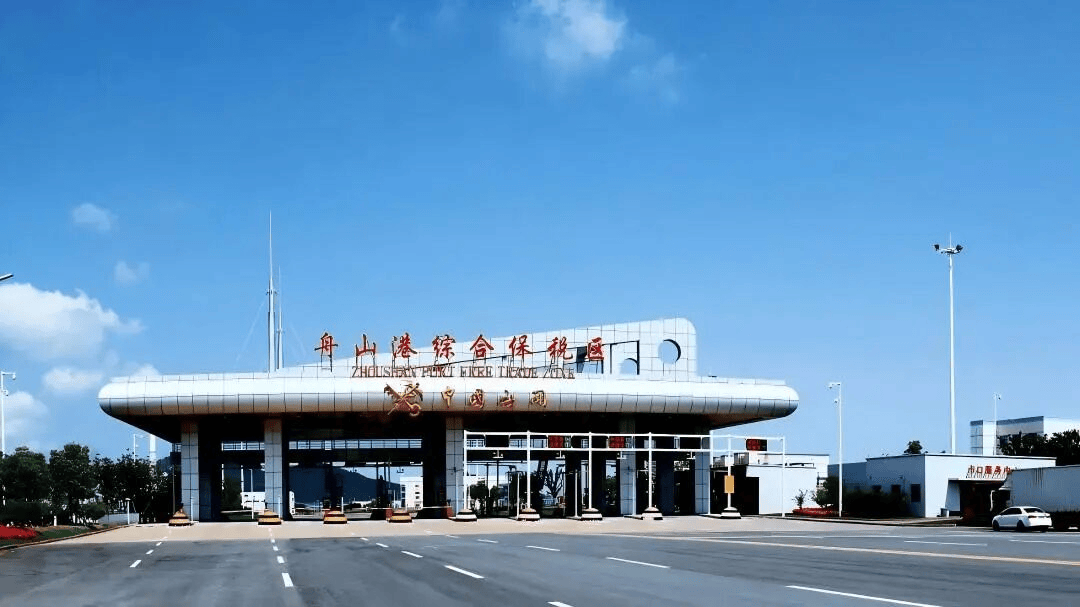
舟山港综保区扩区获批 打造全国首个大宗商品特色型综保区
Zhong Guo Xin Wen Wang· 2026-02-09 14:39
Core Viewpoint - The expansion of Zhoushan Port Comprehensive Bonded Zone marks a new development phase focused on bulk commodities, enhancing its role as a resource allocation hub in Zhejiang's Free Trade Zone [1][2] Group 1: Expansion Details - The State Council has approved the expansion of Zhoushan Port Comprehensive Bonded Zone, which will now include an additional 0.98 square kilometers from Shulanghu Island and Huangzeshan Island [1] - The total planned area of the Zhoushan Port Comprehensive Bonded Zone is now 6.12 square kilometers, establishing an "one area, four sections" industrial development pattern [1] Group 2: Strategic Importance - The expansion supports the construction of a bulk commodity resource allocation hub in Zhejiang, enhancing the storage, transportation, and processing capabilities for iron ore, oil products, and non-ferrous metals [2] - The bonded zone aims to leverage preferential policies to improve supply chain services such as blending, distribution, and trade, thereby increasing Zhejiang's international influence in the bulk commodity sector [2] Group 3: Future Development Plans - Zhejiang plans to accelerate the large-scale development of bonded blending minerals, biofuel blending, and bonded marine fuel businesses [2] - There will be a focus on strengthening industrial linkages within and outside the bonded zone to optimize the entire bulk commodity supply chain and enhance international market competitiveness [2]
地方两会划重点:五省市明确大宗商品发展路线图
Qi Huo Ri Bao Wang· 2026-02-02 01:11
Group 1 - The core focus of local government reports during the ongoing regional two sessions is the establishment of a "bulk commodity resource allocation hub" to enhance trading platform services and promote efficient resource allocation for a unified national market [1] - Zhejiang province is advancing the construction of a bulk commodity spot and futures integrated market, with a plan to increase spot trading scale and industry influence by 2027 and to enhance the impact of commodity price indices by 2030 [2] - Hubei province is developing a "seven major elements" trading service platform to facilitate the efficient allocation of various resources, with a focus on technology transfer and data sharing [3] Group 2 - Shandong province is committed to high-level opening up, focusing on stabilizing foreign trade and investment, and enhancing the role of Qingdao and Rizhao ports as national bulk commodity resource allocation hubs [4] - Henan province is accelerating integration into the national unified market, with a focus on logistics and commodity circulation, and has initiated comprehensive reforms to enhance market efficiency [5][6] - Tianjin is promoting a high-efficiency resource allocation market system, encouraging innovation in trading platforms and financial services to enhance the overall efficiency of resource allocation [7]
悬水小岛担当“国之大者” 浙江省人大代表述开放实景
Xin Lang Cai Jing· 2026-01-15 12:12
Core Viewpoint - The transformation of Da Yu Shan Island from a small fishing village to a world-class petrochemical base exemplifies the "Zhejiang speed" and the province's unique advantages in global connectivity and domestic integration [1][3]. Group 1: Development of the Petrochemical Base - The Zhoushan Green Petrochemical Base integrates refining, chemicals, and high-end new materials, marking a significant industrial development in Zhejiang [1]. - Since 2015, the establishment of the Zhoushan Green Petrochemical Base has been a key project, contributing to the growth of China's first large commodity resource allocation hub [3]. Group 2: Role of Zhoushan in Commodity Trading - Zhoushan serves as the main battlefield for the commodity hub, facilitating the efficient operation of storage, transportation, processing, and trade of major commodities like crude oil, grain, and iron ore [3]. - The city has achieved a remarkable transition from not producing oil to becoming a significant player in oil and gas storage and transportation, housing the largest oil and gas storage base in China [3]. Group 3: Efficiency and Innovation - The successful simultaneous berthing of two 400,000-ton vessels at the Shulanghu terminal set a global record, showcasing the operational efficiency of the port [4]. - The collaboration between the Zhejiang International Bulk Commodity Trading Center and the Shanghai Futures Exchange has led to the establishment of a pricing index for low-sulfur fuel oil, marking a shift from passive to active pricing in the market [6]. Group 4: Future Outlook - The province aims to transition from a "trade powerhouse" to a "pricing center," reflecting its ambition to enhance its global influence in commodity pricing [6].
全国首个大宗商品资源配置枢纽的浙江答卷
Qi Huo Ri Bao Wang· 2025-12-22 02:29
Core Insights - The Zhejiang International Bulk Commodity Trading Center has transitioned from a single oil and gas trading platform to a multi-category bulk commodity trading platform, marking a significant milestone in its first year of operation [1][2] Group 1: Platform Integration - The bulk commodity resource allocation hub aims to integrate the entire supply chain functions of bulk commodities, enhancing global resource allocation efficiency [2] - The platform has expanded its offerings from oil and gas to include steel, non-ferrous metals, rubber, and coal through equity integration with existing trading markets [2] - The chairman of Zhejiang Dazong emphasized that the integration is not merely a physical addition but aims to create synergistic effects, fostering an open and shared trading ecosystem [2] Group 2: Trading Performance - As of December 9, the trading volume of Zhejiang Dazong exceeded 420 billion yuan, with over 100 million tons traded [2] - The self-developed "ZME Easy Trading" system has covered 22 energy and chemical products, achieving a cumulative trading scale of 49 billion yuan, thereby enhancing resource integration and service efficiency [2] Group 3: Supervision Mechanism - Given the lack of mature construction experience, Zhejiang Dazong has developed a regular supervision mechanism to mitigate risks associated with integration, institutional innovation, and fund usage [3] - A closed-loop management mechanism has been established to ensure compliance and smooth operation of the platform, focusing on problem discovery, rectification, and tracking [3] Group 4: Pricing Power - The hub aims to establish pricing influence in the international bulk commodity market, moving from reliance on Singapore's pricing to developing its own pricing benchmarks [4] - New pricing products have been launched, including the "Zhou Shan Low Sulfur Fuel Oil Tax-Free Bunker Supply Seller Quotation," which is based on domestic futures prices [4] - The platform has implemented an intelligent supervision model to ensure full-process visibility and has developed risk warning models to identify potential issues [4] Group 5: Alliance Building - The establishment of the China (Zhejiang) Free Trade Zone Bulk Commodity Resource Allocation Hub Full Industry Chain Alliance aims to enhance cooperation among industry players and improve resource allocation efficiency [6] - The alliance focuses on various supply chain aspects, facilitating information sharing and business connections among member units [6] - The development trajectory of Zhejiang Dazong reflects a strategic path to enhance platform capabilities in alignment with national strategies [6]
交易额超4200亿元 浙江大宗夯实枢纽基石
Zhong Guo Jing Ji Wang· 2025-12-16 06:47
Core Insights - The Zhejiang Commodity Resource Allocation Hub has achieved significant milestones in its first year, with a trading volume exceeding 420 billion yuan and over 1 million tons traded, marking its transition from concept to reality [1] - The Zhejiang International Commodity Trading Center has expanded its offerings from a single oil and gas trading platform to include various commodities such as steel, non-ferrous metals, rubber, and coal [2] - The hub aims to establish "Zhou Shan Price" as a benchmark for pricing in the commodity market, moving from passive price following to active price setting [3] Group 1: Platform Integration - The hub has successfully integrated resources from existing trading platforms, enhancing its service capabilities and attracting major enterprises like Jinxin Steel and Wuhan Zhuoer [2] - The proprietary "ZME Yipaitong" system has facilitated transactions across 22 energy and chemical products, achieving a cumulative trading scale of 49 billion yuan [2] Group 2: Pricing Authority - The hub has developed a domestic pricing mechanism for bonded fuel oil, allowing local enterprises to set prices based on domestic futures rather than relying on international benchmarks [3] - New pricing products have been launched, including the "Zhou Shan Biodiesel Storage Comprehensive Price" and "China Green Power Certificate Seller Quotation," enhancing the hub's pricing influence [3] Group 3: Alliance Formation - The establishment of the Commodity Resource Allocation Hub's full industry chain alliance aims to enhance cooperation among enterprises, promoting resource aggregation and complementary advantages [4] - The alliance focuses on various aspects of the industry chain, including storage, processing, trade, and maritime services, to improve resource allocation efficiency [5] Group 4: Collaborative Efforts - Members of the alliance are engaging in deep cooperation in areas such as information sharing and risk sharing, significantly improving the turnover efficiency of commodities [5] - The alliance is also providing supply chain financial services to newly established non-oil enterprises, facilitating their operational launch [5]
十月浙江舟山口岸大宗商品进口超一千六百万吨 全国首个大宗商品资源配置枢纽建设稳步推进
Ren Min Ri Bao· 2025-11-29 22:32
Core Insights - The article highlights the significant growth in the import of major bulk commodities at the Zhoushan port in Zhejiang, which accounted for approximately 150 million tons, or 7.1% of the national total, from January to October this year [1] - In October alone, the port imported 16.1 million tons of bulk commodities, marking a year-on-year increase of 22%, indicating a steady improvement in resource allocation capabilities [1] Summary by Sections - **Policy and Development**: The establishment of the national first bulk commodity resource allocation hub in Zhejiang was approved by the State Council on November 8 last year, aimed at enhancing the storage, transportation, processing, and trading of bulk commodities [1] - **Customs Innovations**: Hangzhou Customs has focused on optimizing regulatory models and has introduced several innovative measures to expedite customs clearance for bulk commodities, contributing to the hub's development [1] - **Logistics Efficiency**: The implementation of the "zone-port linkage" business model has optimized vehicle clearance processes, reducing the time for bulk commodities to enter and exit the zone by approximately 40%, which translates to a cost saving of about 40% for enterprises [1] - **Digital Transformation**: The port has achieved full-process digital handover for bonded ship fuel supply, becoming the first in the country and the third globally to do so, with the entire process taking less than five minutes [1]
十月浙江舟山口岸大宗商品进口超一千六百万吨
Ren Min Ri Bao· 2025-11-29 22:11
Core Insights - In the first ten months of this year, the Zhoushan port in Zhejiang imported approximately 150 million tons of major bulk commodities, accounting for 7.1% of the national total imports [1] - In October alone, the port imported 16.1 million tons of bulk commodities, representing a year-on-year increase of 22%, indicating a steady improvement in resource allocation capabilities [1] Group 1: Policy and Development - The establishment of the national first bulk commodity resource allocation hub in Zhejiang was approved by the State Council on November 8 last year [1] - The Hangzhou Customs has focused on key areas such as storage, transportation, processing, trade, and international maritime services for bulk commodities, continuously optimizing regulatory models and introducing innovative reform measures [1] Group 2: Operational Efficiency - The "Zone-Port Linkage" business model implemented by Hangzhou Customs has optimized vehicle clearance processes, enhancing logistics efficiency [1] - After the implementation of "Zone-Port Linkage," the time for bulk commodities to enter and exit the zone has been reduced by approximately 40%, resulting in a cost saving of about 40% for enterprises [1] - The port has achieved full smart supervision, with an online system efficiently issuing electronic fuel delivery orders in under five minutes, making Zhoushan the first port in the country and the third globally to realize a fully digital handover process for bonded ship fuel [1]
浙江:持续优化营商环境 助企逐浪全球
Zhong Guo Xin Wen Wang· 2025-11-15 12:53
Core Viewpoint - Zhejiang province aims to enhance its market environment by promoting private sector investment and innovation during the "14th Five-Year Plan" period, emphasizing the importance of the private economy as a key driver of growth [1][3]. Group 1: Private Economy and Investment - The private economy is highlighted as Zhejiang's "golden business card," contributing significantly to the province's strength and achieving a "grand slam" in the "China's Top 500 Private Enterprises" list for two consecutive years [1]. - Zhejiang will focus on stimulating private investment by lowering barriers in sectors such as renewable energy, artificial intelligence, and urban renewal, allowing private ownership stakes in key projects to exceed 10% [3]. Group 2: Innovation and Collaboration - The province plans to promote collaborative innovation across the industrial chain, encouraging cooperation between large, medium, and small enterprises to create a robust innovation ecosystem [3]. - Zhejiang will implement a negative list system for market access and deepen reforms for fair competition, aiming to enhance the province's attractiveness and competitiveness [3]. Group 3: Open Economy and Trade - The province is committed to high-level openness, aiming to create an optimal service environment with the lowest costs and highest efficiency during the "14th Five-Year Plan" [3]. - Zhejiang will optimize the flow of goods, capital, personnel, and data to facilitate trade and investment, positioning itself as a high-quality destination for foreign investment [4]. Group 4: Resource and Market Development - The province plans to establish a high-standard hub for bulk commodity resource allocation, enhancing its capabilities in storage, processing, and maritime services [5]. - Zhejiang will deepen reforms in international trade, particularly in Yiwu, to strengthen its position as a global center for digital trade [5].