
存储半导体

Search documents
内存条崩盘?“消费者用不起了”,但“AI需求依旧炸裂”
硬AI· 2026-03-31 09:04
Core Viewpoint - The recent sharp decline in DDR5 memory spot prices, driven by concerns over reduced demand due to Google's TurboQuant algorithm, primarily affects the consumer retail market, which constitutes a small fraction of the overall market. In contrast, the demand for server-driven AI applications remains robust, indicating a stable industry fundamental despite the current market volatility [2][3][4]. Group 1: Price Decline - DDR5 memory module spot prices have dropped nearly 30% in a month, with reports from Chinese wholesalers describing the situation as a "price collapse." This decline is attributed to fears of reduced AI memory demand and a sell-off of previously accumulated inventory [3][6]. - The retail market's price drop is significant, with the price of a 32GB DDR5 module on Amazon falling from $490 to $379.99, and in China, the price of a mainstream 16GB DDR5 module dropping from 1,000 RMB to around 700 RMB. Sales have decreased by over 60% compared to November of the previous year due to high prices discouraging non-essential purchases [6][8]. - Goldman Sachs noted that the current price correction was inevitable, as the previous premiums on spot prices were significantly high, with DDR5 and DDR4 spot prices exceeding contract prices by 25% and 111%, respectively [6][11]. Group 2: Server Demand - The demand from the server segment remains strong and is the true driver of storage semiconductor profitability. The retail market, primarily composed of PC and consumer electronics, represents only a small percentage of total market transactions [8][9]. - Data from Goldman Sachs indicates that revenue from Taiwanese server ODM manufacturers grew by 84% year-over-year in February, driven by a surge in AI server shipments. This growth trend has been consistent for four months, reflecting strong demand for AI infrastructure [9][11]. - A major cloud service provider's decision to procure server DDR4 at a premium price further underscores the ongoing robust demand in the server market, despite concerns about weakening overall demand [9][11]. Group 3: Systemic Risks - The real systemic risks facing the storage sector stem from rising energy costs due to the Middle East conflict and the rapid accumulation of debt within the AI industry. These factors create a complex web of vulnerabilities that could lead to significant economic pressures [4][14][16]. - The conflict has led to a 40% increase in Brent crude oil prices and a doubling of helium prices, which are critical for chip manufacturing. The reliance on the Middle East for essential resources poses a risk to the AI supply chain [14][15]. - The rapid debt accumulation in the AI sector, with major companies investing nearly $700 billion annually, raises concerns about financial stability and the potential for a systemic crisis if vulnerabilities in the supply chain are triggered [15][16].


SK海力士:全面向好
citic securities· 2026-03-16 06:53
Investment Rating - The report maintains a positive outlook on SK Hynix, indicating a favorable investment rating [2]. Core Insights - SK Hynix is negotiating legally binding long-term supply agreements with clients, which could enhance profit visibility [2][3]. - The Y1 factory construction is progressing, with production expected to commence by the end of 2027 [4]. - The company will begin supplying HBM4 to Nvidia later this month, and concerns regarding SRAM architecture affecting HBM demand are deemed unfounded, as both technologies are complementary [6]. Summary by Sections Long-term Agreements Enhance Profit Visibility - SK Hynix is in discussions for long-term supply agreements (3-5 years) with major clients, which may include fixed pricing, prepayments, or joint investments in new factories. Although there are still discrepancies in contract terms, such agreements could significantly improve revenue and profit visibility, serving as a potential catalyst for storage stocks [3]. Y1 Factory Phase 1 Production by End of 2027 - The M15X factory dedicated to HBM has increased its capacity to 20,000-30,000 wafers per month, with expectations to reach full capacity (80,000 wafers/month) by mid-2027. The Y1 factory's phase 1 construction is ahead of schedule, expected to begin production in Q1 2027, but actual production is anticipated by the end of 2027. By 2030, the Y1 factory will add 320,000-350,000 wafers/month to DRAM capacity, with total capital expenditure projected at 90-100 trillion KRW [4]. Traditional DRAM Price Increase Benefits HBM Negotiations - Despite traditional DRAM products showing significant profitability improvements over the past six months, the current HBM production lines cannot be converted to traditional DRAM. However, the rise in traditional DRAM prices is expected to benefit HBM price negotiations in 2027 [5]. HBM4 Supply to Nvidia; SRAM is Complementary - SK Hynix's products meet all performance and speed requirements set by Nvidia for HBM4, with shipments starting this month. Concerns about SRAM architecture impacting HBM demand are addressed, indicating that SRAM's high cost and low density limit its application to specific ultra-low latency AI workloads, rather than replacing high-capacity HBM products [6]. Catalysts - Maintaining market leadership in HBM is expected to continue increasing market share, and a quicker-than-expected recovery in NAND demand may serve as a potential catalyst for stock price [7].
港股迎马年首个交易日,机器人板块逆势大涨
Xin Lang Cai Jing· 2026-02-20 06:03
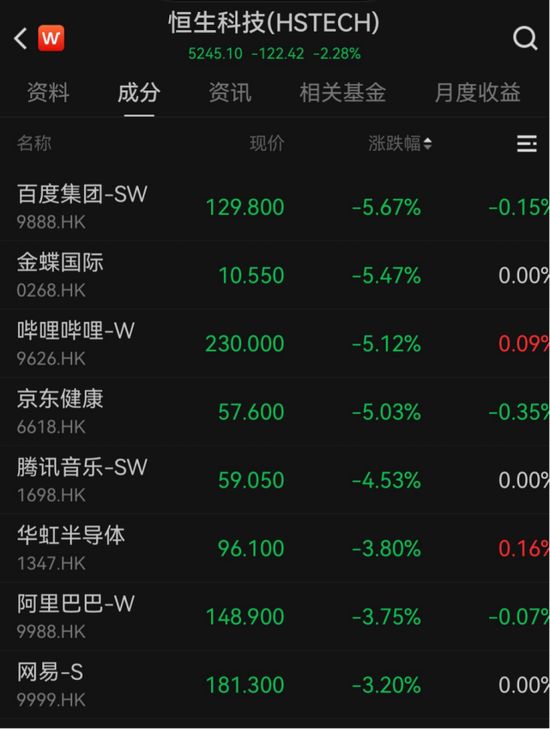
Market Overview - On February 20, the Hong Kong stock market opened lower on the first trading day of the Year of the Horse, with the Hang Seng Index down by 0.6%, the Hang Seng Tech Index down by 2.28%, and the Hang Seng China Enterprises Index down by 0.59% [1] - There was a noticeable sector rotation as funds shifted from large tech stocks to AI application stocks, with major tech stocks like Baidu, Kingdee International, Bilibili, and JD Health all dropping over 5%, while Alibaba fell over 3% [1] AI Application Sector - The AI application sector showed strong performance, with stocks like Zhizhu and Haizhi Technology Group rising over 19%, and MiniMax-WP increasing by over 10%. International investment banks such as Morgan Stanley and UBS have given a buy rating to MiniMax [2] Robotics Sector - The robotics sector surged, driven by the appearance of robots at the Spring Festival Gala, with stocks like Yujian rising over 19%, Sutech increasing over 9%, and companies like UBTECH and Sanhua Intelligent Control rising over 6% [3] Power Equipment Sector - The power equipment sector also performed well, with China High-Speed Transmission rising over 17%, Shanghai Electric increasing over 6%, Harbin Electric up over 4%, and Northeast Electric rising over 3% [4][5] Semiconductor Sector - The semiconductor sector saw a mid-session rally, with companies like Lanke Technology and Tiannum Intelligent Chip reaching historical highs before retreating. By midday, Lanke Technology was up nearly 2%, while Tiannum Intelligent Chip turned down over 6% [5] Investment Recommendations - Huatai Securities suggests focusing on three key areas for future investments: 1. Semiconductor hardware, particularly storage, as overseas leaders' earnings reports and South Korea's export data indicate a continuation of the super cycle 2. Specialty consumption sectors benefiting from platform subsidies and improved expectations for innovative drugs 3. The electrical equipment sector, driven by rising demand for power system upgrades and the inclusion of CATL in the Hang Seng Index, which brings passive fund inflows [6]

中国在存储半导体领域提高存在感
36氪· 2025-12-12 13:51
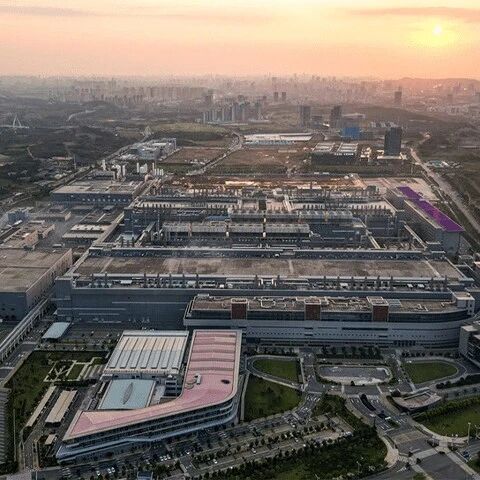
Core Viewpoint - China's presence in the storage semiconductor sector is significantly increasing, with Yangtze Memory Technologies Co. (YMTC) achieving a global NAND market share exceeding 10% for the first time, driven by government support and technological advancements [4][5]. Group 1: NAND Market Developments - YMTC's NAND sales share reached 10% in Q1 2025 and increased to 13% in Q3 2025, closing in on Micron Technology, the fourth-largest player globally [5]. - The company aims to achieve a 15% market share by the end of 2026, with plans for factory investments around Wuhan, which could lead to a global supply share of approximately 20% [7]. - YMTC's technology has advanced to about 270 layers, comparable to Samsung Electronics, and it has adopted cost-reduction methods not yet utilized by competitors [5][4]. Group 2: DRAM Market Developments - Changxin Memory Technologies (CXMT) has expanded its market share in the DRAM sector to 8% in Q3 2025, up from 6% in the same period of 2024, positioning it as the fourth-largest globally [8]. - CXMT is focusing on increasing production of general-purpose products for PCs and smartphones, holding around 40% of the domestic market share in China [8]. Group 3: Competitive Landscape and Pricing - Chinese NAND products are approximately 10-20% cheaper than those from other countries, giving them a competitive edge [10]. - Despite the technological gap in high-bandwidth memory (HBM) where Chinese firms lag by about five years, the price advantage may lead to increased adoption of Chinese semiconductors by other countries [10][11]. - The U.S. government has restricted YMTC's access to design technology, impacting its ability to expand in markets outside China [10]. Group 4: Market Dynamics and Future Outlook - The smartphone market in China is projected to grow by 6% in 2024, reaching 286 million units, which could influence the sales of companies like Kioxia, as a significant portion of their sales is directed towards China [10]. - Concerns regarding quality and safety have led Japanese companies to be cautious in adopting Chinese storage semiconductors, although other sectors like solar panels and electric vehicles are seeing success due to competitive pricing [11].
中国在存储半导体领域提高存在感
3 6 Ke· 2025-12-05 06:30
Core Insights - Yangtze Memory Technologies Co. (YMTC) aims to achieve a 15% market share in the NAND flash memory sector by the end of 2026, with its sales share surpassing 10% for the first time [2][3][4] Group 1: Market Position and Growth - YMTC's NAND sales share reached 10% in Q1 2025 and increased to 13% in Q3 2025, closing in on Micron Technology, the world's fourth-largest player [3] - Despite currently holding only 8% of the global market by revenue, analysts predict YMTC will reach 10% by 2027 [4] - The company is investing in factories around Wuhan, China, which could lead to a global supply share of approximately 20%, surpassing Kioxia and approaching SK Hynix [4] Group 2: Competitive Landscape - YMTC's NAND technology has advanced to approximately 270 layers, comparable to Samsung Electronics, and has adopted cost-reduction methods not yet utilized by competitors [2] - In the DRAM sector, Changxin Memory Technologies (CXMT) has increased its market share to 8% in Q3 2025, up from 6% in the same period of 2024 [4] - Chinese NAND products are reported to be 10-20% cheaper than those from other countries, enhancing their competitive edge [6] Group 3: Challenges and Limitations - Chinese companies, including YMTC, face challenges in expanding outside China due to U.S. restrictions on technology transfers and concerns over quality and safety from Japanese firms [6][7] - The U.S. government has placed YMTC on a restricted list, limiting its ability to procure necessary production equipment [7] - Despite these challenges, there is optimism that the price advantage of Chinese semiconductors will lead to increased adoption by other countries over time [7]

SK海力士:DRAM利润率直逼70%
半导体芯闻· 2025-11-11 10:17
Core Viewpoint - The article discusses the significant increase in profitability for SK Hynix's DRAM business, with operating profit margins expected to exceed 70% due to rising demand and supply shortages in the DRAM market [2][3]. Group 1: Market Dynamics - The price of commodity DRAM is expected to continue rising due to ongoing supply shortages, with SK Hynix's operating profit margin projected to surpass 70%, marking the first time in nearly 30 years since the semiconductor market boom in 1995 [2][3]. - Analysts predict that if the strong pricing trend continues into the first quarter of next year, the operating profit margin for general DRAM could also exceed 70% [3]. Group 2: Production Capacity and Supply Constraints - SK Hynix has confirmed that its DRAM production capacity is primarily focused on high-bandwidth memory (HBM), leading to limited supply for general DRAM, which is already sold out for the upcoming year [3][4]. - The expansion plans of competitors like Samsung and Micron are not expected to meet the surging demand, contributing to a structural supply shortage in the DRAM market [3][4]. Group 3: Financial Projections - Financial data indicates that SK Hynix's operating profit forecast for next year has been raised by approximately 36% to 68.7301 trillion Korean won [4]. - The shift in the semiconductor business model from bulk production to securing supply through pre-signed contracts has improved the visibility of profitability [4].
