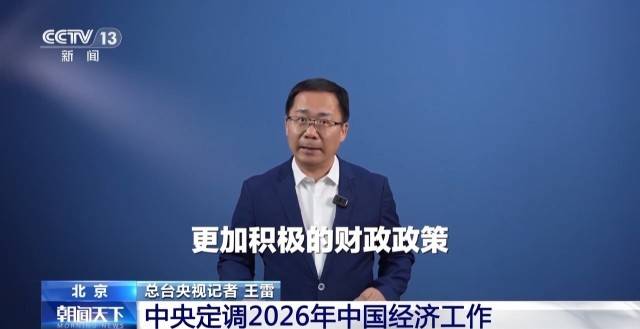
宏观政策集成效应

Search documents
2026年物价走势:发挥宏观政策集成效应 扩大居民消费 促进物价合理回升
Guo Jia Tong Ji Ju· 2026-01-21 10:46
Group 1 - The overall price level in China is relatively low, with the Consumer Price Index (CPI) expected to remain stable in 2025, showing minor monthly fluctuations [1] - CPI has structural characteristics, with significant impacts from declining food and energy prices; food prices decreased by 1.5% in the previous year, affecting CPI by approximately 0.27 percentage points, while energy prices fell by 3.3%, contributing another 0.25 percentage points to the decline [1] - The current low CPI is influenced by complex domestic and international macroeconomic conditions, as well as the country's development stage, with traditional growth drivers slowing down [1] Group 2 - Policies aimed at expanding domestic demand are showing results, with core CPI experiencing a mild recovery; in 2025, the core CPI excluding food and energy is projected to rise by 0.7%, an increase of 0.2 percentage points from the previous year [2] - In December, the core CPI rose by 1.2%, maintaining above 1% for four consecutive months, with industrial consumer goods prices excluding energy increasing by 1.1% [2] - Specific price increases include home appliances and communication tools, which rose by 1.8% and 0.6% respectively, while the decline in fuel and new energy vehicles has narrowed significantly [2] Group 3 - Favorable factors for a moderate CPI recovery are accumulating, with effective implementation of consumption-boosting initiatives and coordinated fiscal and financial policies expected to gradually expand consumer demand [3] - In December, CPI increased by 0.8%, the highest since March 2023, driven by increased food consumption during the New Year holiday and active service consumption [3] - Continued industry self-regulation and capacity management are anticipated to support price recovery, with a focus on enhancing product standards and quality [3]
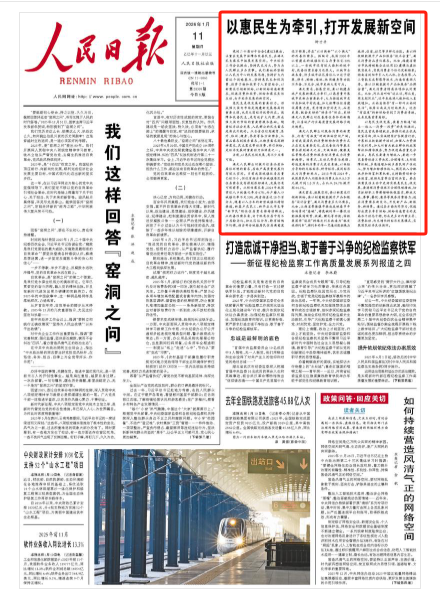
连续五日 人民日报刊发钟才平文章
Ren Min Ri Bao· 2026-01-11 01:01
Core Viewpoint - The articles emphasize the importance of prioritizing people's livelihoods to drive economic development, advocating for a strategy that combines consumer demand with investment to create new growth opportunities in the economy [1][3]. Group 1: Economic Development and Livelihood Improvement - The central economic work conference highlights the need to focus on improving people's livelihoods as a key driver for economic growth, advocating for a people-centered development approach [3][4]. - The demand for housing quality and living conditions remains significant, with a notable gap in meeting urban residents' housing needs, indicating substantial potential for the real estate sector [4][5]. - The shift in consumer preferences towards service-oriented and experiential consumption is evident, with per capita service consumption expenditure increasing from 5,000 yuan to 13,000 yuan from 2013 to 2024, representing a rise from 39.7% to 46.1% of total consumption [5][6]. Group 2: Investment and Consumption Dynamics - The articles stress the need for a new model of real estate development that focuses on high-quality urban renewal and the construction of affordable housing to meet the evolving expectations of residents [5][6]. - A virtuous cycle of "employment—income—consumption—investment" is essential for promoting livelihoods and economic growth, with a focus on stabilizing employment and increasing income through various policy measures [7][8]. - The integration of new demands into supply chains is crucial, with examples of innovative products and services being developed to meet diverse consumer needs, such as personalized shoes and tourism experiences [6][11]. Group 3: Policy Support and Economic Governance - The articles advocate for a coordinated approach to macroeconomic policies, emphasizing the need for effective fiscal and monetary policies to support economic stability and growth [13][16]. - The importance of enhancing the efficiency of fiscal spending and ensuring that public funds are used effectively to support social welfare and economic development is highlighted [15][18]. - The need for a flexible and effective monetary policy that adapts to changing economic conditions is emphasized, with a focus on maintaining liquidity and supporting the real economy [16][17].

第三篇钟才平,来了
财联社· 2026-01-09 03:36
Core Viewpoint - The article emphasizes the importance of integrated macroeconomic policies to enhance governance effectiveness and support sustainable economic growth in China [1]. Group 1: Macroeconomic Policy Overview - Macroeconomic policies are crucial for maintaining stable economic operations and achieving high-quality development in China. The implementation of a more proactive fiscal policy and moderately loose monetary policy in 2025 is highlighted as a key driver for economic recovery [2]. - The central economic work conference outlines that in 2026, macroeconomic policies will focus on stability and quality improvement, continuing to implement proactive policies while enhancing counter-cyclical and cross-cyclical adjustments [2]. Group 2: Fiscal Policy - The proactive fiscal policy aims to increase efficiency through targeted support for key projects and significant investment in basic research. In 2025, the fiscal deficit rate will be raised, and larger government bonds will be issued to support local governments and manage hidden debts [3]. - The article stresses the need for effective fiscal management, optimizing expenditure structures, and ensuring that public funds are used efficiently to support growth and social welfare [4]. Group 3: Monetary Policy - A flexible and effective monetary policy is essential, with measures such as timely interest rate cuts and targeted support for key sectors introduced in 2025 to create a conducive financial environment for economic recovery [5]. - The central economic work conference emphasizes the importance of maintaining liquidity and managing social financing costs to support economic growth and price stability [5]. Group 4: Policy Coordination - The article highlights the necessity of enhancing the consistency and effectiveness of macroeconomic policies to avoid conflicts and ensure that various measures work synergistically [7]. - It calls for a systematic approach to policy evaluation, integrating economic and non-economic policies, and ensuring collaboration between fiscal and monetary policies to achieve cohesive economic management [8].

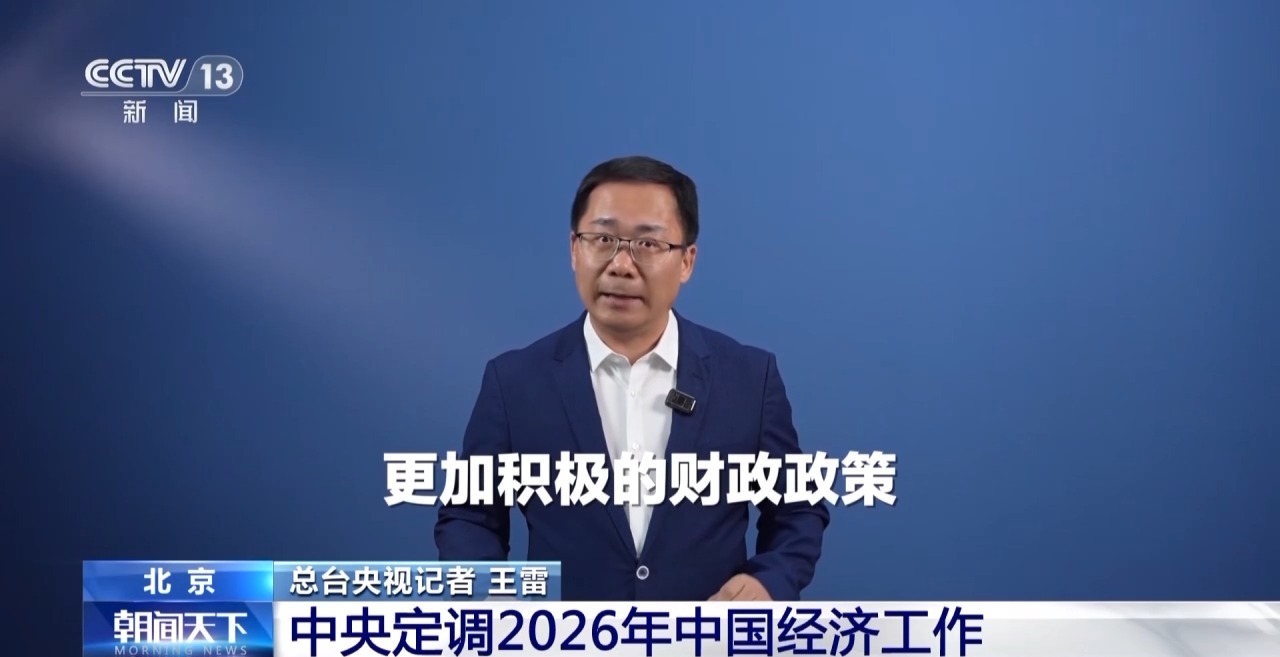
财经老王丨明年我国经济工作怎么干?关注这些重点工作
Yang Shi Xin Wen Ke Hu Duan· 2025-12-09 12:45
Group 1 - The meeting emphasized a more proactive fiscal policy and moderately loose monetary policy, continuing the approach from the previous year [1] - The policy support for 2026 is expected to remain strong, focusing on both existing policies and new measures to address emerging issues, aiming to stabilize employment, businesses, markets, and expectations [3] - The meeting highlighted the importance of domestic demand and the construction of a strong domestic market, indicating that insufficient effective demand is a key issue to be addressed [5] Group 2 - The meeting called for better coordination between domestic economic work and international trade struggles, emphasizing the need for openness while safeguarding national interests [7] - The potential of the Chinese economy is expected to be further released in the new year, providing new development opportunities for both enterprises and individuals [7]
明年我国经济工作怎么干?关注这些重点工作
Sou Hu Cai Jing· 2025-12-09 01:36
Group 1 - The core economic policy for 2026 emphasizes a more proactive fiscal policy combined with moderately loose monetary policy, continuing the approach from the previous year [1] - The meeting highlighted the importance of leveraging existing policies while also introducing new measures to address emerging issues, aiming for a synergistic effect to stabilize short-term fluctuations and lay a foundation for long-term development [3] - The focus on "domestic demand as the main driver" indicates that insufficient effective demand remains a key challenge, necessitating deeper efforts to build a strong domestic market and dismantle local protectionism and regional barriers [5] Group 2 - The meeting underscored the need for better coordination between domestic economic work and international trade dynamics, advocating for both openness and the protection of national interests in response to uncertainties [7] - The potential for the Chinese economy is expected to be further unleashed in the new year, presenting new development opportunities for both enterprises and individuals across various sectors [7]