市场流动性危机

Search documents
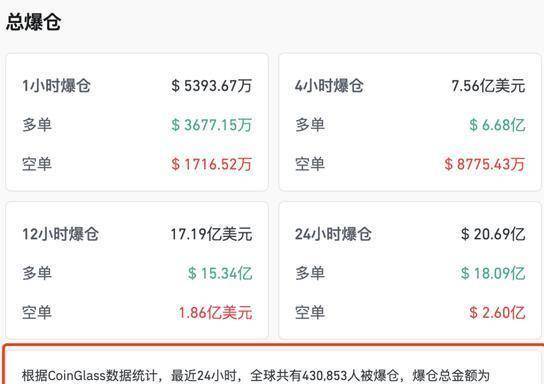
全线暴跌!超43万人爆仓!美股、金银、比特币、石油全都崩了!
Sou Hu Cai Jing· 2026-02-06 15:16
Group 1: Cryptocurrency Market - The cryptocurrency market experienced a significant crash, with Bitcoin dropping below $70,000, a daily decline of 12.81%, and Ethereum and XRP falling over 13% [1] - The collapse triggered a liquidation of over 430,000 investors, with a total liquidation amount reaching $2.069 billion [1] - The market faced a chain reaction due to the hawkish nomination of the new Federal Reserve Chairman Kevin Walsh, leading to a 1.2% rise in the dollar index and a subsequent liquidation in the cryptocurrency market [2] Group 2: Stock Market - The U.S. stock market saw a collective plunge, with the Nasdaq index experiencing its highest three-day cumulative decline since April 2024, and major tech stocks like Amazon and Microsoft losing over 4% in a single day [1] - Nvidia's market value dropped by $128.1 billion, marking the largest single-day loss for a U.S. publicly traded company, amid concerns over AI technology not meeting expectations [5] - The labor market showed signs of strain, with January layoffs reaching 108,000, the highest since the global financial crisis [5] Group 3: Precious Metals Market - The precious metals market faced a catastrophic sell-off, with spot silver plummeting over 31% and gold prices falling below $5,000 [1] - Silver's price drop was attributed to multiple factors, including hawkish comments from the Federal Reserve and a significant reduction in open contracts on COMEX [6] - The Chicago Mercantile Exchange raised margin requirements for gold and silver, exacerbating the situation by triggering further liquidations [6] Group 4: Oil Market - The oil market experienced a collapse, with WTI crude oil futures dropping below $63 per barrel, a 22% decline from the year's high [7] - Contributing factors included a rebound in U.S. shale oil production and increased Iranian oil exports, which alleviated supply concerns [7] - Despite the price drop, U.S. refinery utilization remained high at 85%, indicating underlying demand issues [7] Group 5: Market Sentiment and Systemic Risk - Retail investors were significantly impacted, with Binance processing over 800,000 liquidation orders in a single day, and Robinhood's margin balance decreasing by $12 billion [8] - The New York Fed initiated a $150 billion overnight repurchase operation to inject liquidity into the market, but confidence in policy effectiveness remained low [8] - The current market volatility has surpassed historical averages, raising concerns about the effectiveness of traditional risk models [8][10]


下周美国市场也不好过?美债发行潮来袭 流动性“雪上加霜”
智通财经网· 2025-11-08 07:18
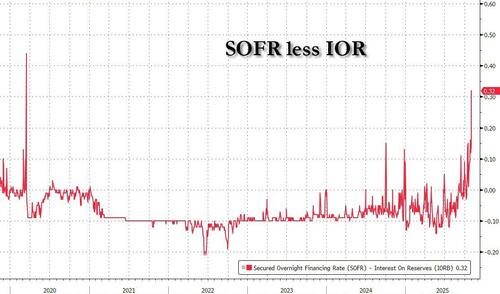
Core Viewpoint - A significant wave of U.S. Treasury bond issuance is set to impact the market next week, coinciding with a recent decline in tech giants' market value and concerns over high valuations and economic signals [1][2]. Group 1: Upcoming Treasury Issuance - The U.S. Treasury plans to auction a total of $125 billion in various maturities next week, including $58 billion in 3-year bonds, $42 billion in 10-year bonds, and $25 billion in 30-year bonds [2]. - This issuance is aimed at refinancing maturing debt and raising approximately $26.8 billion in new funds from private investors [2]. Group 2: Market Liquidity Concerns - The upcoming bond issuance will occur in a compressed trading week due to the Veterans Day holiday, raising concerns about market liquidity [2]. - Key liquidity indicators in the U.S. financial system have shown signs of distress, with the secured overnight financing rate (SOFR) recently spiking by 22 basis points, indicating a tightening liquidity environment [3][4]. Group 3: Causes of Liquidity Tightening - The root cause of the liquidity strain is attributed to a significant increase in the Treasury General Account (TGA) balance, which has surged from approximately $300 billion to over $1 trillion since July due to cash withdrawals from the market [4][6]. - This liquidity withdrawal has led to a decrease in bank reserves to the lowest level since early 2021, with foreign banks' cash assets dropping by over $300 billion in four months [6]. Group 4: Potential Risks - Experts have warned that the deterioration of funding conditions could lead to a self-reinforcing cycle, potentially triggering a crisis similar to the 2019 repo market turmoil if key indicators continue to worsen [8].
下周美国市场也不好过?美债发行潮来袭,流动性“雪上加霜”
Hua Er Jie Jian Wen· 2025-11-08 02:46
Core Viewpoint - A significant wave of U.S. Treasury bond issuance is set to impact the market next week, coinciding with a recent decline in tech giants' market value and concerns over high valuations and economic signals [1][2]. Group 1: Upcoming Treasury Issuance - The U.S. Treasury plans to auction a total of $125 billion in various maturities next week, alongside an expected $40 billion in investment-grade corporate bonds [2][3]. - The issuance will occur during a shortened trading week due to the Veterans Day holiday, which may strain market liquidity [2][3]. - The Treasury aims to refinance maturing debt and raise approximately $26.8 billion in new funds from private investors [3]. Group 2: Market Liquidity Concerns - The upcoming bond issuance is particularly concerning given the already fragile liquidity environment in the U.S. financial system [4]. - Key liquidity indicators have shown signs of distress, with the secured overnight financing rate (SOFR) spiking by 22 basis points, reaching the highest spread over the Federal Reserve's excess reserves rate since March 2020 [4]. - The U.S. Treasury General Account (TGA) balance has surged over $700 billion in the past three months due to government shutdown measures, leading to significant liquidity withdrawal from the market [6][8]. Group 3: Implications of Liquidity Tightening - The liquidity tightening has resulted in the lowest level of bank reserves since early 2021, with foreign commercial banks' cash assets dropping by over $300 billion in four months [8]. - Analysts warn that the scale of liquidity withdrawal could have tightening effects comparable to multiple interest rate hikes [8]. - There are concerns that continued deterioration in liquidity could trigger a chain reaction similar to the 2019 repo crisis [10].

USDT爆仓压力升级,XBIT深度观察5亿美元提前布局背后的市场信号
Sou Hu Cai Jing· 2025-10-24 23:43
Core Insights - The cryptocurrency market is facing a liquidity crisis triggered by USDT liquidation pressure, with significant pre-announcement deposits raising concerns about insider trading and USDT's stability [1][3][5] Group 1: USDT Liquidation Concerns - Approximately $500 million USDT was deposited into the platform by wallets linked to Stable Vault before the official announcement, indicating potential insider trading [1][3] - Over 70% of the $825 million stablecoin deposit occurred before the announcement, with a single transaction happening just 22 minutes prior [3] - A major whale or institution accounted for 60.6% of the pre-deposit activity, heightening USDT liquidation pressure [3] Group 2: Market Dynamics and Liquidation Pressure - If Bitcoin surpasses $113,000, centralized exchanges could face $1.247 billion in short liquidations, while a drop below $108,000 could lead to $1.346 billion in long liquidations [5] - The current Bitcoin price is around $111,000, with a 24-hour trading volume of $74 billion, indicating a critical balance between bullish and bearish forces [5] Group 3: Regulatory Environment and Market Sentiment - The recent pardon of Binance founder CZ by President Trump signals a potential shift in U.S. cryptocurrency policy, which may impact market confidence [7] - Following the pardon announcement, market sentiment has fluctuated, emphasizing the importance of USDT's stability in mitigating liquidation risks [7] Group 4: Institutional Investment Strategies - With U.S. Treasury yields declining, institutional investors are diversifying their stablecoin reserves, as seen with Spark protocol allocating $100 million to Superstate's USCC fund [9] - This shift reflects a growing awareness of USDT liquidation risks and a desire for returns independent of Federal Reserve policies [9] Group 5: Decentralized Finance (DeFi) Resilience - Decentralized platforms like XBIT are enhancing transparency and risk management through real-time on-chain data monitoring and smart contract execution [10] - The evolving landscape of cryptocurrency, influenced by regulatory changes and institutional strategies, is reshaping the market dynamics post-USDT liquidation [10]

交易商包机空运银锭,伦敦白银惊现历史性逼空,市场流动性几乎完全枯竭
华尔街见闻· 2025-10-12 12:02
Core Viewpoint - The London silver market is experiencing unprecedented turmoil, with a "short squeeze" driving silver prices above $50 per ounce for only the second time in history, reminiscent of the 1980 "Hunt brothers" incident [2]. Group 1: Market Dynamics - The current situation has led to an unprecedented premium for London spot silver relative to New York futures, with market liquidity nearly depleted [4]. - Traders holding short positions are struggling to find deliverable metal, incurring high costs to delay settlements, with some institutions even chartering transatlantic flights to transport silver bars to capitalize on the premium [4][5]. - The London silver market's liquidity relies on billions of ounces stored in local vaults, but these inventories have been significantly depleted, with free-flowing silver inventory dropping from 850 million ounces to approximately 200 million ounces since mid-2019, a decline of 75% [10]. Group 2: Supply and Demand Factors - Global investors are flocking to gold and silver as a hedge against rising U.S. debt, fiscal gridlock, and currency devaluation risks, exacerbating market volatility due to a tight supply-demand dynamic [7]. - A sudden increase in demand from India, particularly during the "Golden Week" holiday, has further strained the market, with one Indian ETF halting new investments due to domestic shortages [7]. - Concerns over potential U.S. import tariffs on silver have led to a preemptive outflow of metal from the U.S. market, further driving up the London spot premium [8]. Group 3: Market Conditions and Responses - The overnight borrowing cost for silver in London has exceeded 100% annualized, surpassing levels seen during the 1980 squeeze [12]. - The lack of willingness among banks to quote prices has widened bid-ask spreads, contributing to significant liquidity shortages [13]. - The current path to alleviate the situation involves bringing more physical silver back to London, with estimates suggesting that traders are seeking to transport between 15 million to 30 million ounces from New York to London [16].