
房地产稳定基金

Search documents
地方卖地收入四年少了约4.6万亿,今年多省预计增长
第一财经· 2026-02-02 00:56
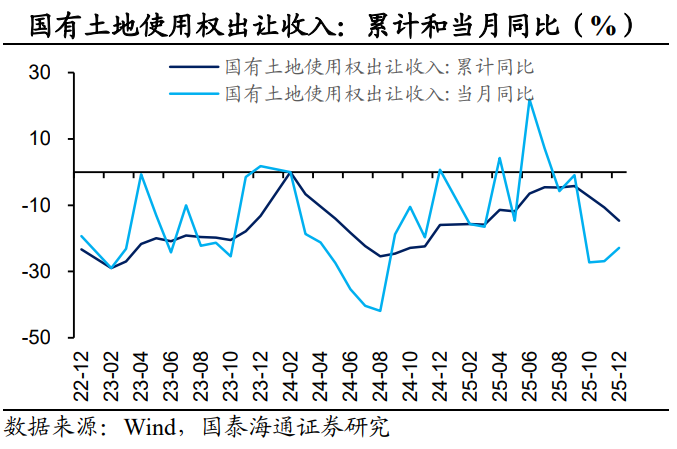
Core Viewpoint - The continuous decline in land transfer revenue for local governments is a direct consequence of the deep adjustment in the real estate market, which has led to reduced financial capacity and increased debt pressure for local governments [3][4][9]. Group 1: Land Transfer Revenue Trends - In 2025, local government land transfer revenue was 41,518 billion yuan, a decrease of 14.7% from the previous year, marking the fourth consecutive year of double-digit declines since 2022 [3][5]. - Compared to the peak in 2021, the land transfer revenue in 2025 decreased by approximately 46,000 billion yuan, representing a decline of 52.3% [3]. - The real estate development investment in 2025 was approximately 8.3 trillion yuan, down 17.2%, while new commodity housing sales were about 8.4 trillion yuan, a decrease of 12.6% [5]. Group 2: Regional Variations in Land Transfer Revenue - There are significant regional differences in land transfer revenue for 2025; for instance, Beijing saw a slight increase of 4.7%, while Guangdong experienced an 11% decline, and Henan's revenue dropped by 27.7% [5]. - In 2026, some provinces expect an increase in land transfer revenue, such as Guangdong with a forecast of 2,536.6 billion yuan (5% growth) and Henan with 2,484.6 billion yuan (57% growth), while Zhejiang anticipates a decline of 16.2% [13]. Group 3: Impacts of Declining Land Transfer Revenue - The decline in land transfer revenue has three major impacts on local governments: reduced financial capacity, increased debt repayment pressure, and limited infrastructure investment due to shrinking funding sources [9]. - In Anhui, land transfer revenue accounted for over 40% of total fiscal revenue, and a nearly 50% drop from peak levels has created significant fiscal gaps [10]. Group 4: Future Outlook and Recommendations - The real estate market is expected to gradually stabilize, with two favorable factors for the land market in 2026: the implementation of special local government bonds and improved financing conditions for real estate companies [17]. - To stabilize land transfer revenue, it is crucial to implement systemic policies to restore market confidence and support local governments through increased fiscal transfers or debt limits [18]. - Recommendations include establishing a "Real Estate Stability Fund" to support distressed projects and encourage local governments to optimize real estate policies to meet housing demand [18][19].

地方卖地收入四年少了约4.6万亿,今年多省预计增长
Di Yi Cai Jing· 2026-02-02 00:43
Core Viewpoint - The continuous decline in land transfer revenue for local governments is primarily driven by a deep adjustment in the real estate market, leading to reduced financial capacity and increased debt repayment pressure for local governments. However, there is an expectation that the decline in land transfer revenue will continue in 2026, albeit at a slower rate [1][2][4]. Group 1: Land Transfer Revenue Trends - In 2025, local government land transfer revenue was 41,518 billion yuan, a decrease of 14.7% from the previous year, marking the fourth consecutive year of double-digit declines [1]. - Compared to the peak in 2021, land transfer revenue has decreased by approximately 46,000 billion yuan, representing a 52.3% decline [1]. - The national real estate development investment in 2025 was approximately 83,000 billion yuan, down 17.2%, while new commodity housing sales were about 84,000 billion yuan, a decrease of 12.6% [3]. Group 2: Regional Variations in Land Transfer Revenue - There are significant regional differences in land transfer revenue for 2025; for instance, Beijing saw a slight increase of 4.7%, while Guangdong experienced an 11% decline, and Henan faced a 27.7% drop [3]. - Forecasts for 2026 indicate that several provinces expect an increase in land transfer revenue, with Guangdong projecting 2,536.6 billion yuan (5% growth), and Henan expecting 2,484.6 billion yuan (57% growth) [7]. Group 3: Impacts of Declining Land Transfer Revenue - The decline in land transfer revenue has three major impacts on local governments: reduced financial capacity, increased debt repayment pressure, and limited infrastructure investment due to shrinking funds [5]. - In Anhui, land transfer revenue accounted for over 40% of the total fiscal budget, and its significant decline has created a substantial revenue gap [5][6]. - The reduction in land transfer revenue has also led to a decrease in related expenditures, with 2025 expenditures dropping by 7.6% compared to the previous year [6]. Group 4: Future Outlook and Recommendations - The real estate market is expected to gradually stabilize, with two favorable factors for the land market in 2026: the implementation of special local government bonds and the acceleration of resolving corporate debt risks [14]. - To stabilize land transfer revenue, it is crucial to implement systemic policies to restore market confidence and support local governments in managing land supply effectively [15][16]. - Recommendations include increasing fiscal support for local governments and considering the relaxation of housing purchase restrictions in major cities to stimulate demand [15][16].
接下来,还有什么利好?
Sou Hu Cai Jing· 2025-08-26 14:39
Core Viewpoint - Shanghai has introduced new real estate policies following Beijing's lead, which has led to a strong rebound in real estate stocks, particularly those represented by Vanke [1] Group 1: Market Outlook - There are unlikely to be any major policy announcements specifically targeting the real estate market before the end of the year, and expectations for significant measures should be tempered [2] - The only potential major measures considered would be a significant reduction in land sales or the establishment of a 3 trillion yuan real estate stabilization fund to absorb excess land and housing from developers [3][4] - The likelihood of halting land sales is low due to the potential negative impact on local government financing and economic stability [4] Group 2: Stock Market Influence - The recent recovery in the stock market, with A-shares entering a bullish phase, reduces the necessity for major real estate policy interventions [5][8] - Increased stock market activity, with daily trading volumes reaching 3 trillion yuan, indicates a strong market sentiment that could positively influence the real estate sector in the long term [5][6][7] Group 3: Interest Rate and Monetary Policy - A potential interest rate cut is anticipated, with a likelihood of a 10 to 15 basis point reduction in the LPR, which could support real estate sales during the upcoming National Day holiday [9] - If the Federal Reserve implements two rate cuts by the end of the year, further reductions in China's LPR may follow before the Spring Festival [10] - The central bank may also consider reserve requirement ratio cuts, which, while incremental, could cumulatively benefit the real estate market [11]

楼市,将有大利好?
Sou Hu Cai Jing· 2025-08-23 10:35
Group 1: U.S. Monetary Policy - The Federal Reserve is expected to resume interest rate cuts after an 8-month pause, with a potential 25 basis point reduction in September [1][4][16] - The U.S. unemployment rate has surpassed the 4% threshold, indicating a need for rate cuts despite inflation concerns [16] - President Trump is pushing for lower interest rates to stimulate the economy ahead of the 2026 midterm elections, which may influence the Fed's decisions [13][16] Group 2: Chinese Real Estate Market - The Chinese real estate market may receive positive news in September, potentially benefiting from a decrease in the Loan Prime Rate (LPR) [1][5][20] - Recent government meetings have emphasized the importance of stabilizing the real estate market, indicating a proactive approach to address market concerns [18][19] - Major cities like Shanghai and Shenzhen are anticipated to follow Beijing's lead in implementing new policies to support the real estate market [21][22]
粤开宏观:对当前及下阶段房地产形势的研判及建议
Yuekai Securities· 2025-08-03 13:57
Group 1: Current Real Estate Market Conditions - The real estate market is gradually moving out of the "hard landing" risk, entering a longer and more moderate adjustment phase[6] - As of June 2025, new home prices in 70 major cities have experienced 25 consecutive months of negative growth, with 56 cities seeing price declines in June[6] - In the first half of 2025, sales area and sales revenue of commercial housing decreased by 42.4% and 49.1% respectively compared to the same period in 2021[6] Group 2: Economic Impact and Challenges - The contribution of the real estate sector to GDP has shifted from positive to negative, with its value-added share dropping from 8.3% in 2020 to 6.3% in 2024[7] - The real estate sector's drag on GDP growth has been increasingly evident, with a negative contribution of -0.12 percentage points in 2024[7] - The ongoing decline in housing prices is causing a reduction in consumer spending and increasing financial risks for real estate companies[9] Group 3: Policy Recommendations - Establish a "Real Estate Stability Fund" at the central level with an initial scale of around 2 trillion yuan to support troubled projects and acquire idle land[14] - Increase fiscal support for local governments to mitigate the impact of declining land sales revenue and enhance their ability to stabilize the real estate market[14] - Implement measures to alleviate liquidity risks for real estate companies, including encouraging mergers and acquisitions among firms facing financial difficulties[15]
专家建言财政政策再加码,选项含“房地产稳定基金”
第一财经· 2025-04-23 03:27
"一季度财政支出进度显著加快,积极财政政策发力为一季度经济'开门红'提供了有力支撑。"粤开证 券首席经济学家罗志恒告诉第一财经。 2025.04. 23 本文字数:2737,阅读时长大约5分钟 作者 | 第一财经 陈益刊 中国在今年首次实施更加积极的财政政策,意在通过扩大财政支出来提振内需促进消费,从而稳定经 济。这一政策效果正在显现。 财政部最新数据显示,今年一季度全国广义财政支出(一般公共预算支出和政府性基金支出)约9.3 万亿元,比去年同期增加近0.5万亿元,同比增长约5.6%。这一增速与一季度经济增速(5.4%)相 近。 面对关税战冲击,不少市场人士都期待财政政策发挥更大作用。其中除了靠前发力推动既定财政政策 尽快落地见效外,针对稳外贸、稳就业、稳楼市、促消费扩内需等推出财政增量政策,也受到市场高 度关注。 财政靠前发力 观察财政政策发力的一个关键指标,是财政支出强度。 根据财政部数据,今年一季度,全国一般公共预算支出72815亿元,同比增长4.2%。这一增速高于去 年同期及去年全年水平。 罗志恒表示,其中3月份的一般公共预算支出同比增长5.7%,较前两个月这一增速加快2.3个百分 点,支出进度显著加 ...