
杜邦分析

Search documents
老百姓投资黄金?一个重要指标需关注
Sou Hu Cai Jing· 2026-02-20 14:36
Core Viewpoint - The article discusses the investment strategies related to gold, emphasizing the importance of understanding supply and demand dynamics, particularly the role of central banks in influencing gold prices and investment decisions. Supply Side Analysis - Global gold supply comes from three main sources: gold mining, recycled gold, and hedging [5] - Gold mining accounts for over 75% of total supply, with production increasing from 2,755 tons in 2010 to an estimated 3,645 tons by 2024, reflecting a compound annual growth rate (CAGR) of 2% [6][8] - Recycled gold supply has fluctuated between 1,100 tons and 1,700 tons from 2010 to 2024, with projections for 2025-2027 estimating supply to be in the range of 1,400 tons to 1,500 tons [9] - Hedging activities contribute a small-scale supply of a few hundred tons annually, which does not significantly impact long-term price trends [10] - Overall, gold supply is stable with low volatility, making it possible to treat it as a fixed value in investment analysis [11] Demand Side Analysis - Demand for gold is driven by several factors: jewelry consumption, industrial use, investment demand, and purchases by central banks and official institutions, maintaining a stable annual demand of 4,000 to 5,000 tons [12] - The demand from central banks and official institutions has notably increased since 2021, influenced by the Federal Reserve entering a new interest rate cycle and significant changes in the global geopolitical landscape [14] Investment Strategy - The article suggests a simplified investment approach focusing on central bank gold reserve data as a key indicator for retail investors [17] - A practical method is proposed: invest in gold ETFs based on monthly central bank gold reserve announcements, with a specific buying strategy tied to these data releases [20][21] - The performance of this strategy from January 2023 to February 2026 shows a 163.52% increase for a specific gold ETF, while the strategy based on central bank data yielded a 124.99% increase [23]


A股2025年三季报全景分析
GOLDEN SUN SECURITIES· 2025-11-03 09:19
Group 1 - A-share earnings growth shows marginal improvement, with cumulative net profit growth for the entire A-share market and non-financial A-shares in Q3 2025 at 5.54% and 1.89% respectively, reflecting a quarter-on-quarter change of 2.89 and 0.59 percentage points [1][17][20] - Revenue growth in A-shares has accelerated, marking four consecutive quarters of recovery, with cumulative revenue growth for the entire A-share market and non-financial A-shares in Q3 2025 at 1.40% and 0.76% respectively, with quarter-on-quarter changes of 1.22 and 0.94 percentage points [2][28][29] - The technology TMT, midstream manufacturing, and financial sectors have shown superior earnings growth, with cumulative net profit growth in Q3 2025 for these sectors at 21.43%, 12.90%, and 6.48% respectively [3][25][44] Group 2 - The DuPont analysis indicates that profitability, operational efficiency, and financial leverage have all negatively impacted the return on equity (ROE) for non-financial A-shares, with Q3 2025 ROE at 6.38%, reflecting a quarter-on-quarter decline of 2.76% [4][49][52] - The inventory cycle for non-financial A-shares is stabilizing at the bottom, with signs of a shift from passive to active inventory replenishment, although fixed asset turnover continues to decline, indicating an ongoing supply-demand imbalance [5][6][4] - Cumulative net profit growth for industries with high growth and marginal improvement in Q3 2025 includes steel, non-ferrous metals, and non-bank financials, while cumulative revenue growth in these sectors also showed significant improvement [3][44][46]
里昂:银河娱乐拥稳健现金储备可借杠杆提升ROE 维持“跑赢大市”评级
Zhi Tong Cai Jing· 2025-09-19 09:29
Core Viewpoint - The report from Credit Lyonnais highlights Galaxy Entertainment (00027) as having the most robust cash reserves among licensed gaming operators in Macau, with significant potential to leverage financial resources to enhance shareholder return on equity (ROE) [1][2] Group 1: Financial Position and Strategy - Galaxy Entertainment has a net cash position equivalent to 17% of its current market value, amounting to approximately HKD 30.3 billion (USD 3.9 billion) as of Q2 2025 [1] - The company is expected to deploy its capital flexibly, with potential strategies including investments in local opportunities and increasing dividends, which would enhance capital efficiency and ROE through financial leverage [1][2] - The forecasted annualized ROE for Galaxy Entertainment is projected to be around 13% for the period, which is lower than the 18-22% range observed from 2017 to 2019 [1][2] Group 2: Dividend Policy and Market Outlook - Investors have shown a preference for increased dividends, including special dividends, especially in light of the structural slowdown in industry growth [1] - Credit Lyonnais anticipates that Galaxy Entertainment will increase its dividend per share to HKD 1.434, HKD 1.503, and HKD 1.634 for the years 2025 to 2027, yielding dividend returns of 3.5%, 3.7%, and 4% respectively [2] - The company is also expected to retain funds to capitalize on investment opportunities in Thailand, where each gaming license entity is required to invest a minimum of THB 100 billion (approximately USD 3.1 billion) [2]

里昂:银河娱乐(00027)拥稳健现金储备可借杠杆提升ROE 维持“跑赢大市”评级
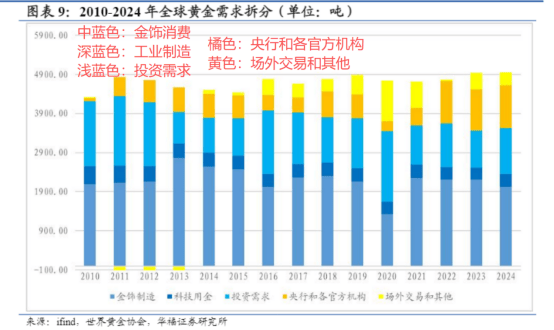
智通财经网· 2025-09-19 09:24
Group 1 - The core viewpoint of the reports indicates that Galaxy Entertainment (00027) has the strongest cash reserves among licensed gaming operators in Macau, allowing for effective financial leverage to enhance shareholder return on equity (ROE) [1] - The company has a net cash position of HKD 30.3 billion (approximately USD 3.9 billion), which represents 17% of its current market value, providing significant flexibility for capital deployment [1] - The report maintains a "Outperform" rating for Galaxy Entertainment with a target price of HKD 50.3, highlighting it as one of the top two picks in the Macau gaming sector [1] Group 2 - The DuPont analysis indicates that the lower asset turnover and financial leverage are impacting the ROE, as overall gaming revenue in Macau has not yet returned to 2019 levels [2] - The company is expected to increase dividends, including special dividends, to improve ROE, while also needing to retain funds for potential investment opportunities in Thailand [2] - Forecasted dividends per share for 2025 to 2027 are HKD 1.434, HKD 1.503, and HKD 1.634, yielding dividend returns of 3.5%, 3.7%, and 4% respectively, with projected ROE of 13.3%, 13.2%, and 13.7% for the same period [2]
为什么一季报并非真正的盈利底?
2025-07-16 06:13
Summary of Conference Call Notes Industry or Company Involved - The discussion primarily revolves around the A-share market and its earnings performance, particularly focusing on the financial sector and real estate industry Core Points and Arguments 1. The profit growth turning from negative to positive in Q1 2025 is attributed to a low base effect rather than internal improvements, as the A-share market has experienced a historically long period of negative profit growth [1][2] 2. The return on equity (ROE) has been on a downward trend, with the current down cycle lasting approximately 7 to 8 quarters, significantly longer than previous cycles, indicating structural pressures on operational capabilities [2][3] 3. The real estate sector has seen a continuous decline in leverage since 2020, with a 3% drop in financial leverage and about a 1% drop in non-financial real estate, which has directly suppressed ROE recovery [3][4] 4. The improvement in profit growth is primarily due to low accumulation effects, enhanced operational performance, and a temporary stabilization of profit data from the longest negative growth cycle [4][5] 5. The Q1 2025 gross profit margin increased by 0.05 percentage points, while net profit margin improved by 0.06 percentage points, driven by reduced operating costs and expenses [4][5] 6. The fixed asset investment in the financial real estate sector remains low, indicating weak corporate confidence and a lack of willingness to expand production [4][6] 7. The positive profit growth in Q1 2025 is not a true inflection point, as structural differentiation exists among industries, with the financial sector contributing 51.4% to the profit growth, followed by the non-ferrous metals sector at 33.4% [5][6] 8. The intrinsic profit growth for A-shares is expected to materialize no earlier than Q3 of the current year, based on the recovery of corporate balance sheets and the leading indicators of long-term loans [6][7] 9. The leading indicators suggest that the recovery of corporate balance sheets and the increase in long-term loans will positively influence industrial enterprise profits by the end of this year or early next year [7][8] 10. The top five performing sectors in Q1 2025 include agriculture, computer technology, steel, construction materials, and non-ferrous metals, with several sectors expected to maintain over 20% growth [8][9] Other Important but Possibly Overlooked Content 1. Investment strategies should focus on domestic certainty and expected growth amidst global geopolitical risks, with recommendations for sectors such as consumer goods, technology, and stable dividend stocks [9][10] 2. The discussion emphasizes the importance of avoiding excessive exposure to U.S. market risks, suggesting a cautious approach to investment in sectors with high volatility [9][10]
银行业专题:浙江农信系统的改革和实践成效
Guoxin Securities· 2025-03-05 01:49
Investment Rating - The report maintains an "Outperform" rating for the banking industry [5] Core Viewpoints - The Zhejiang Rural Credit System has demonstrated significant reform and operational effectiveness, maintaining a strong focus on supporting agriculture and small enterprises, leading to a notable market presence in terms of deposits and loans [1][49] - The system's return on equity (ROE) consistently exceeds that of listed banks, indicating superior cyclical resilience despite a general decline in ROE across both sectors [2][50] - The growth in net profit for the Zhejiang Rural Credit System was 12.5% and 10.0% year-on-year for 2022 and 2023, respectively, driven primarily by rapid expansion and improved non-interest income [3][51] Summary by Sections Reform and Operational Effectiveness - The Zhejiang Rural Credit System has evolved since the establishment of the first rural credit cooperative in 1952, culminating in the formation of the Zhejiang Rural Commercial Bank in 2022, which serves as a model for national reform [1][49] - By the end of 2024, the system's total deposits and loans reached 4.78 trillion yuan and 3.78 trillion yuan, respectively, with market shares of 20.88% and 15.92% [20] Profitability Analysis - The high ROE of the Zhejiang Rural Credit System is attributed to a higher net interest margin compared to the industry, although this advantage has been narrowing due to increased competition from larger banks [2][50] - The system's non-interest income has improved, particularly from investment returns, which have helped offset the pressure from declining net interest margins [3][50] Growth Potential - The Zhejiang Rural Credit System has maintained a loan growth rate exceeding 15%, supported by a strong demand from small and micro enterprises in a robust regional economy [38] - The system's asset quality remains strong, with a non-performing loan ratio of 0.85% and a provision coverage ratio of 486.7% as of the end of 2024, indicating a solid risk management framework [20][47] Asset Quality - The system's non-performing loan ratio has remained low, benefiting from a favorable economic environment and effective risk management practices [44] - Despite a slight increase in non-performing loans due to economic pressures, the overall asset quality remains superior compared to national averages [44][47] Investment Recommendations - The report suggests a focus on high-dividend stocks in a low-interest-rate environment, recommending banks such as China Merchants Bank and Jiangsu Bank for long-term investment [53]