民生消费

Search documents
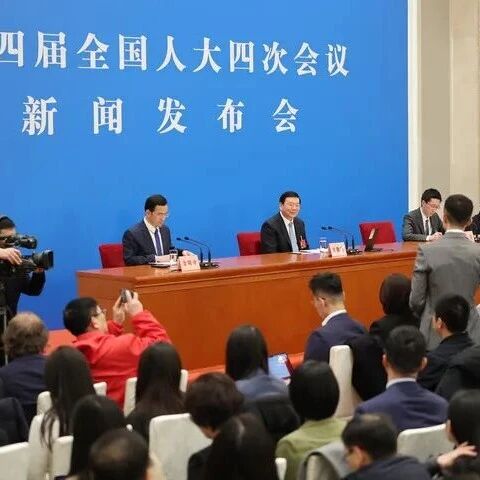
今年我国将制定托育服务法等法律
券商中国· 2026-03-04 08:48
Group 1 - The National People's Congress (NPC) will focus on building a unified domestic market and advancing rural revitalization this year [1] - The NPC aims to draft laws on social assistance, medical security, and childcare services to allocate more resources to the people's livelihood sector [1] - The goal is to encourage consumers to spend more confidently and willingly [1]

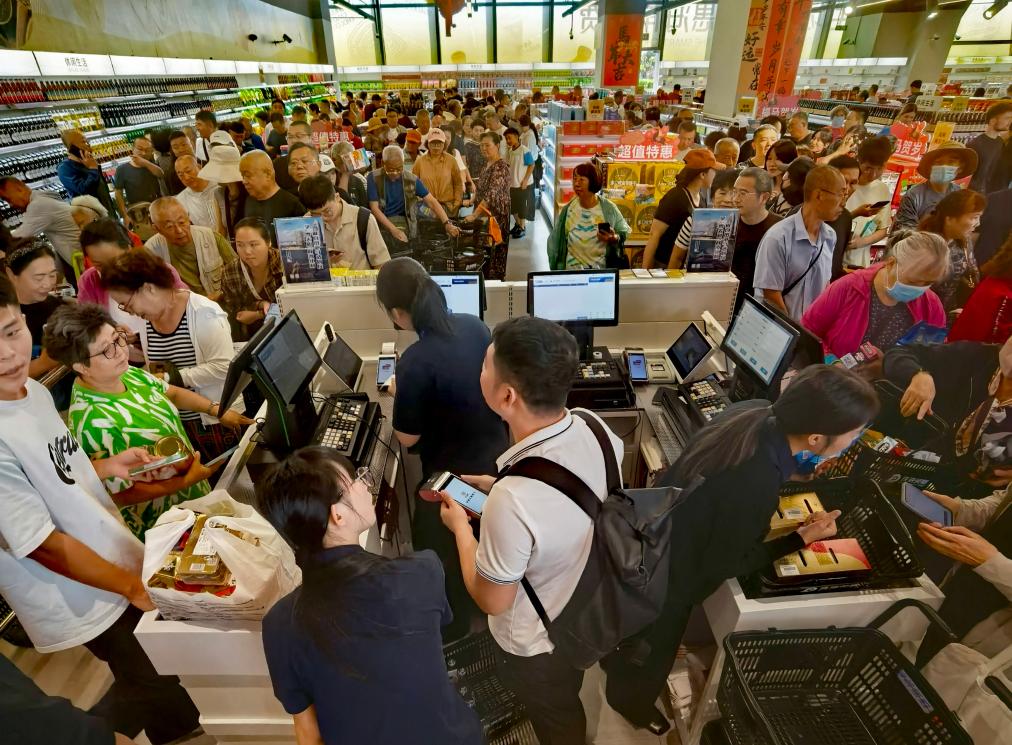
家门口的“免税购物车” 海南岛内居民免税店开业直击
Xin Hua She· 2026-02-11 22:51
Core Viewpoint - The opening of the first five duty-free stores for daily consumer goods in Hainan marks a significant extension of the "zero tariff" policy from the industrial sector to the livelihood sector, directly benefiting residents and boosting local consumption [1][5]. Group 1: Store Operations and Consumer Response - The duty-free stores in Haikou, Sanya, and Danzhou have seen high consumer traffic, with the Haikou store featuring over 50,000 items across more than 40 categories, including imported fruits and daily necessities [2][3]. - Consumers have reported significant savings, such as nearly 20 yuan per kilogram on imported durians compared to regular market prices, indicating strong demand for imported goods [2]. - The shopping experience is streamlined, with a quick verification process for eligibility and spending limits, allowing for efficient transactions [3]. Group 2: Policy and Economic Impact - The new policy allows eligible residents to enjoy a duty-free allowance of 10,000 yuan per person annually, with a family of three able to accumulate 30,000 yuan, catering to frequent daily consumption needs [3][5]. - The policy exempts all taxes, including import duties and domestic value-added and consumption taxes, effectively reducing the tax burden by approximately 20% on imported goods, making them more affordable for local residents [5]. - The Hainan provincial government plans to expand the number of duty-free stores across the island, ensuring comprehensive coverage and continuous evaluation of the policy's effectiveness [6].
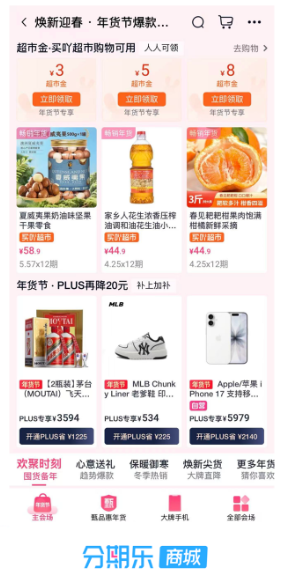
分期乐商城“年货节”启动
Zheng Quan Ri Bao Wang· 2026-01-27 10:42
Core Viewpoint - The launch of the "New Year Festival" by Lexin's Fenqile Mall aims to enhance consumer experience during the Spring Festival by offering a wide range of products and multiple discounts, thereby stimulating consumption activity [1][2] Group 1: Event Overview - Fenqile Mall has introduced a "multi-cycle, multi-benefit" design for the New Year Festival to cater to different consumer needs at various times [1] - The festival focuses on three core consumption scenarios: "family stocking," "new spring renewal," and "gathering gifts," featuring popular products across categories such as electronics, apparel, beauty, food, daily necessities, and home appliances [1] Group 2: Consumer Trends - There has been a significant increase in winter essential purchases, with heater transaction amounts rising by 1495% and order volume increasing by 480% year-on-year [1] - Sales of warm clothing also saw substantial growth, with transaction amounts up by 406% and order volume soaring by 2577% year-on-year, indicating consumer preference for quality supply and affordable prices [1] Group 3: Strategic Intent - The New Year Festival is not just a promotional event but reflects Fenqile Mall's commitment to deepening its engagement in consumer spending [1] - The company aims to enhance the quality of life for consumers through well-designed promotions and product offerings, while maintaining its advantage in full-category coverage and installment service [2]
分期乐商城“年货节”启动,热门3C年货好礼直降千元
Xin Lang Cai Jing· 2026-01-27 09:53
Core Viewpoint - The "New Year Festival" event launched by Lexin's (NASDAQ: LX) Fenqile Mall aims to enhance consumer experience during the Spring Festival by offering significant discounts and various promotional activities, running until February 3 [1][6]. Group 1: Event Details - The "New Year Festival" features a design of "multiple cycles, multiple benefits, and phased releases" to cater to different consumer needs during the festival [1][6]. - The event focuses on three core consumption scenarios: "family stocking," "new spring renewal," and "gathering gifts," offering a wide range of products including electronics, apparel, beauty items, food, daily necessities, and home appliances [1][6]. Group 2: Promotional Strategies - Fenqile Mall reduces the consumption threshold for users through layered benefits, such as offering up to 200 yuan in supermarket credits for certain popular products purchased during the event [7]. - Daily promotions include random supermarket credits of 8 yuan and 18 yuan for the first 3,000 users who spend over 100 yuan, addressing the needs for supplementary purchases [7]. - The platform also features a special event area where users can receive varying amounts of supermarket credits based on their order amounts during live broadcasts [2][7]. Group 3: Market Trends - The event reflects Fenqile Mall's ongoing commitment to enhancing consumer spending in essential categories, with significant growth observed in winter necessities [4][8]. - Data indicates a dramatic increase in demand for heating products, with transaction amounts for heaters rising by 1495% and transaction orders increasing by 480% year-on-year [5][8]. - The sales of warm clothing also saw substantial growth, with transaction amounts increasing by 406% and transaction orders by 2577% year-on-year, highlighting consumer recognition of quality supply and affordable prices [5][8].

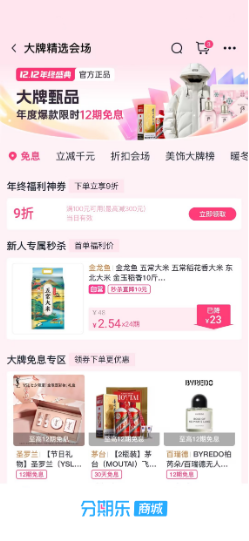
分期乐商城双十二发力生活刚需,打造有温度的年末大促
Xin Lang Cai Jing· 2025-12-04 09:56
Core Insights - The article highlights the launch of the "12·12 Year-End Festival" by Fenqile Mall, aimed at enhancing consumer spending during the year-end shopping season through extended promotional periods and diverse discount offerings [1][4]. Group 1: Event Overview - The "12·12 Year-End Festival" runs from December 1 to December 12, providing a 12-day window for consumers to enjoy discounts without the need for last-minute rush [2][6]. - The promotional strategy includes a comprehensive welfare matrix, offering discounts across various categories such as electronics, fashion, beauty products, second-hand goods, and daily necessities [2][6]. Group 2: Discount Structure - Basic benefits include a 10% discount on purchases over 100 yuan, with additional tiered discounts available through a large coupon package valued at 780 yuan, which includes various thresholds for savings [2][6]. - Low-threshold payment discounts are also available, such as a 5 yuan discount on purchases over 10 yuan, catering to smaller transactions [2][6]. Group 3: Exclusive Benefits - The festival features exclusive benefits, including supermarket cards worth over one million yuan, which can be redeemed for essential goods after making a purchase during the event [7]. - Users can receive supermarket cards with values up to 200 yuan after confirming their orders, enhancing the appeal of the event [7]. Group 4: Market Performance - During the previous shopping event from October 22 to November 12, Fenqile Mall saw a 42% increase in order numbers, a 38% rise in total transaction value, and a 53% growth in the number of buyers [3][4]. - The essential consumer goods sector experienced a remarkable surge, with transaction values increasing by 237% and order numbers rising by 384%, indicating strong consumer preference for Fenqile Mall's services [4][7]. Group 5: Strategic Focus - Fenqile Mall's strategy emphasizes combining discounts with installment payment options to lower consumer spending barriers, particularly targeting the younger demographic [4][7].
从民生关切中找消费增长点(人民时评)
Ren Min Ri Bao· 2025-11-18 22:54
Core Insights - The article emphasizes the significant consumer potential embedded in the public's livelihood needs, suggesting that addressing these pain points can unlock consumption potential [1][4] Group 1: Community Development and Consumer Services - The "micro-renovation" of community spaces in Shanghai's Yangpu District has led to the establishment of various facilities such as community kitchens and smart markets, enhancing service quality and stimulating local commerce [1] - As of July 2023, 6,255 convenience living circles have been established across 210 pilot areas, serving 129 million residents, showcasing the scale of community service improvements [1] - The Ministry of Commerce and other departments have initiated plans to expand and upgrade convenience living circles, aiming to create age-friendly and high-quality living environments [1] Group 2: Addressing Specific Community Needs - In Changchun, the "Happiness Restaurant" initiative addresses elderly dining challenges, fostering a stable community dining consumption chain [2] - In Baoji, the creation of 27 service categories based on resident feedback has filled service gaps and boosted daily consumption for 45,000 people across six communities [2] - The article highlights that improving consumer scenarios can elevate the quality of life, transitioning from basic needs to enhanced living standards [2] Group 3: Cultural and Family Support Initiatives - In Chengdu, community centers are providing diverse cultural activities tailored to youth, enhancing community engagement and satisfaction [3] - Shanghai's Danning Road has introduced embedded childcare services in corporate parks, alleviating concerns for working parents [3] - The article stresses the importance of precise service delivery that aligns with community needs, advocating for tailored solutions based on local resources and demands [3] Group 4: Integration of Consumption and Livelihood - The article concludes that integrating consumption promotion with livelihood improvement can create a vibrant and warm community atmosphere, contributing to the broader goal of modernization with a focus on people's well-being [4]
快手发布民生专项数据报告:70后、80后成民生商品购买主力
Bei Ke Cai Jing· 2025-11-11 11:05
Core Insights - Kuaishou released the "2025 Kuaishou E-commerce Rural Revitalization Plan: Livelihood Special Data Report" highlighting significant growth in the e-commerce sector focused on livelihood products [1] Group 1: E-commerce Performance - From January to September this year, the GMV (Gross Merchandise Volume) of livelihood products increased by over 20% year-on-year [1] - The number of active products sold also saw a year-on-year growth of over 20% [1] - During the Double 11 shopping festival, categories such as flour and noodles showed remarkable performance, with flour GMV increasing by 26% compared to last year's Double 11 and noodle GMV rising by 66% year-on-year [1] Group 2: Consumer Demographics - Users born in the 1980s and 1970s are identified as the solid consumer base for livelihood products [1] - Geographically, consumers from Hebei, Shandong, and Liaoning demonstrate concentrated purchasing power, indicating strong consumption momentum in the northern market [1]

元瞻经纬总量月报(2025年10月):“十五五”承前启后,接续奋进谱新篇-20251104
Guoyuan Securities· 2025-11-04 02:34
Group 1 - The "15th Five-Year Plan" emphasizes high-quality development as the core theme and primary goal, reflecting a significant historical moment and the need to align with economic development trends [3][22][23] - The plan prioritizes the construction of a modern industrial system, placing it at the forefront of strategic tasks, indicating a shift in focus compared to the previous five-year plan [27][28] - The report highlights the importance of domestic demand in driving economic growth, suggesting that enhancing domestic consumption is crucial for sustainable development [23][24] Group 2 - The industrial sector is identified as a key area for development, with a focus on upgrading traditional industries and fostering new and future industries, such as renewable energy and advanced manufacturing [31][32] - The report indicates that consumer confidence is gradually recovering, with policies aimed at stimulating consumption and improving living standards being prioritized [35][36] - The financial sector is experiencing a decline in social financing and credit, indicating a need for recovery in the financing demands of the real economy [4][25]
凸显战略定力,强调风险应对,注重效能提升
Western Securities· 2025-10-29 05:58
Group 1: Policy Insights - The "15th Five-Year Plan" emphasizes risk response, highlighting the need to gain strategic initiative amid intense international competition[1] - The structure of the "15th Five-Year Plan" largely follows the previous "14th Five-Year Plan," indicating policy stability and continuity[1] - The term "safety" is a key theme, covering various sectors including economic governance and social stability, with a focus on "safety + all industries"[2] Group 2: Efficiency and Focus - The "15th Five-Year Plan" places greater emphasis on efficiency, with the term "efficiency" appearing 9 times and "high efficiency" 15 times, compared to 3 and 7 times in the "14th Five-Year Plan" respectively[2] - The word "focus" appears 24 times in the "15th Five-Year Plan," indicating a shift towards prioritizing key areas, up from 12 mentions in the previous plan[2] - Specific policies aimed at enhancing consumer welfare and stabilizing the economy are highlighted, such as transferring state capital to social security funds and removing unreasonable consumption restrictions[3] Group 3: Societal and Market Dynamics - The plan addresses "anti-involution" by proposing measures to eliminate barriers to a unified national market, reflecting a commitment to long-term reform[3] - The report warns of potential risks, including policy implementation falling short of expectations and geopolitical disturbances impacting domestic policies[3]
博时基金市场异动陪伴10月24日:沪指再创年内新高,创业板指涨超3.5%
Xin Lang Ji Jin· 2025-10-24 07:31
Market Performance - The A-share market showed strong performance on October 24, with the Shanghai Composite Index reaching a new high for the year and the ChiNext Index rising over 3.5% [2] Core Insights - The market rally was driven by improved policy expectations and a more favorable external environment, particularly following the release of the 20th Central Committee's Fourth Plenary Session communiqué, which emphasized high-quality development and technological self-reliance as core goals during the 14th Five-Year Plan [2] - The upcoming China-U.S. trade negotiations and positive signals from the Ministry of Commerce regarding potential resolutions to mutual concerns have alleviated fears of escalating trade tensions, leading to a quick recovery in risk appetite [2] Policy Implications - The Fourth Plenary Session reiterated the 2035 goals, including achieving a per capita GDP level of a moderately developed country and significantly enhancing technological self-reliance, highlighting the importance of economic and technological policies [2] - The 14th Five-Year Plan emphasizes domestic demand recovery and deepening reforms, with potential for continued consumer stimulus policies and monetary easing, which could stabilize the market fundamentals [2] Future Outlook - Short-term market sentiment may fluctuate between policy expectations and changes in the external environment, while the implementation of the 14th Five-Year Plan is expected to provide clear policy guidance for key areas such as technological innovation, green low-carbon initiatives, and consumer spending [3] - Investors are advised to monitor the progress of policies related to technological self-reliance, the effectiveness of domestic demand recovery measures, and developments in China-U.S. trade negotiations [3]