油运超级周期

Search documents
高盛闭门会-地缘冲突-影子油轮制裁-油运有望迎来超级周期-看好vlcc和原油运输
Goldman Sachs· 2026-02-10 03:24
Investment Rating - The report maintains a positive outlook on the oil shipping industry, particularly for Very Large Crude Carriers (VLCC) and crude oil transportation, anticipating a super cycle driven by geopolitical factors and sanctions on shadow tankers [1]. Core Insights - Global crude oil supply is expected to stagnate in 2024, but will see an increase of approximately 1.5 million barrels per day from non-OPEC countries starting mid-2025, followed by OPEC countries joining the production increase [1][4]. - Geopolitical factors significantly impact the tanker market, with issues such as U.S.-China port fee disputes leading to vessel delays and increased demand asymmetry [2][5]. - China plays a crucial role in global oil reserves, with an expected addition of at least 100 million barrels of storage capacity by mid-2026, which will boost demand for mainstream raw material imports and vessels [1][6]. - High refining margins are prompting regions like the Middle East, India, Japan, and South Korea to activate idle capacities, with a projected net increase of 1 million barrels per day in refining capacity by 2026 [1][8]. - The global oil supply-demand outlook shows uncertainty, with an expected daily surplus of around 1 million barrels in 2026, potentially lasting into 2027 [1][9]. Summary by Sections Current Oil Tanker Market Drivers - Key drivers include the growth in crude oil production and exports, increased transportation distances, and geopolitical factors affecting demand [2]. Supply and Demand Dynamics - The oil tanker market is characterized by a complex supply-demand situation, with supply growth expected at 3% in 2026, but actual growth at only 2% due to aging fleets [3][10]. - Demand is projected to grow by 6% in 2026, with a slight decrease in growth rate expected in 2027 [10]. Geopolitical Influences - Geopolitical events, such as potential sanctions relief on Iranian oil, could shift demand from shadow fleets to mainstream fleets, positively impacting VLCC demand [11][12]. Regional Inventory Behaviors - Japan and South Korea are critical regions, with significant increases in crude oil imports, which will impact global oil demand [13]. Clean vs. Dirty Transportation Analysis - The clean and dirty transportation sectors are highly interchangeable, with expected growth rates of 5% to 5.8% for dirty transportation and 2.1% for clean transportation [14].
运价罕见单日暴跌20%,油轮龙头股价逆势上涨
2 1 Shi Ji Jing Ji Bao Dao· 2025-12-27 23:37
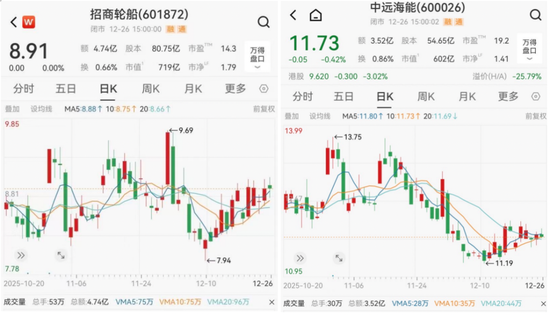
Core Viewpoint - The global tanker market experienced a significant drop in VLCC spot rates, with the Baltic TD3C index falling 20% to $87,711 per day, marking the largest single-day decline since May 2020. Despite this, major domestic oil tanker companies like China Merchants Energy Shipping Company and COSCO Shipping Energy Transportation remained resilient, with China Merchants Energy seeing a weekly increase of over 4% as of December 26 [1][3][8]. Group 1: Market Dynamics - The tanker market is influenced by complex and sometimes contradictory pricing mechanisms, which have led to a notable increase in tanker transport prices since August due to longer transport distances and rising demand [4][11]. - The current geopolitical situation has resulted in a reduction of the global "compliant" fleet, with the number of sanctioned tankers doubling to 906 vessels, representing 19% of the global oil tanker fleet capacity [10][12]. - The demand for oil tankers is expected to rise as OPEC has resumed increasing oil production, which could further support tanker rates [10][12]. Group 2: Company Performance - China Merchants Energy maintains the world's largest VLCC fleet, with 52 VLCCs and 7 Aframax tankers, positioning it well for potential profit growth as tanker rates are projected to reach their highest levels since 2008 in Q4 2025 [7][8]. - Despite the favorable market conditions, the stock price of China Merchants Energy was only 8.91 yuan per share as of December 26, which is lower than its historical prices from 2015 and 2024 [8][12]. - The company's management remains optimistic about the tanker market, predicting that the supply-demand imbalance will persist, keeping average rates above those of 2025 [15]. Group 3: Future Outlook - Analysts suggest that the tanker market may be entering a "super cycle," driven by supply constraints and increasing demand, although the current stock prices of leading companies do not fully reflect this potential [7][12]. - The upcoming delivery of new VLCCs is expected to be insufficient to offset the decline in efficiency from older vessels, maintaining a tight supply situation in the compliant market [13][15]. - The market's perception of seasonal demand fluctuations may not accurately predict future performance, as the first quarter is traditionally a peak season for tanker operations [15].


运价罕见单日暴跌20%,油轮龙头股价逆势上涨
21世纪经济报道· 2025-12-27 23:31
Core Viewpoint - The global tanker market experienced a significant drop in VLCC spot rates, with the Baltic TD3C index falling 20% to $87,711 per day, marking the largest single-day decline since May 2020. Despite this, major domestic oil tanker companies like China Merchants Energy Shipping Company (招商轮船) and COSCO Shipping Energy Transportation (中远海能) remained resilient, with China Merchants' stock rising over 4% in the week ending December 26, 2023 [1][3][8]. Group 1: Market Dynamics - The oil tanker market is characterized by complex and sometimes contradictory pricing mechanisms, which have led to a mixed performance of A-share oil tanker companies despite strong demand [3]. - Analysts from Guotai Junan Securities highlighted a "super bull market option" for oil shipping companies due to unexpected demand and supply bottlenecks, suggesting that current valuations do not fully reflect the potential for a super bull market [7]. - As of mid-2025, China Merchants will maintain the world's largest VLCC fleet, comprising 52 VLCCs and 7 Aframax tankers, positioning it as a key player in the market [7]. Group 2: Supply and Demand Factors - The global fleet of sanctioned oil tankers has doubled to 906 vessels, representing 19% of the total oil tanker fleet, which has led to increased transportation distances and a temporary surge in tanker rates [10][11]. - The geopolitical landscape has restructured global oil transportation routes, contributing to rising tanker rates, while the U.S. shale oil production faces challenges that may support higher rates in the long term [11]. - Despite the recent surge in tanker rates, concerns remain about potential price corrections if geopolitical tensions ease or if floating storage capacities are released [12]. Group 3: Future Outlook - The supply of VLCCs is expected to remain tight until mid-2026, with only a limited number of new deliveries and a significant portion of the fleet being older vessels that may not meet environmental standards [13]. - The company anticipates that the compliance market will continue to experience supply-demand imbalances, with average rates expected to be higher than in 2025 [14]. - The company also noted that the first quarter of the year is typically a peak season for oil transportation, despite historical trends suggesting a decline in activity during the fourth quarter [15].

极端周期,VLCC油运公司命运之局
2 1 Shi Ji Jing Ji Bao Dao· 2025-12-27 00:00
Core Viewpoint - The global tanker market experienced a significant drop in VLCC spot rates, with the Baltic TD3C index falling 20% to $87,711 per day, marking the largest single-day decline since May 2020. This decline is viewed as a market correction rather than a crisis, as VLCC rates remain above the highs seen in the spring of 2020 [1][2]. Group 1: Market Dynamics - The recent drop in tanker rates contrasts sharply with the extreme market conditions of May 2020, where OPEC's failed negotiations led to a drastic reduction in demand and unprecedented negative oil prices. This time, there are no similar geopolitical crises or OPEC production cuts influencing the market [2]. - Despite the drop in rates, major domestic tanker companies like China Merchants Energy Shipping Company (招商轮船) and COSCO Shipping Energy Transportation (中远海能) have shown resilience, with China Merchants experiencing a weekly increase of over 4% as of December 26 [2]. - The tanker market's pricing mechanism is complex, influenced by various factors including geopolitical tensions and supply chain disruptions, which have led to increased transportation distances and demand [3][7]. Group 2: Future Outlook - Analysts suggest that the tanker industry is entering a "super bull market" phase due to unexpected demand and supply constraints, with projections indicating that VLCC spot market earnings could reach their highest levels since 2008 by Q4 2025 [5][6]. - The current fleet of VLCCs is aging, with 20.2% of the global fleet over 20 years old, which may limit supply growth and maintain upward pressure on rates [11]. - The company anticipates that the supply-demand imbalance will persist, particularly as older vessels may not meet new environmental regulations, potentially leading to a decrease in effective fleet capacity [10][13]. Group 3: Investor Sentiment - There is a notable divergence between the performance of tanker rates and the stock prices of related companies, with the latter showing a lackluster response to rising rates due to market concerns over potential price corrections [9]. - The management of China Merchants has expressed optimism about the tanker market, predicting that the stock price will eventually reflect the positive market conditions despite current investor hesitance [12][13].
极端周期,VLCC油运公司大赌局
2 1 Shi Ji Jing Ji Bao Dao· 2025-12-26 12:34
Core Viewpoint - The global tanker market is experiencing a significant drop in VLCC spot rates, with the Baltic TD3C index falling 20% to $87,711 per day, marking the largest single-day decline since May 2020 [1][2] Group 1: Market Dynamics - The recent drop in tanker rates contrasts sharply with the extreme market conditions of May 2020, where OPEC production cuts and geopolitical events led to a dramatic shift in oil transportation dynamics [2][3] - Despite the current decline, VLCC rates have not fallen below the highs seen during the spring bull market of 2020, indicating a more stable market environment [2][3] - The recent price drop is viewed as a market correction rather than a collapse, with major domestic tanker companies like China Merchants Energy Shipping Company (招商轮船) and COSCO Shipping Energy Transportation Co. (中远海能) showing resilience [2][3] Group 2: Supply and Demand Factors - Analysts suggest that the tanker market is influenced by a combination of unexpected demand and supply constraints, which could provide a "super bull market option" for listed oil shipping companies [4][5] - The head of China Merchants Energy Shipping Company noted that their VLCC fleet remains the largest globally, with expectations of significant profit growth due to rising spot rates [5][6] - The global fleet of sanctioned tankers has doubled to 906 vessels, representing 19% of the total oil tanker fleet, which has restructured transportation routes and increased shipping distances [7][8] Group 3: Future Outlook - The tanker market is expected to face a tight supply situation, with a limited number of new VLCC deliveries and a significant portion of the fleet being older vessels that may not meet environmental regulations [11][12] - The company anticipates that the demand for compliant vessels will continue to outstrip supply, leading to higher average rates in the future [12][13] - The company's management remains optimistic about the market's long-term prospects, despite short-term fluctuations and seasonal demand variations [12][13]
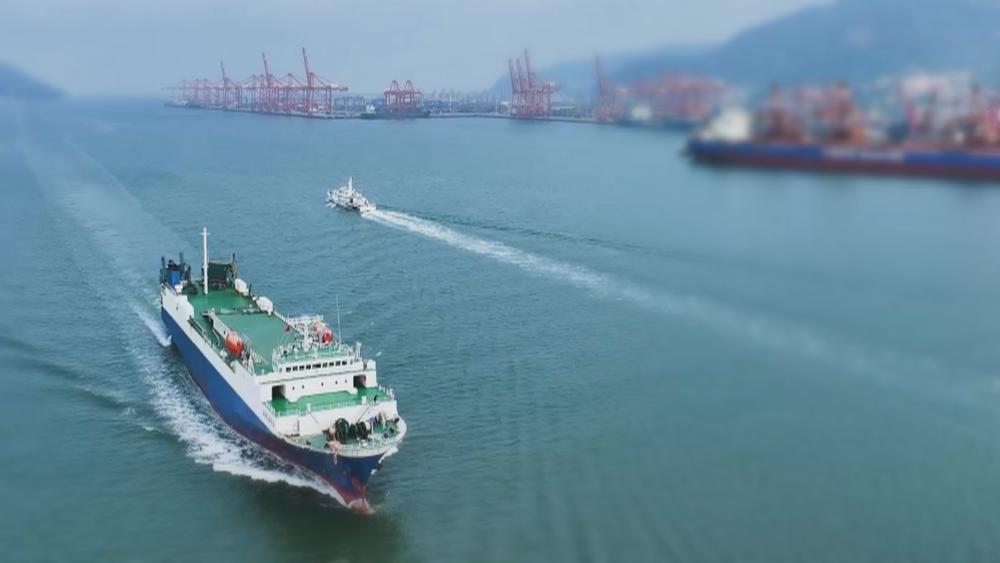
油运:Q4盈利将创十年新高,把握分歧与逆向时机
2025-12-04 02:21
Summary of Key Points from the Conference Call Industry Overview - The conference call focuses on the oil shipping industry, specifically the performance and outlook of Very Large Crude Carriers (VLCC) [1][2][3]. Core Insights and Arguments - **High Earnings Forecast**: The fourth quarter is expected to achieve the highest earnings in a decade, with annual performance also reaching a ten-year high [1]. - **Market Dynamics**: Despite a recent decline, VLCC freight rates remain above $120,000, significantly exceeding the breakeven point of $25,000 to $30,000 per day, indicating strong seasonal demand elasticity [2]. - **Geopolitical Factors**: The easing of geopolitical tensions and increased production from Iran have positively impacted oil pricing, leading to a recovery in refinery utilization rates and boosting shipping demand [1][3]. - **Supply and Demand Improvement**: Increased oil production from the Middle East and South America, coupled with ongoing U.S. sanctions on Russia, is expected to enhance supply-demand dynamics, pushing freight rates higher [1][4]. - **Super Cycle Anticipation**: The next two years are projected to see favorable supply-demand conditions, potentially leading to a super cycle in the oil shipping industry [5]. - **Impact of OPEC+**: OPEC+ is expected to continue increasing production, which will directly translate into higher shipping demand [5][11]. - **Indian Market Shift**: Due to U.S. sanctions on Russian oil, India is shifting its import structure towards compliant markets, favoring VLCCs, which will benefit the VLCC supply-demand balance [7]. Additional Important Insights - **Future Freight Rate Projections**: The average freight rate is expected to rise to over $60,000 next year, driven by sustained OPEC+ production increases [3][11]. - **VLCC Capacity Utilization**: By the end of 2025, VLCC capacity utilization is projected to recover to around 90%, further supporting freight rate increases [7]. - **Short-term Volatility Factors**: VLCC freight rates are influenced by various short-term factors, including shipowner sentiment and local weather conditions, which can lead to significant price fluctuations [10]. - **Long-term Demand Trends**: The petrochemical industry is expected to maintain a rising demand for VLCCs due to increased global oil production and limited effective capacity growth in the compliant market [17][18]. - **Investment Strategy**: The current market presents a significant opportunity for reverse positioning, focusing on long-term trends rather than short-term fluctuations [23][24]. Conclusion - The oil shipping industry is poised for a strong performance driven by favorable supply-demand dynamics, geopolitical factors, and strategic shifts in global oil trade. Investors are encouraged to focus on long-term trends and potential super cycles while being mindful of short-term market volatility.
集运狂欢后,大变局下的油运超级周期或启动?
Sou Hu Cai Jing· 2025-06-17 08:09
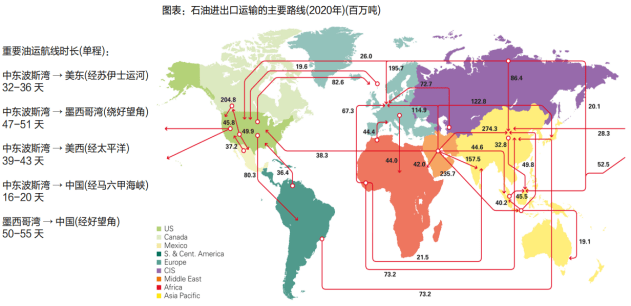
Core Insights - The shipping industry is experiencing a cyclical shift, with container shipping reaching a peak while the oil shipping sector is showing signs of recovery after a prolonged downturn [1][7] - The VLCC (Very Large Crude Carrier) rates have recently surpassed the breakeven point, indicating a potential turnaround in the oil shipping market [1][7] - Geopolitical tensions are reshaping trade routes, which may lead to a more significant cyclical reversal in the oil shipping sector compared to container shipping [1][8] Industry Overview - The maritime industry supports 80% of global trade volume and 70% of trade value, with oil shipping being one of its three main pillars alongside dry bulk and container shipping [2] - Oil shipping is characterized by its complexity due to the strategic nature of oil as a commodity, which is influenced by geopolitical factors [2] - The oil shipping market is divided into crude oil and refined oil transportation, with crude oil routes heavily concentrated in strategic passages from the Middle East to Asia and Europe [2] Market Dynamics - The trend towards larger oil tankers, particularly VLCCs, is driven by the need to minimize unit transportation costs, with VLCCs dominating the crude oil transport market [4] - The market exhibits a dual structure, with a high concentration in crude oil transport but a fragmented market in refined oil transport, where no single company holds a significant market share [4][5] - The BDTI (Baltic Dirty Tanker Index) and BCTI (Baltic Clean Tanker Index) are key indicators of the oil shipping market, reflecting price movements and market conditions [6] Supply and Demand Analysis - The oil shipping sector is at a critical juncture, with supply constraints due to a near halt in new VLCC orders from 2021 to 2023, leading to limited capacity growth until 2026 [7] - Geopolitical events have historically triggered spikes in shipping rates, with current tensions in the Middle East pushing VLCC daily rates above $45,000 [7][8] - The demand for VLCCs is increasing as Asian buyers shift towards long-term contracts to mitigate geopolitical risks, raising the proportion of VLCCs in total capacity to 62% [8] Price Trends - The BDTI index has shown a 6.36% month-on-month increase to 987 points, but remains down 22.07% year-on-year, indicating ongoing market volatility [9] - VLCC daily rates have recently reached $39,890, reflecting a significant increase from previous levels, while the BCTI index has seen a year-on-year decline of 33.01% [9] - The market is experiencing structural differentiation, with VLCCs performing better than smaller tankers, suggesting a shift in demand towards larger vessels due to increased import needs in Asia [8][9]